Quick Verdict: A Pioneering PHEV That Shows Its Age
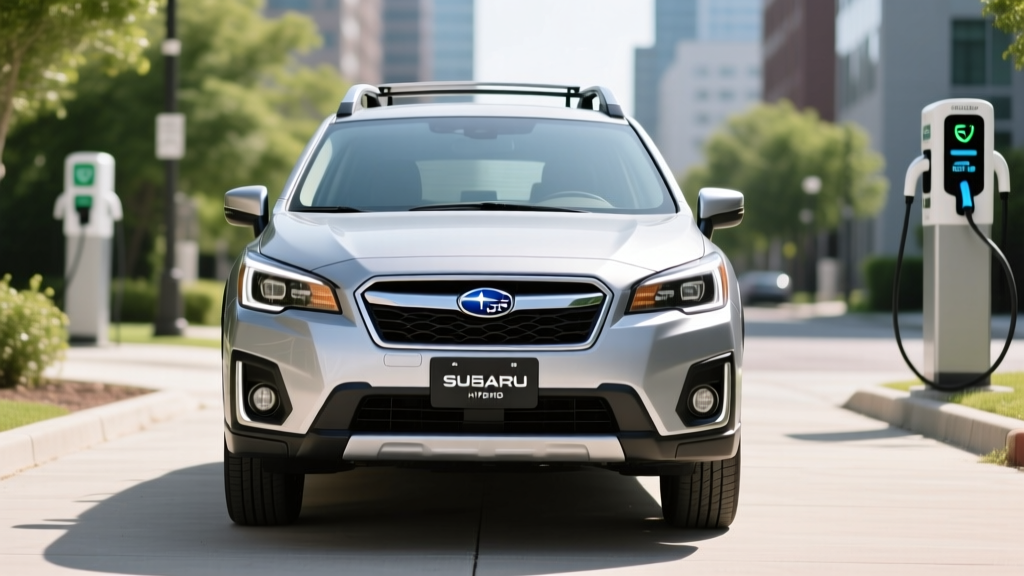
The 2016 Subaru Crosstrek Hybrid was Subaru's first plug-in hybrid (PHEV), pairing a 2.0-liter boxer engine with a small electric motor and a modest battery pack. For 2026 used-car shoppers, it remains one of the few PHEVs offering standard all-wheel drive in a compact crossover footprint. But with just 13 miles of electric-only range and a battery pack that's now a decade old, buyers need to go in with eyes wide open about what this vehicle can and cannot deliver.
If you're researching the 2016 Subaru Crosstrek Hybrid as a used purchase, this guide covers the exact EPA figures, real-world efficiency expectations, battery longevity data, and whether it still makes financial sense versus a newer PHEV or a full battery-electric vehicle (BEV).
HEV vs PHEV: Where the 2016 Crosstrek Hybrid Fits
Before diving into specs, it's essential to understand the distinction between hybrid types — especially since Subaru later released a different Crosstrek Hybrid with updated PHEV hardware.
Conventional Hybrid (HEV)
- No plug — the battery charges via regenerative braking and the engine
- Small battery (typically 1-2 kWh)
- Electric motor assists the engine; no meaningful electric-only driving
- Example: Toyota RAV4 Hybrid, Honda CR-V Hybrid
Plug-In Hybrid (PHEV)
- Has a charge port — plugs into Level 1 (120V) or Level 2 (240V) outlets
- Larger battery (6-20+ kWh depending on model year and brand)
- Can drive 15-50+ miles on electricity alone before the engine engages
- Example: 2016 Subaru Crosstrek Hybrid, Toyota RAV4 Prime, Chrysler Pacifica Hybrid
The 2016 Crosstrek Hybrid is a PHEV. It has a charge port (J1772 connector) and a 8.8 kWh lithium-ion battery pack that provides limited electric-only range. It does not support DC fast charging — Level 2 at 3.3 kW is the maximum charge rate.
Note: Subaru discontinued the first-generation Crosstrek Hybrid after 2016, then reintroduced a new Crosstrek Hybrid PHEV for the 2019 model year with Toyota-sourced hybrid hardware and 17 miles of EV range. If you see "Crosstrek Hybrid" listings, confirm the model year carefully.
Fuel Economy and Electric Range: The Numbers
| Metric | EPA Rating | Real-World Expectation |
|---|---|---|
| Combined MPG (hybrid mode) | 31 MPG | 28-33 MPG |
| City MPG | 30 MPG | 30-35 MPG (regen-heavy city driving favors hybrids) |
| Highway MPG | 34 MPG | 28-32 MPG (AWD drag and boxer engine hurt highway efficiency) |
| Electric-only range | 13 miles | 10-13 miles (less in cold weather or with HVAC use) |
| Combined MPGe (electric mode) | 90 MPGe | Varies with driving style and temperature |
| Total range (gas + electric) | ~340 miles | ~300-340 miles depending on conditions |
| Gas tank capacity | 13.2 gallons | — |
The 31 MPG combined figure is underwhelming by 2026 PHEV standards — the Toyota RAV4 Prime achieves 38 MPG combined in hybrid mode with 42 miles of EV range. But in 2016, few AWD crossovers offered any plug-in capability at all.
Source: EPA Fuel Economy Guide — 2016 Subaru Crosstrek Hybrid
Real-World MPG: What Owners Actually Report
Hybrids often exceed their EPA city ratings because regenerative braking recaptures energy in stop-and-go traffic. The 2016 Crosstrek Hybrid follows this pattern: owners regularly report 33-35 MPG in urban driving. Highway efficiency is the weak point — the CVT transmission, permanent AWD system, and relatively heavy curb weight (~3,560 lbs) push highway consumption higher than the 34 MPG sticker suggests. Expect 28-32 MPG on sustained freeway runs at 70+ mph.
In cold weather (below 30°F), the electric-only range drops noticeably. The small 8.8 kWh pack doesn't have the thermal mass to sustain cabin heating on electric power alone, so the engine fires up sooner. Plan on 8-10 miles of EV range in winter conditions.
Powertrain and Performance Specs
| Specification | Detail |
|---|---|
| Engine | 2.0L DOHC 4-cylinder boxer |
| Engine horsepower | 148 hp @ 6,000 rpm |
| Electric motor output | 13.4 hp (10 kW) |
| Combined system horsepower | 160 hp |
| Combined torque | 163 lb-ft |
| Transmission | Lineartronic CVT |
| Drivetrain | Symmetrical AWD (full-time) |
| Battery capacity | 8.8 kWh (lithium-ion) |
| Battery location | Under cargo floor (reduces cargo space slightly) |
| Charge port | J1772 (Level 1 and Level 2 only) |
| Max AC charge rate | 3.3 kW |
| DC fast charging | Not supported |
| Level 1 charge time (120V) | ~5 hours (0-100%) |
| Level 2 charge time (240V) | ~2.5 hours (0-100%) |
| 0-60 mph | ~10.5 seconds |
| Curb weight | ~3,560 lbs |
| Cargo volume (behind rear seats) | 20.8 cu ft (vs 22.3 cu ft in gas model) |
The electric motor's 13.4 hp output is modest — it functions more as a torque-fill assist and short-range EV mode than a primary propulsion source. Acceleration is adequate for city merging but leisurely by modern standards. The CVT keeps the engine in its efficient band but produces the characteristic drone under hard acceleration that Subaru owners know well.
Battery Health, Warranty, and Replacement Costs
Original Battery Warranty
Subaru warranted the 2016 Crosstrek Hybrid's lithium-ion battery pack for 8 years / 100,000 miles (whichever comes first) against defects and excessive capacity loss. In California and states that follow CARB emissions rules, the warranty extended to 10 years / 150,000 miles.
2026 reality check: The 8-year federal warranty has expired for all 2016 models. The 10-year CARB-state warranty expires in 2026 at the latest. Any battery failure is now an out-of-pocket expense unless covered by an extended warranty or CPO program.
Battery Degradation: What to Expect at 10 Years
The 8.8 kWh pack in the 2016 Crosstrek Hybrid uses lithium-ion cells that were modest in energy density even when new. After 8-10 years of charge-discharge cycles, owners report noticeable range reduction:
- Years 1-3: Minimal degradation; 12-13 miles EV range typical
- Years 4-7: Gradual decline; 10-12 miles EV range
- Years 8-10: More significant fade; 7-10 miles EV range common
The battery never "dies" outright — it simply holds less energy. The hybrid-mode MPG is less affected because the engine does most of the work anyway. But if you bought this car for the electric-only commute, the shrinking EV range is the primary disappointment.
Battery Replacement Cost
A replacement battery pack for the 2016 Crosstrek Hybrid costs approximately $4,000-$6,000 for the pack itself, plus $500-$1,200 in labor at a Subaru dealer. Total out-of-pocket: roughly $4,500-$7,200. Independent hybrid-battery specialists may offer refurbished packs for $2,500-$4,000 installed.
Given that a clean 2016 Crosstrek Hybrid sells for $12,000-$17,000 in the 2026 used market (depending on mileage and condition), a full battery replacement represents 25-50% of the vehicle's value. This is the single biggest financial risk of buying this car.
Pre-Purchase Battery Health Check
Before buying any used 2016 Crosstrek Hybrid, request a hybrid battery health report from a Subaru dealer. The dealer scan tool reads individual cell voltages and overall state of health (SoH). Look for:
- Cell voltage variance under 0.2V (higher variance signals weak cells)
- Overall SoH above 70% (below this, EV range is significantly compromised)
- No stored hybrid system fault codes
Charging at Home: What You Need to Know
The 2016 Crosstrek Hybrid uses a J1772 connector, the standard for all non-Tesla plug-in vehicles sold in the US before the NACS transition. This means it's compatible with virtually every Level 2 home charger and public charging station built before 2025.
| Charging Level | Power Source | Max kW | Charge Time (0-100%) | Practical Use |
|---|---|---|---|---|
| Level 1 | 120V household outlet | ~1.4 kW | ~5 hours | Overnight top-up; included cordset |
| Level 2 | 240V (dryer outlet or hardwired) | 3.3 kW | ~2.5 hours | Recommended for daily use |
| DC Fast Charge | Not available | N/A | N/A | This vehicle does not support DCFC |
With only an 8.8 kWh battery, the Crosstrek Hybrid doesn't need fast charging. Even Level 1 from a standard 120V outlet replenishes the pack overnight. However, a Level 2 home charger (240V, 16-amp circuit minimum) is still recommended because it charges faster and is more efficient (less energy lost as heat).
Home charging cost: At the US average electricity rate of ~$0.16/kWh, a full charge costs roughly $1.41 — enough for about 13 miles of electric driving. That's approximately $0.11 per mile on electricity, compared to ~$0.15-$0.18 per mile on gasoline (at $3.50/gallon and 31 MPG). The electric savings are real but modest given the short EV range.
Pricing, Tax Credits, and Used Market Value
Original MSRP (2016)
The 2016 Subaru Crosstrek Hybrid launched at a base MSRP of $32,820 (including destination). It came in a single, well-equipped trim with standard leather, EyeSight driver-assist, and a power moonroof.
Federal Tax Credit — Original vs. 2026 Used Purchase
When new, the 2016 Crosstrek Hybrid qualified for a $5,002 federal tax credit under IRS §30D (the credit amount was based on battery capacity). That credit applied only to the original purchaser and is long expired for any used transaction.
Used EV/PHEV Tax Credit (IRS §25E) — 2026 Rules
If you buy a 2016 Crosstrek Hybrid from a dealer in 2026, you may qualify for the used clean vehicle credit under §25E:
- Credit amount: 30% of sale price, up to $4,000 maximum
- Vehicle sale price must be $25,000 or less (most 2016 Crosstrek Hybrids qualify)
- Buyer income caps: $75,000 single / $112,500 head of household / $150,000 joint
- Vehicle must be at least 2 model years old (2016 qualifies)
- Must purchase from a licensed dealer (private-party sales don't qualify)
- Credit is non-refundable — you must have tax liability to claim it
- Can only claim the used-vehicle credit once every 3 years
At a typical used price of $14,000-$16,000, the 30% credit would be $4,200-$4,800, but the $4,000 cap applies. So the maximum benefit is $4,000, bringing the effective purchase price down to roughly $10,000-$12,000 — a compelling value if the battery checks out.
2026 Used Market Pricing
- High mileage (100k+): $10,000-$12,500
- Average mileage (60k-100k): $12,500-$15,000
- Low mileage (under 60k), excellent condition: $15,000-$17,500
Pros and Cons: Honest Assessment
Pros
- Standard symmetrical AWD — rare in the PHEV segment at this price
- Subaru's proven boxer engine and CVT are well-understood by mechanics
- Good ground clearance (8.7 inches) for light off-road and snow
- Eligible for up to $4,000 used clean vehicle tax credit
- EyeSight driver-assist (adaptive cruise, lane-keep, pre-collision) was advanced for 2016
- Low electric cost per mile for short commutes under 13 miles
- J1772 connector compatible with all public Level 2 stations
Cons
- Only 13 miles EPA electric range (7-10 miles in real-world winter driving)
- Battery warranty has expired — replacement costs $4,500-$7,200
- 31 MPG combined is below modern hybrid/PHEV benchmarks
- Highway MPG disappoints due to AWD weight and CVT tuning
- Reduced cargo space vs. gas Crosstrek (battery under floor)
- Sluggish 0-60 time (~10.5 seconds)
- No DC fast charging capability
- Infotainment system is dated (no Apple CarPlay/Android Auto)
Who Should Buy This — And Who Shouldn't
Choose the 2016 Crosstrek Hybrid if:
- Your daily commute is under 15 miles round-trip and you can charge at home
- You need AWD for snow, mountain roads, or rural driving
- You qualify for the $4,000 used clean vehicle credit and the effective price is under $12,000
- You've had the battery health checked and SoH is above 75%
- You want a PHEV as a "gas car that occasionally uses electricity" rather than an EV-first vehicle
Look elsewhere if:
- Your commute exceeds 20 miles — the EV range won't cover it, and hybrid-mode MPG is mediocre
- You want meaningful electric savings — a newer PHEV (RAV4 Prime, Tucson PHEV) delivers 30-42 miles EV range
- You're concerned about battery replacement risk with no warranty remaining
- You want modern infotainment, wireless CarPlay, or advanced driver-assist
- You're considering a full EV — a used Chevrolet Bolt EV or Nissan Leaf offers 150-250 miles of range at similar prices
Hybrid vs PHEV vs EV: Which Fits Your Situation?
The 2016 Crosstrek Hybrid sits in an awkward middle ground by 2026 standards:
- Conventional hybrid (HEV): Better choice if you can't charge at home. A used Toyota RAV4 Hybrid or Honda CR-V Hybrid delivers 38-40 MPG combined with zero plug-in hassle and simpler maintenance.
- Plug-in hybrid (PHEV): Makes sense only if you have home charging AND a short commute. This Crosstrek works for sub-13-mile commutes; for longer ones, a newer PHEV is far more effective.
- Full EV (BEV): The best choice if your daily driving is under 200 miles and you have home charging. A used Bolt EV (259 miles range) or Leaf (150-226 miles) offers dramatically lower fuel and maintenance costs with no engine maintenance.
Reliability and Common Issues
Subaru's 2.0-liter FB20 engine and Lineartronic CVT have a solid reliability record when maintained properly. The hybrid system adds complexity but is relatively simple compared to full EVs — there's no high-voltage cooling loop, no DC fast-charge hardware, and the electric motor is small.
Common issues to watch for:
- CVT shudder: Some owners report a shudder during low-speed acceleration. Subaru issued a CVT fluid update; confirm it was performed.
- Head gasket concerns: Less common on the FB20 than older Subaru engines, but still inspect for coolant leaks at 100k+ miles.
- 12V battery drain: The auxiliary 12V battery can drain if the car sits unplugged for extended periods. A dead 12V battery prevents the hybrid system from starting.
- EyeSight camera issues: Windshield replacement can knock the stereo cameras out of calibration. Confirm EyeSight functions work during a test drive.
Source: NHTSA — 2016 Subaru Crosstrek Hybrid (check for open recalls and TSBs)
Frequently Asked Questions
How many MPG does the 2016 Subaru Crosstrek Hybrid get?
The EPA rates it at 31 MPG combined (30 city / 34 highway). In real-world driving, expect 28-33 MPG combined. City driving often yields 33-35 MPG thanks to regenerative braking, while sustained highway driving drops to 28-32 MPG.
How far can the 2016 Crosstrek Hybrid go on electric only?
The EPA rates it at 13 miles of electric-only range. Real-world range is typically 10-13 miles in mild weather and 8-10 miles in cold conditions (below 30°F) when the cabin heater demands engine heat.
Does the 2016 Crosstrek Hybrid qualify for a tax credit in 2026?
It no longer qualifies for the new-vehicle §30D credit. However, if you buy from a licensed dealer and meet income requirements (under $75k single / $150k joint), you may qualify for the used clean vehicle credit (§25E) — up to $4,000 or 30% of the sale price, whichever is less. The vehicle must sell for $25,000 or less.
Is the 2016 Crosstrek Hybrid reliable, and what does a battery replacement cost?
The mechanical components (engine, CVT, AWD) are generally reliable with proper maintenance. The hybrid battery is the main concern — at 10 years old, degradation is expected. A replacement battery costs approximately $4,500-$7,200 at a dealer, or $2,500-$4,000 through an independent hybrid specialist. Always get a battery health report before purchasing.
Does the 2016 Crosstrek Hybrid need to be plugged in?
No — it operates as a regular hybrid if you never plug it in. However, you lose the benefit of the 13-mile electric range and the associated fuel savings. Plugging in at home (even on a standard 120V outlet) is how you extract value from the PHEV system.
Can the 2016 Crosstrek Hybrid DC fast charge?
No. The vehicle only supports Level 1 (120V, ~1.4 kW) and Level 2 (240V, 3.3 kW max) AC charging via a J1772 connector. With an 8.8 kWh battery, DC fast charging isn't necessary — a full Level 2 charge takes only about 2.5 hours.
What's the difference between the 2016 and 2019+ Crosstrek Hybrid?
The 2019+ Crosstrek Hybrid uses Toyota-derived hybrid hardware (similar to the Prius Prime) with a larger battery, 17 miles of EV range, 35 MPG combined in hybrid mode, and a more powerful electric motor. It's a meaningfully better PHEV but commands higher used prices ($22,000-$28,000 in 2026).
Bottom Line
The 2016 Subaru Crosstrek Hybrid was ahead of its time as an AWD plug-in crossover, but time has passed it by. With just 13 miles of electric range, a battery warranty that has expired, and hybrid-mode fuel economy that trails modern competitors, it makes sense only for a specific buyer: someone who needs AWD, has a short commute, can charge at home, qualifies for the used-vehicle tax credit, and has verified the battery health before purchase. For everyone else, a newer PHEV or a used full EV delivers better value and less risk.