Quick Verdict: The 2016 Sonata Hybrid SE in 2026
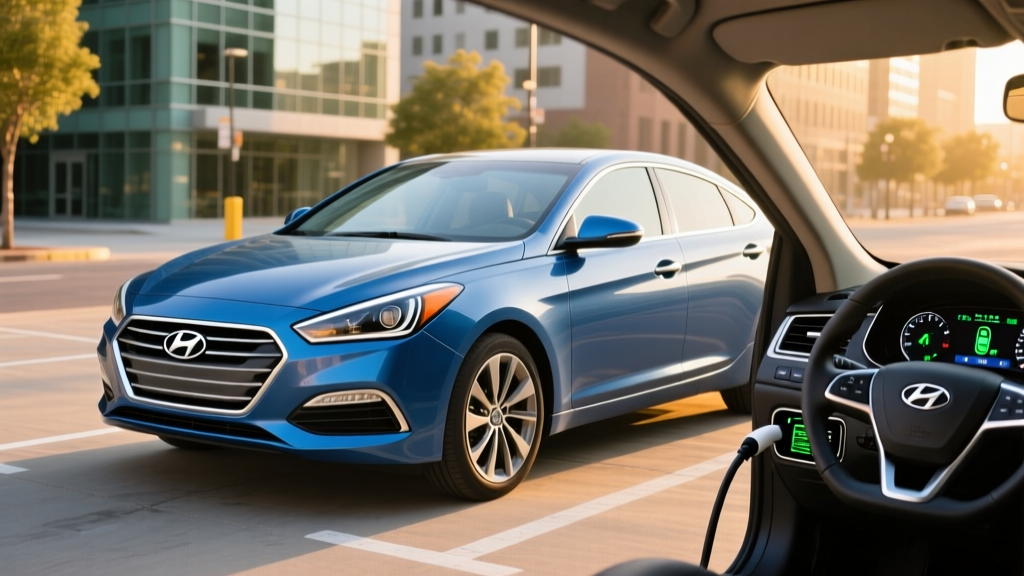
If you're researching the 2016 Sonata Hybrid SE as a used purchase, you're looking at one of the more practical conventional hybrid sedans from its era. The SE trim was the volume seller, offering a 2.0-liter gasoline engine paired with an electric motor for an EPA-estimated 40 MPG combined. Unlike a plug-in hybrid or full EV, this car never needs to be plugged in — it generates and recaptures all its own electricity through regenerative braking and the engine.
Ten years on, the 2016 Sonata Hybrid SE remains a compelling used-car value. Prices on the secondary market typically range from $9,000 to $14,000 depending on mileage and condition. The hybrid battery warranty, originally 10 years/100,000 miles, may still have residual coverage on lower-mileage examples — a critical factor we break down below.
HEV vs PHEV: What the 2016 Sonata Hybrid Actually Is
Before we go further, let's clear up a common source of confusion. Hyundai sold two electrified Sonata variants around this era:
2016 Sonata Hybrid (HEV)
- Type: Conventional hybrid — no plug
- Battery: 1.62 kWh lithium-ion (not plug-in capable)
- Electric-only driving: Very brief low-speed assist only
- Refueling: Gasoline only
- EPA MPG: 40 combined
Sonata Plug-In Hybrid (PHEV, separate model)
- Type: Plug-in hybrid — requires charging for EV range
- Battery: 9.8 kWh lithium-polymer
- Electric-only range: 27 miles EPA
- Refueling: Gasoline + Level 2 plug
- EPA MPG: 99 MPGe (EV mode), 40 MPG (hybrid mode)
The 2016 Sonata Hybrid SE is the conventional HEV. It does not have a charging port, cannot drive meaningful distances on electric power alone, and does not qualify for any federal EV tax credit. If you want plug-in capability, you need the separately badged Sonata Plug-In Hybrid, which was sold in limited states and is a different vehicle under the skin.
Fuel Economy: EPA Ratings and Real-World MPG
| Driving Cycle | EPA Estimate | Real-World Expectation |
|---|---|---|
| City | 39 MPG | 38–43 MPG (regenerative braking shines in stop-and-go) |
| Highway | 43 MPG | 38–42 MPG (aerodynamic drag reduces hybrid advantage) |
| Combined | 40 MPG | 38–42 MPG depending on driving mix |
According to fueleconomy.gov, the 2016 Sonata Hybrid SE achieves 39 city / 43 highway / 40 combined. The highway number being higher than city is somewhat unusual for hybrids — Hyundai's 6-speed automatic transmission (rather than a CVT) allows the engine to operate efficiently at steady cruising speeds.
How Many MPG Does the 2016 Sonata Hybrid SE Actually Get?
In owner-reported data aggregated by Fuelly and similar tracking sites, most drivers average between 37 and 42 MPG combined over thousands of miles. Hybrids tend to exceed their EPA city estimates because regenerative braking recaptures energy that conventional cars waste as heat. If your commute is heavily urban with frequent stops, expect to land near or above 40 MPG. Sustained highway driving at 75+ MPH with A/C running will pull numbers toward the mid-to-high 30s.
Powertrain Specs: Engine, Motor, and Combined Output
| Specification | 2016 Sonata Hybrid SE |
|---|---|
| Engine | 2.0L 4-cylinder GDI (Atkinson cycle) |
| Engine HP | 154 hp @ 6,000 rpm |
| Electric Motor | 38 kW (51 hp) permanent-magnet synchronous |
| Combined System HP | 193 hp |
| Transmission | 6-speed automatic |
| Drivetrain | Front-wheel drive |
| 0–60 MPH | ~8.3 seconds (estimated) |
| Hybrid Battery | 1.62 kWh lithium-ion, located behind rear seat |
| Fuel Tank | 18.5 gallons |
| Total Range | ~740 miles (theoretical at combined MPG) |
The 2.0-liter Nu engine operates on the Atkinson cycle — a modified combustion sequence that sacrifices peak power for greater thermal efficiency. The 38 kW electric motor fills in torque at low RPMs, which is why the car feels reasonably responsive from a stop despite the modest power figures. The combined 193 hp is adequate for highway merging and passing, though this is not a quick car by modern standards.
Battery Longevity, Warranty, and Replacement Cost
Hybrid Battery Warranty (Original)
- Coverage: 10 years / 100,000 miles (whichever comes first)
- Transferability: In most states, the 10/100,000 warranty is tied to the original owner. Second owners typically receive 8 years / 80,000 miles.
- What it covers: Battery capacity loss below a manufacturer-defined threshold, cell failure, and related hybrid system components
- 2026 Status: A 2016 model's original 10-year battery warranty expired in 2026 by time. Coverage now depends on mileage and whether you're the original owner.
Is the 2016 Sonata Hybrid Reliable? What Does Battery Replacement Cost?
Hyundai's lithium-ion hybrid battery pack in this generation has proven durable. Unlike the nickel-metal hydride packs in older Toyota hybrids, the Li-ion cells in the Sonata Hybrid have shown modest degradation over time — typically losing 5–10% of capacity over 100,000 miles, which has minimal impact on fuel economy since the battery is small and primarily used for assist and regen buffering.
That said, if the battery does fail outside warranty, replacement costs are significant:
- New OEM battery pack: $2,500–$3,500 (parts) + $500–$800 labor = $3,000–$4,300 total
- Refurbished/remanufactured pack: $1,500–$2,200 installed
- Individual cell replacement: Some independent hybrid specialists can replace failed cells for $500–$1,000, though this is less common on the Hyundai platform than on Toyota Prius packs
Before purchasing a used 2016 Sonata Hybrid SE, request a hybrid battery state-of-health (SoH) readout from a Hyundai dealer or hybrid specialist. The OBD-II system can report battery voltage variance across cells — large variances indicate aging.
Tax Credits and Incentives: Does It Qualify?
The 2016 Sonata Hybrid SE is a conventional hybrid (HEV), not a plug-in vehicle. Under current IRS §30D rules, the federal EV tax credit applies only to battery electric vehicles (BEVs) and plug-in hybrids (PHEVs) that meet battery capacity, critical mineral sourcing, and MSRP thresholds. The Sonata Hybrid SE does not qualify for the federal EV tax credit — neither at original purchase nor on the used market.
The Sonata Plug-In Hybrid (the separate PHEV model) originally qualified for a $4,543 federal credit when new, but that credit is no longer available for used PHEV purchases of this model year under current IRS used-vehicle credit rules, which cap eligibility at model years where the manufacturer's credit hadn't phased out and require dealer reporting.
Some states offer their own hybrid incentives — check your state energy office or department of revenue for current programs. These vary widely and change frequently.
Who Should Buy the 2016 Sonata Hybrid SE (and Who Shouldn't)
Pros
- 40 MPG combined without ever plugging in
- 740+ mile total range — fewer fill-ups than any gas-only midsize sedan
- Spacious cabin: 16.3 cu ft trunk (only slightly reduced from gas model)
- Lower used-car price than comparable Camry Hybrid or Accord Hybrid
- 6-speed automatic feels more natural than CVTs in competitors
- Strong reliability record for the hybrid system
Cons
- Modest acceleration (8.3 sec 0–60) — not a performance sedan
- No electric-only driving mode of meaningful distance
- Infotainment is dated by 2026 standards (no wireless CarPlay/Android Auto)
- Hybrid battery warranty likely expired for most used examples
- Lower resale value than Toyota Camry Hybrid
Hybrid vs PHEV vs EV — Which Fits You?
| Factor | HEV (Sonata Hybrid) | PHEV | Full EV (BEV) |
|---|---|---|---|
| Plug-in required? | No | Yes (for EV range) | Yes |
| Electric-only range | Negligible | 20–40 mi typical | 200–400+ mi |
| Fuel cost per mile | ~$0.10–0.12 | ~$0.04 (electric) / $0.10 (gas) | ~$0.03–0.05 |
| Maintenance | Standard + hybrid system | Standard + hybrid + charging | Minimal (no oil, fewer fluids) |
| Best for | No home charging access, long highway commutes | Short daily commute + home charging + road trips | Home charging access + mostly under 250 mi/day |
| Tax credit eligible? | No | Possibly (new); limited (used) | Yes (up to $7,500, subject to rules) |
Choose the 2016 Sonata Hybrid SE if you lack access to home or workplace charging, drive a mix of city and highway miles, and want lower fuel costs without any lifestyle change. It's also ideal if you regularly take road trips exceeding 300 miles and don't want to plan around charging stops.
Look at a PHEV instead if you can install a Level 2 charger at home and your daily commute is under 30 miles — you'd do most driving on electricity while keeping a gas engine for longer trips.
Consider a full EV if you have reliable home charging, your daily driving stays under 200 miles, and you want the lowest per-mile operating cost and minimal maintenance.
Frequently Asked Questions
How many MPG does the 2016 Sonata Hybrid SE get?
The EPA rates it at 39 city / 43 highway / 40 combined. Real-world owners typically report 37–42 MPG combined, with city-heavy driving often exceeding the EPA estimate thanks to regenerative braking.
Does the 2016 Sonata Hybrid need to be plugged in?
No. This is a conventional hybrid (HEV). It charges its small 1.62 kWh battery through regenerative braking and the gasoline engine. There is no charging port.
How far can the 2016 Sonata Hybrid drive on electric power alone?
Effectively zero miles in pure EV mode. The electric motor assists the gas engine and can propel the car at very low speeds (under ~25 MPH) for brief distances, but the battery is too small for sustained electric-only driving. If you want electric-only range, you need the separate Sonata Plug-In Hybrid model, which offers 27 miles EPA electric-only.
Is the 2016 Sonata Hybrid SE reliable?
Yes. The hybrid system (motor, inverter, battery) has proven durable, with most packs lasting well beyond 100,000 miles without significant degradation. The 2.0L Nu engine is generally reliable, though some owners report oil consumption at higher mileages. Overall, it rates as one of the more dependable midsize hybrids of its generation.
What does it cost to replace the hybrid battery?
A new OEM replacement runs $3,000–$4,300 installed. Refurbished packs cost $1,500–$2,200 installed. Given the car's current used value of $9,000–$14,000, a battery replacement is a significant percentage of the vehicle's worth — make sure to check battery health before purchase.
Does the 2016 Sonata Hybrid SE qualify for any tax credit?
No. As a conventional hybrid (HEV) without a plug, it does not qualify for the federal §30D EV tax credit or the used clean vehicle credit. Some states may offer minor hybrid incentives, but there is no federal tax benefit.
How does it compare to a 2016 Toyota Camry Hybrid?
The Camry Hybrid LE achieves 42 MPG combined (EPA) versus the Sonata's 40 MPG. The Camry typically commands a higher used price ($12,000–$17,000) and holds resale value better. The Sonata Hybrid SE offers more trunk space (16.3 vs 13.1 cu ft) and a lower entry price, making it a value-oriented alternative.
Final Assessment for Used Buyers
The 2016 Sonata Hybrid SE occupies a specific niche in 2026: an affordable, no-plug-required midsize sedan that delivers genuine 40 MPG without demanding any change to your fueling habits. For buyers without home charging access who want to reduce fuel costs, it remains one of the smartest used hybrid purchases available. The key risk is battery replacement cost relative to the car's value — get that pre-purchase hybrid health check, and you're making a data-driven decision rather than a gamble.
Sources: U.S. EPA fueleconomy.gov, IRS Used Clean Vehicle Credit, Hyundai Motor America press archives.