Why the 2016 Prius Hybrid Still Matters in 2026
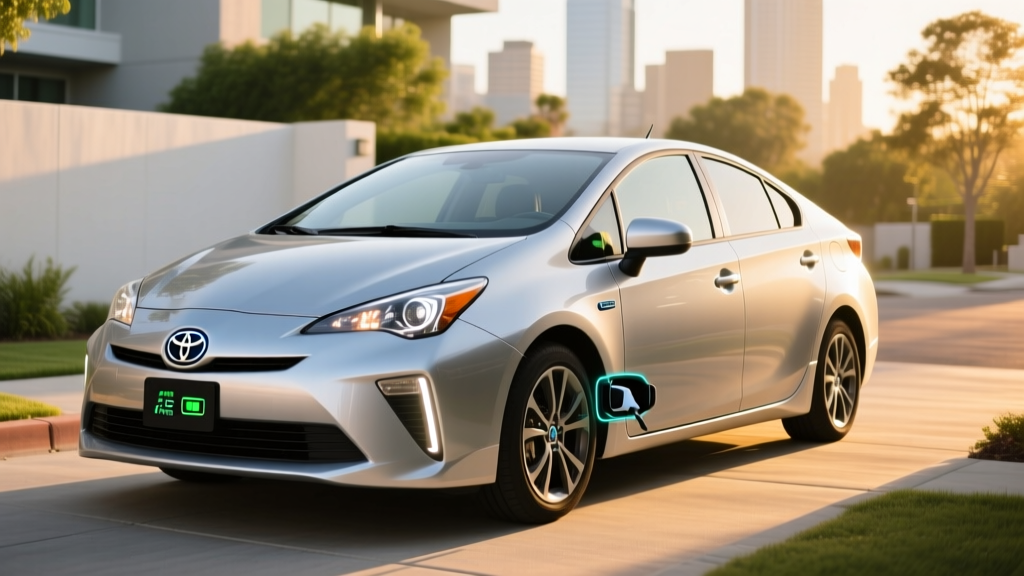
The fourth-generation Toyota Prius debuted for the 2016 model year on the TNGA (Toyota New Global Architecture) platform, bringing a lower center of gravity, independent rear suspension, and a significant efficiency jump over its predecessor. A decade later, the 2016 Prius hybrid remains one of the most cost-effective ways to slash fuel consumption without changing your driving habits or installing home charging equipment. With used examples now trading between $11,000 and $17,000 depending on mileage and condition, it occupies a sweet spot for budget-conscious commuters who want proven hybrid reliability without the depreciation hit of a newer vehicle.
This guide covers exactly what you get: EPA and real-world fuel economy, the hybrid powertrain layout, battery longevity data, ownership costs, and how the 2016 Prius stacks up against plug-in hybrids and full EVs available today.
HEV vs PHEV: Where the 2016 Prius Fits
The 2016 Prius is a conventional hybrid electric vehicle (HEV). It cannot be plugged in. It generates all of its electricity from the gasoline engine and regenerative braking, storing energy in a small battery that assists acceleration and enables brief low-speed electric-only driving. You fuel it at any gas station and drive it exactly like a conventional car — there is no charging cable, no EV-only range to manage, and no range anxiety.
| Attribute | HEV (2016 Prius) | PHEV (e.g., Prius Prime) | BEV (e.g., Tesla Model 3) |
|---|---|---|---|
| Plugs in? | No | Yes (Level 1/2) | Yes (Level 1/2/DC) |
| Electric-only range | ~0.5 mi at low speed | 25–44 mi (model dependent) | 250–360+ mi |
| Gas engine? | Yes (primary) | Yes (backup) | No |
| Battery size | 0.75 kWh (NiMH) / 0.95 kWh (Li-ion) | 8.8–13.6 kWh | 50–82+ kWh |
| Fuel/energy cost per mile | ~$0.07 (gas) | ~$0.03–0.07 (mixed) | ~$0.03–0.05 (electric) |
| Home charging needed? | No | Recommended | Essential |
| Federal tax credit (new) | None | Up to $7,500 (§30D) | Up to $7,500 (§30D) |
Toyota did offer a plug-in variant called the Prius Prime starting for the 2017 model year, but the 2016 model year was strictly HEV. If plug-in capability matters to you, you'll need to look at the 2017+ Prius Prime or a competing PHEV.
Fuel Economy: EPA Ratings and Real-World MPG
The 2016 Prius comes in two efficiency tiers depending on trim. The base Prius Two (and most trims) carries an EPA rating of 54 city / 50 highway / 52 combined MPG. The Prius Two Eco trim, which uses lighter wheels, a lighter lithium-ion battery pack, and low-rolling-resistance tires, achieves 58 city / 53 highway / 56 combined MPG — making it one of the most efficient mass-production gasoline vehicles ever sold in the United States, according to fueleconomy.gov.
| Trim | City MPG | Highway MPG | Combined MPG | Annual Fuel Cost* |
|---|---|---|---|---|
| Two, Three, Four, Four Touring | 54 | 50 | 52 | ~$1,150 |
| Two Eco, Three Touring (Eco equip) | 58 | 53 | 56 | ~$1,050 |
*Based on 15,000 miles/year, 55% city driving, $3.50/gallon regular unleaded. Your costs will vary with local fuel prices and driving patterns.
Real-World MPG: What Owners Actually Report
Hybrids tend to meet or exceed their EPA city ratings because stop-and-go driving maximizes regenerative braking and electric-motor assist. Fuelly.com owner data shows many 2016 Prius drivers averaging 50–55 MPG combined in mixed driving, with city-heavy commuters occasionally hitting 58–62 MPG in warm weather.
However, highway-dominant driving at 75+ MPH typically yields 44–48 MPG — the gasoline engine runs more frequently at sustained high speed, where aerodynamic drag dominates. In cold weather (below 30°F), expect a 5–10% efficiency drop as the engine runs longer to heat the cabin and bring the catalytic converter to operating temperature. A 52-MPG combined sticker might deliver 46–48 MPG in a Minnesota winter.
Powertrain and Performance Specs
The 2016 Prius uses Toyota's Hybrid Synergy Drive system pairing a 1.8-liter four-cylinder Atkinson-cycle gasoline engine with two motor-generators and a planetary gearset that functions as a continuously variable transmission. There are no fixed gears and no traditional friction clutch.
| Engine | 1.8L 4-cyl Atkinson-cycle (2ZR-FXE) |
| Engine horsepower | 95 HP @ 5,200 RPM |
| Engine torque | 105 lb-ft @ 3,600 RPM |
| Electric motor (MG2) | 71 HP / 120 lb-ft |
| Net combined system output | 121 HP |
| Transmission | eCVT (planetary gearset) |
| Drivetrain | Front-wheel drive |
| 0–60 MPH | ~9.8 seconds |
| Battery (standard) | 0.75 kWh Nickel-Metal Hydride (NiMH) |
| Battery (Two Eco trim) | 0.95 kWh Lithium-Ion (Li-ion) |
| Fuel tank capacity | 11.4 gallons |
| Total driving range | ~590–640 miles |
| Curb weight | 3,042–3,117 lbs |
The 121 HP combined output won't win any drag races, but it's adequate for merging and passing. The electric motor's instant torque fills in the low-end gap that makes small-displacement engines feel sluggish off the line. The TNGA platform's double-wishbone rear suspension was a significant handling upgrade over the previous torsion-beam setup, giving this generation noticeably better composure on back roads and over bumps.
Battery Lifespan, Warranty, and Replacement Cost
Toyota Hybrid Battery Warranty
When new, the 2016 Prius hybrid battery was covered for 8 years / 100,000 miles in most states, and 10 years / 150,000 miles in California Air Resources Board (CARB) states (CA, CT, ME, MA, NJ, NY, OR, RI, VT, WA, and others that adopted CARB standards). By 2026, most original 8-year warranties have expired unless the vehicle was certified pre-owned with an extended warranty.
Toyota's hybrid batteries have an outstanding longevity track record. Data aggregated from taxi fleets, high-mileage owner reports, and Toyota dealer service records indicate that the vast majority of Prius NiMH and Li-ion hybrid batteries retain above 80% of their original capacity past 150,000 miles. It is not uncommon to see original batteries functioning well at 200,000+ miles with gradual capacity loss rather than sudden failure.
When replacement is needed, here are the realistic cost tiers as of 2026:
- New OEM Toyota battery: $2,000–$2,500 installed at a dealer
- Remanufactured battery (e.g., Green Bean Battery, Dorman): $1,200–$1,800 installed, often with a lifetime warranty
- Individual module replacement: Independent hybrid specialists can replace failed NiMH modules within the pack for $500–$900, extending the pack's life at a fraction of full replacement cost
The hybrid battery is not the only high-voltage component. The inverter assembly (which converts DC battery power to AC for the motor-generators) can also fail, though this is less common. Replacement runs $1,500–$2,500. When inspecting a used 2016 Prius, a hybrid-system health scan via an OBD-II tool that reads Toyota-specific hybrid data (such as a ScanGauge or Techstream-compatible reader) can reveal battery block voltage imbalance — an early indicator of degradation.
Reliability, Safety, and Ownership Costs
The 2016 Prius benefits from Toyota's reputation for long-term reliability, and this generation specifically earned strong marks. The Insurance Institute for Highway Safety (IIHS) named it a Top Safety Pick when equipped with the optional front crash prevention system. Standard Toyota Safety Sense-P (TSS-P) includes pre-collision braking with pedestrian detection, lane departure alert with steering assist, automatic high beams, and full-speed-range adaptive cruise control — a remarkably complete ADAS suite for a 2016 compact car, and it was standard on every trim.
The National Highway Traffic Safety Administration (NHTSA) gave the 2016 Prius a 5-star overall safety rating.
Annual maintenance costs are low. There's no timing belt (it uses a timing chain), no traditional starter motor, no alternator, and no conventional transmission fluid to change. The regenerative braking system significantly extends brake pad life — many owners report original brake pads lasting 80,000–100,000 miles. Expect annual maintenance costs of $300–$500 for oil changes (0W-20 synthetic, ~$40–$60 every 10,000 miles), cabin air filters, tire rotations, and wiper blades.
Insurance costs are moderate. Because the Prius is inexpensive to repair, has excellent crash-test ratings, and is not a high-theft vehicle, average annual premiums run $1,100–$1,500 depending on your state, age, and driving record.
Tax Credits and Incentives: What Applies in 2026
Here's where the math diverges sharply from a new EV or PHEV purchase. The 2016 Prius, as a conventional HEV, did not qualify for the federal §30D plug-in vehicle tax credit when it was new, and it does not qualify now. The §30D credit under current IRS rules applies only to battery electric vehicles (BEVs) and plug-in hybrid electric vehicles (PHEVs) that meet battery capacity, critical mineral sourcing, MSRP cap, and buyer income requirements.
For a used 2016 Prius purchase, there is also no eligibility for the §25E used clean vehicle credit, which similarly requires a plug-in vehicle (BEV or PHEV) priced under $25,000.
Some states and municipalities offer modest incentives for high-efficiency vehicles or reduced registration fees for hybrids, but these vary widely and change frequently. Check your state energy office or department of revenue for current programs. The lack of federal tax incentives is offset by the 2016 Prius's low used purchase price and minimal ongoing fuel and maintenance costs.
Who Should Buy the 2016 Prius — And Who Shouldn't
Pros
- 52–56 MPG combined EPA — among the best of any vehicle ever sold
- No plug-in charging required — works with any gas station
- Standard TSS-P safety suite (adaptive cruise, AEB, lane assist)
- Proven hybrid battery longevity (200,000+ mi common)
- Low maintenance costs (no timing belt, extended brake life)
- 590+ mile total range between fill-ups
- Affordable used pricing ($11,000–$17,000)
Cons
- Modest 121 HP — slow by modern standards (9.8s 0–60)
- No EV-only driving range to speak of
- Rear seat headroom tight for taller passengers
- Cargo area compromised by battery placement (19.3 cu ft)
- Infotainment feels dated (no Apple CarPlay / Android Auto)
- No federal tax credit eligibility
- Original battery warranty likely expired by 2026
Choose the 2016 Prius Hybrid If:
- You want maximum fuel savings without changing your fueling routine
- You don't have access to home or workplace EV charging
- You drive 15,000+ miles per year and want sub-$0.08/mile fuel cost
- You're buying on a budget under $18,000 and prioritize low running costs
- You want a proven, reliable daily commuter with strong safety features
Look at a PHEV or Full EV Instead If:
- You have home Level 2 charging and want to eliminate most gas purchases
- You want EV-only driving for short commutes (consider a used Prius Prime or RAV4 Prime)
- You want access to the §30D federal tax credit (up to $7,500 on qualifying new BEVs/PHEVs) or the §25E used credit (up to $4,000)
- You want stronger acceleration and a more modern infotainment system
- You drive primarily in stop-and-go city traffic where a BEV's efficiency advantage is largest
Frequently Asked Questions
How many MPG does the 2016 Prius hybrid get?
The 2016 Prius is EPA-rated at 54 city / 50 highway / 52 combined MPG for most trims, and 58 city / 53 highway / 56 combined for the Two Eco trim. Real-world results typically match or slightly exceed EPA city figures in stop-and-go driving, while sustained highway driving at 75+ MPH may yield 44–48 MPG.
Can you plug in the 2016 Prius?
No. The 2016 Prius is a conventional hybrid (HEV) with no plug-in capability. It charges its small battery entirely through the gasoline engine and regenerative braking. If you want a plug-in Prius, look at the 2017 or newer Prius Prime, which offers 25 miles of electric-only range (2017–2022) or 44 miles (2023+).
Is the 2016 Prius hybrid battery reliable, and what does replacement cost?
Yes — Toyota's hybrid batteries are among the most durable in the industry, frequently lasting 150,000–200,000+ miles with gradual capacity loss. A new OEM replacement costs $2,000–$2,500 installed; remanufactured options run $1,200–$1,800 with aftermarket warranties. Individual module repair by a hybrid specialist can cost $500–$900.
Does the 2016 Prius qualify for any tax credit?
No. As a conventional hybrid (HEV), the 2016 Prius does not qualify for the federal §30D new clean vehicle credit or the §25E used clean vehicle credit. These credits are reserved for plug-in vehicles (BEVs and PHEVs). Some states may offer minor incentives for high-efficiency vehicles — check your local regulations.
Hybrid vs PHEV vs EV — which is right for me?
A conventional hybrid like the 2016 Prius is ideal if you lack home charging access, want minimal upfront cost, and drive high annual miles. A PHEV (like the Prius Prime) suits those with home charging who want 25–44 miles of electric commuting but gas flexibility for road trips. A full BEV (like a Tesla Model 3 or Chevrolet Equinox EV) offers the lowest per-mile energy cost and strongest tax incentives but requires reliable charging access and a higher purchase price.
How long will a 2016 Prius last?
With regular maintenance (oil changes every 10,000 miles, coolant service, inverter cooling system inspection), the 2016 Prius powertrain is designed to exceed 200,000 miles. Many examples in taxi and rideshare fleets have surpassed 300,000 miles. The hybrid battery and inverter are the most expensive potential repairs, but both have strong longevity records.
What should I check before buying a used 2016 Prius?
Prioritize a hybrid battery health scan (checking individual module voltage delta — a spread greater than 0.3V under load suggests aging), inverter cooling system inspection (the coolant pump and filter should be clean), brake actuator function (the regenerative-to-friction braking transition should be smooth), and a standard pre-purchase inspection. Verify the TSS-P system functions correctly (camera and radar calibration). Service records showing regular oil changes are a strong positive signal.