Quick Verdict: The 2016 Malibu Hybrid Still Holds Up
The 2016 Chevrolet Malibu Hybrid was a midsize sedan that quietly punched above its weight in fuel efficiency. Rated at 47 MPG combined by the EPA, it outperformed the Toyota Camry Hybrid of the same era and gave the Ford Fusion Hybrid a serious run for its money. Now, in 2026, the Malibu Hybrid exists exclusively on the used market — Chevrolet discontinued the Malibu nameplate after the 2024 model year. But for buyers hunting a fuel-sipping sedan under $15,000, this first-year Voltec-based hybrid remains a compelling proposition — provided you understand the battery and what a decade of use means for the powertrain.
This guide covers the 2016 Malibu Hybrid's real-world fuel economy, battery longevity, ownership costs, and how it stacks up against modern hybrids and plug-in hybrids you can still buy new.
2016 Malibu Hybrid Specs at a Glance
| Specification | 2016 Malibu Hybrid |
|---|---|
| Powertrain Type | Conventional Hybrid (HEV) — no plug |
| Engine | 1.8L 4-cylinder DOHC direct-injection |
| Electric Motors | Two-motor drive unit (derived from 2nd-gen Volt) |
| Combined System Output | 182 horsepower |
| Battery Chemistry / Capacity | Lithium-ion / 1.5 kWh (gross) |
| EPA Fuel Economy (City / Hwy / Combined) | 47 / 46 / 47 MPG |
| 0–60 mph | ~7.5 seconds |
| Transmission | Continuously variable (eCVT, Voltec) |
| Cargo Volume | 11.6 cu ft (trunk, battery reduces space) |
| Original MSRP (base) | ~$28,645 (2016) |
| Typical Used Price (2026) | $9,000–$14,500 depending on mileage/condition |
| Hybrid Battery Warranty (original) | 8 years / 100,000 miles |
Fuel Economy: EPA Numbers vs. Real-World MPG
The EPA rated the 2016 Malibu Hybrid at 47 MPG city, 46 MPG highway, and 47 MPG combined (source: fueleconomy.gov). These were impressive figures for 2016 — the Camry Hybrid LE of that year was rated at 42 combined, and the Fusion Hybrid at 42 combined.
| Model (2016) | City MPG | Highway MPG | Combined MPG |
|---|---|---|---|
| Chevrolet Malibu Hybrid | 47 | 46 | 47 |
| Toyota Camry Hybrid LE | 42 | 38 | 40 |
| Ford Fusion Hybrid | 44 | 41 | 42 |
| Honda Accord Hybrid | 49 | 47 | 48 |
Real-World MPG: What Owners Actually Report
Conventional hybrids like the Malibu Hybrid tend to perform close to — or sometimes slightly above — their EPA city estimates in stop-and-go driving, because regenerative braking recaptures energy that gas-only cars waste as heat. On the highway, however, real-world MPG often dips below the sticker.
Owner-reported data from Fuelly and Edmunds forums clusters around 40–44 MPG combined in mixed driving, with city-dominant commutes sometimes hitting 46–48 MPG and highway-heavy road trips dropping to 38–40 MPG. Cold weather (below 35°F) can knock 3–5 MPG off those figures as the engine runs more frequently to provide cabin heat and maintain battery temperature.
How the Voltec Powertrain Works (and Why It Matters)
The 2016 Malibu Hybrid borrowed heavily from Chevrolet's second-generation Volt architecture. It uses a 1.8-liter four-cylinder engine paired with a two-motor drive unit that can operate in several modes: pure electric at low speeds, blended engine-motor assist, engine-only cruising, and regenerative braking. The system automatically selects the most efficient mode — the driver never needs to intervene.
This is a conventional hybrid (HEV), not a plug-in hybrid. The 1.5 kWh lithium-ion battery charges exclusively through regenerative braking and the gasoline engine. There is no plug, no charging port, and no electric-only driving range beyond about 1–2 miles at very low speeds.
HEV vs. PHEV: Know the Difference
| Feature | HEV (Malibu Hybrid) | PHEV (e.g., Prius Prime) |
|---|---|---|
| Plugs in? | No | Yes |
| Electric-only range | ~1 mile (low speed) | 25–45 miles typical |
| Battery size | 1.5 kWh | 13–18 kWh |
| Federal tax credit | None | Up to $7,500 (§30D, if eligible) |
| Fuel needed? | Yes, always | Yes, for trips beyond EV range |
Battery Longevity, Warranty, and Replacement Cost
Hybrid battery anxiety is the single biggest concern for used hybrid buyers. Here's what you need to know about the 2016 Malibu Hybrid's pack.
How Long Does the Battery Actually Last?
The 1.5 kWh lithium-ion pack in the Malibu Hybrid is relatively small and operates within a conservative state-of-charge window (the car never fully charges or fully depletes it). This buffer strategy significantly reduces degradation. Based on data from Volt and Malibu Hybrid owner communities, most packs retain 85–92% of original capacity after 100,000 miles and 8–10 years of use.
Catastrophic battery failure is rare. More commonly, owners may see a gradual 1–3 MPG decline over 100,000+ miles as the battery's ability to accept and deliver charge diminishes slightly. The car remains fully drivable.
Battery Replacement Cost
If the hybrid battery does fail outside warranty, replacement options in 2026 include:
- New OEM battery (GM dealer): $3,000–$4,200 installed
- Refurbished/remanufactured battery: $1,500–$2,500 installed (from hybrid specialists like GreenTech Automotive or Bumble Bee Batteries)
- Used/salvage battery: $800–$1,500 plus installation (riskier, limited remaining life)
For context, the Malibu Hybrid's small 1.5 kWh pack is considerably cheaper to replace than the larger packs in PHEVs (13–18 kWh) or full BEVs (60–100 kWh).
Who Should Buy the 2016 Malibu Hybrid in 2026?
Pros
- 47 MPG EPA combined — still competitive with 2026 hybrids
- Smooth, quiet Voltec two-motor system (no traditional CVV drone)
- Spacious midsize cabin with comfortable ride quality
- Low used pricing ($9K–$14.5K) makes it accessible
- Inexpensive battery replacement vs. PHEV/BEV
- No charging infrastructure needed — just fill up with gas
Cons
- Discontinued model — no new parts pipeline from GM long-term
- Trunk space reduced to 11.6 cu ft (battery intrusion)
- Hybrid battery warranty has expired on most examples
- No plug-in capability — cannot drive on electricity alone meaningfully
- No federal tax credit available (used or new)
- Infotainment system feels dated vs. 2026 competitors
Tax Credits and Incentives: What Applies in 2026?
The 2016 Malibu Hybrid does not qualify for any federal EV tax credit. Under IRS §30D rules, only plug-in electric vehicles (PHEVs and BEVs) with sufficient battery capacity are eligible. Conventional hybrids like the Malibu Hybrid have never qualified for the federal credit.
For the used clean vehicle credit (up to $4,000 or 30% of sale price, whichever is less under IRC §25E), the vehicle must be a qualified plug-in electric or fuel-cell vehicle. The Malibu Hybrid, as an HEV, is not eligible for this credit either.
Some states offer their own incentives for fuel-efficient vehicles, but most have sunset hybrid-specific rebates in favor of EV and PHEV programs. Check your state's energy office or the AFDC state law database for any remaining programs.
2016 Malibu Hybrid vs. What You Can Buy New in 2026
If you're weighing a used 2016 Malibu Hybrid against a new 2026 hybrid, here's a direct comparison with current models:
| Attribute | 2016 Malibu Hybrid (Used) | 2026 Toyota Camry Hybrid (New) | 2026 Hyundai Sonata Hybrid (New) |
|---|---|---|---|
| Combined MPG (EPA) | 47 | 44–52 (depending on trim) | 44–47 |
| Combined HP | 182 | 225 | 192 |
| Starting Price | ~$10,000–$14,500 | ~$29,995 | ~$30,250 |
| Battery Warranty Remaining | Expired | 10 yr / 150,000 mi | 10 yr / 100,000 mi |
| Modern ADAS | Lane-keep, FCA (basic) | TSS 3.0 (full suite) | HDA 2, full suite |
| Tax Credit Eligible | No | No | No |
The new hybrids offer more power, longer warranties, and modern driver-assistance suites — but at 2–3× the price. The 2016 Malibu Hybrid's fuel economy remains genuinely competitive even a decade later, which is a testament to the efficiency of the Voltec system.
Decision Framework: Is the 2016 Malibu Hybrid Right for You?
Choose the 2016 Malibu Hybrid If:
- You need maximum MPG on a budget under $15,000
- Your commute is city-heavy (where hybrids shine brightest)
- You have no access to home or workplace charging (rules out PHEV/EV)
- You want a midsize sedan with a comfortable ride and don't need a massive trunk
- You're comfortable buying a 10-year-old vehicle and budgeting for potential battery replacement
Consider a PHEV or Full EV Instead If:
- You have home Level 2 charging and a commute under 30 miles (a PHEV like the 2026 Prius Prime could run purely on electricity daily)
- You want federal tax credits — the §30D credit can knock up to $7,500 off a qualifying new PHEV/BEV (subject to MSRP caps, income limits, and battery-sourcing requirements per IRS guidelines)
- You want a full factory warranty and the latest safety tech
- You drive over 20,000 miles per year and want to minimize fuel spend long-term (a BEV at $0.04–$0.06/mile electricity cost beats $0.08–$0.10/mile hybrid gas cost)
Frequently Asked Questions
How many MPG does the 2016 Malibu Hybrid get?
The EPA rates it at 47 city / 46 highway / 47 combined MPG. Real-world mixed driving typically yields 40–44 MPG, with city-heavy routes sometimes exceeding the EPA estimate and cold-weather highway driving dropping to the high 30s.
Does the 2016 Malibu Hybrid need to be plugged in?
No. It is a conventional hybrid (HEV). The battery charges through regenerative braking and the gasoline engine. There is no plug or charging port.
How far can it drive on electric power alone?
Essentially zero meaningful electric-only range. At very low speeds (parking lots, creeping traffic), the car may operate on battery for brief stretches — roughly 1 mile at most. This is not a plug-in hybrid and was never designed for electric-only commuting.
Is the 2016 Malibu Hybrid reliable?
The Voltec-derived two-motor system has proven durable. The 1.8L engine is naturally aspirated and straightforward. The main reliability variable at this age is the hybrid battery, which is now outside its 8-year/100,000-mile warranty. Most packs last 150,000+ miles, but budget $1,500–$4,000 as a contingency for refurbishment or replacement.
What does a replacement hybrid battery cost?
New OEM replacement runs $3,000–$4,200 installed at a GM dealer. Refurbished packs from hybrid specialists cost $1,500–$2,500 installed. Used salvage packs are $800–$1,500 but carry unknown remaining life.
Does the 2016 Malibu Hybrid qualify for any tax credit?
No. Federal tax credits under §30D (new clean vehicles) and §25E (used clean vehicles) apply only to plug-in electric vehicles and fuel-cell vehicles. Conventional hybrids are not eligible for either credit.
Hybrid vs. PHEV vs. EV — which is right for me?
HEV (like the Malibu Hybrid): Best for buyers without home charging who want better MPG with zero behavior change. Just drive and fill up with gas.
PHEV (like the Prius Prime): Best for buyers with home charging and short commutes who want electric daily driving but gas flexibility for road trips.
BEV (like the Tesla Model 3 or Hyundai Ioniq 6): Best for buyers with reliable charging access who want the lowest per-mile fuel cost, zero tailpipe emissions, and minimal maintenance.
How does the trunk space compare to the gas Malibu?
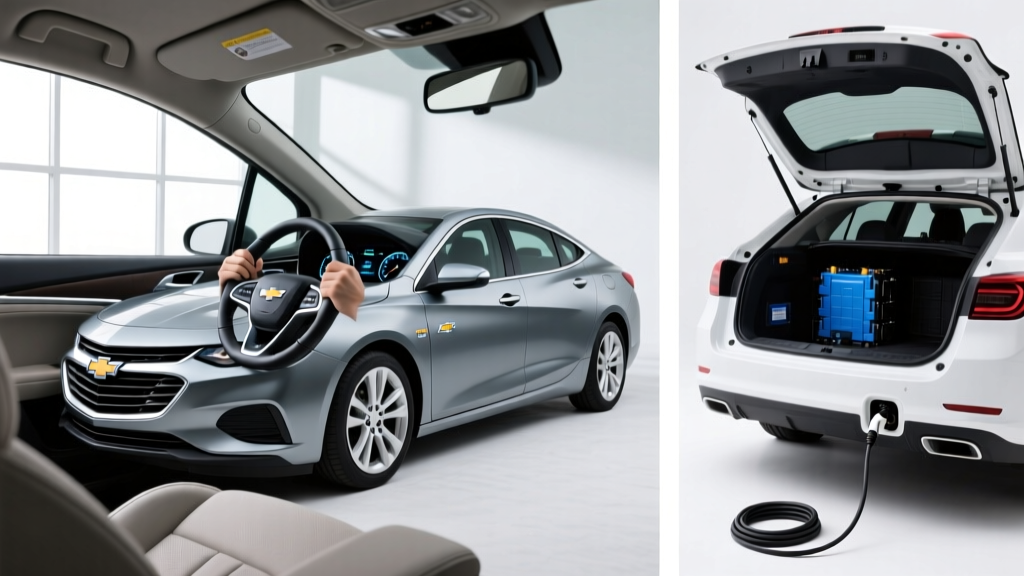
The hybrid battery sits behind the rear seats, reducing trunk volume to 11.6 cubic feet compared to 15.8 cu ft in the gas-only 2016 Malibu. That's a meaningful loss — roughly equivalent to losing space for one large suitcase.
Sources: EPA Fuel Economy (fueleconomy.gov), IRS Clean Vehicle Credits (irs.gov), Alternative Fuels Data Center (afdc.energy.gov). Used pricing reflects 2026 market estimates from Kelley Blue Book and Edmunds. Tax credit rules are current as of 2026 and subject to change — consult a tax professional for your specific eligibility.