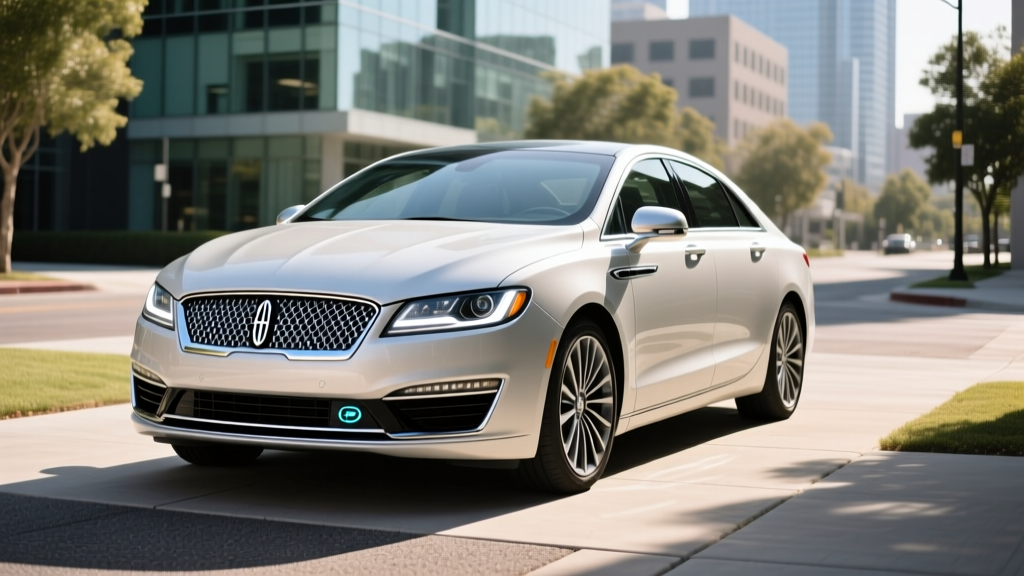
The 2016 Lincoln MKZ Hybrid FWD occupies a specific niche in the used-car market: a luxury midsize sedan that delivers genuine hybrid fuel economy without requiring a plug, a charging routine, or any change in driving habits. Built on Ford's CD4 platform and sharing its powertrain with the Ford Fusion Hybrid, the MKZ Hybrid wraps proven hybrid tech in Lincoln's quiet, well-appointed cabin. For 2026 buyers evaluating used hybrids, this model remains relevant — especially given its low acquisition cost and strong real-world city MPG.
This guide covers everything a prospective buyer needs: exact EPA and real-world fuel economy, powertrain specifications, battery longevity data, replacement cost expectations, and how the MKZ Hybrid stacks up against plug-in hybrids and full EVs in today's market.
2016 Lincoln MKZ Hybrid FWD: Key Specifications
| Specification | 2016 Lincoln MKZ Hybrid FWD |
|---|---|
| Powertrain Type | Conventional Hybrid (HEV) — no plug |
| Engine | 2.0L Atkinson-cycle I4 |
| Engine Horsepower | 141 hp @ 6,000 rpm |
| Electric Motor Output | 88 kW (118 hp) |
| Combined System Horsepower | 188 hp |
| Transmission | eCVT (planetary gearset, not belt-driven) |
| Drive Configuration | Front-Wheel Drive (FWD) |
| Hybrid Battery Capacity | 1.4 kWh (lithium-ion, 270V nominal) |
| Battery Location | Behind rear seats (trunk intrusion) |
| EPA MPG (City / Hwy / Combined) | 40 / 39 / 40 MPG |
| Fuel Tank Capacity | 16.5 gallons |
| Total Driving Range | ~660 miles |
| 0–60 mph | ~8.3 seconds |
| Cargo Volume | 11.1 cu ft (reduced by battery) |
| Original MSRP (Base) | $39,560 |
| Typical Used Price (2026) | $9,000–$15,000 |
Fuel Economy: EPA Ratings vs. Real-World MPG
The EPA rates the 2016 Lincoln MKZ Hybrid FWD at 40 MPG city, 39 MPG highway, and 40 MPG combined, according to fueleconomy.gov. These are strong numbers for a luxury sedan of this era, and they reflect how Ford's hybrid system optimizes for urban driving where regenerative braking and electric-only low-speed operation yield the biggest gains.
| Driving Condition | EPA Rating | Real-World Expectation |
|---|---|---|
| City | 40 MPG | 41–45 MPG (hybrids often exceed EPA in stop-and-go) |
| Highway | 39 MPG | 35–38 MPG (sustained 70+ mph reduces regen benefit) |
| Combined | 40 MPG | 37–42 MPG depending on driving mix |
| Cold Weather (below 32°F) | Not rated | 33–37 MPG (engine runs more for cabin heat) |
The real-world pattern for this powertrain is consistent with other Toyota- and Ford-derived hybrid systems: city driving often yields higher numbers than the EPA sticker because frequent stops maximize regenerative braking. Highway driving, especially at 75–80 mph, will drop efficiency to the mid-30s. In cold climates, expect a 10–15% reduction because the gasoline engine must run more frequently to provide cabin heat — the MKZ Hybrid does not have a heat pump.
With a 16.5-gallon fuel tank and real-world combined economy around 38–40 MPG, owners can expect roughly 600–660 miles between fill-ups. That range figure matters for road-trip planning and compares favorably to many EVs on the used market.
Conventional Hybrid (HEV) vs. Plug-In Hybrid (PHEV): What the MKZ Is
The 2016 Lincoln MKZ Hybrid is a conventional hybrid electric vehicle (HEV). It cannot be plugged in. It has no meaningful electric-only range. It charges its own small battery through regenerative braking and engine-driven generation. This is fundamentally different from a plug-in hybrid (PHEV) like the Ford Fusion Energi or a full battery-electric vehicle (BEV).
| Feature | 2016 MKZ Hybrid (HEV) | Typical PHEV (e.g., Fusion Energi) | Full EV (BEV) |
|---|---|---|---|
| Plug-in Required? | No | Yes (for EV range) | Yes |
| Electric-Only Range | ~1 mile at low speed | 20–30 miles | 200–350+ miles |
| Battery Size | 1.4 kWh | 7.6–9 kWh | 60–100+ kWh |
| Gas Engine? | Yes (always available) | Yes (always available) | No |
| Home Charging Needed? | No | Recommended (Level 2) | Essential |
| Federal Tax Credit (New) | None | Up to $3,750 (varies) | Up to $7,500 (§30D rules) |
| Best For | No home charging access | Short commutes + road trips | Home charging + daily driving |
The MKZ Hybrid's 1.4 kWh lithium-ion battery is far too small to provide sustained electric-only driving. The electric motor assists the gasoline engine during acceleration and can propel the car at very low speeds (parking lots, traffic creep) for brief distances, but the engine engages almost immediately under normal acceleration. This is by design — the HEV system's goal is to reduce fuel consumption by optimizing engine load, not to eliminate gasoline use.
Powertrain Deep Dive: 2.0L Atkinson-Cycle + eCVT
The 2016 MKZ Hybrid pairs a 2.0-liter Atkinson-cycle four-cylinder engine (141 hp, 129 lb-ft torque) with an 88 kW permanent-magnet electric motor integrated into Ford's eCVT transaxle. The combined system output is 188 horsepower. This is the second-generation Ford hybrid powertrain, refined significantly from the 2010–2012 generation.
The "eCVT" designation is important to understand. Unlike a traditional belt-and-pulley CVT (which some drivers find rubbery), Ford's eCVT uses a planetary gearset that blends engine and motor power through mechanical coupling. There are no belts, no cones, and no fixed gear ratios. The result is smooth, linear acceleration with the engine RPM managed independently of vehicle speed — similar in principle to Toyota's Hybrid Synergy Drive.
Acceleration is adequate but not quick: 0–60 mph takes approximately 8.3 seconds. The MKZ Hybrid prioritizes efficiency over performance, and the electric motor's instant torque helps mask the Atkinson-cycle engine's relatively low output at low RPM. Highway merging and passing are competent, but this is not a performance sedan.
Battery Longevity, Warranty, and Replacement Cost
Original Hybrid Battery Warranty: 8 years / 80,000 miles (federal emissions mandate) or 10 years / 100,000 miles in CARB states (California, New York, Massachusetts, and others adopting California emissions standards). Coverage applies to capacity loss that causes the battery to fail functional diagnostics.
For a 2016 model in 2026: The original 8-year/80,000-mile warranty has expired for most vehicles. The 10-year/100,000-mile CARB-state warranty may still apply to low-mileage examples registered in those states — verify with a Lincoln dealer using the VIN.
Ford's second-generation hybrid batteries have proven durable in fleet and owner data. The 1.4 kWh lithium-ion pack in the MKZ Hybrid is modest in size and rarely stressed to extreme states of charge, which promotes longevity. Many Ford Fusion Hybrids and MKZ Hybrids from the 2013–2016 era have reached 150,000–200,000 miles on the original battery without requiring replacement.
However, a 2016 model is now a decade old, and lithium-ion cells degrade with time regardless of mileage. Expect some capacity loss — typically manifesting as slightly reduced fuel economy and more frequent engine engagement — but not catastrophic failure in most cases.
Battery replacement cost (2026 estimates):
- New OEM battery from Ford/Lincoln: $2,500–$3,500 (parts) + $500–$800 (labor) = $3,000–$4,300 total
- Refurbished/remanufactured battery: $1,200–$2,000 (parts) + $500–$800 (labor) = $1,700–$2,800 total
- Individual cell/module replacement (independent hybrid specialist): $800–$1,500
The module-replacement option is worth investigating. Hybrid battery shops can identify and replace only the degraded cells within the pack, extending battery life at a fraction of full-pack cost. This is a well-established service for Ford and Toyota hybrids.
Is the 2016 MKZ Hybrid Reliable?
The 2016 MKZ Hybrid benefits from Ford's extensive hybrid experience — the company had been building Fusion Hybrids since 2010 by the time this model year arrived. The powertrain is shared with the Fusion Hybrid, which has strong long-term reliability data. The eCVT transaxle, in particular, has proven more durable than conventional automatic transmissions because it has fewer wear components (no clutch packs, no torque converter, no friction bands).
Common issues reported by owners and tracked by NHTSA are largely unrelated to the hybrid system:
- Infotainment glitches: MyLincoln Touch / SYNC can be slow or unresponsive. Software updates help but don't fully resolve the issue.
- Power steering assist: Some Ford CD4-platform vehicles experienced intermittent electric power steering faults. Check for open recalls on the specific VIN.
- 12V auxiliary battery: Like all hybrids, the MKZ relies on a conventional 12V battery to boot the vehicle computers. A dead 12V battery will prevent the car from starting even though the hybrid battery is fully charged. Replace every 4–5 years proactively.
- Trunk space: The hybrid battery intrudes into the trunk, reducing cargo volume to 11.1 cu ft (vs. 15.4 cu ft in the non-hybrid MKZ). This is a practical limitation, not a reliability concern.
The hybrid-specific components — battery, inverter, eCVT, electric motor — have not been common failure points. This is a meaningful advantage for used buyers: the complexity that scares some buyers away from used hybrids is actually where the engineering is most robust.
Pricing, Tax Credits, and Used-Buyer Economics
The 2016 Lincoln MKZ Hybrid originally started at $39,560 MSRP, with well-equipped Reserve and Black Label trims reaching $50,000+. In the 2026 used market, expect to pay:
- $9,000–$11,000: Higher mileage (100,000+ miles), average condition
- $11,000–$13,000: Moderate mileage (60,000–100,000 miles), good condition
- $13,000–$15,000: Lower mileage (under 60,000 miles), excellent condition, documented service history
Federal tax credit: As a conventional hybrid (HEV), the MKZ Hybrid does not qualify for the IRS §30D Clean Vehicle Credit. That credit applies only to plug-in electric vehicles (PHEVs and BEVs) meeting specific battery sourcing, MSRP, and buyer income requirements. There is no federal tax incentive for purchasing a used conventional hybrid.
State incentives: Some states offer modest incentives for used hybrid purchases or registration, but these vary widely and change frequently. Check your state's DMV or energy office for current programs.
Total cost of ownership advantage: At 40 MPG combined and $3.25/gallon gas (2026 national average), the MKZ Hybrid costs approximately $0.081 per mile in fuel. A comparable non-hybrid luxury sedan getting 25 MPG combined would cost $0.130 per mile — a difference of roughly $490 per year at 10,000 miles driven annually. Over five years of ownership, that's approximately $2,450 in fuel savings, which partially offsets the used purchase price and any potential battery service.
Hybrid vs. PHEV vs. Full EV: Which Should You Choose?
Choose the 2016 MKZ Hybrid (HEV) if:
- You cannot install a home charger (apartment, street parking, no garage)
- You want hybrid efficiency without changing any habits
- Your budget is under $15,000 for a luxury sedan
- You take regular long road trips and don't want to plan around charging
- You want low maintenance costs and proven reliability
Choose a used PHEV (e.g., Fusion Energi, BMW 330e) if:
- You have home Level 2 charging and a commute under 25 miles
- You want electric-only daily driving but gas flexibility for road trips
- You can budget $15,000–$25,000 for a used PHEV
Choose a used full EV (e.g., Chevy Bolt, Nissan Leaf, Tesla Model 3) if:
- You have reliable home charging
- Your daily driving is under 200 miles and you can plan longer trips around DC fast charging
- You want the lowest per-mile energy cost (~$0.04/mile on home electricity)
- You want to eliminate oil changes and engine maintenance entirely
The MKZ Hybrid's strongest argument in 2026 is simplicity. It requires no charging infrastructure, no range planning, and no behavioral change. You fuel it at any gas station and drive it like any other car — it just uses significantly less fuel. For buyers who lack home charging access or who regularly drive in areas with sparse public charging infrastructure, a conventional hybrid remains the most practical path to lower fuel costs.
Pros
- 40 MPG combined EPA — strong for a luxury sedan
- No plug-in charging required — works anywhere gas is sold
- 660-mile total range eliminates range anxiety
- Proven, reliable hybrid powertrain with low failure rates
- Quiet, comfortable cabin with Lincoln luxury appointments
- Low used acquisition cost ($9K–$15K)
- eCVT is more durable than conventional automatics
Cons
- Trunk reduced to 11.1 cu ft (battery intrusion)
- No electric-only driving capability
- No federal tax credit eligibility
- MyLincoln Touch infotainment is dated and sluggish
- 8.3-second 0–60 is leisurely for a luxury sedan
- Original hybrid battery warranty has likely expired
- FWD only — no AWD option for snow-belt buyers
Frequently Asked Questions
How many MPG does the 2016 Lincoln MKZ Hybrid FWD get?
The EPA rates it at 40 MPG city, 39 MPG highway, and 40 MPG combined. In real-world driving, expect 41–45 MPG in city traffic (where regen braking excels), 35–38 MPG at sustained highway speeds, and 33–37 MPG in cold weather. Overall real-world combined typically lands between 37–42 MPG depending on your driving mix.
Does the MKZ Hybrid need to be plugged in?
No. The 2016 MKZ Hybrid is a conventional hybrid (HEV), not a plug-in hybrid. It charges its 1.4 kWh battery through regenerative braking and engine-driven generation. There is no charging port and no electric-only driving range of practical significance. You simply fill it with gasoline.
Is the 2016 MKZ Hybrid reliable, and what does battery replacement cost?
The hybrid powertrain is one of the most reliable components in the vehicle. Ford's second-generation hybrid system has strong longevity data, with many examples reaching 150,000–200,000 miles on the original battery. If replacement is needed, expect $3,000–$4,300 for a new OEM battery installed, $1,700–$2,800 for a refurbished pack, or $800–$1,500 for individual module replacement at a hybrid specialist.
Does the 2016 MKZ Hybrid qualify for any tax credit?
No. The IRS §30D Clean Vehicle Credit applies only to plug-in electric vehicles (PHEVs and BEVs) that meet battery-sourcing, MSRP-cap, and buyer-income requirements. Conventional hybrids like the MKZ Hybrid are not eligible for any federal purchase incentive. Check your state's energy office for any local programs.
How does the MKZ Hybrid compare to a full EV for daily driving?
The MKZ Hybrid costs approximately $0.08/mile in fuel vs. ~$0.04/mile for a full EV charging at home. However, the EV requires home charging infrastructure ($500–$2,000 for Level 2 installation) and route planning for trips exceeding the EV's range. The MKZ Hybrid works with zero infrastructure investment and offers 660 miles of range. If you lack home charging or regularly drive long distances in charging-sparse areas, the hybrid is the more practical choice.
What should I check before buying a used 2016 MKZ Hybrid?
Request a pre-purchase inspection that includes a hybrid battery health check (many dealers and hybrid specialists can read the battery's state-of-health percentage via OBD-II). Verify open recalls on NHTSA.gov using the VIN. Check the 12V battery age (replace if over 4 years old). Test all SYNC/MyLincoln Touch functions. And confirm whether the vehicle was originally registered in a CARB state, which may extend the hybrid battery warranty to 10 years/100,000 miles.