Quick Verdict: The 2016 Lexus ES 300h at a Glance
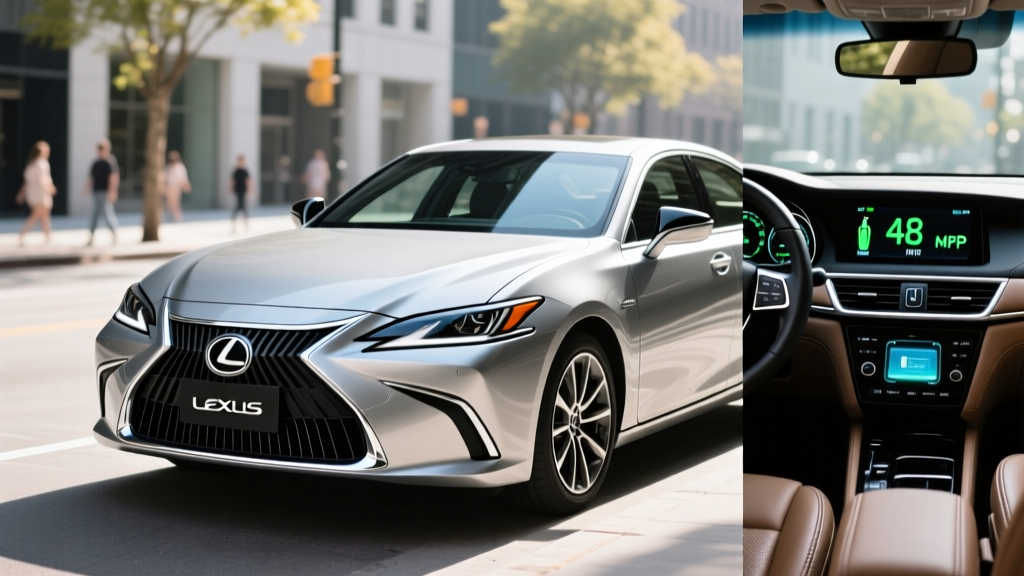
The 2016 Lexus ES 300h is a conventional hybrid (HEV) luxury sedan that pairs a 2.5-liter four-cylinder engine with an electric motor for an EPA-rated 40 MPG combined. It does not plug in — the battery recharges through regenerative braking and the gasoline engine. Nearly a decade after its debut, the ES 300h remains one of the most compelling used hybrid sedans on the market, offering Lexus-grade reliability, a refined ride, and fuel economy that still rivals newer competitors.
If you're shopping the used market in 2026, expect to find well-maintained examples between $14,000 and $22,000 depending on mileage and condition. The hybrid battery is the single biggest ownership question — and one we'll address in detail below with real degradation data and replacement costs.
| Spec | Value |
|---|---|
| Powertrain | 2.5L I4 Atkinson-cycle + electric motor (HEV) |
| Combined Horsepower | 200 hp |
| Engine Output | 156 hp / 156 lb-ft torque |
| Electric Motor Output | 105 kW (141 hp) |
| Transmission | eCVT (planetary gearset) |
| Hybrid Battery | 1.6 kWh, Nickel-Metal Hydride (NiMH) |
| EPA Fuel Economy | 40 city / 39 highway / 40 combined MPG |
| Fuel Tank | 17.2 gallons |
| Total Range | ~688 miles |
| 0–60 mph | ~7.8 seconds |
| Drivetrain | Front-wheel drive |
| Plug-In Charging | No — self-charging HEV |
HEV vs. PHEV: What the 2016 ES 300h Actually Is
Before going further, it's critical to understand what you're buying. The 2016 Lexus ES 300h is a conventional hybrid (HEV), not a plug-in hybrid (PHEV). Here's the difference:
| Feature | HEV (ES 300h) | PHEV (e.g., Prius Prime) |
|---|---|---|
| Plugs into an outlet? | No | Yes |
| Electric-only driving | Very short distances at low speed (<1 mi) | 25–44 miles typical |
| Battery size | 1.6 kWh (NiMH) | 8–18 kWh (Li-ion) |
| Charging method | Regen braking + engine | Wall outlet / charger + regen |
| Federal tax credit | Not eligible | Up to $7,500 (new, subject to §30D rules) |
| Gas required? | Yes, always | Yes, after EV range depletes |
The ES 300h's small 1.6 kWh NiMH battery cannot propel the car on electricity alone for meaningful distances. The electric motor assists the gasoline engine during acceleration, enables engine-off coasting at low speeds, and captures energy during braking. You will never need to find a charger — you simply fill up at any gas station.
Fuel Economy: EPA Ratings and Real-World MPG
| Driving Cycle | EPA Rating |
|---|---|
| City | 40 MPG |
| Highway | 39 MPG |
| Combined | 40 MPG |
Source: EPA Fuel Economy Guide — 2016 Lexus ES 300h
Real-World MPG: What Owners Actually Report
Hybrids like the ES 300h tend to perform close to — and sometimes exceed — their EPA city rating in stop-and-go driving because regenerative braking is most effective at lower speeds. On the highway, where the gasoline engine does most of the work, expect results closer to the 39 MPG highway figure or slightly below.
Based on aggregated owner data from Fuelly and hybrid-community forums, most 2016 ES 300h drivers report 38–43 MPG combined in mixed driving. Drivers who do predominantly city commuting frequently see 42–45 MPG. Highway-heavy commutes at 75+ mph tend to drop to 35–37 MPG.
Cold weather reduces fuel economy by roughly 5–10% due to increased engine idling for cabin heat and reduced battery efficiency. In sub-freezing conditions, expect combined MPG in the mid-to-high 30s.
Powertrain and Driving Experience
The ES 300h uses Toyota's proven Hybrid Synergy Drive system, pairing a 2.5-liter Atkinson-cycle four-cylinder engine (156 hp, 156 lb-ft) with a 105 kW (141 hp) electric motor. Combined system output is 200 horsepower. Power flows through an electronically controlled continuously variable transmission (eCVT), which uses a planetary gearset rather than a belt-and-pulley design — a key reliability advantage.
The 0–60 mph time of approximately 7.8 seconds is adequate for a luxury sedan focused on comfort, not sportiness. The electric motor's instant torque gives the ES 300h a responsive feel from a stoplight, but passing power at highway speeds is merely competent.
Three driving modes are available:
- EV Mode: Forces electric-only operation at very low speeds (under ~25 mph, short distances). Useful for creeping through a parking garage.
- Eco Mode: Softens throttle response and reduces climate-control power draw to maximize fuel economy.
- Sport Mode: Sharpens throttle mapping and increases steering weight for a more engaged feel.
The ride quality is the ES 300h's strongest dynamic attribute. It isolates occupants from road imperfections with a compliant, well-damped suspension that prioritizes comfort over cornering agility. Cabin noise levels are low, with the engine only becoming audible under hard acceleration.
Hybrid Battery Health: Lifespan, Warranty, and Replacement Cost
Hybrid Battery Warranty (Original)
Coverage: 8 years / 100,000 miles (10 years / 150,000 miles in California and states adopting California emissions standards: CT, ME, MD, MA, NJ, NY, OR, RI, VT, WA)
What's covered: Hybrid battery pack, hybrid control module, and related hybrid-system components
Threshold: Lexus warrants the battery against defects and excessive capacity loss. There is no published State of Health (SoH) percentage threshold — coverage is at the dealer's diagnostic discretion.
Real-World Battery Longevity
The 2016 ES 300h's 1.6 kWh NiMH battery is one of the most durable components in the vehicle. Toyota/Lexus hybrid batteries have an outstanding track record: many reach 150,000–200,000+ miles without requiring replacement. The NiMH chemistry is less energy-dense than modern lithium-ion but is remarkably tolerant of the shallow charge-discharge cycles that hybrids use.
The hybrid system's battery management never allows the pack to fully charge or fully deplete — it operates in a narrow State of Charge window (roughly 40–80%), which dramatically reduces stress on the cells. This is fundamentally different from a full EV, where deeper cycling accelerates degradation.
Battery Replacement Cost in 2026
If the hybrid battery does fail outside warranty, here's what to expect:
- New OEM battery from Lexus: $3,000–$4,500 installed (parts + labor)
- Refurbished/remanufactured battery: $1,500–$2,500 installed
- Individual cell module replacement: $500–$1,200 at a hybrid specialist (only failed modules are replaced)
For a used 2016 ES 300h with 100,000–130,000 miles, the battery is statistically likely to have significant remaining life. A pre-purchase hybrid battery health check at a Lexus dealer or qualified hybrid shop (typically $100–$150) is strongly recommended before purchase.
Pricing, Tax Credits, and Ownership Economics
Used Market Pricing (2026)
The 2016 Lexus ES 300h originally carried an MSRP starting at approximately $41,020 (base) to around $50,000 fully loaded. In the 2026 used market:
- 80,000–100,000 miles: $18,000–$22,000
- 100,000–130,000 miles: $15,000–$18,000
- 130,000+ miles: $12,000–$15,000
Prices vary by region, condition, service history, and trim/options. The ES 300h holds value well relative to non-hybrid luxury sedans due to strong demand for fuel-efficient, reliable used vehicles.
Federal Tax Credit Eligibility
The 2016 Lexus ES 300h does not qualify for the federal §30D Clean Vehicle Credit. This credit applies only to plug-in electric vehicles (BEVs and PHEVs) with a minimum battery capacity of 7 kWh. The ES 300h's 1.6 kWh NiMH pack falls far below this threshold. No federal tax incentive is available for purchasing this vehicle, whether new or used.
Some states may offer minor incentives for used hybrid purchases, but these vary widely and change frequently. Check your state's energy or environmental agency website for current programs.
Cost to Fuel: Hybrid vs. Gasoline Sedan
At a national average of $3.25/gallon (regular unleaded, 2026 estimate) and 12,000 miles driven annually:
- ES 300h (40 MPG): ~$975/year in fuel
- Comparable gas-only luxury sedan (25 MPG combined): ~$1,560/year in fuel
- Annual fuel savings: ~$585
- 5-year fuel savings: ~$2,925
The ES 300h requires regular 87-octane gasoline — no premium fuel needed — which keeps operating costs low for a luxury-badged vehicle.
Reliability, Safety, and Long-Term Ownership
The 2016 ES 300h benefits from Lexus's industry-leading reliability reputation. The Toyota Hybrid Synergy Drive system has been in continuous production since 1997, and the eCVT planetary gearset has no belts, clutches, or bands to wear out. There is no conventional automatic transmission fluid to change on a schedule — the transaxle fluid is a lifetime fill under normal conditions.
Common maintenance items are straightforward:
- Engine oil changes every 10,000 miles (0W-20 synthetic)
- Brake pads last 80,000–100,000+ miles thanks to regenerative braking handling most deceleration
- Inverter coolant replacement at 100,000 miles (per Lexus maintenance schedule)
- Engine coolant at 100,000 miles
Safety Ratings
The 2016 Lexus ES earned strong safety scores. The IIHS rated the ES as a Top Safety Pick, with Good ratings in all crashworthiness tests. Standard safety equipment includes 10 airbags, Stability Control, and the Lexus Safety System+ suite (pre-collision system, lane departure alert, automatic high beams, and dynamic radar cruise control) on most trims.
Who Should Buy the 2016 Lexus ES 300h — and Who Shouldn't
Pros
- 40 MPG combined — outstanding for a luxury sedan
- Proven, bulletproof hybrid powertrain
- Exceptionally quiet, comfortable ride
- No charging infrastructure needed
- Low maintenance costs (long brake life, no transmission service)
- Runs on regular 87-octane fuel
- Strong resale value
Cons
- Modest 200 hp — not a performance sedan
- NiMH battery limits electric-only assist to low speeds
- Infotainment system (Remote Touch Interface) is dated and frustrating
- No Apple CarPlay or Android Auto (2016 model year)
- Rear seat does not fold down (limits cargo flexibility)
- Hybrid battery replacement is a $1,500–$4,500 risk out of warranty
Choose the 2016 ES 300h If:
- You want luxury-sedan comfort with 40 MPG and zero charging hassle
- Your commute is a mix of city and highway driving
- You prioritize reliability and low cost of ownership over performance
- You don't have access to home or workplace EV charging
- You want a proven vehicle with abundant parts and service availability
Consider a PHEV or Full EV Instead If:
- You have home charging access and want to eliminate most gasoline use (consider a used Chevrolet Volt, Toyota Prius Prime, or a BEV like the Tesla Model 3)
- Your daily commute is under 30 miles and you want zero-emission electric driving
- You want modern infotainment with smartphone integration (2018+ models added CarPlay)
- You want to qualify for federal or state EV incentives on a new purchase
Frequently Asked Questions
How many MPG does the 2016 Lexus ES 300h hybrid get?
The EPA rates the 2016 ES 300h at 40 MPG city, 39 MPG highway, and 40 MPG combined. Real-world owners typically report 38–43 MPG combined, with city-heavy driving often exceeding the EPA estimate thanks to regenerative braking.
Does the 2016 Lexus ES 300h plug in?
No. The ES 300h is a conventional hybrid (HEV), not a plug-in hybrid (PHEV). It charges its own battery through regenerative braking and the gasoline engine. You never need to plug it in — you simply refuel at a gas station.
How far can the ES 300h drive on electric power alone?
The ES 300h can creep at very low speeds (under ~25 mph) on electric power alone for less than one mile — useful for parking lots or traffic jams. It is not designed for meaningful electric-only driving. If you want 25+ miles of electric range, you need a PHEV like the Prius Prime or a full BEV.
Is the 2016 Lexus ES 300h reliable?
Yes. The ES 300h uses Toyota's Hybrid Synergy Drive, one of the most proven hybrid systems ever built. The eCVT has no wearable friction components. With regular maintenance, these vehicles routinely reach 200,000+ miles. Lexus consistently ranks at or near the top in J.D. Power dependability studies.
What does a hybrid battery replacement cost for the 2016 ES 300h?
A new OEM hybrid battery from Lexus costs approximately $3,000–$4,500 installed. Refurbished batteries run $1,500–$2,500 installed, and individual cell module replacement at a hybrid specialist can cost as little as $500–$1,200. Most batteries last 150,000–200,000+ miles.
Does the 2016 Lexus ES 300h qualify for any tax credit?
No. The federal §30D Clean Vehicle Credit requires a plug-in vehicle with at least 7 kWh of battery capacity. The ES 300h's 1.6 kWh NiMH battery does not qualify. There is no federal tax credit for conventional hybrids, new or used. Check your state's programs for any local incentives.
What's the difference between the ES 300h and a full EV?
A full battery electric vehicle (BEV) like the Tesla Model 3 or Hyundai Ioniq 6 runs entirely on electricity, produces zero tailpipe emissions, and requires no gasoline. A BEV offers lower per-mile energy costs and less maintenance (no oil changes, no engine) but requires access to charging infrastructure and has a higher purchase price. The ES 300h is a gasoline car that uses a hybrid system to maximize fuel efficiency — it's the right choice if you can't reliably charge at home or frequently drive long distances in areas with sparse charging networks.