Quick Verdict: The 2016 Lexus CT 200h Hybrid Hatchback in 2026
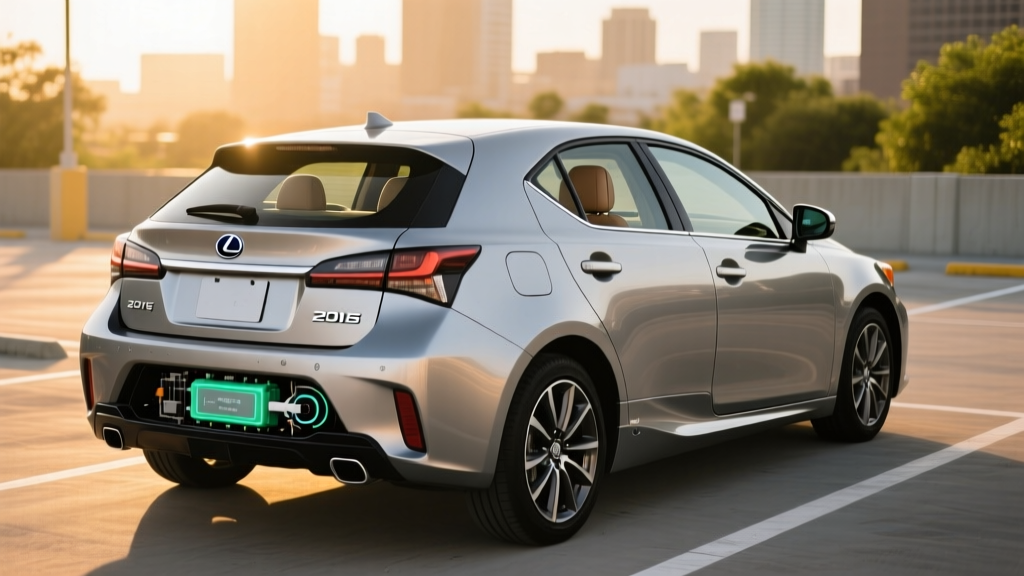
The 2016 Lexus CT 200h remains one of the most fuel-efficient luxury hatchbacks ever sold in the United States. Built on the proven Toyota Prius powertrain architecture, it delivers 42 MPG combined in a compact, premium package. A decade later, it occupies a unique niche on the used market: buyers who want hybrid efficiency with a luxury badge, without stepping into a full EV or a larger SUV.
This guide covers everything a 2026 used-car shopper needs to know — EPA and real-world fuel economy, the hybrid powertrain, battery longevity and replacement cost, and whether the CT 200h still makes sense against modern PHEVs and BEVs.
HEV vs PHEV: Where the CT 200h Fits
Before diving into specs, it's critical to understand what the 2016 Lexus CT 200h is — and what it is not.
Conventional Hybrid (HEV): The CT 200h is a self-charging hybrid. It recovers energy through regenerative braking and its gasoline engine. You never plug it in. The small traction battery (approximately 1.3 kWh usable) buffers energy for electric assist and brief low-speed EV-mode driving.
Plug-in Hybrid (PHEV): A PHEV has a larger battery (typically 10–20 kWh), can be plugged into a wall outlet or charger, and delivers 20–50 miles of electric-only range before the gas engine engages. The CT 200h was never offered as a PHEV.
Battery Electric Vehicle (BEV): A BEV has no gasoline engine at all. It relies entirely on a large battery pack (50–100+ kWh) and must be charged from an external source.
The 2016 CT 200h is strictly an HEV. If you're looking for plug-in electric-only range, you'll need to look at vehicles like the Toyota Prius Prime or a used BMW i3 REx instead.
Fuel Economy: EPA Ratings and Real-World MPG
According to fueleconomy.gov, the 2016 Lexus CT 200h carries the following EPA ratings:
| Metric | Value |
|---|---|
| EPA City | 43 MPG |
| EPA Highway | 40 MPG |
| EPA Combined | 42 MPG |
| Fuel Tank Capacity | 11.9 gallons |
| EPA Estimated Total Range | ~500 miles |
| Annual Fuel Cost (EPA est.) | ~$1,150 (at $3.00/gal avg) |
Real-World MPG: What Owners Actually See
The CT 200h's Atkinson-cycle 1.8L engine and Toyota Hybrid Synergy Drive are well-known for matching — and sometimes exceeding — EPA estimates in city driving, where regenerative braking recovers the most energy.
- City / stop-and-go: Many owners report 44–48 MPG in warm weather, exceeding the EPA city rating.
- Highway (70+ mph): Expect 37–40 MPG. Aerodynamic drag and the lack of high gears in the eCVT reduce efficiency at sustained high speeds.
- Cold weather (below 30°F): MPG drops to 35–38 combined. The engine runs longer to heat the cabin and maintain battery temperature.
- Mixed driving (annual average): Most owners settle around 40–43 MPG combined year-round, per aggregated data on owner forums and Fuelly.
Bottom line: The EPA 42 MPG combined figure is realistic for mixed driving in moderate climates. City-heavy drivers may see 45+ MPG. Highway-dominant commuters in cold states should budget for 36–39 MPG.
Powertrain Specs: Engine, Motor, and Combined Output
The 2016 CT 200h shares its powertrain with the third-generation Toyota Prius (XW30 platform). Here's the exact hardware:
| Specification | Value |
|---|---|
| Engine | 1.8L 4-cylinder Atkinson-cycle (2ZR-FXE) |
| Engine Power | 98 hp @ 5,200 rpm |
| Engine Torque | 105 lb-ft @ 4,000 rpm |
| Electric Motor | Permanent-magnet synchronous (650V max) |
| Motor Power | 80 hp (60 kW) |
| Combined Net System Power | 134 hp |
| Transmission | eCVT (planetary gearset, no traditional belts) |
| Drivetrain | Front-wheel drive |
| 0–60 mph | ~9.8 seconds |
| Top Speed | 113 mph (electronically limited) |
| Curb Weight | ~3,200 lbs |
The combined 134 hp output is modest by modern standards. Acceleration is adequate for city merging but requires patience on highway on-ramps. The eCVT is not a traditional belt-and-pulley CVT — it uses a planetary gearset to blend engine and motor power, which contributes to the CT 200h's reputation for durability.
Hybrid Battery: Capacity, Chemistry, Warranty, and Replacement
The traction battery is the component most used-hybrid buyers worry about. Here's what the data shows:
| Specification | Value |
|---|---|
| Battery Chemistry | Nickel-Metal Hydride (NiMH) |
| Gross Capacity | ~1.3 kWh |
| Usable Capacity | ~0.8 kWh (shallow cycle buffer) |
| Module Count | 28 modules |
| Location | Under rear cargo floor |
Original Hybrid Battery Warranty: When new, Lexus covered the CT 200h hybrid battery for 8 years / 100,000 miles (10 years / 150,000 miles in CARB states including California, New York, Massachusetts, and others). For a 2016 model, original factory warranty coverage expired by 2024 at the earliest, or 2026 in CARB states if mileage was under 150,000.
How Long Does the CT 200h Battery Actually Last?
The NiMH battery in the CT 200h is one of the most proven hybrid batteries in existence — the same basic chemistry and architecture used in millions of Prius vehicles since 2004. Key data points:
- Typical lifespan: 150,000–250,000 miles or 12–18 years under normal use. Many third-gen Prius taxis have exceeded 300,000 miles on the original battery.
- Failure mode: Gradual capacity loss rather than sudden failure. As the battery degrades, you'll notice slightly lower MPG and more frequent engine cycling, but the car remains drivable.
- Heat is the enemy: Vehicles in hot climates (Arizona, Texas, Southern California) may see earlier degradation. Keeping the rear battery vent unblocked helps.
Battery Replacement Cost in 2026
| Option | Estimated Cost | Notes |
|---|---|---|
| New OEM Lexus battery | $2,500–$3,500 (parts) + $300–$500 (labor) | Best longevity; dealer-installed |
| Refurbished / reconditioned battery | $1,000–$1,800 installed | Replaced weak modules; 1–3 year warranty typical |
| Individual module replacement | $200–$600 (parts + labor) | Only viable if 1–2 modules are weak; requires diagnosis |
| Aftermarket new battery (e.g., Dorman) | $1,800–$2,500 installed | Growing availability; check warranty terms |
Compared to a BEV battery replacement ($5,000–$20,000+), the CT 200h's NiMH pack is remarkably affordable to replace. This is one of the strongest ownership arguments for Toyota/Lexus hybrids.
Driving Experience, Interior, and Practicality
The CT 200h trades performance for efficiency. At 9.8 seconds to 60 mph, it's one of the slower vehicles in the Lexus lineup. But for its intended role — premium urban commuting — it delivers where it counts:
- Ride quality: Firm but composed. The Sport mode sharpens throttle response and steering weight but doesn't transform the car.
- Noise: Quieter than a contemporary Prius, with better sound insulation. Engine drone under hard acceleration is present but muted.
- Interior materials: Soft-touch dash, available NuLuxe or leather seats, Lexus infotainment with a 7-inch display. The Remote Touch mouse controller is a common complaint — finicky compared to a touchscreen.
- Cargo space: 14.3 cu ft behind rear seats; 37.4 cu ft with seats folded. Adequate for groceries and luggage but tight for large items.
- Back seat: Fits adults under 6 feet comfortably. Headroom is limited by the sloping roofline.
Safety Ratings
The 2016 CT 200h earned strong marks from both major safety agencies. The NHTSA gave it an overall 4-star rating (out of 5). The IIHS rated it Good in most crashworthiness categories. Standard safety equipment includes 8 airbags, stability control, and a rearview camera. The optional Pre-Collision System (PCS) adds forward collision warning and automatic braking — worth seeking on the used market.
Pricing in 2026 and Tax Credit Eligibility
The 2016 Lexus CT 200h was originally priced from approximately $31,250 MSRP (base) to roughly $40,000 fully loaded. On the 2026 used market, expect the following:
| Condition / Mileage | Approximate Price Range |
|---|---|
| Excellent, under 60,000 miles | $16,000–$20,000 |
| Good, 60,000–100,000 miles | $12,000–$16,000 |
| Fair, 100,000–150,000 miles | $8,500–$12,000 |
| High mileage, 150,000+ miles | $6,000–$9,000 |
Does the 2016 CT 200h Qualify for Any Tax Credit?
No. The 2016 Lexus CT 200h does not qualify for the federal §30D new clean vehicle credit — it's a conventional HEV, not a plug-in vehicle, and it's no longer new. It also does not qualify for the federal used EV credit (which applies only to used BEVs and PHEVs under $25,000, per IRS guidelines). Conventional hybrids are excluded from both programs.
Some states or utilities offer rebates for hybrids, but these are typically for new purchases. Check your state energy office or utility provider for any current local incentives. For federal rules, always consult a tax professional and the latest IRS publications.
Pros
- 42 MPG combined; often exceeds EPA in city driving
- Proven Toyota hybrid powertrain with 200k+ mile longevity
- Affordable battery replacement ($1,000–$3,500)
- Luxury interior and badge at economy-car fuel cost
- No plug-in infrastructure needed — works anywhere gas is sold
- Strong reliability record; low maintenance costs
- 500+ mile total range per tank
Cons
- Slow acceleration (9.8 sec 0–60)
- Dated infotainment; Remote Touch controller is frustrating
- Limited cargo space (14.3 cu ft)
- No plug-in or electric-only driving capability
- No DC fast charging (not applicable — HEV)
- Factory warranty fully expired by 2026
- Rear visibility compromised by thick C-pillars
CT 200h vs Modern PHEV vs EV: Which Fits You?
If you're cross-shopping the 2016 CT 200h against modern alternatives, here's a practical decision framework:
Choose the 2016 Lexus CT 200h if:
- You want a sub-$15,000 vehicle with 40+ MPG and no charging infrastructure needed.
- You lack access to home or workplace charging (apartment, street parking).
- You drive mostly in the city where the hybrid system excels.
- You value Lexus build quality and want minimal maintenance surprises.
Choose a used PHEV (e.g., Prius Prime, Clarity PHEV) if:
- You can charge at home (Level 1 outlet is sufficient for overnight).
- Your daily commute is under 25 miles and you want to drive mostly on electricity.
- You want to reduce fuel consumption to near zero on weekdays while keeping gas for road trips.
Choose a used BEV (e.g., Chevrolet Bolt, Nissan Leaf) if:
- You have reliable Level 2 home charging access.
- Your daily driving is under 150 miles and you rarely road-trip.
- You want to eliminate gas entirely and qualify for the used EV tax credit (up to $4,000 on qualifying models under $25,000).
Pre-Purchase Checklist for a Used 2016 CT 200h
If you're seriously considering a 2016 CT 200h in 2026, use this checklist before handing over money:
- Hybrid battery health check: Ask a Lexus dealer or hybrid specialist to run a battery health diagnostic. Look for State of Health (SoH) above 70%. Below 60% means a replacement is approaching.
- Check for battery-related DTCs: Codes P0A80, P0A7F, or individual module imbalance codes (P0AFA series) signal battery issues.
- Verify the 12V auxiliary battery: The small 12V battery in the rear powers electronics. These are often overlooked and fail every 4–6 years. A weak 12V can prevent the hybrid system from starting.
- Inspect the inverter coolant pump: Listen for a humming sound from the inverter coolant reservoir under the hood when the car is ON (READY). No flow = pump failure, which can overheat the inverter ($1,500+ repair).
- Check for brake actuator recalls: Some 2014–2016 CT 200h models were included in ABS/brake actuator recalls. Verify completion on NHTSA's recall lookup.
- Review maintenance records: Look for regular oil changes (0W-20 synthetic every 10,000 miles), transaxle fluid changes, and cabin air filter replacements.
Frequently Asked Questions
How many MPG does the 2016 Lexus CT 200h get?
The EPA rates the 2016 CT 200h at 43 city / 40 highway / 42 combined MPG. In real-world driving, city-heavy commuters often see 44–48 MPG, while highway-dominant driving yields 37–40 MPG. Cold weather can reduce combined MPG to the mid-30s.
Is the 2016 Lexus CT 200h a plug-in hybrid?
No. The CT 200h is a conventional hybrid (HEV). It charges its own battery through regenerative braking and the gasoline engine. You never plug it in. Lexus never produced a plug-in version of the CT 200h.
How far can the CT 200h drive on electric only?
Under very specific conditions — low speed (under 25 mph), gentle acceleration, warm battery — the CT 200h can travel roughly 0.5 to 1 mile on electric power alone using its EV Mode button. This is not practical for commuting; the system uses electric assist to improve MPG, not to replace the engine for meaningful distances.
Is the 2016 CT 200h reliable? What is the battery replacement cost?
Yes. The CT 200h uses the same Toyota Hybrid Synergy Drive found in millions of Prius vehicles, widely regarded as one of the most reliable powertrains ever built. The NiMH hybrid battery typically lasts 150,000–250,000 miles. Replacement costs range from $1,000 (refurbished) to $3,500 (new OEM), significantly less than a BEV battery replacement.
Does the 2016 Lexus CT 200h qualify for any tax credit?
No. As a conventional hybrid (not plug-in), the CT 200h does not qualify for the federal §30D new vehicle credit or the used clean vehicle credit. Those programs require plug-in capability (PHEV or BEV). Some state or utility incentives may apply — check local programs.
What is the total range on a full tank?
With an 11.9-gallon fuel tank and 42 MPG combined, the EPA estimates approximately 500 miles of total range. Real-world range varies from about 430 miles (highway/cold weather) to 550+ miles (city/warm weather).
Should I buy a 2016 CT 200h or a newer hybrid in 2026?
If your budget is under $15,000, the CT 200h offers exceptional value — luxury build, proven reliability, and 42 MPG. If you can spend $25,000+, a newer Toyota Prius (57 MPG combined) or a PHEV with plug-in capability offers better technology, more cargo space, and potentially lower long-term fuel costs. The CT 200h's advantage is its low entry price and mature, well-understood hybrid system.