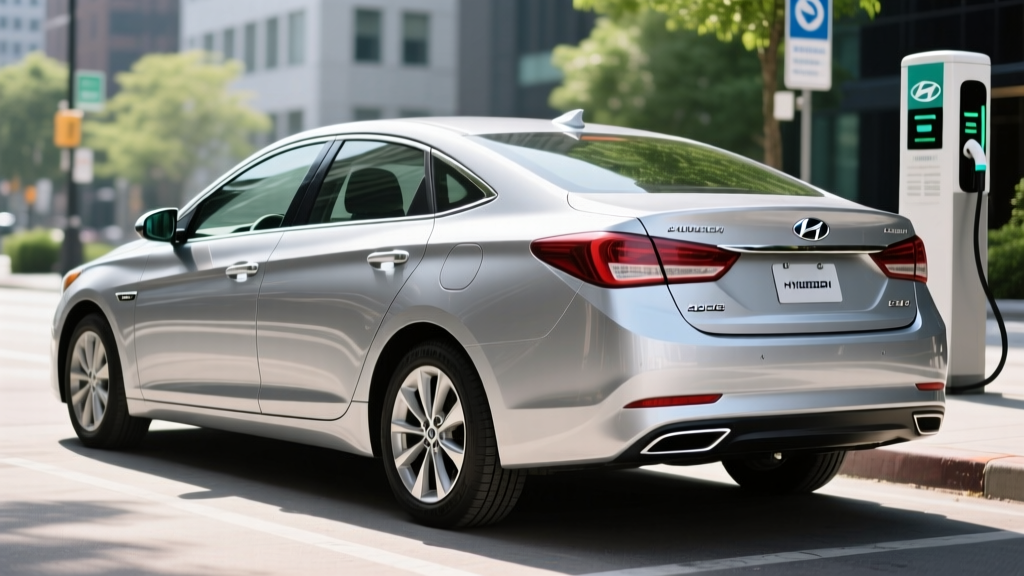
The 2016 Hyundai Sonata Hybrid SE sedan occupies a specific niche in the used-car market: a midsize conventional hybrid (HEV) that prioritizes fuel economy and long-term battery warranty without requiring a plug. If you are researching this exact model, you likely want hard numbers on MPG, battery longevity, and whether a seven-year-old hybrid is a sound purchase in 2026. This guide breaks down the specs, real-world efficiency, and ownership economics of the 2016 Sonata Hybrid SE.
HEV vs PHEV: What the 2016 Sonata Hybrid Actually Is
Before examining the numbers, it is critical to distinguish what this car is — and what it is not. The 2016 Hyundai Sonata Hybrid SE is a conventional hybrid electric vehicle (HEV). It pairs a gasoline engine with a small electric motor and a compact battery pack that recharges through regenerative braking and engine power. You never plug it in. You fuel it at a gas station like any other car.
HEV (This Car): 1.4 kWh battery, no plug, regenerative braking charges the battery, electric motor assists the gas engine at low speeds and during acceleration. EPA-rated at 39 MPG combined.
PHEV (Sonata Plug-In Hybrid — separate model): 9.8 kWh battery, plugs into a wall outlet or Level 2 charger, offers ~27 miles of electric-only range before the gas engine engages. Hyundai sold a Sonata Plug-In Hybrid in limited markets during this generation, but it is a distinct vehicle with different pricing and powertrain specs.
BEV (Full Electric): No gas engine at all. Requires plug-in charging. Examples: Tesla Model 3, Hyundai Ioniq 5.
If you see listings advertising "Sonata Hybrid" with plug-in capability, they are referencing the PHEV variant, not the SE trim covered here. The 2016 Sonata Hybrid SE does not have a charge port, does not offer electric-only driving beyond brief low-speed assist, and cannot be plugged in.
2016 Sonata Hybrid SE: Full Powertrain and Efficiency Specs
| Specification | 2016 Sonata Hybrid SE |
|---|---|
| Powertrain Type | Conventional Hybrid (HEV) |
| Engine | 2.0L 4-cylinder GDI (154 hp) |
| Electric Motor | 38 kW (51 hp) permanent-magnet synchronous |
| Combined System Output | 193 hp |
| Transmission | 6-speed automatic |
| Hybrid Battery | 1.4 kWh lithium-ion polymer |
| Plug-In Capable | No (charges via regen + engine) |
| EPA MPG (City) | 39 MPG |
| EPA MPG (Highway) | 43 MPG |
| EPA MPG (Combined) | 40 MPG |
| Fuel Tank | 18.5 gallons |
| Total Driving Range | ~740 miles (EPA combined) |
| 0-60 mph | ~8.2 seconds |
| Original MSRP (2016) | ~$26,000 |
| Typical Used Price (2026) | $9,000–$14,000 |
The 2.0-liter naturally aspirated engine runs an Atkinson-cycle combustion strategy, which sacrifices some peak power for greater thermal efficiency. Combined with the 38 kW electric motor integrated into the transmission housing, the system delivers 193 total horsepower — adequate for highway merging and passing, though not sporty. The 6-speed automatic is a conventional torque-converter unit, not a CVT, which gives it a more familiar shift feel compared to Toyota's eCVT in the Camry Hybrid.
Real-World MPG: What Owners Actually Report
| Driving Scenario | Expected MPG | Notes |
|---|---|---|
| EPA Combined (sticker) | 40 MPG | Official EPA rating per fueleconomy.gov |
| City driving (real-world) | 38–44 MPG | Hybrids excel in stop-and-go; regen braking recovers energy |
| Highway (65-70 mph) | 37–41 MPG | Less electric assist at sustained speed; aero drag dominates |
| Highway (75-80 mph) | 33–37 MPG | Efficiency drops sharply above 70 mph |
| Cold weather (below 35°F) | 33–38 MPG | Engine runs more often for cabin heat; battery less efficient |
| Short trips (under 3 mi) | 28–35 MPG | Engine cold-start enrichment dominates; hybrid advantage minimized |
The 2016 Sonata Hybrid SE's EPA rating of 39 city / 43 highway / 40 combined is unusual in that the highway number exceeds the city number. This reflects Hyundai's tuning emphasis on high-speed efficiency and the relatively modest electric motor output, which provides less low-speed assist than Toyota's Hybrid Synergy Drive. In practice, many owners report achieving 38–42 MPG in mixed driving, with city-heavy commutes sometimes exceeding the EPA city estimate thanks to frequent regenerative braking events.
On long highway road trips at 75+ mph, expect the figure to settle around 35–38 MPG. Cold weather reduces efficiency by roughly 10–15% due to increased engine runtime for cabin heating and reduced lithium-ion battery performance at low temperatures. This is a characteristic of all hybrids and is not unique to Hyundai.
Hybrid Battery Warranty, Degradation, and Replacement Cost
Original Hyundai Hybrid Battery Warranty: 8 years / 100,000 miles (whichever comes first) for the lithium-ion hybrid battery pack. In CARB states (California and states adopting California emissions standards), the warranty extends to 10 years / 150,000 miles.
For a 2016 model in 2026: The 8-year/100k federal warranty has expired for most vehicles (10 years have passed). The 10-year/150k CARB warranty may still apply to low-mileage examples in qualifying states — check your vehicle's in-service date and odometer against these thresholds.
The 1.4 kWh lithium-ion polymer battery in the 2016 Sonata Hybrid SE is small by modern standards. It serves a narrow role: smoothing torque delivery during acceleration, enabling brief engine-off coasting, and capturing energy during braking. Because it operates in a shallow state-of-charge window (typically 40–60% SoC), it experiences less stress than a PHEV or BEV battery that cycles through deeper charge ranges.
Degradation reality: Most 2016 Sonata Hybrid owners report minimal noticeable battery degradation at 100,000–150,000 miles. The battery management system (BMS) keeps the pack in a conservative charge window, which significantly extends cycle life. However, at 10 years of age, some capacity loss is inevitable. Symptoms of a degrading hybrid battery include reduced electric-assist feel, slightly lower MPG, and more frequent engine engagement at low speeds.
Replacement cost (2026): A new OEM hybrid battery pack from Hyundai runs approximately $2,200–$3,000 for the part, with labor adding $300–$500, bringing the total to roughly $2,500–$3,500 at a dealership. Third-party refurbished or reconditioned packs are available for $1,200–$1,800 installed. Individual cell replacement by a hybrid specialist can cost as little as $500–$800 if only one or two modules have failed.
For context, the hybrid battery in this vehicle is far less expensive to replace than a BEV traction battery (which can exceed $10,000–$18,000) because of its small 1.4 kWh size. This is an important cost-of-ownership advantage for used-hybrid buyers.
2016 Sonata Hybrid SE vs. Competitors: A Used-Market Comparison
| Attribute | 2016 Sonata Hybrid SE | 2016 Camry Hybrid LE | 2016 Ford Fusion Hybrid SE |
|---|---|---|---|
| EPA Combined MPG | 40 MPG | 41 MPG | 42 MPG |
| Combined HP | 193 hp | 200 hp | 188 hp |
| Battery | 1.4 kWh Li-ion polymer | 1.6 kWh NiMH | 1.4 kWh Li-ion |
| Transmission | 6-speed auto | eCVT | eCVT |
| Hybrid Battery Warranty (orig.) | 8yr/100k mi (10/150k CARB) | 8yr/100k mi (10/150k CARB) | 8yr/100k mi |
| Cargo Volume | 13.3 cu ft | 13.1 cu ft | 12.0 cu ft |
| Typical 2026 Used Price | $9,000–$14,000 | $11,000–$16,000 | $8,500–$13,000 |
The Sonata Hybrid SE sits in the middle of this group on efficiency but offers the most conventional driving feel thanks to its 6-speed automatic. The Camry Hybrid's eCVT delivers slightly better MPG and Toyota's reputation for hybrid longevity, but at a higher used price. The Fusion Hybrid is the efficiency leader here but may command higher maintenance costs as Ford's hybrid system ages.
Tax Credits and Incentives in 2026
The 2016 Hyundai Sonata Hybrid SE does not qualify for the federal §30D new clean vehicle tax credit. That credit applies only to new vehicle purchases and has specific MSRP caps, buyer income limits, and battery component sourcing requirements per IRS guidelines. Since this is a used vehicle purchased a decade after its model year, no federal EV tax credit applies.
The federal used clean vehicle credit (up to $4,000 or 30% of sale price, whichever is less) applies only to used BEVs and PHEVs purchased from a dealer — conventional hybrids (HEVs) are excluded. The Sonata Hybrid SE, as a non-plug-in hybrid, does not qualify.
Some states offer their own incentives for hybrid purchases or registrations, but these vary widely by jurisdiction and many have expired or been restricted to zero-emission vehicles. Check your state's DMV or energy office for current programs.
Who Should Buy This Hybrid — and Who Should Look Elsewhere
Pros
- 40 MPG combined EPA; real-world city driving can exceed 42 MPG
- No plug required — ideal for apartment dwellers or those without garage charging
- 6-speed automatic feels natural; no CVT drone
- Low hybrid battery replacement cost ($2,500–$3,500 OEM) vs BEV batteries
- 740-mile total range eliminates fuel-stop anxiety on road trips
- Competitive used pricing ($9k–$14k) in 2026 market
- Spacious midsize cabin with 13.3 cu ft trunk
Cons
- Original 8-year battery warranty has expired for most 2016 examples
- Highway MPG trails city MPG — less efficient on long interstate trips
- No electric-only driving mode (unlike PHEVs)
- Modest 193 hp — adequate but not quick
- Infotainment system dated by 2026 standards; no wireless CarPlay/Android Auto
- Not eligible for any federal tax credit (new or used)
- Cold-weather MPG drops to 33–38 in sub-freezing temps
Choose the 2016 Sonata Hybrid SE if: You want 38–42 MPG in daily commuting without plugging in, you lack home charging access, your budget is under $15,000, and you drive a mix of city and highway miles.
Consider a used PHEV instead if: You have home Level 2 charging and want 20–30 miles of electric-only commuting with a gas backup for road trips. Examples: used Chevrolet Volt, Toyota Prius Prime, or Hyundai Ioniq PHEV.
Consider a used BEV instead if: You have reliable home charging, your daily driving is under 200 miles, and you want zero tailpipe emissions with minimal drivetrain maintenance. Examples: used Nissan Leaf, Chevrolet Bolt EV, or Tesla Model 3.
Stick with a conventional gas car if: You drive primarily long highway miles (where hybrid advantage shrinks), you want the lowest possible purchase price, and fuel cost is not a primary concern.
Frequently Asked Questions
How many MPG does the 2016 Hyundai Sonata Hybrid SE get?
The EPA rates it at 39 city / 43 highway / 40 combined. In real-world mixed driving, owners typically report 38–42 MPG. City-heavy commutes with frequent stops can push toward 44 MPG thanks to regenerative braking. Highway driving at 75+ mph drops to 33–37 MPG. According to fueleconomy.gov, the combined rating of 40 MPG translates to an estimated annual fuel cost of approximately $1,350 (based on 15,000 miles/year at 2026 average fuel prices).
Does the 2016 Sonata Hybrid need to be plugged in?
No. The 2016 Sonata Hybrid SE is a conventional hybrid (HEV). Its 1.4 kWh battery charges entirely through regenerative braking and the gasoline engine. There is no charge port and no plug-in capability. You fuel it exclusively at gas stations.
How far can it drive on electric power alone?
Effectively zero miles in sustained electric-only mode. The electric motor assists the gas engine during acceleration and enables brief engine-off coasting at low speeds, but the 1.4 kWh battery is far too small for meaningful electric-only driving. If electric-only range is a priority, you need a PHEV (like the Sonata Plug-In Hybrid, rated at ~27 miles electric) or a full BEV.
Is the 2016 Sonata Hybrid reliable and what does a battery replacement cost?
The 2016 Sonata Hybrid has generally average-to-good reliability for its class. The hybrid system itself is straightforward — the 6-speed automatic avoids the complexity of a power-split eCVT, and the lithium-ion polymer battery operates in a conservative charge window that promotes longevity. The original 8-year/100,000-mile hybrid battery warranty has expired for most examples by 2026. A new OEM replacement battery costs approximately $2,500–$3,500 installed at a dealer, or $1,200–$1,800 for a refurbished pack from a hybrid specialist. This is significantly less than BEV battery replacement costs.
Does the 2016 Sonata Hybrid qualify for any tax credit?
No. The federal §30D new clean vehicle credit applies only to new purchases of qualifying BEVs and PHEVs — conventional hybrids are excluded, and this vehicle is no longer sold new. The federal used clean vehicle credit (up to $4,000) also excludes conventional hybrids, applying only to used BEVs and PHEVs. Some state-level incentives may exist for efficient vehicles, but most have shifted to zero-emission vehicles. Consult your state's energy office or a tax professional for local programs.
Hybrid vs PHEV vs EV — which is right for me?
A conventional hybrid (HEV) like the Sonata Hybrid SE is best if you cannot charge at home, want maximum range without planning charging stops, and prioritize a lower purchase price. A plug-in hybrid (PHEV) suits drivers with home charging who want electric-only commuting (typically 20–40 miles) with a gas engine for longer trips. A full electric vehicle (BEV) is ideal if you have reliable home charging, drive under 250 miles daily, want the lowest per-mile fuel cost, and can accept charging infrastructure planning for road trips. Your access to charging is the single biggest factor in this decision.
What should I check before buying a used 2016 Sonata Hybrid?
Prioritize a pre-purchase inspection that includes a hybrid battery health check (many Hyundai dealers can read the battery's state-of-health percentage via OBD-II). Verify the transmission fluid has been changed per the maintenance schedule (every 60,000 miles is recommended). Check for any outstanding recalls via NHTSA's recall lookup. Review service records for evidence of regular oil changes and coolant flushes. Finally, confirm the 12V auxiliary battery is in good condition — a weak 12V battery can prevent the hybrid system from starting, even if the main hybrid battery is healthy.