Quick Verdict: The 2016 Sonata Hybrid SE in 2026
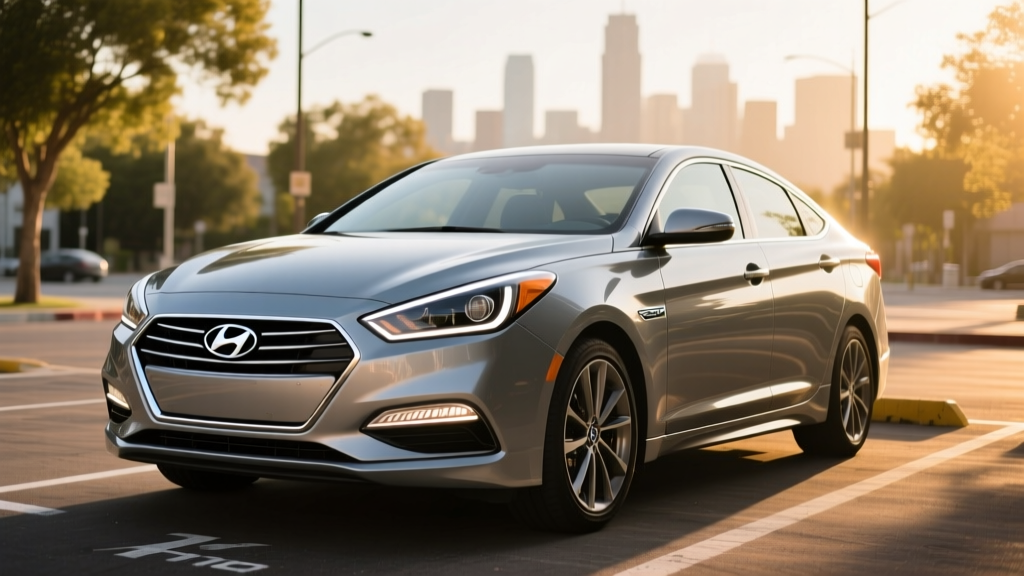
The 2016 Hyundai Sonata Hybrid SE occupies a specific niche in today's used-car market: a midsize sedan that delivers genuine hybrid fuel savings without the complexity, charging requirements, or premium price of a plug-in hybrid or full EV. With an EPA-rated 40 MPG combined, a proven 2.0L gasoline engine paired with a 38 kW electric motor, and Hyundai's generous hybrid battery warranty, this model remains a practical choice for budget-conscious drivers who want electrified efficiency without plugging in.
As of 2026, well-maintained examples typically sell for $9,000–$14,000 depending on mileage and condition. The SE is the base hybrid trim, offering strong value, while the Limited adds premium features. This guide covers everything a used buyer needs to know: real-world fuel economy, battery longevity, replacement costs, and how this conventional hybrid stacks up against PHEVs and full EVs in today's market.
| Specification | Value |
|---|---|
| Powertrain Type | Conventional Hybrid (HEV) — no plug-in |
| Gasoline Engine | 2.0L GDI 4-cylinder, 154 hp / 140 lb-ft |
| Electric Motor | 38 kW (51 hp), integrated into 6-speed automatic |
| Combined System Output | 193 hp |
| Hybrid Battery | 1.62 kWh lithium-ion polymer |
| EPA Fuel Economy | 39 city / 43 highway / 40 combined MPG |
| Fuel Tank | 18.5 gallons |
| Total Range | ~740 miles (EPA estimate) |
| 0–60 mph | ~8.2 seconds |
| Drivetrain | Front-wheel drive |
| Original MSRP (SE) | $26,825 |
| Typical Used Price (2026) | $9,000–$14,000 |
| Hybrid Battery Warranty (original) | 10 years / 100,000 miles (original owner); 8 yr / 100,000 mi in CARB states (transferable) |
Fuel Economy: EPA Ratings vs. Real-World MPG
The EPA rates the 2016 Sonata Hybrid SE at 39 city / 43 highway / 40 combined MPG. These are strong numbers for a midsize sedan, and they reflect the 2016 model year's significant powertrain redesign, which replaced the previous generation's less efficient setup with a lighter, more integrated hybrid system.
| Driving Condition | EPA Rating | Real-World Expectation |
|---|---|---|
| City | 39 MPG | 38–44 MPG (hybrids excel in stop-and-go) |
| Highway | 43 MPG | 38–42 MPG (less regen benefit at steady speed) |
| Combined | 40 MPG | 37–43 MPG depending on driving mix |
Real-world context: Like most conventional hybrids, the Sonata Hybrid SE tends to exceed its EPA city rating in actual stop-and-go driving, where regenerative braking recaptures energy and the electric motor handles low-speed propulsion. On the highway, however, expect slightly lower figures — steady 75 mph cruising relies more heavily on the gasoline engine. Owners on fuel-tracking platforms consistently report 38–42 MPG combined in mixed driving, with some achieving 44+ MPG in city-heavy commutes.
Cold weather reduces fuel economy by roughly 5–10% due to increased engine idling for cabin heat and reduced battery efficiency. In winter conditions, expect 35–38 MPG combined. This is normal hybrid behavior, not a defect.
Hybrid (HEV) vs. Plug-In Hybrid (PHEV): What's the Difference?
The 2016 Sonata Hybrid SE is a conventional hybrid (HEV), meaning it does not plug in. The small 1.62 kWh battery charges entirely through regenerative braking and the gasoline engine. Hyundai did not offer a plug-in variant of the 2016 Sonata in the U.S. market — the Sonata Plug-in Hybrid arrived for the 2016 model year in limited markets but with different specs (a 9.8 kWh battery and ~27 miles of electric-only range).
| Feature | HEV (Sonata Hybrid SE) | PHEV (e.g., Toyota Prius Prime) | BEV (e.g., Tesla Model 3) |
|---|---|---|---|
| Plugs in? | No | Yes | Yes |
| Electric-only range | None (EV assist only, ~1 mile at low speed) | 25–45 miles typical | 250–370 miles typical |
| Battery size | 1.62 kWh | 8–18 kWh | 50–100 kWh |
| Gasoline engine? | Yes (primary power + charging) | Yes (backup + highway) | No |
| Home charging needed? | No | Recommended (Level 2) | Essential |
| Federal tax credit (§30D) | Not eligible | Eligible (up to $7,500, subject to sourcing/income rules) | Eligible (up to $7,500, subject to sourcing/income rules) |
| Best for | No home charging access; simple ownership | Short commutes + road trip flexibility | Home charging + lowest operating cost |
The Sonata Hybrid SE's conventional hybrid system is its greatest advantage for drivers who lack access to home or workplace charging. You simply fuel up at any gas station and let the hybrid system manage energy recovery automatically. There's no plug to connect, no charging app to manage, and no range anxiety beyond what a standard gasoline car presents.
Powertrain Details: Engine, Motor, and Transmission
For 2016, Hyundai redesigned the Sonata Hybrid's powertrain from the ground up. The result was a lighter, more efficient system that ditched the previous generation's heavier and less refined setup.
Gasoline engine: A 2.0-liter GDI (gasoline direct injection) 4-cylinder producing 154 horsepower and 140 lb-ft of torque. This Atkinson-cycle engine prioritizes efficiency over peak power, which is standard practice for hybrid applications.
Electric motor: A 38 kW (51 hp) motor integrated directly into the transmission housing. This motor handles low-speed electric-only driving (briefly, at speeds under ~25 mph for roughly one mile), assists during acceleration, and acts as a generator during regenerative braking.
Transmission: A conventional 6-speed automatic — not a CVT. Hyundai chose a traditional stepped automatic for smoother, more natural-feeling acceleration compared to the "rubber band" sensation some CVTs produce. This was a deliberate differentiator versus the Toyota Camry Hybrid's e-CVT.
Combined output: 193 hp, delivered to the front wheels. The 0–60 mph time of approximately 8.2 seconds is adequate for merging and passing, though it won't feel quick by modern EV standards.
Hybrid battery: A 1.62 kWh lithium-ion polymer pack located behind the rear seats. This is a small battery by modern standards — its role is energy buffering, not extended electric driving. It captures regenerative braking energy and deploys it for acceleration assist and brief low-speed EV mode.
Battery Longevity, Warranty, and Replacement Cost
Battery durability is the top concern for any used hybrid buyer. Here's what the data shows for the 2016 Sonata Hybrid SE.
Hybrid Battery Warranty Coverage
- Original owner: 10 years / 100,000 miles (Hyundai's standard hybrid battery warranty)
- Second owner (non-CARB states): Typically not transferable — coverage drops to basic powertrain warranty
- CARB states (CA, NY, MA, and others adopting CARB rules): Hybrid battery warranty extends to 10 years / 150,000 miles and is transferable to subsequent owners, per CARB emissions component requirements
- Capacity threshold: Warranty covers failure or significant capacity loss that triggers diagnostic fault codes
Real-world battery lifespan: The 1.62 kWh lithium-ion polymer pack in the 2016 Sonata Hybrid has proven durable. Hyundai's hybrid battery management system is conservative — it never fully charges or fully depletes the pack, maintaining a state-of-charge buffer that reduces degradation stress. At 10 years old (as of 2026), most original batteries remain functional, though some capacity loss is expected.
Industry data from hybrid repair networks suggests that Hyundai/Kia hybrid batteries from this generation typically last 150,000–200,000 miles before requiring attention. Failure before 120,000 miles is uncommon but not unheard of.
Battery replacement cost: If the hybrid battery does fail out of warranty, expect to pay:
- New OEM battery (dealer): $2,500–$3,800 including labor
- Refurbished/remanufactured battery: $1,200–$2,200 including labor
- Individual cell/module replacement (specialist shops): $500–$1,200 if only one or two modules have failed
Before purchasing a used 2016 Sonata Hybrid SE, request a hybrid battery state-of-health (SoH) check. A qualified Hyundai dealer or hybrid specialist can read the battery's diagnostic data, including internal resistance values and capacity measurements. A healthy pack should show balanced cell voltages and no stored fault codes.
Tax Credits and Incentives: What Applies in 2026?
Because the 2016 Sonata Hybrid SE is a conventional hybrid (HEV) with no plug-in capability, it does not qualify for the federal §30D new clean vehicle tax credit (which applies only to plug-in vehicles with batteries of at least 7 kWh). It also does not qualify for the federal used-EV credit (§25E), which similarly requires plug-in capability.
For used buyers in 2026, the financial equation is straightforward: you're paying market price ($9,000–$14,000) with no federal incentive offset. The savings come at the fuel pump — at 40 MPG combined versus a comparable gasoline-only midsize sedan at roughly 28 MPG, a driver covering 15,000 miles per year saves approximately $450–$650 annually on fuel (based on $3.30/gallon national average and current conditions). Over five years, that's $2,250–$3,250 in fuel savings versus a non-hybrid equivalent.
Some states and local utilities offer rebates or HOV lane access for hybrids, but these programs vary widely and often target new purchases. Check your state's energy office or the Alternative Fuels Data Center for current local incentives.
Who Should Choose the 2016 Sonata Hybrid SE?
Pros
- 40 MPG combined without plugging in — zero behavior change required
- Conventional 6-speed automatic feels natural, no CVT drone
- Proven, durable hybrid system with conservative battery management
- Spacious midsize cabin with 16.3 cu ft trunk (only slightly reduced vs. gas model)
- Low used-market pricing ($9K–$14K) with strong fuel savings
- CARB-state buyers may inherit remaining hybrid battery warranty
Cons
- No electric-only driving range (brief low-speed EV mode only)
- No federal tax credit eligibility (new or used)
- 8.2-second 0–60 is adequate but unexciting
- Rear-seat space slightly compromised by battery placement
- At 10 years old, some examples may need hybrid battery attention within ownership
- Infotainment and driver-assist tech dated by 2026 standards
Choose the 2016 Sonata Hybrid SE if:
- You don't have access to home or workplace charging and want hybrid efficiency without plug-in complexity
- Your budget is under $15,000 and you want a fuel-efficient, reliable midsize sedan
- Your commute is city-heavy, where the hybrid system delivers its best MPG gains
- You want a conventional ownership experience — gas up and go, no apps, no charging cables
Consider a PHEV or full EV instead if:
- You have Level 2 home charging and a short commute — a PHEV like the 2026 Toyota Prius Prime (44 miles electric-only) or a BEV like the Chevrolet Equinox EV (315 miles range) will deliver lower per-mile energy costs and potential tax credit eligibility
- You want the latest driver-assist technology, over-the-air updates, and modern infotainment
- You drive predominantly highway miles — the MPG advantage of a hybrid narrows at steady highway speeds, and a diesel or efficient gas car may close the gap
Reliability and Common Issues
The 2016 Sonata Hybrid's powertrain has a generally solid reliability record. The 2.0L GDI engine is a well-established Hyundai design, and the hybrid-specific components (inverter, electric motor, battery management system) have proven robust in real-world use.
NHTSA safety data shows no major recalls specific to the hybrid battery or high-voltage system for this model year. The vehicle earned a 5-star overall safety rating from NHTSA.
Items to inspect on a used example:
- Hybrid battery SoH: Have a dealer or specialist pull the battery diagnostic report. Balanced cell voltages and no stored codes indicate a healthy pack.
- 12V auxiliary battery: Like all hybrids, the Sonata has a conventional 12V battery that powers accessories and boots the hybrid system. These typically last 3–5 years and are inexpensive to replace ($150–$250).
- Transmission fluid: Hyundai recommends fluid inspection/replacement at specific intervals. Verify maintenance records.
- Brake wear: Regenerative braking reduces wear on the friction brakes, so pads and rotors often last 80,000+ miles. However, infrequent use can lead to surface corrosion on rotors — check for vibration during braking.
- GDI carbon buildup: Direct-injection engines can accumulate carbon on intake valves over 100,000+ miles. An intake valve cleaning service ($200–$400) may be needed if idle roughness develops.
Frequently Asked Questions
How many MPG does the 2016 Hyundai Sonata Hybrid SE get?
The EPA rates it at 39 city / 43 highway / 40 combined MPG. In real-world mixed driving, most owners report 38–42 MPG combined, with city-heavy commutes sometimes exceeding 43 MPG thanks to regenerative braking.
Does the 2016 Sonata Hybrid SE plug in?
No. This is a conventional hybrid (HEV). The battery charges entirely through regenerative braking and the gasoline engine. You never plug it in — just fuel it at any gas station.
Is this hybrid reliable, and what does a battery replacement cost?
The 2016 Sonata Hybrid has a solid reliability record. The hybrid battery typically lasts 150,000–200,000 miles. If replacement is needed out of warranty, a new OEM battery costs $2,500–$3,800 installed, while refurbished options run $1,200–$2,200.
Does the 2016 Sonata Hybrid SE qualify for any tax credit?
No. Federal §30D and §25E tax credits require plug-in capability with a minimum battery capacity. As a conventional hybrid, the Sonata Hybrid SE is not eligible for any federal purchase incentive. Check your state for possible local programs.
Hybrid vs. PHEV vs. EV — which should I choose?
Choose a conventional hybrid like this Sonata if you lack charging access and want simple, efficient motoring. Choose a PHEV if you have home charging and a short commute but want gas-engine flexibility for road trips. Choose a full EV if you have reliable home charging, want the lowest operating cost, and your daily driving stays within the vehicle's range.
How does the 2016 model differ from earlier Sonata Hybrids?
The 2016 model year introduced a completely redesigned hybrid powertrain: a lighter 2.0L engine, a more compact lithium-ion polymer battery (replacing the older, heavier pack), and a conventional 6-speed automatic replacing the previous generation's less refined setup. Fuel economy improved significantly — from 36 MPG combined in the 2015 model to 40 MPG in the 2016.
What's the total driving range on a full tank?
With an 18.5-gallon fuel tank and 40 MPG combined, the EPA-estimated total range is approximately 740 miles. In real-world driving with a 38–42 MPG average, expect 700–775 miles between fill-ups.