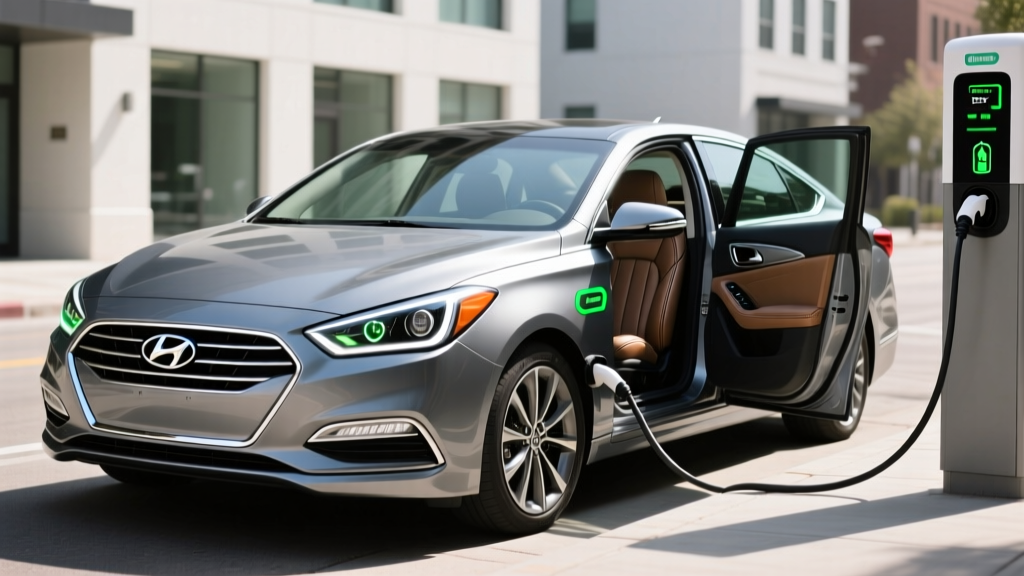
The 2016 Hyundai Sonata Hybrid arrived as a significant redesign for Hyundai's midsize hybrid sedan, moving to a dedicated 2.0-liter four-cylinder engine paired with a more compact lithium-ion polymer battery. For used-car shoppers in 2026 evaluating a decade-old hybrid, the key questions center on battery health, real-world fuel economy, and whether this conventional hybrid (HEV) still makes sense compared to newer plug-in hybrids and full electric vehicles.
This guide covers everything a prospective buyer or current owner needs to know about the 2016 Sonata Hybrid's powertrain, efficiency, battery longevity, and ownership economics — with the exact numbers that matter.
HEV vs. PHEV: What the 2016 Sonata Hybrid Actually Is
The 2016 Hyundai Sonata Hybrid is a conventional hybrid (HEV), not a plug-in hybrid. This distinction matters because it determines how the car operates, fuels, and qualifies for incentives.
| Feature | 2016 Sonata Hybrid (HEV) | Plug-In Hybrid (PHEV) Example |
|---|---|---|
| Plugs in to charge? | No — charges via regenerative braking and engine | Yes — Level 1 or Level 2 charging |
| Electric-only driving | Brief low-speed EV mode (~1 mile max) | 25-40+ miles on battery alone |
| Battery size | 1.62 kWh (lithium-ion polymer) | Typically 9-18 kWh |
| Fueling | Gasoline only (15.8-gal tank) | Gasoline + electricity |
| Federal tax credit (new) | None | Up to $7,500 under §30D (when new) |
Hyundai also offered the Sonata Plug-in Hybrid for the 2016 model year as a separate variant. That PHEV version featured a larger 9.8 kWh battery, approximately 27 miles of EPA-rated electric-only range, and a combined 202 horsepower. However, the conventional HEV discussed here is far more common on the used market and operates without any plug-in requirement.
Fuel Economy: EPA Ratings and Real-World MPG
The 2016 Sonata Hybrid's efficiency is its primary selling point. Here is the official EPA breakdown, sourced from fueleconomy.gov:
| Metric | 2016 Sonata Hybrid (Base/SEL) | 2016 Sonata Hybrid (Limited) |
|---|---|---|
| City MPG | 40 | 39 |
| Highway MPG | 43 | 43 |
| Combined MPG | 41 | 41 |
| Annual fuel cost (est.) | ~$1,350 | ~$1,350 |
| Gallons per 100 miles | 2.4 | 2.4 |
Real-World MPG: What Owners Actually See
Conventional hybrids like the Sonata HEV often exceed EPA estimates in city driving because stop-and-go traffic maximizes regenerative braking and electric-motor assist. On the highway, where the gasoline engine runs more continuously, real-world figures tend to track closer to — or slightly below — the EPA sticker.
Based on owner-reported data and long-term testing from the era:
- City / suburban driving: 40-45 MPG is achievable, particularly in warm weather with moderate acceleration
- Highway (70-75 mph): Expect 37-41 MPG, with colder temperatures and headwinds pulling toward the low end
- Winter driving (below freezing): Combined MPG can drop 10-15% to roughly 35-37 MPG due to engine warm-up cycles and reduced battery efficiency
- Overall mixed driving: Most owners report 38-42 MPG as a realistic long-term average
For a 2026 used buyer, fuel economy will also depend on battery health. A degraded hybrid battery reduces the motor's contribution, shifting more load to the gasoline engine and lowering MPG by 2-5 MPG in noticeable cases.
Powertrain and Performance Specs
| Specification | 2016 Hyundai Sonata Hybrid |
|---|---|
| Engine | 2.0L GDI 4-cylinder (Nu series) |
| Engine horsepower | 154 hp @ 6,000 rpm |
| Engine torque | 140 lb-ft @ 5,000 rpm |
| Electric motor output | 38 kW (51 hp) / 151 lb-ft |
| Combined system output | 193 horsepower |
| Transmission | 6-speed automatic (no CVT) |
| 0-60 mph (est.) | ~8.3 seconds |
| Drivetrain | Front-wheel drive |
| Fuel tank | 15.8 gallons |
| Total range (est.) | ~647 miles (combined) |
| Battery type | Lithium-ion polymer, 1.62 kWh |
Hyundai's decision to use a conventional 6-speed automatic rather than a CVT gave the 2016 Sonata Hybrid a more natural driving feel than many competitors. The electric motor is integrated into the transmission housing (a "transmission-mounted electric device" or TMED), which enables smooth engine-motor blending and allows the car to operate in EV mode at speeds up to approximately 75 mph under light load — though only for very short distances given the 1.62 kWh battery.
Acceleration is adequate for daily driving but not brisk. The 193 combined horsepower puts it in line with the Toyota Camry Hybrid of the same era, though the Sonata feels slightly heavier through corners.
Battery Health, Lifespan, and Replacement Cost
For a 10-year-old hybrid, battery condition is the single most important factor in purchase confidence. Here is what buyers need to know.
Hyundai covered the 2016 Sonata Hybrid's lithium-ion polymer battery for 8 years / 100,000 miles (10 years / 100,000 miles in CARB states including California, New York, Massachusetts, and others). This warranty guaranteed the battery would retain sufficient capacity for normal hybrid operation. For a 2016 model, original factory warranty has now expired as of 2024-2026 depending on mileage and state.
How Long Do These Batteries Actually Last?
The 1.62 kWh lithium-ion polymer pack in the 2016 Sonata Hybrid is relatively small, which means it cycles more frequently than larger PHEV or EV batteries. However, Hyundai's battery management system keeps the state of charge within a conservative operating window — typically between roughly 30% and 70% — which significantly reduces degradation stress.
Based on owner reports and hybrid battery longevity data:
- Typical lifespan: 120,000 to 180,000+ miles before significant capacity loss or cell failure
- Age factor: At 10 years old, some units may show 10-20% capacity reduction, which manifests as slightly lower MPG and less EV-mode availability
- Failure mode: Individual cell imbalance is more common than total pack failure; reconditioning or cell-level repair is sometimes possible
Battery Replacement Cost
If the hybrid battery does require replacement:
- New OEM battery (Hyundai dealer): $2,500 - $3,500 including installation
- Refurbished/reconditioned battery: $1,200 - $2,000 from independent hybrid specialists
- Used/salvage battery: $800 - $1,500 (riskier, limited remaining life)
For a used 2016 Sonata Hybrid purchase in 2026, budgeting $1,500-$3,000 as a contingency for battery replacement within the first few years of ownership is prudent — particularly if the vehicle has over 120,000 miles and no documentation of prior battery service.
Pre-Purchase Battery Check
Before buying, request a hybrid battery health report from a Hyundai dealer or qualified hybrid shop. This diagnostic reads individual cell voltages, internal resistance, and state-of-health (SoH) percentage. Red flags include:
- Cell voltage variance exceeding 0.2V between modules
- State-of-health reading below 70%
- Multiple "check hybrid system" warning codes in the ECU history
Pricing in 2026: Used Market and Value
The 2016 Sonata Hybrid was originally priced at approximately $26,000-$31,000 MSRP depending on trim (SE, SEL, Limited). A decade later, used-market pricing reflects typical depreciation for a midsize hybrid sedan.
| Condition / Mileage | Estimated 2026 Used Price |
|---|---|
| Excellent, under 80k miles | $11,000 - $14,000 |
| Good, 80k-120k miles | $8,500 - $11,000 |
| Fair, 120k-160k miles | $6,000 - $8,500 |
| High mileage / needs battery | $4,000 - $6,000 |
Tax Credit Eligibility
The 2016 Sonata Hybrid (HEV) does not qualify for the federal §30D clean vehicle tax credit, which applies only to plug-in electric vehicles (BEVs and PHEVs with sufficient battery capacity). Conventional hybrids have not been eligible for the federal purchase credit since the early 2010s era of the original Hybrid Tax Credit, which expired for Hyundai vehicles many years ago.
For the 2016 Sonata Plug-in Hybrid variant (the PHEV, not the HEV covered here), the federal credit was available when purchased new but is no longer applicable on the used market under current IRS rules. The IRS §30D credit applies to new qualifying vehicles only, with income caps, MSRP limits, and battery-sourcing requirements.
Some states offer their own incentives for used hybrid or EV purchases — check your state energy office or department of environmental quality for current programs.
Reliability and Common Issues
The 2016 Sonata Hybrid rates as a solid mid-tier choice for reliability in the hybrid sedan segment. Key points:
- Engine (Nu 2.0L): Generally reliable with proper oil-change maintenance; some reports of oil consumption at higher mileages (above 100k)
- Transmission (6-speed auto): Conventional planetary automatic — more durable long-term than CVTs, with standard fluid-change intervals
- Hybrid system: The inverter, motor, and battery management have proven robust; failures are uncommon before 120k miles
- Brakes: Regenerative braking reduces pad wear significantly; original brake pads often last 80,000+ miles
- 12V battery: Like all hybrids, the Sonata has a standard 12V auxiliary battery (separate from the hybrid pack) that requires replacement every 4-5 years
The NHTSA gave the 2016 Sonata (including hybrid variants) a 5-star overall safety rating. The IIHS rated it "Good" in most crash test categories. See details at NHTSA.gov.
Who Should Buy This Hybrid — and Who Shouldn't
Choose the 2016 Sonata Hybrid if:
- You want strong fuel economy (40+ MPG) without changing your fueling habits
- You lack access to home or workplace charging, making a PHEV or EV impractical
- You want a spacious midsize sedan with a large trunk (16.3 cu ft) and comfortable rear seats
- Your budget is under $12,000 and you want lower operating costs than a gas-only sedan
- You drive mostly city/suburban miles where the hybrid system delivers peak efficiency
Consider a PHEV or full EV instead if:
- You have home Level 2 charging and want to drive on electricity daily (a PHEV like the Toyota RAV4 Prime or a BEV like the Hyundai Ioniq 5 would eliminate most gasoline use)
- You want federal tax credits — only plug-in vehicles qualify for §30D on new purchases
- You drive less than 30 miles daily and could cover nearly all trips on electric-only range with a PHEV
- You want the latest driver-assistance technology — the 2016 Sonata's safety features are basic by 2026 standards
Pros
- 40/43 MPG EPA city/highway is excellent for a midsize sedan
- Conventional 6-speed automatic feels more natural than a CVT
- Spacious interior with 16.3 cu ft trunk (no battery intrusion)
- Low running costs: cheap to fuel, long brake life
- No plug-in charging needed — ideal for apartment dwellers
Cons
- Battery replacement risk ($2,500-$3,500) as vehicles age past 10 years
- Modest 193 hp — acceleration is adequate, not quick
- No electric-only highway driving (unlike PHEVs)
- Older infotainment and ADAS compared to 2026 models
- No federal tax credit eligibility (new or used)
Frequently Asked Questions
How many MPG does the 2016 Hyundai Sonata Hybrid get?
The EPA rates the 2016 Sonata Hybrid at 40 city / 43 highway / 41 combined MPG (base/SEL trim). The Limited trim is rated at 39/43/41 MPG. In real-world driving, owners typically see 38-42 MPG combined, with city driving sometimes exceeding 44 MPG in warm weather and highway driving at 75 mph returning around 37-40 MPG.
Does the 2016 Sonata Hybrid need to be plugged in?
No. The 2016 Sonata Hybrid is a conventional hybrid (HEV). It charges its 1.62 kWh battery entirely through regenerative braking and the gasoline engine. You never plug it in. (The separate Sonata Plug-in Hybrid variant does require plugging in for electric-only range.)
How far can it drive on electric power alone?
The conventional 2016 Sonata Hybrid can operate in EV mode for approximately 0.5 to 1 mile at low speeds (under 25 mph) under light acceleration. At higher speeds, it can coast in EV mode briefly but cannot sustain electric-only driving. This is fundamentally different from a PHEV, which can drive 25-40+ miles on electricity alone.
Is the hybrid battery reliable, and what does replacement cost?
The lithium-ion polymer battery is generally reliable for 120,000-180,000+ miles. Hyundai originally warranted it for 8 years/100,000 miles (10 years/100,000 miles in CARB states). As of 2026, a 2016 model's original warranty has expired. Replacement costs range from $1,200-$2,000 for a refurbished unit to $2,500-$3,500 for a new OEM battery at a dealership.
Does the 2016 Sonata Hybrid qualify for any tax credit?
No. As a conventional hybrid (HEV), the Sonata Hybrid does not qualify for the federal §30D clean vehicle tax credit, which applies only to plug-in electric vehicles (BEVs and PHEVs). The original Hybrid Tax Credit program that once applied to early hybrids expired for Hyundai many years ago. Check your state's energy office for any local hybrid incentives, which vary by jurisdiction.
How does it compare to the Toyota Camry Hybrid of the same year?
The 2016 Camry Hybrid LE was rated at 40/38/40 MPG (city/highway/combined) — very close to the Sonata Hybrid's 40/43/41. The Sonata holds a slight highway efficiency edge and offers more trunk space. The Camry Hybrid's battery (nickel-metal hydride on LE, lithium-ion on XLE/SE) has a strong long-term reliability reputation. Both are competitive used hybrid sedan choices, with the Camry typically commanding a $500-$1,500 premium on the used market due to Toyota's brand perception.
What should I check before buying a used 2016 Sonata Hybrid?
Prioritize a hybrid battery health diagnostic (cell voltage balance and state-of-health reading), review maintenance records for regular oil changes, check for any outstanding recalls via NHTSA.gov using the VIN, and verify that the hybrid system warranty hasn't been voided by prior accident damage or aftermarket modifications. A pre-purchase inspection at a Hyundai dealer or hybrid specialist is strongly recommended.