Quick Verdict: A Smart Used Hybrid Sedan in 2026
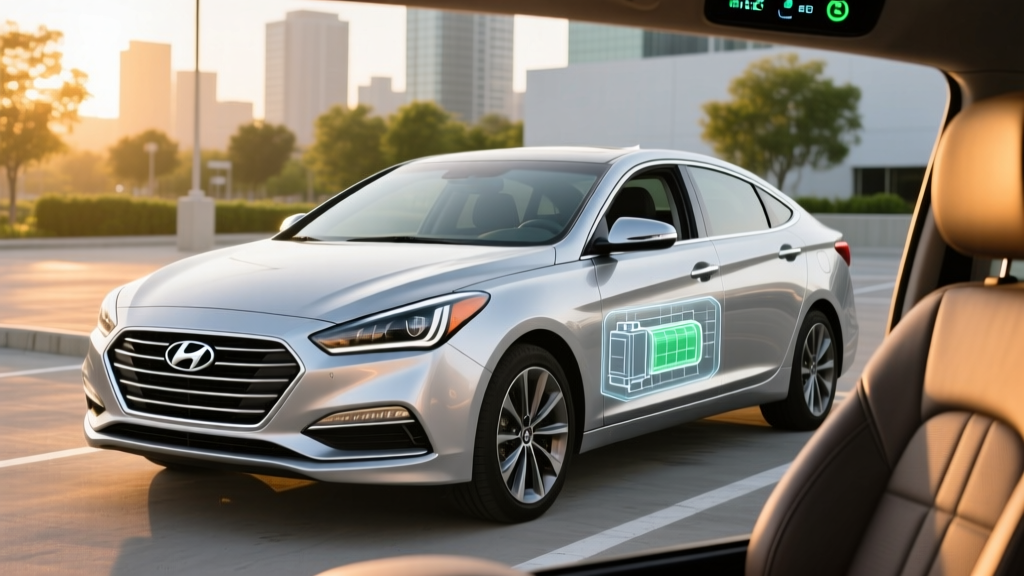
The 2016 Hyundai Sonata Hybrid occupies a practical sweet spot on the used market: a midsize sedan that delivers genuine fuel savings without demanding any change in driving habits. With an EPA-estimated 41 MPG combined, a conventional hybrid powertrain that requires no plug-in charging, and Hyundai's industry-leading hybrid battery warranty, it remains a compelling option for buyers who want efficiency without range anxiety or charging infrastructure dependency.
This was a significant redesign year for the Sonata Hybrid. Hyundai moved away from the earlier model's problematic transmission setup, replacing it with a conventional 6-speed automatic paired with a more powerful electric motor. The result was a more refined, more reliable, and more efficient hybrid sedan that competes directly with the Toyota Camry Hybrid and Ford Fusion Hybrid of the same era.
| Specification | 2016 Hyundai Sonata Hybrid |
|---|---|
| Powertrain | 2.0L I4 + electric motor (HEV) |
| Combined Horsepower | 193 HP |
| Engine Output | 154 HP @ 6,000 RPM |
| Electric Motor Output | 51 HP (38 kW) |
| Transmission | 6-speed automatic |
| Hybrid Battery | 1.62 kWh lithium-ion polymer |
| EPA City / Highway / Combined | 39 / 43 / 41 MPG |
| 0–60 MPH | ~8.0 seconds |
| Fuel Tank | 18.5 gallons |
| Total Range (est.) | ~758 miles |
| Cargo Volume | 13.3 cu ft (trunk) |
| Original MSRP | $26,000–$31,250 |
| Typical Used Price (2026) | $9,000–$14,500 |
HEV vs. PHEV: Understanding What You're Buying
It is critical to understand that the 2016 Sonata Hybrid is a conventional hybrid electric vehicle (HEV), not a plug-in hybrid (PHEV). Hyundai did offer a Sonata Plug-in Hybrid in the 2016 model year as a separate, distinct model — but the two vehicles have fundamentally different capabilities.
| Feature | 2016 Sonata Hybrid (HEV) | 2016 Sonata Plug-in Hybrid (PHEV) |
|---|---|---|
| Plug-in charging required? | No — charges via regen & engine | Yes — 9.8 kWh battery, Level 2 plug |
| Electric-only range | None (EV assist only at low speed) | ~27 miles EPA |
| Hybrid battery size | 1.62 kWh | 9.8 kWh |
| Combined MPG / MPGe | 41 MPG | 99 MPGe (electric) / 40 MPG (hybrid) |
| DC fast charging | N/A | No (Level 2 AC only, ~3 hours) |
| Combined HP | 193 HP | 202 HP |
| Original MSRP | $26,000–$31,250 | $35,450–$39,450 |
If you're searching for a 2016 Sonata Hybrid, confirm which version you're looking at. The HEV is the far more common model and the one most buyers want for its simplicity. The PHEV is rarer and appeals to drivers with short commutes and reliable home charging access.
Fuel Economy: EPA Estimates and Real-World MPG
| Driving Condition | EPA Estimate | Real-World Expectation |
|---|---|---|
| City | 39 MPG | 38–44 MPG (hybrids excel in stop-and-go) |
| Highway | 43 MPG | 38–42 MPG (less regen benefit at sustained speed) |
| Combined | 41 MPG | 38–43 MPG |
The 2016 Sonata Hybrid's EPA ratings were competitive at launch and remain strong for a used midsize sedan. According to fueleconomy.gov, the 39 city / 43 highway / 41 combined split reflects how Hyundai tuned the hybrid system for balanced efficiency.
Real-world results vary. Hybrid vehicles typically exceed their EPA city estimate in heavy traffic because regenerative braking recovers energy that gas-only vehicles waste as heat. Owners reporting on Fuelly and similar platforms frequently log 40–44 MPG in urban and suburban driving. Highway efficiency drops somewhat because the electric motor provides less assistance at sustained high speeds, and aerodynamic drag dominates. Expect 38–42 MPG on long interstate trips at 70+ MPH.
Cold weather impacts all hybrids. In winter conditions below freezing, expect a 5–10% reduction in fuel economy. The engine runs more frequently to maintain cabin heat and battery temperature, reducing the electric motor's contribution. This is a physics limitation shared by every hybrid on the market, not specific to the Sonata.
Powertrain Details: How the Hybrid System Works
The 2016 Sonata Hybrid pairs a 2.0-liter naturally aspirated 4-cylinder engine (154 HP) with a 51-HP electric motor integrated into the transmission housing. Combined system output is 193 HP — adequate for confident merging and highway passing. The 6-speed automatic transmission was a major improvement over the previous generation's unique hybrid transmission, which drew reliability complaints.
The 1.62 kWh lithium-ion polymer battery pack sits behind the rear seats, slightly reducing trunk space compared to the gas-only Sonata (13.3 cu ft vs. 16.3 cu ft). This battery is not user-chargeable; it recovers energy through regenerative braking and excess engine output. The battery management system maintains a state-of-charge window to prevent deep discharge or overcharge, which is key to longevity.
Driving modes include Eco, Normal, and Sport. Eco mode increases regenerative braking aggression and softens throttle response for maximum efficiency. Sport mode holds lower gears and increases steering weight. EV mode is available at very low speeds (under ~25 MPH) for brief distances — useful in parking lots or drive-throughs, but not meaningful for commuting.
Battery Warranty, Lifespan, and Replacement Cost
Hyundai Hybrid Battery Warranty (Original): 10 years / 100,000 miles for the original owner. Coverage drops to 10 years / 100,000 miles transferable in California Air Resources Board (CARB) states, and 10 years / 100,000 miles for the original owner only in non-CARB states. For second owners outside CARB states, the powertrain warranty is 5 years / 60,000 miles.
Warranty threshold: Hyundai replaces the hybrid battery if capacity drops below approximately 70% of original capacity during the warranty period.
For a 2016 model in 2026, the original 10-year / 100,000-mile warranty is either expired or nearing expiration depending on mileage. This makes pre-purchase battery health assessment critical.
Hyundai's lithium-ion polymer hybrid batteries have proven durable in practice. Taxi fleet data and high-mileage owner reports suggest these batteries commonly reach 150,000–200,000 miles before significant degradation. The Sonata Hybrid's relatively small 1.62 kWh battery experiences shallow charge cycles (it never fully charges or fully discharges), which extends cell life considerably compared to a full EV battery.
If replacement is needed out of warranty, expect to pay $2,500–$4,000 for a new OEM hybrid battery pack installed at a Hyundai dealer. Refurbished or aftermarket options may reduce this to $1,500–$2,500. This is a fraction of full EV battery replacement costs, reflecting the smaller pack size.
Tax Credits and Used Purchase Economics
The 2016 Hyundai Sonata Hybrid does not qualify for the current federal §30D new clean vehicle tax credit — that credit applies only to new vehicle purchases. However, the IRS used clean vehicle credit (up to $4,000 or 30% of sale price, whichever is less) applies only to battery electric vehicles and fuel cell vehicles, not conventional hybrids. The Sonata Hybrid HEV does not qualify for this credit either.
If you are considering the rarer 2016 Sonata Plug-in Hybrid, it originally qualified for a federal tax credit when new, but as a used vehicle in 2026, it does not qualify for the used EV credit because its MSRP when new exceeded relevant thresholds and the credit is non-transferable. Confirm current rules with a tax professional and the IRS used vehicle credit page.
The real economic story of the 2016 Sonata Hybrid is at the fuel pump. At $3.50/gallon gasoline and 15,000 miles driven annually:
| Vehicle | Combined MPG | Annual Fuel Cost | 5-Year Fuel Cost |
|---|---|---|---|
| 2016 Sonata Hybrid | 41 | $1,280 | $6,402 |
| 2016 Sonata 2.4L (gas) | 28 | $1,875 | $9,375 |
| Savings with Hybrid | — | $595/year | $2,973 over 5 years |
At typical used pricing of $9,000–$14,500, the Sonata Hybrid is already priced lower than equivalent-age gas sedans with similar mileage, meaning the fuel savings are a bonus on top of a lower purchase price.
Reliability, Safety, and Common Issues
The 2016 Sonata Hybrid benefits from the powertrain redesign that addressed earlier models' transmission complaints. The conventional 6-speed automatic is a proven, well-understood design with no hybrid-specific reliability concerns. The electric motor has no wear items — no brushes, no commutator — and is essentially maintenance-free.
Common issues reported by owners and tracked by the NHTSA include:
- Brake feel: The transition between regenerative braking and friction braking can feel abrupt, especially when coming to a stop. This is a characteristic of the hybrid system, not a defect, but some owners find it takes adjustment.
- 12V auxiliary battery: Like all hybrids, the Sonata has a conventional 12V battery for accessories. If the car sits unused for extended periods, this battery can drain. This is separate from the high-voltage hybrid battery.
- Trunk space: The 13.3 cu ft trunk is smaller than the gas Sonata's 16.3 cu ft due to the hybrid battery placement. Verify cargo needs before purchasing.
The NHTSA gave the 2016 Sonata Hybrid a 5-star overall safety rating. The IIHS named it a Top Safety Pick when equipped with optional forward collision warning.
Who Should Buy the 2016 Sonata Hybrid in 2026?
Pros
- 41 MPG combined with no plug-in requirement
- Strong reliability record post-redesign
- Low used pricing ($9K–$14.5K)
- Comfortable ride, spacious cabin
- Conventional 6-speed auto (no CVT drone)
- Low annual fuel cost (~$1,280/year)
Cons
- Trunk reduced to 13.3 cu ft
- Original hybrid battery warranty mostly expired
- No DC fast charging (not applicable for HEV)
- EV mode limited to low-speed, short distances
- Infotainment feels dated by 2026 standards
- Not eligible for federal used EV tax credit
Choose the 2016 Sonata Hybrid if: You want a reliable, efficient daily driver without changing your fueling habits. You don't have home charging access or don't want to install a Level 2 charger. You drive 10,000–20,000 miles annually and want to minimize fuel cost. You want a spacious sedan with proven safety ratings at a budget-friendly used price.
Choose a full EV instead if: You have reliable home charging (Level 2), drive under 250 miles daily, want zero tailpipe emissions, and can afford a higher upfront cost for lower operating expenses. Consider a used Chevrolet Bolt EV, Hyundai Kona Electric, or Tesla Model 3.
Choose a PHEV instead if: You have a short commute (under 30 miles), can charge at home, and want electric-only daily driving with gas-engine flexibility for road trips. Look at a used Toyota Prius Prime, Ford Fusion Energi, or Hyundai Ioniq Plug-in Hybrid.
Frequently Asked Questions
How many MPG does the 2016 Hyundai Sonata Hybrid get?
The EPA rates the 2016 Sonata Hybrid at 39 MPG city, 43 MPG highway, and 41 MPG combined. Real-world owners typically see 38–44 MPG depending on driving conditions. City driving with frequent stops often yields the best results due to regenerative braking.
Does the 2016 Sonata Hybrid need to be plugged in?
No. The 2016 Sonata Hybrid is a conventional HEV that charges its 1.62 kWh battery entirely through regenerative braking and the gasoline engine. You never plug it in. The separate 2016 Sonata Plug-in Hybrid (PHEV) is a different model that does require plugging in for its 27-mile electric range.
Is the 2016 Sonata Hybrid reliable, and what does a battery replacement cost?
Yes. The 2016 model year benefited from a redesigned powertrain that eliminated earlier transmission issues. The hybrid battery commonly lasts 150,000–200,000 miles. Out-of-warranty replacement costs $2,500–$4,000 for a new OEM pack, or $1,500–$2,500 for a refurbished unit.
Does the 2016 Hyundai Sonata Hybrid qualify for any tax credit in 2026?
No. As a conventional hybrid (HEV), the 2016 Sonata Hybrid does not qualify for the federal §30D new vehicle credit or the used clean vehicle credit (which applies only to BEVs and FCEVs). Some states may offer minimal hybrid incentives — check your state's energy office for current programs.
Hybrid vs. PHEV vs. EV — which should I choose?
A conventional hybrid like the Sonata Hybrid is best if you lack home charging access and want efficiency without behavior changes. A PHEV suits short-commute drivers who can charge at home and want electric daily driving with gas backup. A full EV is ideal if you have Level 2 home charging, want the lowest operating costs, and your daily driving stays within range. Your charging access is the single biggest factor in this decision.
What should I check before buying a used 2016 Sonata Hybrid?
Request a hybrid battery health report from a Hyundai dealer (State of Health percentage). Verify the battery warranty status — it may still apply in CARB states or if mileage is under 100,000. Check for any outstanding recalls via the NHTSA VIN lookup. Inspect brake pad wear (regen braking extends pad life, but they still need periodic replacement). Confirm the 12V battery age, as these typically need replacement every 4–5 years.