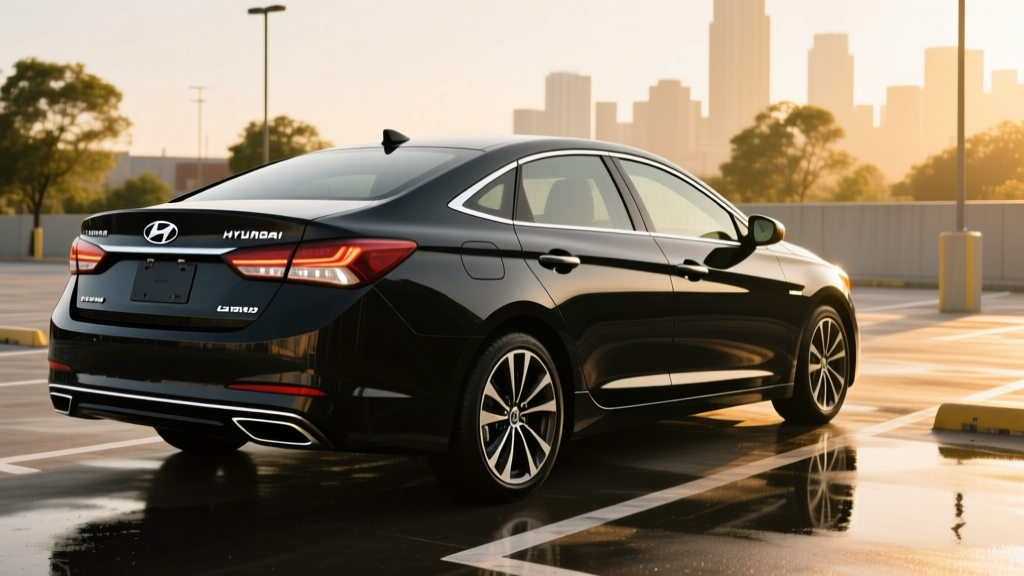
The 2016 Hyundai Sonata Hybrid Limited sedan occupies a specific niche in the used-car market: a midsize conventional hybrid (HEV) that prioritizes comfort and fuel economy over sportiness, without requiring a plug or lifestyle change. If you are cross-shopping used hybrids in 2026, this generation of the Sonata Hybrid deserves a close look — but understanding its exact specifications, real-world efficiency, and long-term battery health is critical before signing any paperwork.
This guide breaks down every number that matters: EPA fuel economy, powertrain output, hybrid battery warranty status, reliability data, and how the 2016 Sonata Hybrid compares to plug-in hybrids and full EVs on the used market.
HEV vs PHEV: What the 2016 Sonata Hybrid Actually Is
Conventional Hybrid (HEV): The 2016 Hyundai Sonata Hybrid is a self-charging hybrid. It uses a small battery recharged by the gasoline engine and regenerative braking. You never plug it in. There is no electric-only driving mode beyond very low-speed, short-distance creeping.
Plug-in Hybrid (PHEV): Hyundai also sold a Sonata Plug-in Hybrid for the 2016 model year, which is a fundamentally different vehicle. The PHEV variant has a larger 9.8 kWh battery, an electric-only range of about 27 miles (EPA), and a charge port. These two models are often confused in listings. This article focuses on the conventional HEV, but we address the PHEV variant in the FAQ section below.
This distinction matters because used listings frequently mislabel trims. The conventional HEV has no charge port, no electric-only range claim, and does not qualify for any federal plug-in vehicle tax credit. If a listing mentions "27 miles electric," you are looking at the PHEV, not the standard hybrid.
2016 Sonata Hybrid Limited: EPA MPG and Real-World Fuel Economy
| Metric | EPA Estimate | Real-World Expectation |
|---|---|---|
| City MPG | 39 mpg | 38–42 mpg (hybrids often exceed EPA in stop-and-go) |
| Highway MPG | 43 mpg | 38–41 mpg (sustained 70+ mph reduces hybrid advantage) |
| Combined MPG | 41 mpg | 38–42 mpg depending on driving mix |
According to fueleconomy.gov, the 2016 Hyundai Sonata Hybrid (all trims including the Limited) is rated at 39 city / 43 highway / 41 combined MPG. These are strong numbers for a midsize sedan, though they trail the segment-leading Toyota Camry Hybrid of the same era by a small margin.
In real-world driving, conventional hybrids tend to outperform their EPA city estimates because stop-and-go traffic maximizes regenerative braking and electric-motor assist. Highway driving is the opposite story: at sustained speeds above 65 mph, the gasoline engine does nearly all the work, and aerodynamic drag erodes the hybrid advantage. Owners who commute primarily in urban or suburban conditions will see numbers at or above the EPA combined rating. Highway-dominant commuters should expect figures closer to 38 mpg.
Cold weather also affects hybrid fuel economy. In temperatures below 35°F, expect a 5–10% reduction in MPG as the engine runs more frequently to maintain cabin heat and the battery operates less efficiently.
Powertrain and Performance Specifications
| Specification | 2016 Sonata Hybrid Limited |
|---|---|
| Engine | 2.0L inline-4 GDI (Atkinson cycle) |
| Engine Output | 154 hp / 140 lb-ft torque |
| Electric Motor | 38 kW (51 hp) permanent-magnet synchronous |
| Combined System Output | 193 hp |
| Hybrid Battery | 1.62 kWh lithium-ion polymer (not plug-in) |
| Transmission | 6-speed automatic (no CVT) |
| 0–60 mph | ~7.9 seconds |
| Drivetrain | Front-wheel drive |
Hyundai paired the 2.0-liter Atkinson-cycle four-cylinder with a 38 kW electric motor and a traditional 6-speed automatic transmission rather than the continuously variable transmission (CVT) found in the Toyota Camry Hybrid. This gives the Sonata Hybrid a more conventional, natural driving feel — shifts are perceptible and the engine doesn't drone under acceleration the way a CVT-equipped hybrid can. The trade-off is slightly lower overall efficiency compared to CVT rivals.
The 193 combined horsepower figure is competitive for the class. Acceleration is adequate for highway merging and passing, though the Sonata Hybrid is tuned for comfort and economy, not performance. The Limited trim adds paddle shifters, but they are a novelty rather than a sporting feature.
Limited Trim: What You Get for the Money
The Limited was the top-tier trim for the 2016 Sonata Hybrid, sitting above the base Hybrid trim. Key standard features on the Limited include:
- Leather seating surfaces with heated and ventilated front seats
- Heated rear seats
- 8-inch touchscreen navigation with Blue Link connected services
- Harman Kardon premium audio (9 speakers)
- Wireless phone charging pad
- LED daytime running lights and HID headlights
- Blind Spot Detection with Rear Cross-Traffic Alert
- Adaptive cruise control
- 17-inch alloy wheels
In 2026, used examples of the 2016 Sonata Hybrid Limited typically list between $9,000 and $14,000 depending on mileage, condition, and region. Low-mileage examples (under 60,000 miles) command the upper end of that range. This represents strong value for a well-equipped hybrid sedan with proven fuel economy.
Hybrid Battery Warranty and Replacement Cost
Original Warranty: Hyundai covered the 2016 Sonata Hybrid's lithium-ion polymer battery pack with a 10-year / 100,000-mile warranty (in states following federal emissions warranty guidelines; some states with CARB adoption extend this further). This warranty covers battery capacity loss below a defined threshold and defects.
2026 Status: As of 2026, the 10-year window for a 2016 model has expired or is expiring this year. Any 2016 Sonata Hybrid you buy today is likely at or beyond the original hybrid battery warranty unless the vehicle had fewer than 100,000 miles and the warranty was transferred to a second owner (Hyundai's hybrid battery warranty transfers to subsequent owners, unlike the powertrain warranty which reduces to 5/60,000 on transfer).
Replacement Cost: A refurbished or new hybrid battery pack for the 2016 Sonata Hybrid typically costs between $2,500 and $4,500 installed at an independent hybrid specialist. Dealership replacement can exceed $5,000. Third-party refurbished packs are increasingly available and can reduce cost to the $2,000–$3,000 range.
The 1.62 kWh battery in the conventional hybrid is small and experiences relatively shallow charge/discharge cycles, which generally leads to slower degradation compared to PHEV or full EV batteries. Most 2016 Sonata Hybrid batteries are lasting well beyond 150,000 miles with proper maintenance. However, if you are buying a high-mileage example (over 120,000 miles), budgeting for a potential battery replacement within your first few years of ownership is prudent.
Reliability and Long-Term Ownership Data
The 2016 model year is part of the seventh-generation Sonata (LF platform), which received a significant redesign for 2015. The hybrid variant shares much of its mechanical architecture with the gasoline model, and the 2.0L Atkinson-cycle engine is a proven, low-stress design.
Common issues reported by owners and tracked by NHTSA include:
- Hybrid system cooling fan: Some owners report cooling fan failures that can trigger reduced-power modes. Repair cost: $300–$600.
- 12V auxiliary battery drain: Like many Hyundai/Kia vehicles of this era, the 12V battery can drain if the vehicle sits for extended periods. This is not the hybrid traction battery — it is the standard 12V battery that powers electronics.
- Brake actuator recalls: Check NHTSA for any open recalls on the specific VIN. Hyundai issued recalls related to the anti-lock brake system on some Sonata models of this era.
Overall, the 2016 Sonata Hybrid rates as average to slightly above average in reliability for its class. It does not carry the bulletproof reputation of the contemporaneous Toyota Camry Hybrid, but catastrophic failures are uncommon. The 6-speed automatic transmission is a conventional torque-converter unit, which is generally more durable long-term than the CVTs used by competitors.
Tax Credit Eligibility: What Applies in 2026?
The 2016 Hyundai Sonata Hybrid (conventional HEV) does not qualify for the federal §30D new clean vehicle tax credit, nor does it qualify for the §25E used clean vehicle credit. Both credits require a vehicle to have plug-in capability with a minimum battery capacity. Because the Sonata Hybrid HEV is a self-charging hybrid with no plug, it is ineligible.
If you are looking at the 2016 Sonata Plug-in Hybrid (PHEV), the §25E used clean vehicle credit could theoretically apply — it offers up to $4,000 or 30% of the sale price (whichever is lower) for qualifying used plug-in vehicles priced at $25,000 or less. However, the vehicle must meet all IRS sourcing requirements and buyer income limits. Check the current IRS §25E guidelines before counting on this credit, as eligibility rules for older PHEVs can be complex.
Who Should Buy the 2016 Sonata Hybrid Limited?
Choose the 2016 Sonata Hybrid Limited if:
- You want 40+ MPG without plugging in or changing your routine
- You lack access to home or workplace charging (apartment, street parking)
- You want a loaded midsize sedan at a $10K–$14K used price point
- You prefer a traditional automatic transmission over a CVT
- Your commute is primarily city/suburban where hybrid efficiency peaks
Consider a full EV (like a used Chevrolet Bolt or Nissan Leaf) if:
- You can install a Level 2 home charger
- Your daily driving is under 200 miles round-trip
- You want zero tailpipe emissions and lower per-mile fuel cost
- You want to eliminate oil changes and engine maintenance entirely
Consider the Sonata Plug-in Hybrid (PHEV) if:
- You want 27 miles of electric-only range for short commutes
- You have access to a plug at home or work
- You still want gasoline flexibility for longer road trips
Pros and Cons at a Glance
Pros
- 41 MPG combined EPA — strong real-world city economy
- Limited trim is exceptionally well-equipped for the price
- 6-speed automatic avoids CVT drone and reliability concerns
- Comfortable ride quality and quiet cabin at cruising speed
- Adaptive cruise control and blind-spot detection standard on Limited
- No plug-in required — zero lifestyle change from a gas car
Cons
- Trails Camry Hybrid by 1–2 MPG on the EPA combined cycle
- Hybrid battery warranty likely expired on 2016 examples
- Modest 193 hp — not a performance-oriented sedan
- Infotainment system feels dated by 2026 standards (no wireless CarPlay)
- No federal tax credit eligibility for the conventional HEV
- Cargo space slightly reduced vs. gas Sonata due to battery placement
Frequently Asked Questions
How many MPG does the 2016 Hyundai Sonata Hybrid get?
The EPA rates the 2016 Sonata Hybrid at 39 city / 43 highway / 41 combined MPG. In real-world city driving, many owners report matching or slightly exceeding the 41 MPG combined figure. Highway-dominant driving typically yields 38–41 MPG.
How far can the 2016 Sonata Hybrid go on electric only?
The conventional hybrid (HEV) has no meaningful electric-only range. It can creep at very low speeds (under 25 mph) for short distances on battery power, but this is not a usable electric driving mode. If you want electric-only range, you need the Sonata Plug-in Hybrid variant, which offers 27 miles EPA electric-only.
Is the 2016 Sonata Hybrid reliable?
Overall reliability is average to above average for the midsize hybrid sedan segment. The 2.0L engine and 6-speed automatic are proven components. The hybrid battery typically lasts 150,000+ miles. Main concerns are cooling fan failures and 12V battery drain during extended parking. Always check NHTSA for open recalls on the specific VIN.
What does a replacement hybrid battery cost?
Expect $2,500–$4,500 for a replacement hybrid battery pack installed at an independent hybrid shop. Dealership pricing can exceed $5,000. Refurbished packs from third-party suppliers are available in the $2,000–$3,000 range. The original 10-year/100,000-mile warranty has likely expired on 2016 examples as of 2026.
Does the 2016 Sonata Hybrid qualify for any tax credit?
The conventional hybrid (HEV) does not qualify for any federal tax credit — neither the §30D new vehicle credit nor the §25E used vehicle credit, because it is not a plug-in vehicle. The separate Sonata Plug-in Hybrid (PHEV) variant may qualify for the §25E used credit (up to $4,000) if all IRS requirements are met, including buyer income limits and the $25,000 maximum sale price.
What is the difference between the Sonata Hybrid and Sonata Plug-in Hybrid?
The conventional Hybrid (HEV) has a 1.62 kWh battery, no plug, and 41 MPG combined. The Plug-in Hybrid (PHEV) has a 9.8 kWh battery, a charge port, 27 miles of electric-only range, and about 99 MPGe when operating in electric mode plus 40 MPG combined once the battery is depleted. They are different vehicles with different use cases.
How does the Sonata Hybrid compare to the Camry Hybrid of the same year?
The 2016 Toyota Camry Hybrid is rated at 42 MPG combined (40 city / 38 highway for the XLE; the LE Hybrid achieves 42/38/41). The Sonata Hybrid matches or slightly trails the Camry on paper but offers a more conventional driving feel with its 6-speed automatic versus Toyota's CVT. The Camry Hybrid generally commands a higher used price due to Toyota's resale value reputation.