Quick Verdict: A Sport-Compact Hybrid Ahead of Its Time
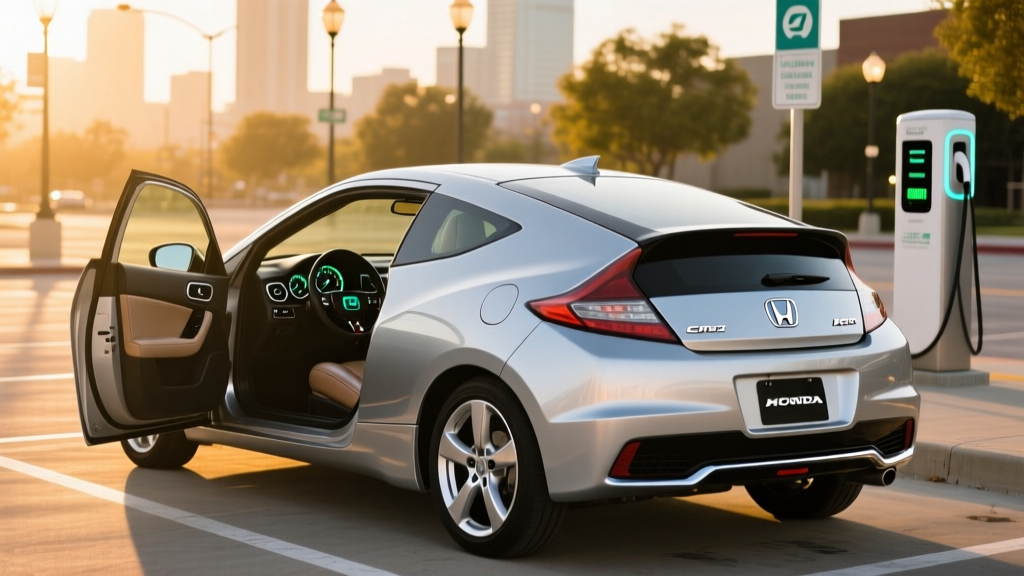
The 2016 Honda CR-Z hybrid occupies an unusual space in the used-car market: a two-seat sport coupe that sips fuel like a Prius but looks like nothing else in Honda's lineup. As Honda's spiritual successor to the original CRX, the CR-Z paired a 1.5-liter four-cylinder engine with Honda's Integrated Motor Assist (IMA) system to deliver respectable efficiency with a manual transmission option — a rarity among hybrids then and now. For 2026 buyers scouting the used market, the CR-Z remains a compelling entry point into hybrid ownership, provided you understand what this car is, what it isn't, and what its aging IMA battery might cost you.
This guide covers the 2016 model year specifically — the CR-Z's final production year before Honda discontinued the nameplate. We'll break down real-world fuel economy, battery longevity expectations, ownership costs, and whether the CR-Z still fits your driving needs a decade after it rolled off the assembly line.
2016 Honda CR-Z Hybrid MPG: EPA Numbers vs. Real-World Results
Fuel economy is the primary reason most buyers consider any hybrid, and the CR-Z delivers solid numbers — though not class-leading ones compared to the Prius or Insight. Here's the official EPA breakdown:
| Transmission | City MPG | Highway MPG | Combined MPG |
|---|---|---|---|
| CVT (Automatic) | 36 | 39 | 37 |
| 6-Speed Manual | 31 | 38 | 34 |
Source: EPA Fuel Economy Guide
The CVT-equipped CR-Z edges out the manual by 3 MPG combined, which is typical for Honda's IMA system — the continuously variable transmission keeps the engine in its most efficient rev range more consistently than a human driver shifting gears.
Real-World MPG Expectations
Based on owner reports aggregated on Fuelly and EPA user-submitted data, real-world fuel economy for the 2016 CR-Z clusters around these figures:
- City driving (stop-and-go): 34–38 MPG with CVT — the IMA system recaptures energy during braking, so city efficiency stays close to or slightly above the EPA sticker.
- Highway cruising (65–75 mph): 36–42 MPG — aerodynamics favor the CR-Z at steady speeds, and many owners report exceeding the 39 MPG highway estimate on flat terrain.
- Mixed/commuter driving: 33–37 MPG — realistic daily expectation for CVT models.
- Cold weather penalty: Expect a 5–10% reduction in winter months (roughly 30–34 MPG combined) as the engine runs richer during warm-up and cabin heating draws energy.
Compared to the 2016 Toyota Prius (52 MPG combined EPA), the CR-Z falls short by about 15 MPG. But the CR-Z was never designed to maximize efficiency above all else — it was engineered to prove that hybrids could be engaging to drive. If pure MPG is your only metric, the Prius or a used Honda Insight will serve you better. If you want a hybrid that doesn't feel like an appliance, the CR-Z is your car.
Powertrain Breakdown: How Honda's IMA System Works
The 2016 CR-Z uses Honda's Integrated Motor Assist (IMA) — a mild hybrid system that differs fundamentally from the full hybrid setups found in the Prius or Ford Fusion Hybrid. Understanding this distinction matters for setting realistic expectations.
| Component | Specification |
|---|---|
| Engine | 1.5L i-VTEC inline-4 |
| Engine horsepower | 111 hp @ 6,000 rpm |
| Electric motor output | 14 hp (10 kW) |
| Combined system output | 130 hp @ 6,000 rpm |
| Combined torque | 140 lb-ft (CVT) / 127 lb-ft (MT) |
| Hybrid battery | 0.6 kWh nickel-metal hydride (NiMH) |
| Transmission options | CVT or 6-speed manual |
| Drivetrain | Front-wheel drive |
| 0–60 mph | ~9.1 seconds (CVT) |
The IMA system sandwiches a thin electric motor between the engine and transmission. This motor provides torque fill at low RPMs (where the 1.5L engine is weakest), enables regenerative braking, and allows the engine to shut off at stops. However, unlike a full hybrid (HEV) like the Prius, the CR-Z cannot drive on electric power alone — the gasoline engine is always mechanically connected to the wheels when the car is moving.
The CR-Z is a conventional hybrid (HEV), meaning it generates all its electricity onboard through regenerative braking and the gasoline engine. It has no plug, no electric-only range, and no external charging capability. A plug-in hybrid (PHEV) like the Toyota Prius Prime or Chrysler Pacifica Hybrid has a larger battery (8–18 kWh) that you charge from a wall outlet or public charger, giving 25–45 miles of electric-only driving before the gas engine kicks in. The CR-Z's 0.6 kWh NiMH battery is roughly 1/20th the size of a modern PHEV battery.
Honda also included a "Sport" mode button on the 2016 CR-Z that sharpens throttle response, adjusts the electric assist curve, and (on CVT models) changes the transmission mapping. It's a modest but noticeable change that makes the car feel more responsive in spirited driving — a feature that reinforced the CR-Z's sporty positioning.
Hybrid Battery Lifespan, Warranty & Replacement Cost
The number-one concern for any used hybrid buyer is battery health. A decade-old hybrid battery is a legitimate consideration, so let's address this directly with data.
Honda warranted the 2016 CR-Z's IMA battery for 8 years / 100,000 miles (10 years / 150,000 miles in California Air Resources Board states: CA, CT, ME, MD, MA, NJ, NY, OR, RI, VT, WA). As of 2026, a 2016 model is 10 years old, meaning most CR-Z batteries are at or past their original warranty window unless the vehicle was registered in a CARB state and has under 150,000 miles.
How Long Does the CR-Z IMA Battery Actually Last?
Honda's NiMH IMA batteries have a strong track record for longevity. Based on owner forums (CR-Z Forum, Honda-Tech), repair shop data, and aggregated failure reports:
- Typical lifespan: 120,000–180,000 miles before noticeable capacity loss or cell imbalance triggers an IMA warning light.
- Age-related degradation: Even low-mileage examples (under 80,000 miles) can experience battery issues at 10–12 years of age due to calendar aging of NiMH cells.
- Warning signs: IMA system warning light on dash, reduced regenerative braking, lower fuel economy (2–5 MPG drop), and reduced electric assist during acceleration.
IMA Battery Replacement Costs in 2026
| Option | Cost Range | Notes |
|---|---|---|
| New OEM Honda battery | $2,000–$2,800 | Dealer-installed; includes labor. Best long-term reliability. |
| Refurbished/remanufactured battery | $1,000–$1,600 | Aftermarket suppliers (BumbleBee Batteries, Hybrid Automotive). Typically 1–3 year warranty. |
| Individual cell replacement | $300–$600 | DIY-friendly for experienced owners; replaces only failed cells. Grid charger (~$100) recommended for balancing. |
| Used OEM battery (junkyard) | $400–$800 | Risky — unknown remaining life. Best as a temporary fix. |
For context, replacing a CR-Z IMA battery costs significantly less than replacing a full EV traction battery ($5,000–$20,000+). The CR-Z's small 0.6 kWh pack is one of the more affordable hybrid battery replacements in the market, and the NiMH chemistry is well-understood by independent shops nationwide.
Pricing & Tax Credit Eligibility in 2026
The 2016 Honda CR-Z was originally priced between $20,295 (LX base with CVT) and $24,510 (EX-L with navigation). In the 2026 used market, expect these approximate ranges depending on mileage, condition, and battery health:
| Condition / Mileage | Approximate Price |
|---|---|
| Under 60,000 mi, excellent | $11,000–$14,000 |
| 60,000–100,000 mi, good | $8,000–$11,000 |
| 100,000+ mi, fair | $5,500–$8,000 |
| Needs IMA battery replacement | $4,000–$6,000 |
Does the 2016 CR-Z Qualify for Any Tax Credit?
Federal credit: No. The IRS §30D new clean vehicle credit applies only to new vehicles, and the used EV credit (§25E, up to $4,000) applies exclusively to used battery-electric vehicles and plug-in hybrids — not conventional hybrids like the CR-Z. The CR-Z has no plug and no EV range, so it does not qualify under current IRS clean vehicle credit rules.
State incentives: A handful of states offer rebates or HOV lane access for hybrid vehicles, but most have shifted incentive programs toward BEVs and PHEVs. Check your state's energy office or DMV for current programs — these vary widely by jurisdiction and change annually.
Tax deduction for hybrid battery replacement: There is no specific federal tax deduction for replacing a hybrid battery on a used vehicle. However, if you use the CR-Z for business purposes, the replacement cost may be deductible as a vehicle maintenance expense. Consult a tax professional for your specific situation.
2016 CR-Z vs. Alternatives: Hybrid, PHEV, or Full EV?
The used market in 2026 offers several alternatives at similar or slightly higher price points. Here's how the CR-Z stacks up against common cross-shops:
| Vehicle | Type | Combined MPG / MPGe | Seats | EV-Only Range |
|---|---|---|---|---|
| 2016 Honda CR-Z | HEV | 37 MPG | 2 | None |
| 2016 Toyota Prius | HEV | 52 MPG | 5 | None |
| 2017 Toyota Prius Prime | PHEV | 54 MPG / 133 MPGe | 4 | 25 mi |
| 2016 Honda Insight (discontinued) | HEV | 42 MPG | 5 | None |
| 2016–2017 Nissan Leaf (used) | BEV | 114 MPGe | 5 | 84–107 mi |
Sources: fueleconomy.gov
- Choose the CR-Z if: You want a fun-to-drive two-seat coupe, value the manual transmission option, have a short-to-medium commute, and can budget $1,000–$2,500 for a potential IMA battery replacement within the next few years.
- Choose a Prius or Insight if: Maximum fuel economy is your top priority, you need four or five seats, or you plan to drive 15,000+ miles per year where MPG savings compound quickly.
- Choose a Prius Prime (PHEV) if: You have home charging access, a commute under 25 miles, and want to drive mostly on electricity while keeping a gas engine for road trips.
- Choose a used Leaf or other BEV if: You have reliable home Level 2 charging, your daily driving stays under 70 miles, and you want zero tailpipe emissions with minimal maintenance (no oil changes, no hybrid battery concerns).
Reliability, Maintenance & Ownership Costs
The 2016 CR-Z benefits from Honda's reputation for mechanical durability. The 1.5L i-VTEC engine is a proven design shared in various forms across Honda's lineup, and the IMA system is mechanically simple compared to Toyota's planetary-gear full hybrid setup.
Known Reliability Points
- Engine: Excellent long-term reliability. Routine oil changes every 5,000–7,500 miles and timing chain (not belt — no replacement interval) make this a low-maintenance powerplant.
- IMA system: Generally reliable to 120,000+ miles. The NiMH battery is the primary wear item. The electric motor itself rarely fails.
- Transmission: Both the CVT and 6-speed manual have strong reliability records. CVT fluid should be changed every 30,000–60,000 miles per Honda's maintenance schedule.
- 12V battery: Like all hybrids, the CR-Z has a standard 12V auxiliary battery for electronics. This is separate from the IMA hybrid battery and should be replaced every 4–5 years like any conventional car battery.
- Brakes: Regenerative braking reduces wear on the friction brakes significantly. Many CR-Z owners report original brake pads lasting 80,000–100,000+ miles.
Annual Ownership Cost Estimate
At 12,000 miles per year and $3.50/gallon regular unleaded (the CR-Z does not require premium), annual fuel cost runs approximately $1,230 for a CVT model at 37 MPG combined. Compare this to a similarly aged non-hybrid sport coupe averaging 25 MPG combined, which would cost roughly $1,680 per year — a savings of about $450 annually from the hybrid system.
Insurance costs for the CR-Z are generally below average for a sport coupe, reflecting its modest power output and Honda's favorable crash-test data. Expect $900–$1,400 annually depending on your driving record and state.
Pros & Cons of the 2016 Honda CR-Z in 2026
Pros
- 37 MPG combined (CVT) — strong efficiency for a sport coupe
- 6-speed manual option — one of the only hybrids ever sold with a stick shift
- Distinctive, head-turning styling that ages well
- Honda reliability and low maintenance costs
- Affordable IMA battery replacement vs. full EV batteries
- Regenerative braking extends brake pad life dramatically
- Lightweight (~2,850 lbs) makes it nimble in city driving
Cons
- Only two seats — impractical as a primary vehicle for most buyers
- Small cargo area (25.1 cu ft with rear parcel shelf removed)
- IMA battery likely due for replacement at this age — budget $1,000–$2,800
- No electric-only mode — not as efficient as full hybrids or PHEVs
- 9.1-second 0–60 time — "sport" is relative; it's not quick by modern standards
- No federal or state tax credits available for used conventional hybrids
- Discontinued model — some body/trim parts may be harder to source
Frequently Asked Questions
How many MPG does the 2016 Honda CR-Z hybrid get?
The EPA rates the 2016 CR-Z at 36 city / 39 highway / 37 combined MPG with the CVT transmission, and 31 city / 38 highway / 34 combined with the 6-speed manual. Real-world owners typically see 33–42 MPG depending on driving conditions, with highway cruising often exceeding the EPA estimate.
Can the 2016 CR-Z drive on electric power only?
No. The CR-Z is a conventional hybrid (HEV), not a plug-in hybrid (PHEV). Its IMA system provides electric assist to the gasoline engine and enables regenerative braking, but the car cannot move under electric power alone. If electric-only driving is important to you, look at PHEVs like the Prius Prime (25 mi EV range) or a full BEV.
Is the 2016 CR-Z reliable, and what does a battery replacement cost?
The CR-Z is generally reliable, with the Honda 1.5L engine and manual/CVT transmissions proving durable well past 150,000 miles. The main concern is the NiMH IMA battery, which typically lasts 120,000–180,000 miles or 10–15 years. Replacement costs range from $300–$600 for individual cell repair to $2,000–$2,800 for a new OEM battery from a Honda dealer.
Does the 2016 CR-Z qualify for any tax credits?
No. Federal tax credits under IRS §30D (new vehicles) and §25E (used EVs) do not apply to conventional hybrids. The CR-Z has no plug-in capability and no electric-only range, making it ineligible for current federal clean vehicle incentives. Some states may offer minor perks (HOV access, registration discounts), but these vary by jurisdiction — check your state's energy office for current programs.
Should I buy a 2016 CR-Z or a used Prius?
It depends on your priorities. The Prius delivers 52 MPG combined, seats five, and has a larger cargo area — it's the practical choice for commuters and families. The CR-Z offers 37 MPG with sportier styling, a manual transmission option, and a more engaging drive, but sacrifices two seats and 15 MPG. If efficiency and practicality lead your decision, choose the Prius. If driving enjoyment and uniqueness matter more, the CR-Z is worth the trade-off.
What should I check before buying a used 2016 CR-Z?
Prioritize these items during a pre-purchase inspection:
- IMA battery health: Ask for a diagnostic scan showing battery cell voltages and state of health. An IMA warning light is a dealbreaker unless the price reflects a $1,000–$2,800 battery replacement.
- Maintenance records: Confirm regular oil changes and CVT fluid service.
- 12V battery age: A weak 12V battery can cause IMA system errors even when the hybrid battery is fine.
- Rust inspection: Check undercarriage and wheel wells if the car was driven in salt-belt states.
- Test drive in Sport mode: Verify the electric assist engages smoothly and regenerative braking feels consistent.