Quick Verdict: The 2016 Accord Hybrid in 2026
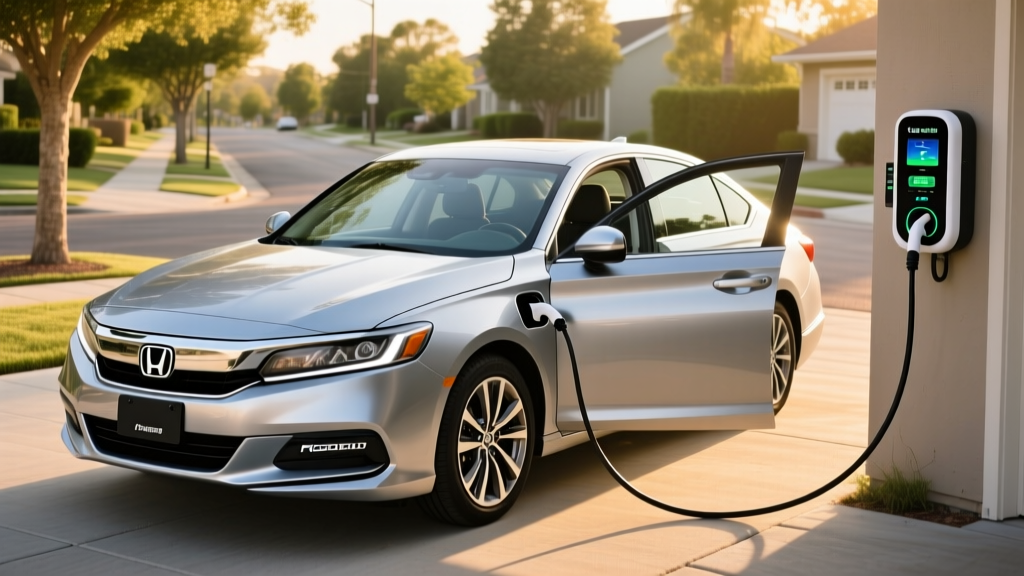
If you're shopping the used midsize sedan market for maximum fuel efficiency without plugging in, the 2016 Honda Accord Hybrid remains one of the most compelling options a decade after its debut. With an EPA-rated 48 MPG combined and a proven two-motor hybrid system, this car delivers real-world savings that few competitors from its era can match. But as these vehicles cross the 10-year mark, battery health and replacement costs become the dominant concern for prospective buyers.
This guide breaks down everything you need to know — from verified fuel economy data and powertrain specs to battery longevity, replacement pricing, and how the Accord Hybrid stacks up against modern PHEVs and full EVs available today.
Fuel Economy: EPA Ratings vs. Real-World MPG
| Metric | Value |
|---|---|
| City MPG | 50 MPG |
| Highway MPG | 45 MPG |
| Combined MPG | 48 MPG |
| Fuel Tank Capacity | 12.8 gallons |
| Total Range (est.) | ~614 miles |
Source: EPA fueleconomy.gov
The 2016 Accord Hybrid's 50 MPG city rating is notable — like most conventional hybrids, it actually performs better in stop-and-go traffic where the electric motor handles low-speed propulsion and regenerative braking recaptures energy constantly. Highway driving relies more heavily on the 2.0L Atkinson-cycle gasoline engine, which explains the 5 MPG drop.
Owner reports and long-term testing consistently place the 2016 Accord Hybrid between 42–50 MPG combined in mixed driving. City-dominant commutes regularly exceed the EPA's 50 MPG city estimate in warm weather. Highway-heavy road trips at 75+ MPH may dip to 38–42 MPG. Cold weather (below 35°F) reduces efficiency by roughly 5–10% due to increased engine idling for cabin heat and reduced battery efficiency.
Powertrain and Performance Specs
| Specification | Detail |
|---|---|
| Engine | 2.0L 4-cylinder Atkinson-cycle i-VTEC |
| Engine Horsepower | 143 HP @ 6,200 RPM |
| Engine Torque | 129 lb-ft @ 3,500 RPM |
| Electric Motor Output | 166 HP / 226 lb-ft |
| Combined System Output | 196 HP |
| Transmission | Electronic CVT (e-CVT, no traditional belt/pulleys) |
| Drivetrain | Front-wheel drive |
| 0–60 MPH (est.) | ~7.1 seconds |
| Hybrid Battery | 1.3 kWh lithium-ion (nominal) |
Honda's Sport Hybrid Intelligent Multi-Mode Drive (i-MMD) system in this generation operates differently than Toyota's planetary-gear Hybrid Synergy Drive. The Accord Hybrid primarily drives the wheels through the electric motor at low and moderate speeds, with the gasoline engine acting as a generator. Only at sustained highway speeds does a lock-up clutch mechanically connect the engine directly to the wheels. This results in smoother, more EV-like acceleration feel around town.
HEV vs. PHEV vs. EV: Where Does the Accord Hybrid Fit?
The 2016 Accord Hybrid is a conventional hybrid electric vehicle (HEV). It does not plug in. The small 1.3 kWh battery charges exclusively through regenerative braking and the gasoline engine. This is fundamentally different from a plug-in hybrid (PHEV) or a battery-electric vehicle (BEV).
| Feature | HEV (Accord Hybrid) | PHEV (e.g., 2026 RAV4 Prime) | BEV (e.g., 2026 Tesla Model 3) |
|---|---|---|---|
| Plug-in charging? | No | Yes (Level 1/2) | Yes (Level 1/2/DC) |
| Electric-only range | ~1 mile at low speed | 30–45 miles | 250–360+ miles |
| Gasoline engine? | Yes (always available) | Yes (backup) | No |
| Federal tax credit (§30D) | Not eligible | Up to $7,500* | Up to $7,500* |
| Home charging needed? | No | Recommended | Essential |
| Typical used price (2026) | $12,000–$18,000 | $28,000–$42,000 | $22,000–$38,000 |
*§30D credit eligibility depends on MSRP caps, buyer income limits, battery sourcing requirements, and manufacturer phase-out status. See IRS.gov for current rules.
Tax Credit Eligibility for the 2016 Accord Hybrid
The 2016 Honda Accord Hybrid does not qualify for the federal §30D clean vehicle tax credit. This credit applies only to plug-in electric vehicles (PHEVs and BEVs) with sufficient battery capacity and compliant sourcing. Conventional HEVs have never been eligible for §30D.
Some states historically offered rebates for hybrid purchases, but most state-level hybrid incentive programs have ended or shifted focus to PHEVs and BEVs. Check your state's energy office or AFDC incentive database for any remaining local programs.
Battery Longevity, Warranty, and Replacement Cost
Honda warranted the 2016 Accord Hybrid's lithium-ion battery pack for 8 years / 100,000 miles (10 years / 150,000 miles in CARB states including California, New York, Massachusetts, and others). As of 2026, most examples have aged out of the time-based warranty unless they were registered in a CARB state and remain under 150,000 miles.
How Long Does the Battery Actually Last?
Honda's i-MMD system uses a relatively small 1.3 kWh battery that operates within a narrow state-of-charge window — typically between 20% and 80% SoC. This shallow cycling significantly reduces degradation compared to BEVs that routinely cycle from 10% to 90%. Real-world data from high-mileage Accord Hybrids shows most packs retain sufficient capacity well past 150,000 miles.
Common failure modes at high mileage aren't sudden death but gradual capacity loss, which manifests as slightly reduced fuel economy (the engine runs more often to compensate) and less seamless electric-only creep at low speeds.
Battery Replacement Cost
As of 2026, expect the following for a 2016 Accord Hybrid battery replacement:
- OEM new battery (Honda dealer): $3,000–$4,500 including parts and labor
- Remanufactured/reconditioned pack: $1,500–$2,500
- Independent hybrid specialist: $2,000–$3,500 for OEM or aftermarket pack with installation
Given that a well-maintained 2016 Accord Hybrid trades for $12,000–$18,000 in the used market, a $3,000+ battery replacement is a meaningful percentage of the vehicle's value. Before purchasing, request a hybrid battery health report from a Honda dealer or use an OBD-II scanner with hybrid-compatible software to check battery state of health (SoH).
Reliability and Ownership Costs
The 2016 Accord Hybrid benefits from Honda's strong reliability reputation and the relative simplicity of the i-MMD system. The e-CVT has no traditional belt, chain, or pulley components — it's an electrically coupled system with fewer wear items than a conventional automatic transmission. Brakes last significantly longer than on gas-only Accords thanks to regenerative braking handling most deceleration; 80,000–100,000 miles on original brake pads is common.
Key reliability considerations for a 10-year-old example:
- Inverter/PCU: Rare failures, but replacement costs $1,500–$2,500 if it occurs
- 12V auxiliary battery: Standard replacement every 4–5 years ($150–$250)
- A/C compressor: Electrically driven; verify cold air output at purchase
- Coolant system: The hybrid system has its own coolant loop; verify service history
Insurance costs are typically comparable to a gas Accord — hybrids don't carry the premium surcharges that some early EVs did. Annual maintenance is minimal: oil changes, cabin air filter, tire rotation, and brake fluid flush.
Pros, Cons, and Who Should Buy
- 48 MPG combined — among the best of any midsize sedan, any year
- No plug-in required — works for apartment dwellers and street parkers
- Spacious cabin with 15.5 cu-ft trunk (only 0.4 cu-ft less than gas Accord)
- Smooth, quiet electric-dominated city driving
- Proven Honda reliability with widely available parts
- Low brake wear from regen braking
- Battery warranty likely expired on most examples
- Replacement battery cost is significant relative to vehicle value
- No EV-only mode for meaningful zero-emission driving
- Dated infotainment — no wireless CarPlay/Android Auto, small screen
- No DC fast charging capability (not applicable — HEV)
- Highway MPG drops noticeably at speeds above 70 MPH
Who Should Choose the 2016 Accord Hybrid?
Buy it if: You want maximum MPG without changing your habits. No home charger needed, no range anxiety, no plug-in logistics. Ideal for high-mile commuters (15,000+ miles/year) where fuel savings quickly offset the used purchase price. At 48 MPG versus a 30 MPG gas sedan, you save roughly $700–$900/year at 15,000 miles and $3.20/gallon.
Look elsewhere if: You want electric-only commuting (consider a PHEV like a used Chevrolet Volt or a new Toyota RAV4 Prime), you need modern driver-assistance features (the 2016 Accord's Honda Sensing suite is basic by 2026 standards), or you want the lowest possible operating cost and have home charging access (a used BEV eliminates fuel costs entirely).
Frequently Asked Questions
How many MPG does the 2016 Honda Accord Hybrid get?
The EPA rates it at 50 city / 45 highway / 48 combined MPG. Real-world results typically fall between 42–50 MPG combined depending on driving mix, speed, and temperature. City-dominant driving in warm weather often exceeds the EPA estimate.
Does the 2016 Accord Hybrid need to be plugged in?
No. It is a conventional hybrid (HEV), not a plug-in hybrid. The battery charges through regenerative braking and the gasoline engine. You fuel it like any other car — just less often.
Is the hybrid battery reliable, and what does replacement cost?
The 1.3 kWh lithium-ion pack is generally reliable past 150,000 miles due to Honda's conservative state-of-charge management. If replacement is needed, expect $1,500–$4,500 depending on whether you choose a remanufactured or OEM pack and where you have it installed.
Does the 2016 Accord Hybrid qualify for any tax credit?
No. The federal §30D clean vehicle credit applies only to plug-in vehicles (PHEVs and BEVs). Conventional hybrids are not eligible. Most state hybrid incentives have also expired.
How does the 2016 Accord Hybrid compare to a modern PHEV or EV?
A 2026 PHEV offers 30–45 miles of electric-only range for short commutes but costs $28,000+ even used. A used BEV eliminates fuel costs entirely but requires home charging access. The 2016 Accord Hybrid at $12,000–$18,000 offers the lowest entry cost and zero lifestyle changes — just fill up less often.
What should I check before buying a used 2016 Accord Hybrid?
Prioritize: (1) hybrid battery health report via OBD-II scan, (2) complete service records showing regular oil changes and coolant service, (3) brake pad thickness (should have significant life remaining thanks to regen), and (4) verify the 12V battery age. A pre-purchase inspection at a Honda dealer is strongly recommended.