Quick Verdict: The 2016 Highlander Hybrid in 2026
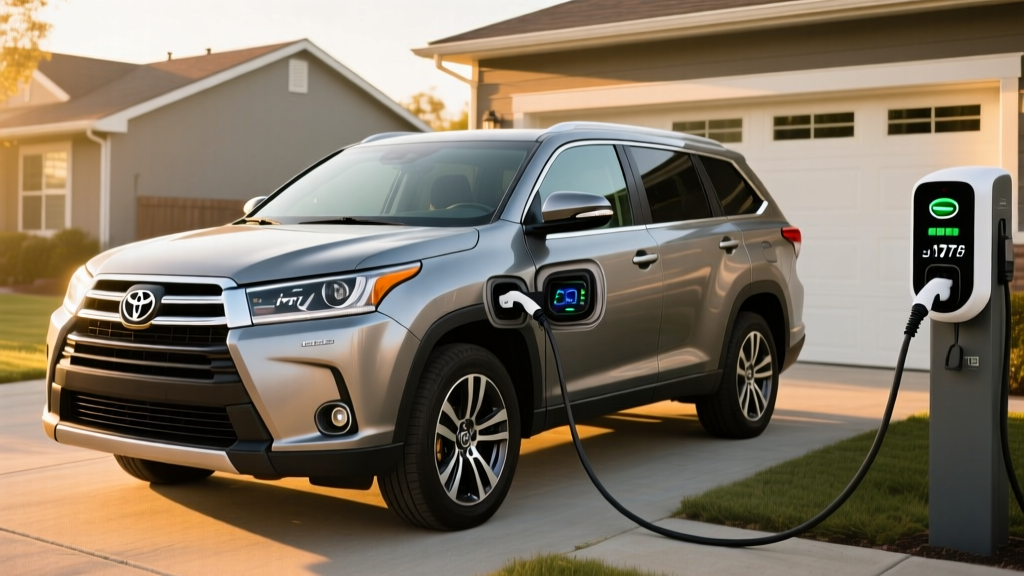
The 2016 Toyota Highlander Hybrid is a conventional hybrid (HEV), not a plug-in hybrid. It requires no external charging — the gasoline engine and regenerative braking keep its small nickel-metal hydride (NiMH) battery topped up. A decade after its debut, this three-row midsize SUV remains one of the most reliable hybrid vehicles on the used market, returning an EPA-estimated 28 MPG combined with seating for up to eight passengers. For buyers who want hybrid fuel economy without changing their refueling habits, the 2016 Highlander Hybrid holds up remarkably well against newer competitors.
| Spec | 2016 Highlander Hybrid |
|---|---|
| Powertrain | 3.5L V6 + 3 electric motors (AWD-i) |
| Combined Horsepower | 280 hp net |
| Battery Chemistry | NiMH (nickel-metal hydride) |
| Battery Capacity | ~1.9 kWh (not plug-in) |
| EPA MPG (City / Hwy / Combined) | 27 / 28 / 28 |
| Drivetrain | AWD-i (electronic all-wheel drive) |
| 0–60 mph | ~7.8 seconds |
| Seating | Up to 8 passengers |
| Cargo Volume (behind 3rd row) | 13.8 cu ft |
| Original MSRP (base LE) | ~$48,095 |
| Used Price Range (2026) | ~$14,000–$22,000 |
HEV vs PHEV: Understanding What the 2016 Highlander Hybrid Is
Before evaluating this SUV, it's essential to understand the difference between the two main hybrid architectures, because the 2016 Highlander Hybrid uses only one of them.
| Feature | Conventional Hybrid (HEV) | Plug-In Hybrid (PHEV) |
|---|---|---|
| External Charging Required? | No — self-charging via engine + regen | Yes — plug in for electric-only range |
| Battery Size | Small (~1–2 kWh) | Larger (8–25+ kWh) |
| Electric-Only Driving | Very short distances, low speeds | 20–50 miles typical at highway speeds |
| Example (Toyota SUV) | 2016 Highlander Hybrid | 2026 RAV4 Prime (42 mi electric) |
| Federal Tax Credit | None (expired long ago) | Up to $7,500 if §30D criteria met |
The 2016 Highlander Hybrid is firmly in the HEV column. You will never need to plug it in. If you want electric-only commuting capability from a Toyota SUV, you'd be looking at the RAV4 Prime PHEV or the newer Highlander Hybrid (which is still an HEV, just with a more modern powertrain).
Fuel Economy: EPA Numbers vs Real-World MPG
The EPA rates the 2016 Highlander Hybrid at 27 MPG city, 28 MPG highway, and 28 MPG combined, according to data on fueleconomy.gov. That's a modest advantage over the gas-only 2016 Highlander V6 AWD, which was rated at 18/24/20 MPG.
| Driving Scenario | EPA Estimate | Real-World Expectation |
|---|---|---|
| City (stop-and-go) | 27 MPG | 26–30 MPG (hybrids often exceed EPA in city) |
| Highway (70+ mph) | 28 MPG | 24–27 MPG (aero drag reduces hybrid advantage) |
| Combined | 28 MPG | 25–28 MPG |
| Cold Weather (below 32°F) | — | 22–25 MPG (engine runs more for cabin heat) |
Toyota's Hybrid Synergy Drive excels in city driving, where the electric motors handle low-speed propulsion and regenerative braking recaptures energy at every stop. On the highway, the 3.5L V6 does most of the work, so the hybrid fuel-economy advantage narrows. Expect to lose 2–4 MPG in sustained cold weather because the engine must run continuously to provide cabin heat — this SUV predates the heat pump technology found in modern EVs and some newer hybrids.
For context, the 2026 Toyota Highlander Hybrid achieves 35–36 MPG combined thanks to a more efficient 2.5L four-cylinder hybrid system. That's a meaningful 7–8 MPG improvement over the 2016 model, but the 2016 version still significantly undercuts the gas-only equivalent of its era.
Powertrain Deep Dive: V6 + Three Electric Motors
The 2016 Highlander Hybrid pairs a 3.5-liter V6 gasoline engine (236 hp on its own) with Toyota's Hybrid Synergy Drive system using three electric motor/generators:
- MG1: Acts as a starter and generator, controlling the planetary gearset
- MG2: Primary drive motor for the front wheels, also handles regenerative braking
- Rear motor: Powers the rear axle for AWD-i (electronic all-wheel drive) — there is no mechanical driveshaft connecting front and rear
Combined net system output is 280 horsepower. The continuously variable transmission (eCVT) is a planetary gearset, not a belt-and-cone CVT, which gives it excellent durability. This is the same fundamental architecture Toyota has used since the original Prius, refined over millions of vehicles.
The AWD-i system is worth noting: because the rear wheels are driven entirely by an electric motor, there's no driveshaft tunnel eating into cabin space, and the rear wheels engage almost instantly when front-wheel slip is detected. It's not designed for serious off-roading, but it handles rain, snow, and light gravel confidently.
Hybrid Battery Lifespan, Warranty & Replacement Cost
Original Battery Warranty: Toyota covered the 2016 Highlander Hybrid's NiMH battery for 8 years / 100,000 miles (extended to 10 years / 150,000 miles in California Air Resources Board states, including CA, CT, ME, MA, NJ, NY, OR, RI, VT, and WA).
Current Status (2026): The 8-year/100k warranty has expired for most 2016 models unless they were purchased very late in the model year and driven minimally. The 10-year/150k CARB-state warranty may still apply to low-mileage examples registered in qualifying states.
The NiMH battery in the 2016 Highlander Hybrid has a strong track record for longevity. Toyota's hybrid batteries routinely last 150,000–200,000+ miles before significant degradation. Unlike the large lithium-ion packs in EVs, this is a relatively small ~1.9 kWh pack that never experiences deep discharge cycles — the hybrid system keeps the state of charge between roughly 40% and 80%, which is the gentlest possible operating window for battery chemistry.
Replacement cost if the battery fails out of warranty:
- OEM new battery (Toyota dealer): $3,000–$4,500 including labor
- Refurbished/remanufactured battery: $1,500–$2,500 including labor
- Individual cell/module replacement: $500–$1,200 (specialized hybrid shops can replace only the degraded modules)
For a vehicle now worth $14,000–$22,000, a full OEM battery replacement is a significant expense but not a total loss. Many owners opt for refurbished packs or module-level repair, which extends the vehicle's life at a fraction of the cost. Independent hybrid specialists like those in the NHTSA-registered repair network can perform these services.
Reliability & Safety Record
The 2016 Highlander Hybrid benefits from Toyota's long-standing reputation for hybrid reliability. The Hybrid Synergy Drive system has no traditional transmission clutches, torque converter, or starter motor — components that commonly fail in conventional vehicles. The eCVT planetary gearset is essentially bulletproof with normal maintenance.
Common issues reported by owners and tracked by NHTSA include:
- 12V auxiliary battery drain: Like all hybrids, the 12V battery can die if the vehicle sits unused for extended periods. This is separate from the hybrid traction battery.
- Brake actuator recalls: Some 2016 Highlander models were included in brake-related service campaigns. Check the VIN on NHTSA.gov for open recalls.
- Water pump: The engine water pump can develop leaks around 100,000–130,000 miles (~$500–$800 repair).
The 2016 Highlander earned an IIHS Top Safety Pick rating when equipped with optional front crash prevention, and it received a 4-star overall rating from NHTSA. Standard safety equipment included eight airbags, stability control, and a rearview camera.
Pricing, Tax Credits & Total Cost of Ownership
Used market pricing (early 2026): Expect to pay between $14,000 and $22,000 depending on mileage, condition, and trim level (LE, XLE, Limited, or Limited Platinum).
Federal tax credit: The 2016 Highlander Hybrid does not qualify for the federal §30D clean vehicle credit. That credit applies only to new plug-in electric vehicles (BEVs and PHEVs) meeting current battery-sourcing, MSRP, and buyer-income requirements as outlined on IRS.gov. Conventional hybrids like this one have not qualified for a federal purchase incentive in many years.
State incentives: A few states offer modest used-hybrid rebates or reduced registration fees, but these vary by jurisdiction. Check your state's energy office or DMV for current programs.
Five-year ownership cost estimate (buying in 2026 at ~$18,000):
| Cost Category | 5-Year Estimate |
|---|---|
| Purchase Price | $18,000 |
| Fuel (12,000 mi/yr, 27 MPG avg, $3.40/gal) | $7,556 |
| Insurance (national avg, family SUV) | $7,500 |
| Maintenance (hybrid-specific + routine) | $3,000 |
| Estimated Depreciation | $6,000 |
| Total 5-Year Cost | ~$42,056 |
For comparison, a gas-only 2016 Highlander V6 AWD at 20 MPG combined would cost approximately $10,200 in fuel over the same period — roughly $2,644 more in fuel alone. That fuel savings helps offset the hybrid's typically higher used-car premium.
Who Should Buy the 2016 Highlander Hybrid vs a PHEV or EV?
Pros
- No plug-in charging needed — refuel at any gas station
- Proven Toyota hybrid reliability with 200k+ mile track record
- AWD standard on all Hybrid trims
- Significant fuel savings vs gas-only Highlander (~$530/yr at 12k mi)
- 8-passenger seating in a midsize footprint
- Low maintenance costs (no transmission fluid changes, regenerative braking extends pad life)
Cons
- 28 MPG combined trails the 2026 Highlander Hybrid by 7–8 MPG
- Small cargo area behind 3rd row (13.8 cu ft)
- No electric-only driving range — always burns gasoline
- No federal tax credit available
- Hybrid battery warranty likely expired
- Dated infotainment (no Apple CarPlay or Android Auto on 2016 models)
Choose the 2016 Highlander Hybrid if:
- You need three rows and AWD but can't charge at home
- You want a reliable, affordable hybrid SUV under $22,000
- Your driving is mostly city/suburban where hybrid efficiency shines
- You plan to keep the vehicle 5+ years and want minimal drivetrain risk
Consider a newer PHEV (like the RAV4 Prime or Sienna PHEV) if:
- You have home charging and a short commute you'd like to do on electricity
- You want to qualify for the §30D federal tax credit (up to $7,500 on eligible new PHEVs)
- You want modern infotainment with smartphone integration
Consider a full EV (like the Kia EV9 or Tesla Model X) if:
- You have reliable Level 2 home charging
- Your daily driving is under 250 miles and you road-trip infrequently
- You want zero tailpipe emissions and the lowest per-mile fuel cost
Frequently Asked Questions
How many MPG does the 2016 Highlander Hybrid get?
The EPA rates it at 27 city / 28 highway / 28 combined. Real-world results typically range from 25–30 MPG depending on driving style, with city driving often exceeding the EPA estimate thanks to regenerative braking. Cold weather can drop combined MPG to 22–25.
Does the 2016 Highlander Hybrid need to be plugged in?
No. This is a conventional hybrid (HEV), not a plug-in hybrid (PHEV). The battery charges itself through the gasoline engine and regenerative braking. You will never need a charging cable or outlet.
How far can the 2016 Highlander Hybrid drive on electric only?
Effectively zero meaningful distance. The NiMH battery holds only ~1.9 kWh, and the electric motors can propel the vehicle at very low speeds (under ~25 mph) for perhaps a quarter mile before the engine kicks in. This is not a vehicle designed for electric-only driving — the electric motors assist the engine to reduce fuel consumption, not replace it.
Is the hybrid battery reliable and what does replacement cost?
Toyota's NiMH hybrid batteries are among the most durable in the industry, routinely lasting 150,000–200,000+ miles. The original warranty was 8 years/100,000 miles (10/150,000 in CARB states). Out-of-warranty replacement runs $1,500–$4,500 depending on whether you choose refurbished or OEM new. Module-level repair can cost as little as $500–$1,200.
Does the 2016 Highlander Hybrid qualify for any tax credit?
No. Federal §30D clean vehicle credits apply only to qualifying new plug-in electric vehicles (BEVs and PHEVs). Conventional hybrids have not been eligible for a federal purchase credit in many years. Some states may offer minor incentives for used hybrids — check your state's energy office.
How does the 2016 Highlander Hybrid compare to the current model?
The 2026 Toyota Highlander Hybrid uses a 2.5L four-cylinder hybrid system producing 243 hp and achieving 35–36 MPG combined — about 7–8 MPG better than the 2016 V6 hybrid. The newer model also offers Apple CarPlay, Android Auto, Toyota Safety Sense 2.5+, and available captain's chairs. However, the 2026 model starts around $42,000+ new, while a well-maintained 2016 can be had for $14,000–$22,000.
What should I check before buying a used 2016 Highlander Hybrid?
Have a mechanic check the hybrid battery state of health (SoH) using a scan tool — look for voltage delta across modules. Verify no open recalls on NHTSA.gov using the VIN. Check the 12V battery age (replace if over 4 years old). Confirm the brake actuator service campaign was addressed. And review maintenance records for water pump and inverter coolant service.