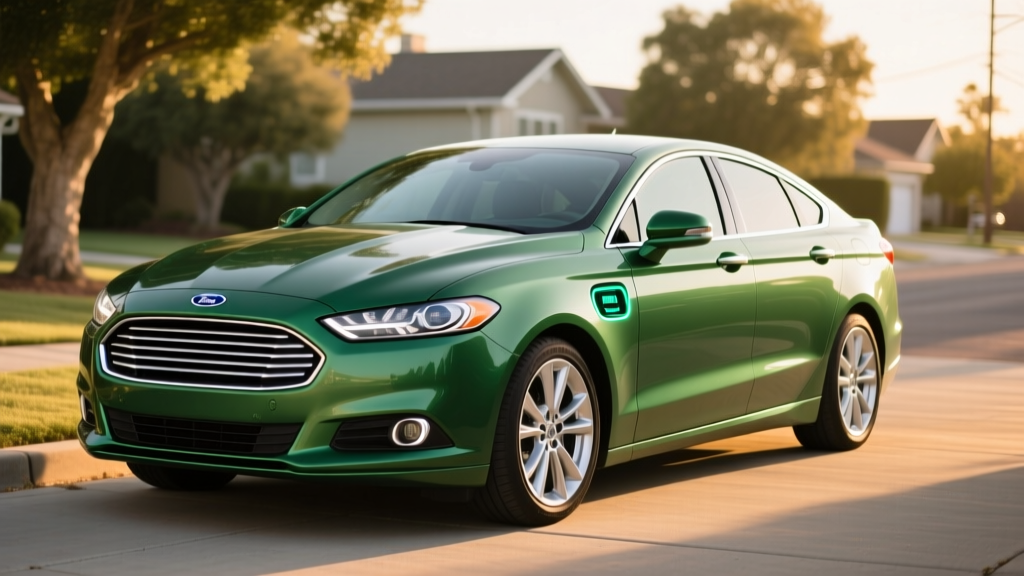
Quick Verdict: The 2016 Fusion Hybrid at a Decade Old
The 2016 Ford Fusion Hybrid was one of the most fuel-efficient midsize sedans of its era, delivering an EPA-rated 44 city / 41 highway / 42 combined MPG without ever needing to plug in. A decade later, it remains a compelling used-car option for commuters who want hybrid efficiency without range anxiety or charging infrastructure. But with a 10-year-old hybrid battery, prospective buyers need hard data on degradation, replacement cost, and what real-world fuel economy actually looks like in 2026.
This guide covers the 2016 Fusion Hybrid (HEV) in detail — and briefly addresses its plug-in sibling, the Fusion Energi (PHEV) — so you can decide whether this generation still makes financial sense on the used market.
Fuel Economy: EPA Ratings vs. Real-World MPG
According to fueleconomy.gov, the 2016 Ford Fusion Hybrid carries the following EPA ratings:
| Metric | City | Highway | Combined |
|---|---|---|---|
| MPG (EPA) | 44 | 41 | 42 |
| Real-World Expectation | 40–47 | 36–40 | 38–44 |
| Annual Fuel Cost (est.) | ~$1,250 (15,000 mi/yr at $3.10/gal) | ||
Why city MPG beats highway: Like all conventional hybrids, the Fusion Hybrid recovers energy through regenerative braking and operates on electric power at low speeds. Stop-and-go city driving actually maximizes the hybrid system's advantage. On sustained highway runs above 65 mph, the 2.0L Atkinson-cycle engine does more of the work, pulling combined MPG toward the lower 30s in real-world conditions.
Cold-weather impact: Expect a 5–10% MPG reduction in sub-freezing temperatures. The engine runs more frequently to maintain cabin heat and battery temperature, reducing electric-only operation. Owners in northern climates commonly report 36–38 combined MPG in winter versus 42–44 in mild weather.
How does the Fusion Energi (PHEV) compare?
The 2016 Fusion Energi carries a 7.6 kWh lithium-ion battery pack (roughly 5.5 kWh usable) and an EPA-rated 19 miles of electric-only range. Once that battery is depleted, it operates as a conventional hybrid rated at approximately 38 MPG combined. Total combined range (electric + gas) is approximately 550 miles. Charging the Energi from a standard 120V outlet (Level 1) takes roughly 7 hours; a 240V Level 2 outlet reduces this to about 2.5 hours. The Energi cannot DC fast charge.
Powertrain and Performance Specs
| Specification | Fusion Hybrid (HEV) | Fusion Energi (PHEV) |
|---|---|---|
| Engine | 2.0L Atkinson-cycle I4 | 2.0L Atkinson-cycle I4 |
| Engine HP | 141 hp | 141 hp |
| Electric Motor | 88 kW (118 hp) AC synchronous | 88 kW (118 hp) AC synchronous |
| Combined System Output | 188 hp | 188 hp |
| Transmission | eCVT (planetary gearset) | eCVT (planetary gearset) |
| Hybrid Battery | 1.4 kWh Li-ion (air-cooled) | 7.6 kWh Li-ion (liquid-cooled) |
| 0–60 mph | ~8.4 sec | ~9.1 sec |
| Drivetrain | FWD | FWD |
| Curb Weight | ~3,572 lbs | ~3,918 lbs |
The eCVT here is not a belt-driven CVT like those found in some competitors. Ford uses a planetary gearset that blends engine and motor power seamlessly — there are no rubber bands or slipping belts. This design has proven extremely durable, with far fewer failure reports than traditional belt-CVTs.
Battery Longevity, Warranty, and Replacement Cost
How long do these batteries actually last?
The 1.4 kWh lithium-ion pack in the Fusion Hybrid HEV is small and conservatively managed. Ford's battery management system keeps the state of charge (SoC) within a narrow operating window — typically between 40% and 60% — which dramatically reduces degradation compared to a full EV battery that cycles from 10% to 90%.
Based on owner reports and fleet data, the Fusion Hybrid battery typically retains 85–92% of original capacity at 150,000 miles. Complete battery failure before 200,000 miles is uncommon but not unheard of. The most frequent failure mode is individual cell imbalance rather than total pack death, which a qualified hybrid shop can sometimes address at the module level.
Battery replacement cost
- OEM dealer replacement: $3,000–$4,500 (parts + labor)
- Aftermarket/remanufactured pack: $1,500–$2,800
- Individual module repair: $500–$1,200 (if only 1–2 modules are degraded)
The Energi's larger 7.6 kWh pack is more expensive to replace: expect $4,500–$6,500 for a full OEM pack. Because the Energi cycles its battery more aggressively (full EV-mode discharges), degradation is somewhat faster than the HEV, though the liquid-cooled thermal system helps mitigate this.
Used Market Pricing and Tax Credit Eligibility
As of early 2026, the 2016 Ford Fusion Hybrid trades on the used market in a wide range depending on mileage, condition, and trim level:
| Trim | Original MSRP | Used Price (80K–120K mi) | Used Price (40K–70K mi) |
|---|---|---|---|
| S Hybrid | $26,700 | $7,500–$9,500 | $10,500–$13,000 |
| SE Hybrid | $28,200 | $8,500–$11,000 | $12,000–$15,000 |
| Titanium Hybrid | $33,200 | $10,000–$13,000 | $14,000–$17,500 |
| Energi SE (PHEV) | $33,900 | $8,000–$10,500 | $11,500–$14,500 |
| Energi Titanium (PHEV) | $36,700 | $9,500–$12,000 | $13,000–$16,500 |
Does the 2016 Fusion Hybrid qualify for any tax credit?
No. The federal §30D new clean vehicle credit applies only to new vehicle purchases. The used EV credit (§25E) provides up to $4,000 for qualifying pre-owned EVs and PHEVs, but it has strict requirements:
- The vehicle must be at least 2 model years old (the 2016 qualifies on age)
- The sale price must be $25,000 or less (most 2016 Fusion Hybrids qualify)
- The buyer's adjusted gross income must not exceed $75,000 (single) / $150,000 (joint)
- The vehicle must have a battery capacity of at least 7 kWh
Here's the critical distinction: The Fusion Hybrid HEV's 1.4 kWh battery does not meet the 7 kWh minimum, so it does not qualify for the used EV credit. The Fusion Energi PHEV's 7.6 kWh battery does meet the threshold, making it potentially eligible for up to $4,000 (30% of the sale price, capped at $4,000) if all other requirements are met. Always verify current eligibility rules on IRS.gov before purchasing, as credit parameters can change.
Reliability Record and Common Issues
The 2016 Fusion Hybrid's powertrain — the 2.0L Atkinson-cycle engine paired with Ford's eCVT — has a strong reliability record. The hybrid system itself generates fewer warranty claims than Ford's conventional turbocharged EcoBoost powertrains from the same era. Key reliability notes:
What holds up well:
- eCVT planetary gearset — virtually bulletproof with normal fluid maintenance
- Regenerative braking extends pad life — many owners report 80,000+ miles on original brake pads
- Atkinson-cycle engine runs cooler and under less stress than conventional engines
- No turbocharger, no direct injection carbon buildup issues
Known problem areas:
- 12V auxiliary battery: Like all hybrids, the Fusion has a conventional 12V battery that powers electronics. It typically lasts 3–5 years and can strand the car if it dies (the car won't "start" without it, even though the hybrid battery is fine)
- Coolant intrusion: Some 2.0L engines from this era developed coolant leaks into cylinders. More common on EcoBoost variants but worth checking on any used 2.0L Ford
- Infotainment: The MyFord Touch system (SYNC 2) in the 2016 model is slow and prone to freezing. Ford released software updates, but it remains a frustration point
- Door latch recalls: NHTSA lists door latch recall campaigns for the 2013–2016 Fusion — verify all recalls were completed
Pros and Cons of the 2016 Fusion Hybrid in 2026
Pros
- 42 MPG combined EPA — still competitive with 2026 hybrids
- Comfortable, quiet ride quality with a spacious rear seat
- eCVT reliability is excellent (planetary gearset, no belt)
- Low purchase price on the used market ($7,500–$17,500)
- Strong regenerative braking reduces brake wear significantly
- No charging infrastructure needed — just fill up with gas
- Spacious 12 cu-ft trunk (HEV); Energi loses trunk space to battery
Cons
- Original hybrid battery warranty has expired or is expiring
- $1,500–$4,500 potential battery replacement cost looms
- MyFord Touch / SYNC 2 infotainment is dated and laggy
- No DC fast charging (Energi PHEV) — Level 2 only
- 0–60 mph in 8.4 seconds — adequate but not quick
- Fusion nameplate discontinued — limited dealer familiarity going forward
- Energi PHEV's 19-mile electric range is short by 2026 standards
Who Should Buy This — Hybrid vs. PHEV vs. Full EV
Decision Framework
Choose the 2016 Fusion Hybrid (HEV) if:
- You want maximum MPG without any change to your fueling routine
- You lack access to home or workplace charging (apartment, street parking)
- Your budget is under $15,000 and you need a reliable daily commuter
- You drive 10,000–15,000 miles/year and want to minimize fuel cost without a large upfront investment
Choose the 2016 Fusion Energi (PHEV) if:
- You have home Level 2 charging and a commute under 20 miles round-trip
- You want to drive mostly on electricity for daily errands but need gas flexibility for road trips
- You qualify for the §25E used EV credit (income under $75K single / $150K joint, sale price under $25K)
- You accept that 19 miles of electric range will cover only short trips
Choose a full EV (BEV) instead if:
- You have reliable home Level 2 charging
- Your daily driving is under 200 miles and you rarely take long road trips
- You want zero tailpipe emissions and lower per-mile "fuel" cost (electricity vs. gas)
- Your budget allows $25,000+ for a newer used EV with a fresh battery warranty
At current national average gas prices (~$3.10/gallon), the Fusion Hybrid's 42 MPG combined translates to roughly $0.074 per mile in fuel cost. Compare that to a 28 MPG conventional midsize sedan at $0.111 per mile. Over 15,000 miles per year, the hybrid saves approximately $555 annually on fuel. Against a modern EV charging at home at $0.13/kWh and averaging 3.5 miles/kWh, the EV costs about $0.037 per mile — saving roughly $555 more per year versus the hybrid. The math favors a full EV on operating cost, but the Fusion Hybrid's much lower purchase price can offset that advantage over a 3–5 year ownership window.
Frequently Asked Questions
How many MPG does the 2016 Ford Fusion Hybrid get?
The EPA rates it at 44 city / 41 highway / 42 combined MPG. In real-world driving, expect 40–47 MPG in city conditions and 36–40 MPG on the highway. Cold weather can reduce combined MPG to the mid-to-high 30s.
How far can the 2016 Fusion Energi go on electric only?
The EPA rates the Fusion Energi PHEV at 19 miles of electric-only range. In mild weather at city speeds, some owners report up to 22 miles. Highway driving and cold weather reduce this to approximately 14–16 miles.
Is the 2016 Fusion Hybrid reliable?
Yes. The hybrid powertrain (2.0L Atkinson-cycle + eCVT planetary gearset) has a strong long-term reliability record. The primary risk on a 10-year-old example is hybrid battery degradation, which typically manifests as slightly reduced MPG rather than sudden failure. Budget $1,500–$4,500 for a potential battery replacement as a contingency.
What does a replacement hybrid battery cost?
An OEM dealer replacement runs $3,000–$4,500 installed. Remanufactured aftermarket packs are available for $1,500–$2,800. Individual module repair — if only one or two cells are degraded — can cost $500–$1,200 at a specialist hybrid shop.
Does the 2016 Fusion Hybrid qualify for a tax credit?
The conventional Fusion Hybrid (HEV) does not qualify for any federal tax credit — its 1.4 kWh battery is below the 7 kWh minimum for the §25E used EV credit. The Fusion Energi (PHEV) with its 7.6 kWh battery may qualify for up to $4,000 under the used EV credit if buyer income and sale price requirements are met. Check current rules at IRS.gov.
Does the Fusion Hybrid need to be plugged in?
No. The Fusion Hybrid (HEV) is a conventional hybrid that charges its battery through regenerative braking and the gasoline engine. You never plug it in. Only the Fusion Energi (PHEV) variant requires plugging in to access its electric-only driving range.
How does the 2016 Fusion Hybrid compare to a 2016 Toyota Camry Hybrid?
The 2016 Camry Hybrid LE is EPA-rated at 43 city / 39 highway / 41 combined — nearly identical to the Fusion Hybrid. The Toyota has a marginally stronger long-term reliability reputation and wider dealer network, while the Ford offers a more engaging driving feel and a slightly more upscale interior on higher trims. Used pricing is comparable, though Camry Hybrids tend to command a small premium.