Quick Verdict: A Practical Hybrid Hatch for Budget-Minded Commuters
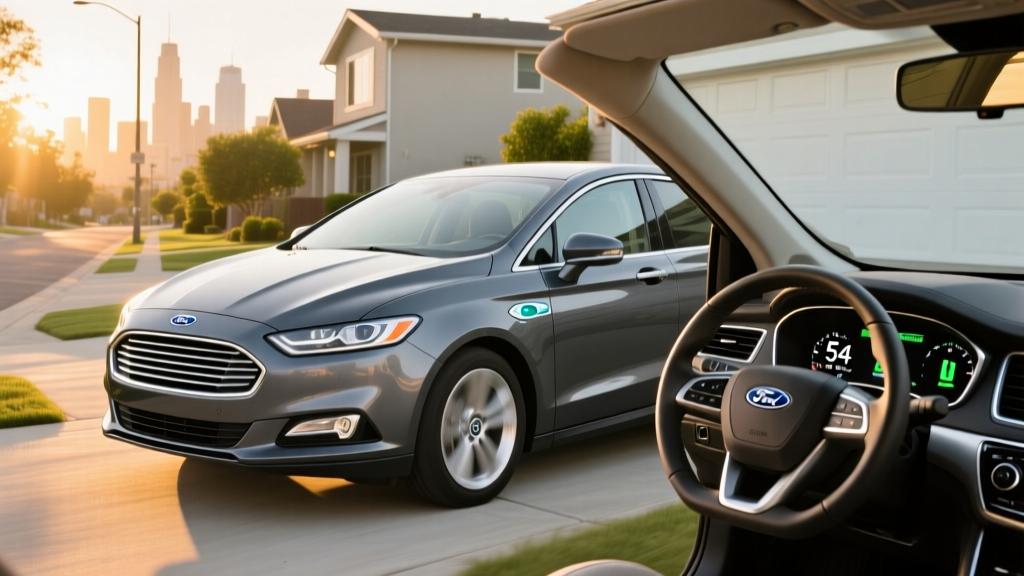
The 2016 Ford C-Max Hybrid occupies a specific niche in the used-car market: a compact hybrid hatchback with wagon-like cargo flexibility, strong city fuel economy, and no plug-in requirement. With an EPA-estimated 42 MPG combined, it undercuts the Toyota Prius on sticker price in the used market while offering comparable real-world efficiency. For 2026 buyers seeking an affordable entry into hybrid ownership without the complexity of a plug-in hybrid (PHEV) or the charging demands of a full EV, the C-Max Hybrid deserves a close look — but its age means battery health and warranty status should drive your purchase decision.
| Specification | Value |
|---|---|
| Powertrain | 2.0L Atkinson-cycle I4 + electric motor (HEV) |
| Combined Horsepower | 188 hp (net system output) |
| Battery | 1.4 kWh lithium-ion (usable capacity) |
| EPA Fuel Economy | 42 city / 37 highway / 40 combined MPG |
| 0-60 mph | ~8.1 seconds |
| Cargo Volume | 24.5 cu ft (rear seats up) / 52.6 cu ft (folded) |
| Drivetrain | Front-wheel drive, eCVT |
| Curb Weight | ~3,607 lbs |
| Plug-In Required? | No — regenerative braking & engine recharge battery |
How Many MPG Does the 2016 Ford C-Max Hybrid Actually Get?
| Driving Scenario | EPA Estimate | Real-World Expectation |
|---|---|---|
| City | 42 MPG | 40–45 MPG (hybrids thrive in stop-and-go) |
| Highway (70+ mph) | 37 MPG | 34–38 MPG (aerodynamic drag, less regen benefit) |
| Combined | 40 MPG | 38–42 MPG (depends on driving mix) |
| Cold Weather (below 30°F) | N/A | 33–37 MPG (engine runs more for cabin heat) |
The 2016 C-Max Hybrid's 42/37/40 MPG EPA rating was revised downward from Ford's original 47 MPG claim after a 2013 class-action settlement over inflated fuel economy labels. The corrected figures, verified on fueleconomy.gov, are more honest and align closely with what owners report on Fuelly and Edmunds forums.
The hybrid advantage shows in city driving, where frequent stops let the regenerative braking system recover energy and the electric motor handles low-speed propulsion. Highway efficiency drops because the 2.0L gasoline engine carries more of the load at sustained speeds, and the C-Max's tall hatchback profile creates more aerodynamic drag than a Prius. In real-world commuting — a mix of suburban streets and highway on-ramps — expect 38–42 MPG combined, which is strong for a vehicle this size.
For context, at $3.25/gallon (a reasonable 2026 national average) and 12,000 miles/year, the C-Max Hybrid's annual fuel cost sits around $975. A comparable non-hybrid compact hatchback averaging 28 MPG would cost roughly $1,393 — a savings of about $418 per year, or $2,090 over five years.
HEV vs PHEV vs EV: Which Powertrain Fits Your Driving Life?
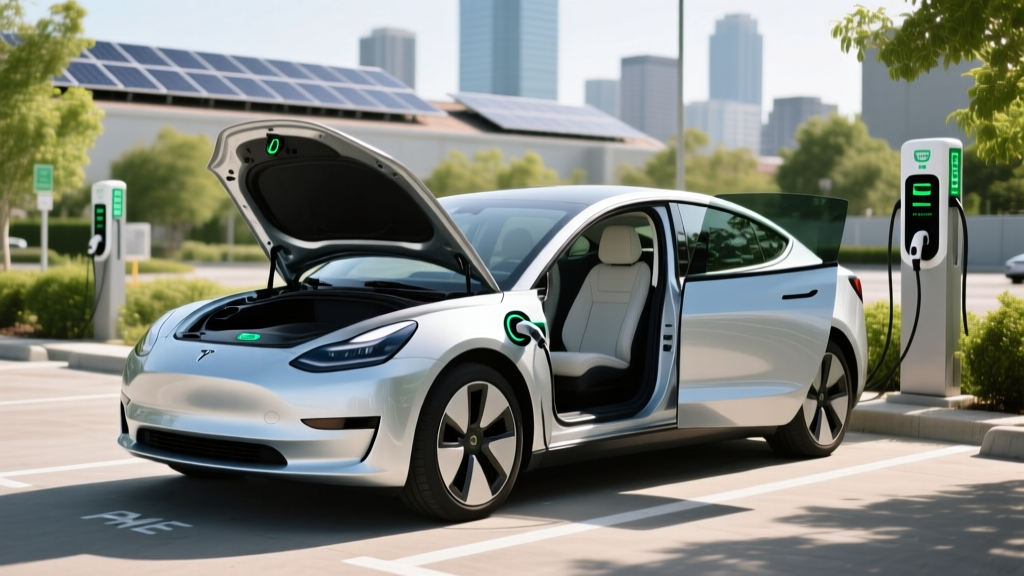
The 2016 C-Max was sold in two electrified variants: the C-Max Hybrid (HEV) and the C-Max Energi (PHEV). Understanding the difference is critical before you shop, because the driving experience, fuel costs, and charging requirements diverge sharply.
| Attribute | C-Max Hybrid (HEV) | C-Max Energi (PHEV) |
|---|---|---|
| Plug-In Required? | No | Yes (Level 2 recommended) |
| Battery Capacity | 1.4 kWh | 7.6 kWh |
| Electric-Only Range | ~0.5–1 mi (low-speed assist only) | 20 miles (EPA) |
| Total Range | ~550 miles | ~550 miles (electric + gas) |
| EPA MPG / MPGe | 40 MPG combined | 95 MPGe (elec) / 38 MPG (gas) |
| DC Fast Charge? | No | No (Level 2 AC only, ~2.5 hours) |
| Cargo Volume | 24.5 cu ft | 19.2 cu ft (battery intrudes) |
| Used Price Range (2026) | $8,000–$13,000 | $9,500–$15,000 |
Choose the C-Max Hybrid (HEV) if: You don't have access to home or workplace charging, you want the lowest purchase price, and your priority is simple fuel savings without lifestyle changes. The HEV recharges its small battery entirely through regenerative braking and the gasoline engine — you never plug it in.
Choose the C-Max Energi (PHEV) if: You can charge at home (even a standard 120V outlet works overnight), your commute is under 20 miles each way, and you want to drive mostly on electricity for daily errands while keeping the gas engine for road trips. The Energi's 20-mile electric range covers many commutes entirely on battery.
Consider a full EV instead if: Your daily driving is predictable, you have reliable home Level 2 charging, and you want to eliminate gasoline entirely. Modern used EVs like the 2019–2021 Chevrolet Bolt EV (259-mile range) or Nissan Leaf (149–226 miles) have matured significantly, though they require charging infrastructure planning that neither C-Max variant demands.
Powertrain Deep Dive: 188 HP With Hybrid Smoothness
The 2016 C-Max Hybrid pairs a 2.0-liter Atkinson-cycle four-cylinder engine (141 hp, 129 lb-ft) with a permanent-magnet electric motor (118 hp) through Ford's electronically controlled continuously variable transmission (eCVT). The combined net system output is 188 horsepower — competitive with compact crossovers of the era and noticeably more potent than the contemporary Prius's 121 hp.
The eCVT isn't a traditional belt-driven CVT. It uses a planetary gearset to blend engine and motor power seamlessly, which eliminates the rubber-band effect common in Nissan or Subaru CVTs. Acceleration from 0-60 mph takes approximately 8.1 seconds — adequate for highway merging and passing, though the C-Max isn't a performance-oriented vehicle. The transition between electric-only and engine-assisted driving is one of the smoothest in the hybrid segment; most drivers won't notice the engine start unless they're watching the energy flow display.
Regenerative braking recovers kinetic energy during deceleration, feeding it back into the 1.4 kWh lithium-ion battery pack. The brake pedal feel is reasonably linear for a hybrid — Ford improved the blending between regenerative and friction braking in the 2014 refresh, and the 2016 model benefits from that tuning. One-pedal driving (where lifting the throttle slows the car significantly) is mild compared to a full EV, but the "L" gear position increases regen aggressiveness for hilly terrain or stop-and-go traffic.
Battery Health, Warranty, and Replacement Costs
For any used hybrid, the traction battery is the single biggest financial risk. Here's what 2016 C-Max Hybrid buyers need to know.
Battery Warranty & Longevity
- Original warranty: 8 years / 100,000 miles (whichever comes first) for the hybrid battery and related components, per federal emissions warranty requirements.
- 2026 status: A 2016 model's original 8-year warranty has expired as of the 2024 calendar year. You are likely purchasing out of warranty unless the previous owner bought an extended powertrain plan.
- California/PZEV states: Hybrid battery warranty extends to 10 years / 150,000 miles in California and states that adopted CARB/PZEV standards (CT, ME, MD, MA, NJ, NY, OR, RI, VT, WA). A 2016 C-Max registered in these states may still carry battery coverage through 2026.
- Expected battery lifespan: Ford's lithium-ion pack in the C-Max has proven durable. Real-world reports on hybrid taxi fleets and high-mileage owners show 150,000–200,000+ miles before significant capacity loss. The battery management system maintains a conservative state-of-charge window (roughly 40–60% SoC) to minimize degradation.
Battery replacement cost: If the hybrid battery fails outside warranty, a new OEM replacement from Ford runs approximately $2,500–$4,000 including parts and labor at a dealership. Independent hybrid specialists often source refurbished or reconditioned packs for $1,500–$2,500 installed. Given the C-Max's used-car value of $8,000–$13,000, a battery failure is a significant but not catastrophic expense — roughly comparable to a transmission replacement on a conventional car.
Pre-purchase battery check: Before buying any used C-Max Hybrid, have a technician pull the battery state-of-health (SoH) data through an OBD-II scanner capable of reading Ford hybrid parameters (FORScan is a popular enthusiast tool). Look for cell voltage imbalance greater than 0.2V between modules, which signals early degradation. A test drive should include sustained highway driving followed by a stop — if the engine runs constantly at idle to charge the battery, the pack may be weakened.
Is the 2016 C-Max Hybrid Reliable?
The 2016 C-Max Hybrid benefits from being the fourth and final model year of the first generation, meaning Ford had resolved most early-production issues. Key reliability notes:
- Hybrid system: The power-split eCVT and hybrid battery have proven very reliable. Unlike conventional automatic transmissions, the planetary eCVT has no clutch packs or bands to wear. The electric motor has no brushes and is essentially maintenance-free.
- Common non-hybrid issues: Owners report occasional problems with the SYNC 3 infotainment system (slow boot times, Bluetooth pairing glitches), power door lock actuators, and the electronic parking brake. None of these are hybrid-specific or prohibitively expensive to repair.
- NHTSA recalls: Check the VIN at nhtsa.gov/recalls for open recalls. The 2013–2016 C-Max had recalls related to the restraint control module and certain electrical system components — verify any used example has recall work completed.
- IIHS safety: The C-Max received a "Good" rating in the moderate overlap front, side, roof strength, and head restraint tests, per iihs.org. It was not tested in the updated small overlap or pedestrian protocols introduced after its production run.
Tax Credits and Incentives for Used Hybrid Buyers
The 2016 Ford C-Max Hybrid does not qualify for the federal §30D new clean vehicle tax credit, as it was sold as a conventional hybrid (HEV), not a plug-in electric vehicle. The §30D credit applies only to battery electric vehicles (BEVs) and plug-in hybrids (PHEVs) meeting battery capacity, sourcing, MSRP, and buyer income requirements under current IRS rules.
The used clean vehicle credit (IRS §25E) also applies only to used BEVs and PHEVs — not conventional hybrids. So the C-Max Hybrid is ineligible for this $4,000 credit as well.
However, the C-Max Energi (PHEV) variant, if purchased used from a dealer for $25,000 or less, may qualify for the §25E used clean vehicle credit of up to $4,000 (30% of sale price, capped at $4,000), subject to buyer income limits ($75,000 single / $150,000 joint) and the vehicle being sold by a licensed dealer. Verify eligibility on IRS.gov before relying on this credit.
Some states and local utilities offer rebates or HOV lane access for hybrids regardless of plug-in status, but these vary by jurisdiction. Check your state's energy office or utility provider for current programs.
Who Should Buy the 2016 C-Max Hybrid — and Who Shouldn't
Pros
- 40+ MPG real-world combined; 42+ MPG in city commuting
- Spacious hatchback cargo area (24.5 cu ft) rivals small crossovers
- 188 hp is peppy for a hybrid; smooth eCVT transitions
- No plug-in required — fuel it like a normal car
- Lower used-car price than equivalent-age Prius or Prius V
- Comfortable ride quality; quiet cabin at cruising speed
Cons
- Highway MPG (37 EPA) trails Prius by 5–8 MPG
- Original 8-year hybrid battery warranty has expired on most examples
- SYNC 3 infotainment feels dated vs modern touchscreens
- No DC fast charging (irrelevant for HEV, but limits Energi PHEV)
- Discontinued after 2018 — parts availability may slowly narrow
- Modest ground clearance; not suited for rough roads
Buy the 2016 C-Max Hybrid if you want an affordable, fuel-efficient daily driver with hatchback versatility, you lack home charging access, and you prioritize city MPG over highway efficiency. It's an excellent commuter car for urban and suburban drivers covering 10,000–15,000 miles per year.
Look elsewhere if your driving is predominantly highway (the Prius or a modern diesel is more efficient), you want the latest safety technology (automatic emergency braking and lane-keeping weren't standard on the C-Max), or you want electrification with zero gasoline (consider a used BEV with home charging).
Frequently Asked Questions
How many MPG does the 2016 Ford C-Max Hybrid get?
The EPA rates it at 42 city / 37 highway / 40 combined MPG. Real-world owners typically achieve 38–45 MPG depending on driving conditions, with city commuting yielding the best results thanks to regenerative braking.
Does the 2016 C-Max Hybrid need to be plugged in?
No. The C-Max Hybrid is a conventional hybrid (HEV), not a plug-in. Its 1.4 kWh battery recharges through regenerative braking and the gasoline engine. You simply fill it with gas like any other car. If you want plug-in capability, look at the C-Max Energi (PHEV) variant instead.
How far can the C-Max Energi PHEV go on electric only?
The 2016 C-Max Energi has an EPA-rated 20 miles of electric-only range from its 7.6 kWh battery pack, which covers many daily commutes. After the battery depletes, it operates as a conventional hybrid with 38 MPG combined.
Is the 2016 C-Max Hybrid reliable?
Yes. The hybrid powertrain (eCVT, electric motor, battery) has proven durable well past 150,000 miles. The 2016 model year is the most refined of the generation. Common issues are minor (SYNC infotainment glitches, door lock actuators) rather than powertrain-related.
What does a replacement hybrid battery cost?
A new OEM hybrid battery replacement runs $2,500–$4,000 at a Ford dealership. Refurbished packs from independent hybrid specialists cost $1,500–$2,500 installed. The original 8-year/100,000-mile battery warranty has expired for most 2016 examples, though PZEV-state vehicles may still be covered through 2026.
Does the 2016 C-Max Hybrid qualify for any tax credit?
No. Federal tax credits (§30D for new vehicles, §25E for used) apply only to plug-in electric vehicles (BEVs and PHEVs), not conventional hybrids. The C-Max Energi PHEV may qualify for the used EV credit if purchased from a dealer under $25,000 and the buyer meets income requirements. Check current IRS rules before relying on any credit.
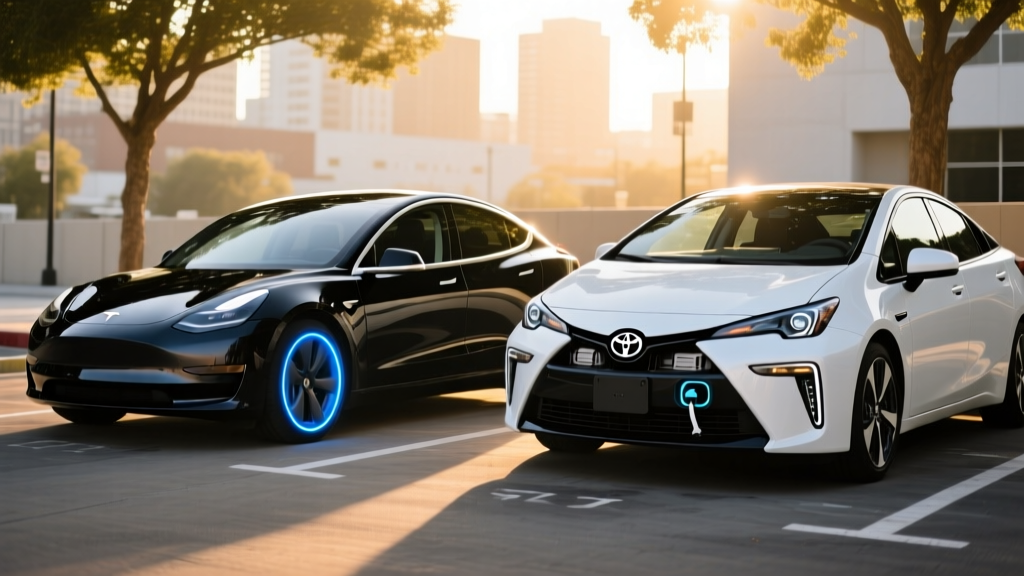
How does the C-Max Hybrid compare to the Toyota Prius?
The C-Max Hybrid offers more cargo space (24.5 vs 21.6 cu ft), more power (188 vs 121 hp), and a lower used-car price. The Prius wins on highway fuel economy (50+ MPG vs 37 MPG) and has a stronger long-term parts and service network. If your driving is mostly highway, the Prius saves more fuel. If you need cargo flexibility and city efficiency, the C-Max is compelling.