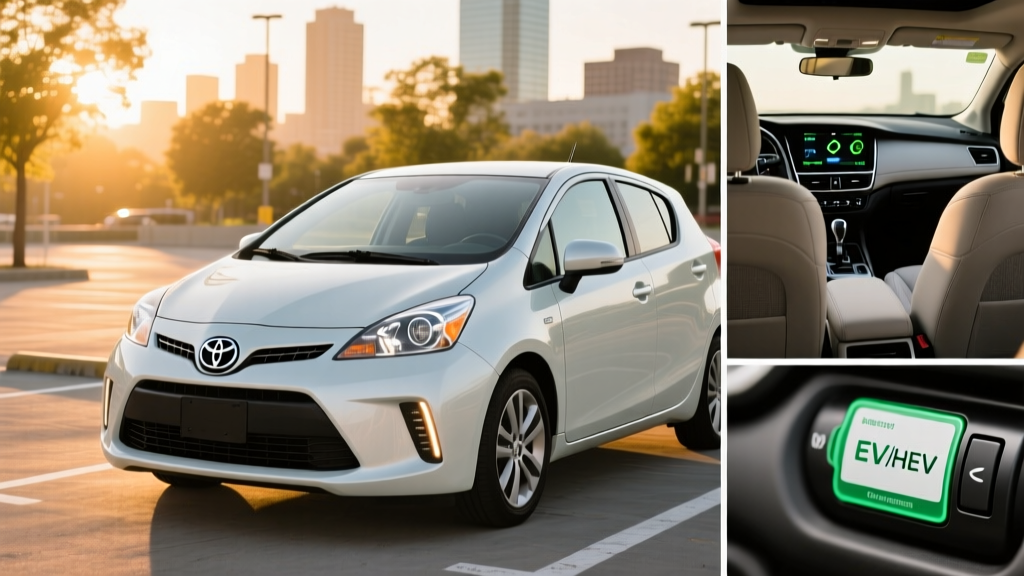
The 2015 Toyota Prius C hybrid remains one of the most fuel-efficient used cars on the road more than a decade after its release. Built on Toyota's proven Hybrid Synergy Drive platform and packaged in a subcompact hatchback, the Prius C (known as the Aqua in Japan) delivers an EPA-estimated 50 MPG combined — a figure that still competes with modern hybrids in 2026's used-car market. If you're shopping for a budget-friendly hybrid that requires zero lifestyle change — no plugs, no charging apps, no range anxiety — this guide covers everything you need to know about the 2015 Prius C's powertrain, real-world efficiency, battery longevity, and ownership economics.
What Is the 2015 Toyota Prius C? HEV vs. PHEV Clarified
Before diving into specs, it's critical to understand what the Prius C is — and what it is not. The 2015 Prius C is a conventional hybrid electric vehicle (HEV), not a plug-in hybrid (PHEV) and not a battery electric vehicle (BEV). This distinction shapes everything about ownership.
HEV vs. PHEV vs. BEV — Where the Prius C Fits
| Feature | HEV (Prius C) | PHEV (e.g., Prius Prime) | BEV (e.g., Tesla Model 3) |
|---|---|---|---|
| Plugs in? | No | Yes | Yes |
| Electric-only range | ~1 mile at low speed | 25–44 miles | 250–350+ miles |
| Gas engine? | Yes (primary) | Yes (backup) | No |
| Battery size | 0.9 kWh (NiMH) | 8.8–13.6 kWh (Li-ion) | 50–82 kWh (Li-ion) |
| Home charging needed? | No | Recommended | Essential |
| Federal tax credit (§30D)? | No | Up to $7,500 (new) | Up to $7,500 (new/used) |
The Prius C generates all its electricity internally through regenerative braking and the gasoline engine. You never plug it in — you simply fuel it like any conventional car and let the hybrid system optimize efficiency.
2015 Prius C Powertrain and Performance Specs
The 2015 Prius C pairs a 1.5-liter four-cylinder Atkinson-cycle gasoline engine with an electric motor-generator through Toyota's Hybrid Synergy Drive continuously variable transmission (eCVT). The combined system output is modest by any standard, but the powertrain's efficiency is the entire point.
| Specification | Value |
|---|---|
| Gas engine | 1.5L 4-cyl Atkinson-cycle, 73 hp / 82 lb-ft |
| Electric motor | 60 hp / 125 lb-ft |
| Combined net horsepower | 99 hp |
| Transmission | eCVT (planetary gearset) |
| Hybrid battery | 0.9 kWh, Nickel-Metal Hydride (NiMH), 144V |
| 0–60 mph | ~11.0 seconds |
| Drivetrain | Front-wheel drive |
| Curb weight | ~2,500 lbs |
| Cargo volume (rear seats up) | 17.1 cu ft |
| Fuel tank | 9.5 gallons |
| Total driving range (est.) | ~475 miles |
With 99 combined horsepower moving 2,500 pounds, the Prius C is deliberately slow. Highway merging requires planning, and steep grades will test your patience. But the tradeoff is remarkable efficiency, and for city commuting and suburban errands, the torque fill from the electric motor makes it feel peppy enough at lower speeds.
Fuel Economy: EPA Ratings vs. Real-World MPG
This is the metric that matters most for any Prius C buyer. According to fueleconomy.gov, the 2015 Toyota Prius C carries the following EPA estimates:
| Driving Condition | EPA Estimate | Real-World Expectation |
|---|---|---|
| City | 53 MPG | 50–58 MPG (often exceeds EPA) |
| Highway | 46 MPG | 42–48 MPG |
| Combined | 50 MPG | 47–54 MPG |
Why Hybrids Often Beat EPA in the City
Unlike gasoline-only cars, which suffer their worst efficiency in stop-and-go traffic, the Prius C thrives in urban driving. The hybrid system recovers energy during braking (regenerative braking), the electric motor handles low-speed propulsion without engaging the gas engine, and the engine shuts off entirely at stoplights. If most of your driving is city and suburban, expect to meet or exceed the 53 MPG city figure.
Real-World Factors That Reduce MPG
- Cold weather: Expect a 10–20% MPG drop in winter months. The engine runs more often to generate cabin heat, and battery efficiency decreases at low temperatures.
- Sustained highway speeds above 70 mph: Aerodynamic drag dominates, and the small engine works harder. Expect 42–45 MPG at 75–80 mph.
- Mountain driving: Climbing grades will drop instantaneous MPG into the 20s, though regenerative braking on descents partially recovers this.
- Heavy cargo and A/C use: The lightweight platform is sensitive to added load.
Hybrid Battery Lifespan, Warranty, and Replacement Cost
The single biggest concern for any used-hybrid buyer is battery longevity. The 2015 Prius C uses a nickel-metal hydride (NiMH) battery pack — the same proven chemistry Toyota has used across millions of Prius vehicles since 1997. Unlike the lithium-ion packs in modern EVs and PHEVs, NiMH batteries degrade more gradually and are less sensitive to temperature extremes.
Battery Warranty (Original)
Toyota's original hybrid battery warranty for the 2015 Prius C:
- Standard states: 8 years / 100,000 miles
- CARB states (CA, NY, MA, and others): 10 years / 150,000 miles
By 2026, the original factory warranty has expired for virtually all 2015 Prius C vehicles unless one was purchased very late and driven minimally. However, the battery's actual lifespan typically extends well beyond warranty coverage.
How Long Does the Prius C Hybrid Battery Actually Last?
Based on fleet data, owner reports, and repair-shop surveys, the NiMH battery in the Prius C typically lasts 150,000 to 200,000 miles before significant degradation or failure. Some units exceed 250,000 miles. Key factors:
- The battery is small (0.9 kWh): Shallow charge/discharge cycles put less stress on NiMH cells compared to the deeper cycles in larger PHEV or BEV packs.
- Toyota's battery management: The system never allows the battery to fully charge or fully discharge — it operates in a narrow state-of-charge window (roughly 40–80%) to maximize longevity.
- Heat is the enemy: Vehicles in hot climates (Arizona, Texas, Southern California) may see earlier degradation. Keeping the rear-seat battery cooling vent unblocked is essential.
Battery Replacement Cost in 2026
| Option | Cost Range | Notes |
|---|---|---|
| New OEM Toyota battery | $2,000 – $2,800 (installed) | Dealer or certified shop; includes labor |
| Refurbished/reconditioned battery | $1,000 – $1,600 (installed) | Reputable hybrid specialists; 1–3 year warranty |
| Individual cell replacement | $300 – $800 | Only if specific cells fail; requires specialist |
| Used/salvage battery | $500 – $900 | Risky — unknown remaining life |
The good news: because the Prius C battery is small and uses mature NiMH technology, replacement costs are a fraction of what a modern BEV battery swap would run ($5,000–$20,000+). For a used Prius C purchased at $8,000–$12,000, even a full OEM battery replacement keeps total investment well below the price of a newer used car.
2015 Prius C Trims, Pricing, and Tax Credit Status
Original MSRP (2015)
The 2015 Prius C was offered in four trims. Here's what they cost new:
- Prius C One: ~$19,540
- Prius C Two: ~$20,700
- Prius C Three: ~$22,315 (added navigation, Entune audio)
- Prius C Four: ~$24,230 (added SofTex seats, alloy wheels, fog lights)
Used Market Pricing in 2026
As of early 2026, a 2015 Prius C in good condition with 80,000–130,000 miles typically sells for $8,000 to $13,000 depending on trim, mileage, condition, and region. Lower-mileage examples under 60,000 miles can command $14,000+. The Prius C holds value well due to its reputation for reliability and low running costs.
Does the 2015 Prius C Qualify for Any Federal Tax Credit?
No. The 2015 Toyota Prius C does not qualify for any federal tax credit in 2026. Here's why:
- The IRS §25E used-EV credit (up to $4,000) applies only to used BEVs and PHEVs — conventional HEVs are excluded.
- The §30D new-vehicle credit also excludes conventional hybrids.
- Toyota's federal hybrid tax credit for the Prius C was phased out in 2010 after Toyota exceeded the 200,000-vehicle manufacturer cap.
- No state offers a purchase incentive for conventional (non-plug-in) hybrids in 2026, though some states provide HOV lane access or reduced registration fees.
The Prius C's value proposition rests entirely on its low fuel cost, low maintenance cost, and reliability — not on tax incentives.
Reliability and Common Issues
The 2015 Prius C benefits from Toyota's decades-long track record with hybrid powertrains. The Hybrid Synergy Drive system is one of the most proven drivetrains in automotive history, with over 20 million units on the road globally. The Prius C specifically is regarded as one of the most reliable vehicles in Toyota's lineup.
What Typically Goes Wrong
While the powertrain is bulletproof, a few age-related items deserve attention on a 10-year-old vehicle:
- 12V auxiliary battery: Located in the rear cargo area, this standard lead-accent battery powers electronics and typically needs replacement every 4–6 years. Cost: $150–$250.
- Brake actuator: Some Toyota hybrids of this era have seen brake actuator failures (recall-related on some models). Verify recall status at NHTSA.gov using the VIN.
- EGR valve and intake manifold clogging: At higher mileages (120,000+), carbon buildup in the EGR system can cause rough idle. Cleaning costs $200–$400.
- Inverter coolant pump: Rare but documented failure. Verify smooth operation and no warning lights.
- Head gasket: The 1.5L engine has a known (though uncommon) head gasket issue above 150,000 miles, particularly if coolant was not changed on schedule. Watch for coolant loss or white exhaust smoke.
Maintenance Schedule Advantages
Because the hybrid system handles low-speed driving and regenerative braking reduces brake wear, the Prius C has lower routine maintenance costs than comparable gas cars:
- Brake pads often last 80,000–100,000+ miles
- No timing belt (uses a timing chain)
- No traditional alternator or starter motor to fail
- Oil changes every 10,000 miles with synthetic 0W-20
Pros and Cons: The Honest Assessment
✅ Pros
- 50 MPG combined EPA — still best-in-class for used subcompacts
- Extremely low running costs (fuel + maintenance)
- Proven, reliable hybrid powertrain with millions of miles of fleet data
- Affordable battery replacement if needed ($1,000–$2,800)
- No plug-in required — works with existing gas infrastructure
- Tight turning radius, easy to park in cities
- 17.1 cu ft cargo space is generous for its footprint
- Strong resale value retention
❌ Cons
- Slow: 11-second 0–60 makes highway merging stressful
- Highway MPG drops to low 40s at speeds above 70 mph
- Ride quality is firm and road noise is significant
- Interior materials feel cheap even by economy-car standards
- Rear seat is tight for adults on longer trips
- No Apple CarPlay / Android Auto (2015 predates both)
- Original factory warranty is fully expired
- No federal or state purchase incentives
Who Should Buy the 2015 Prius C — and Who Shouldn't
Decision Framework
Choose the 2015 Prius C if:
- You drive 10,000–20,000+ miles per year, mostly city/suburban, and want to minimize fuel cost
- You have no access to home or workplace EV charging and a BEV isn't practical
- You want a simple, proven car with minimal maintenance and low risk
- Your budget is $8,000–$13,000 for a reliable daily driver
- You want the lowest possible cost-per-mile without lifestyle changes
Consider a PHEV (like a used Prius Prime) if:
- You have home charging access and a short commute (under 25 miles)
- You want to drive mostly on electricity but keep a gas engine for road trips
- You're willing to spend $15,000–$22,000 on a used PHEV
Consider a full BEV (like a used Chevrolet Bolt or Nissan Leaf) if:
- You have reliable home Level 2 charging
- Your daily driving is under 150 miles
- You want zero tailpipe emissions and the lowest per-mile energy cost (~$0.04/mi)
- You're willing to plan for road-trip DC fast charging
Skip the Prius C if:
- You regularly drive long highway trips at high speeds (a midsize hybrid like the Camry Hybrid or a BEV would be more comfortable and efficient)
- You need to carry four adults regularly
- Performance and acceleration matter to you
Frequently Asked Questions
How many MPG does the 2015 Toyota Prius C hybrid get?
The EPA rates the 2015 Prius C at 53 MPG city, 46 MPG highway, and 50 MPG combined. In real-world driving, most owners report between 47 and 54 MPG combined, with city-heavy drivers often exceeding the EPA city estimate thanks to the hybrid system's regenerative braking and engine-off capability at low speeds.
Does the Prius C need to be plugged in to charge?
No. The 2015 Prius C is a conventional hybrid (HEV), not a plug-in hybrid. It charges its small 0.9 kWh battery entirely through regenerative braking and the gasoline engine. You simply fill it with gas and drive — no charging cable, no charging station, no plug of any kind.
How far can the 2015 Prius C go on a full tank?
With a 9.5-gallon fuel tank and 50 MPG combined, the Prius C delivers approximately 475 miles of total range per tank. Conservative drivers in city conditions have reported over 500 miles between fill-ups.
Is the 2015 Prius C reliable after 100,000 miles?
Yes, with proper maintenance. The Hybrid Synergy Drive powertrain has been proven across millions of vehicles. The hybrid battery typically lasts 150,000–200,000 miles. At 100,000 miles, expect the engine, transmission, and hybrid components to have significant remaining life. Pay attention to the 12V battery, brake actuator recall status, and EGR system condition during a pre-purchase inspection.
What does it cost to replace the hybrid battery in a 2015 Prius C?
A new OEM Toyota replacement battery costs $2,000–$2,800 installed. Refurbished batteries from hybrid specialists run $1,000–$1,600 with a 1–3 year warranty. Individual cell repairs can cost as little as $300–$800 if only specific cells have failed. These costs are far lower than BEV battery replacements.
Does the 2015 Prius C qualify for any federal or state tax credit?
No. Conventional hybrids (HEVs) are not eligible for the federal §30D new-vehicle credit or the §25E used-vehicle credit. These credits apply only to plug-in vehicles (PHEVs and BEVs). Toyota's hybrid credits were also phased out in 2010 after exceeding the manufacturer cap. Check your state's specific rules for any minor incentives, but do not expect meaningful purchase credits.
Hybrid vs. PHEV vs. EV — which is right for me?
If you lack home charging and want zero hassle, a conventional HEV like the Prius C is ideal. If you have home charging and a short commute, a PHEV lets you drive on electricity daily while keeping a gas engine for longer trips. If you have reliable charging access and want the lowest per-mile cost and zero tailpipe emissions, a BEV is the best long-term choice — but it requires a higher upfront investment and charging planning for road trips.
How does the Prius C compare to the regular 2015 Prius?
The standard 2015 Prius is larger, more powerful (134 hp combined vs. 99 hp), and slightly more efficient on the highway (48 MPG vs. 46 MPG). The Prius C sacrifices some power and highway efficiency for a lower price, tighter dimensions, and a lighter weight that gives it an edge in city MPG (53 vs. 51). If you mostly drive in the city and want a smaller car, the C is the better pick. For highway-heavy driving and more passenger room, the standard Prius wins.