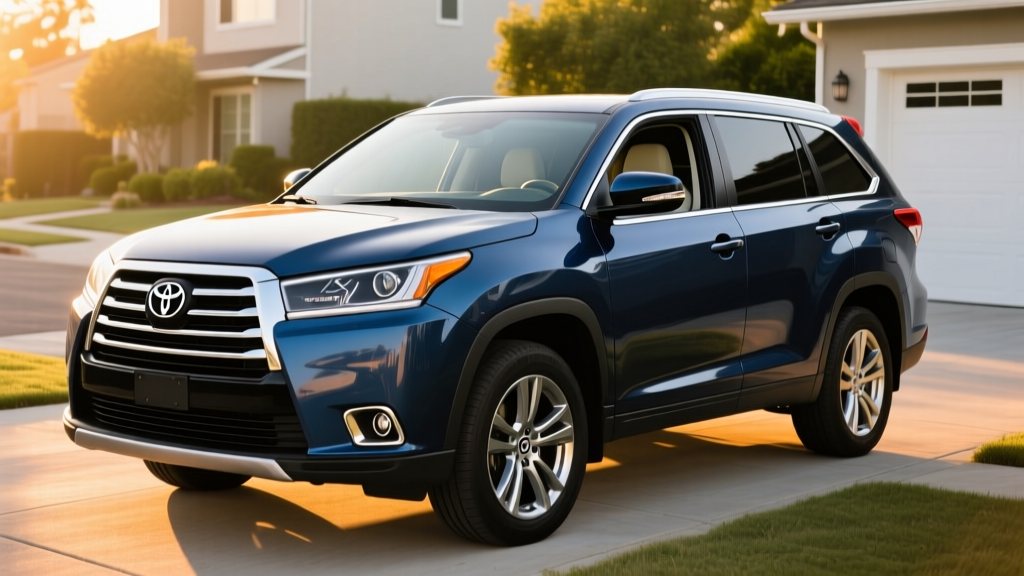
The 2015 Toyota Highlander Hybrid occupies a specific niche in the used three-row SUV market: it's one of the few vehicles from that era that pairs seven-passenger seating with genuinely strong fuel economy and Toyota's proven hybrid reliability. For buyers in 2026 searching for a dependable, efficient family hauler without stepping into full EV territory, this generation remains a compelling option — provided you understand what you're getting, what to watch for, and how it stacks up against modern alternatives.
This guide covers everything a used-car buyer or current owner needs to know: EPA and real-world MPG, the hybrid powertrain, battery longevity and replacement costs, and whether a decade-old Highlander Hybrid still makes financial sense versus a newer PHEV or battery-electric SUV.
2015 Highlander Hybrid Fuel Economy: EPA vs. Real World
The headline number for any hybrid buyer is fuel economy. The 2015 Highlander Hybrid carries EPA ratings that remain competitive even by 2026 standards for a gasoline-powered three-row SUV.
| Metric | MPG |
|---|---|
| City | 27 MPG |
| Highway | 28 MPG |
| Combined | 28 MPG |
Source: fueleconomy.gov
Real-World MPG Expectations
Toyota's Hybrid Synergy Drive system excels in stop-and-go traffic, where regenerative braking recaptures energy and the electric motor handles low-speed propulsion. In real-world driving, owners frequently report:
- City driving: 28–31 MPG — many owners match or slightly exceed the EPA city estimate because regenerative braking works hardest in urban traffic.
- Highway driving: 25–27 MPG — at sustained highway speeds, the 3.5L V6 carries most of the load, and the hybrid advantage narrows.
- Mixed/commuter driving: 26–29 MPG combined, closely tracking the EPA's 28 MPG combined estimate.
- Cold weather (below 35°F): Expect a 5–10% reduction (roughly 24–26 MPG combined) as the engine runs more frequently to provide cabin heat and maintain battery temperature.
Hybrid Powertrain: How It Works
The 2015 Highlander Hybrid uses Toyota's well-established series-parallel hybrid system. This is a conventional hybrid (HEV) — not a plug-in hybrid. You never plug it in. The battery charges through regenerative braking and the gasoline engine.
| Component | Specification |
|---|---|
| Gasoline Engine | 3.5L V6 (2GR-FXE), Atkinson cycle |
| Engine Power | 236 HP @ 5,600 RPM |
| Front Electric Motor | 167 HP (125 kW) |
| Rear Electric Motor | 67 HP (50 kW) — enables electronic AWD |
| Net System Horsepower | 280 HP |
| Transmission | eCVT (electronically controlled continuously variable) |
| Drivetrain | Electronic on-demand AWD (AWD-i) |
| Hybrid Battery | Nickel-Metal Hydride (NiMH), ~1.87 kWh (sealed) |
| 0–60 MPH | ~7.8 seconds |
HEV vs. PHEV: What's the Difference?
Conventional Hybrid (HEV) — This Vehicle
- No plug — battery charges via regen braking and engine
- Small battery (~1.87 kWh) — assists the engine, doesn't drive alone for meaningful distance
- Electric-only: less than 1 mile at very low speeds
- Always has gasoline available — no range anxiety
Plug-In Hybrid (PHEV)
- Plugs into a wall outlet or charger to fill a larger battery
- Larger battery (typically 13–20+ kWh) — drives 25–45 miles on electricity alone
- After electric range is depleted, operates as a conventional hybrid
- Example: Toyota RAV4 Prime (42 mi electric-only), Toyota Prius Prime (44 mi)
The 2015 Highlander Hybrid was never offered as a PHEV. Toyota did not produce a plug-in Highlander until the 2026 model year introduced in select markets. If you need electric-only driving for a short commute, you'd need to look at a different model — the RAV4 Prime or a newer PHEV three-row SUV.
Hybrid Battery Longevity and Replacement Cost
This is the single most common concern for used hybrid buyers, and it deserves a thorough answer.
Toyota's original hybrid battery warranty for the 2015 Highlander Hybrid was 8 years / 100,000 miles (10 years / 150,000 miles in California and states adopting CARB emissions standards). As of 2026, most original warranties have expired unless the vehicle was purchased late in the model year and driven minimally.
How Long Do These Batteries Actually Last?
The 2015 Highlander Hybrid uses a Nickel-Metal Hydride (NiMH) battery pack. Toyota's NiMH packs have an extensive real-world track record:
- Typical lifespan: 150,000–200,000+ miles before significant degradation, based on fleet and owner data.
- Degradation pattern: NiMH batteries lose capacity gradually. You may notice a slight MPG decline (1–3 MPG) before a full failure.
- Failure mode: Individual cells weaken unevenly. Often, replacing a single module (the battery is composed of multiple modules) can restore function at a fraction of a full-pack replacement.
Battery Replacement Costs in 2026
| Option | Estimated Cost | Notes |
|---|---|---|
| New OEM battery (Toyota dealer) | $3,500–$5,000 | Full pack replacement, typically includes 1-year warranty |
| Refurbished/remanufactured pack | $1,800–$3,000 | Rebuilt with tested modules; warranty varies (1–3 years) |
| Individual module replacement | $400–$900 | Independent hybrid specialists can replace weak modules; requires diagnostic scan |
| Used/salvage pack | $800–$1,500 | From a wrecked low-mileage Highlander; gamble on remaining life |
The good news: at 200,000+ miles, many 2015 Highlander Hybrids are still running on their original battery pack. The NiMH chemistry is less energy-dense than modern lithium-ion but is extremely durable. If you're buying used, have the hybrid battery health checked via an OBD-II scan tool that reads individual module voltages — a spread greater than 0.3V between modules suggests impending issues.
Who Should Buy a 2015 Highlander Hybrid in 2026?
This vehicle fits a specific buyer profile. Here's a practical decision framework:
Choose the 2015 Highlander Hybrid if:
- You need three-row seating but want to minimize fuel costs vs. a gas-only V6 SUV
- You drive 12,000–18,000 miles/year in mixed or city-heavy conditions
- You don't have reliable access to home or workplace EV charging
- Your budget is $14,000–$22,000 (typical 2026 used-market range for 80k–140k miles)
- You value Toyota's long-term reliability and low maintenance costs
Look at a PHEV or full EV instead if:
- You have a short commute (under 30 miles) and can charge at home — a PHEV like the RAV4 Prime covers most trips on electricity alone
- You want the latest safety tech (the 2015 Highlander predates Toyota Safety Sense as standard; it became standard in 2017)
- You want a federal tax credit — used hybrids do not qualify for the §30D new-vehicle credit, and the used-EV credit (§25E, up to $4,000) applies only to battery-electric and PHEV models, not conventional HEVs
- You need modern infotainment (Apple CarPlay/Android Auto were not available in the 2015 model year)
Hybrid vs. PHEV vs. Full EV: Which Fits Your Situation?
Buyers cross-shopping a used 2015 Highlander Hybrid are often weighing it against newer electrified alternatives. Here's how the categories compare for a family-SUV buyer:
| Factor | 2015 Highlander Hybrid (HEV) | Modern PHEV (e.g., Grand Cherokee 4xe) | Full EV (e.g., Kia EV9) |
|---|---|---|---|
| Used Price (2026) | $14,000–$22,000 | $30,000–$45,000 | $38,000–$58,000 |
| Fuel/Energy Cost per Mile | ~$0.12 (gas @ $3.40/gal) | ~$0.06 electric / ~$0.13 gas | ~$0.04–$0.08 (home charging) |
| Electric-Only Range | N/A (less than 1 mi) | 25–45 miles | 250–310 miles (full battery) |
| Home Charging Needed? | No | Recommended for benefit | Essential |
| Three-Row Seating | Yes (7–8 passengers) | Limited options | Yes (EV9, others) |
| Federal Tax Credit (New) | N/A | Up to $7,500 (§30D) | Up to $7,500 (§30D) |
| Maintenance Cost | Low (proven Toyota) | Moderate (two powertrains) | Low (no engine/transmission) |
The 2015 Highlander Hybrid wins on lowest entry price and no charging infrastructure required. It loses on per-mile energy cost and modern technology. If you already own a home with a 240V outlet and your budget allows, a newer PHEV or EV delivers dramatically lower operating costs — but the upfront gap is $15,000–$35,000.
Tax Credit Eligibility: What Applies to This Vehicle?
A critical point for used hybrid buyers in 2026:
- Federal new-vehicle credit (§30D): Not applicable. The 2015 Highlander Hybrid is no longer sold new, and conventional HEVs have never qualified for the federal plug-in vehicle credit regardless.
- Federal used-EV credit (§25E): Not applicable. This credit (up to $4,000 or 30% of sale price, whichever is less) applies only to battery-electric vehicles and plug-in hybrids purchased used from a dealer. Conventional hybrids are excluded. See IRS §25E guidelines.
- State incentives: A handful of states offer modest rebates for used hybrid purchases, but these vary by jurisdiction and change frequently. Check your state's energy or environmental agency for current programs.
The absence of tax credits means the 2015 Highlander Hybrid's value proposition rests entirely on its low purchase price, strong fuel economy, and reliability — not government incentives.
Pros and Cons: Honest Assessment
Pros
- 28 MPG combined in a 7-passenger SUV — still competitive in 2026
- Proven NiMH hybrid battery with 200k+ mile track record
- Standard AWD (AWD-i) with no mechanical linkage to maintain
- Smooth, quiet powertrain with 280 net HP — adequate for merging and passing
- Low annual maintenance cost (no turbo, no complex transmission)
- Strong resale value retention relative to non-hybrid competitors
Cons
- Predates Toyota Safety Sense — no standard automatic emergency braking or lane-keeping
- No Apple CarPlay or Android Auto
- NiMH battery limits electric-only assist to low speeds / short distances
- Third-row space is tight for adults (better suited for children)
- eCVT can feel disconnected under hard acceleration (common to all Toyota hybrids of this era)
- No federal or state tax credits available
Frequently Asked Questions
How many MPG does the 2015 Toyota Highlander Hybrid get?
The EPA rates the 2015 Highlander Hybrid at 27 MPG city, 28 MPG highway, and 28 MPG combined. In real-world driving, city-dominant commuters often see 28–31 MPG thanks to regenerative braking, while highway-heavy trips may return 25–27 MPG. Cold weather can reduce combined economy by 5–10%.
Does the 2015 Highlander Hybrid need to be plugged in?
No. This is a conventional hybrid (HEV), not a plug-in hybrid (PHEV). The battery charges entirely through regenerative braking and the gasoline engine. There is no charging port and no electric-only driving range beyond a few hundred yards at parking-lot speeds.
How far can it go on electric only?
Effectively zero miles in any practical sense. The NiMH battery pack is small (~1.87 kWh) and the electric motors assist the gasoline engine rather than powering the vehicle independently for meaningful distances. If electric-only commuting is a priority, you need a PHEV (like the RAV4 Prime with 42 miles electric-only) or a full EV.
Is the 2015 Highlander Hybrid reliable, and what does a battery replacement cost?
Yes — this is one of the most reliable three-row SUVs of its era. The hybrid system is simpler than a conventional automatic transmission (no torque converter, no clutch packs), and Toyota's NiMH batteries routinely last 150,000–200,000+ miles. If replacement is needed, expect $3,500–$5,000 for a new OEM pack, $1,800–$3,000 for a refurbished unit, or $400–$900 for individual module repair at a hybrid specialist.
Does the 2015 Highlander Hybrid qualify for any tax credit?
No. Conventional hybrids have never qualified for the federal plug-in vehicle tax credit (§30D), and the used clean vehicle credit (§25E) applies only to battery-electric and plug-in hybrid vehicles. Some states may offer small incentives for used hybrid purchases — check your local programs. Consult a tax professional for eligibility specifics.
What should I check before buying a used 2015 Highlander Hybrid?
Prioritize these inspections: (1) hybrid battery health scan via OBD-II — check individual module voltage spread; (2) inverter coolant level and condition (pink, not brown); (3) brake actuator function (the regenerative braking system uses an electro-hydraulic actuator that can fail expensively — listen for unusual pump cycling); (4) transmission fluid condition (though the eCVT is sealed and generally maintenance-free, leaks indicate seal failure). A pre-purchase inspection at a Toyota dealer or hybrid specialist is strongly recommended.
How does the 2015 Highlander Hybrid compare to newer hybrid SUVs?
Newer models like the 2025 Toyota Grand Highlander Hybrid (36 MPG combined) or the Hyundai Santa Fe Hybrid (34 MPG combined) deliver meaningfully better fuel economy, modern safety suites, and current infotainment. However, they cost $38,000–$50,000+ new. The 2015 Highlander Hybrid at $14,000–$22,000 used represents roughly 60% of the fuel savings at 35–45% of the purchase price — a strong value proposition for budget-conscious families who don't need the latest tech.