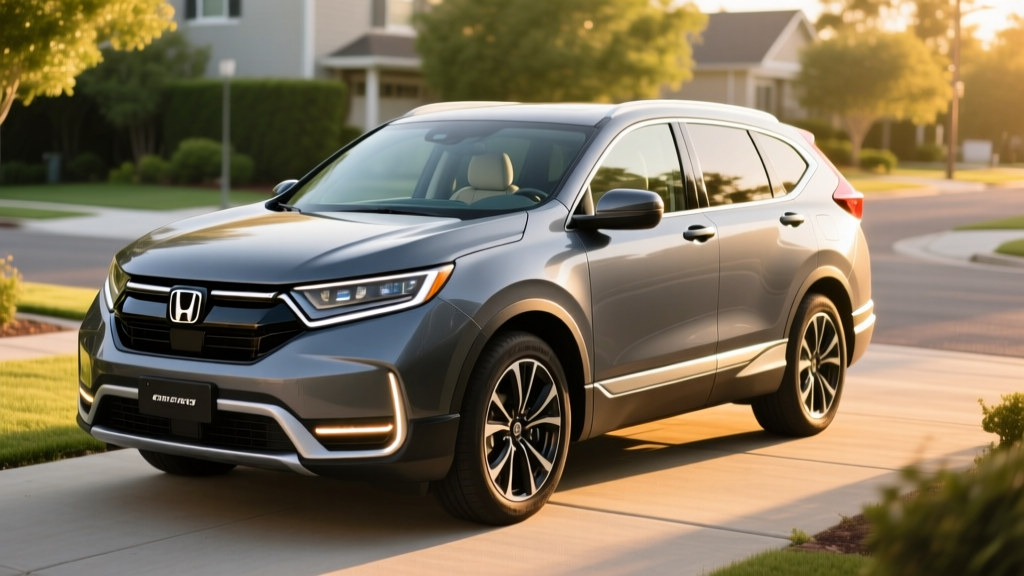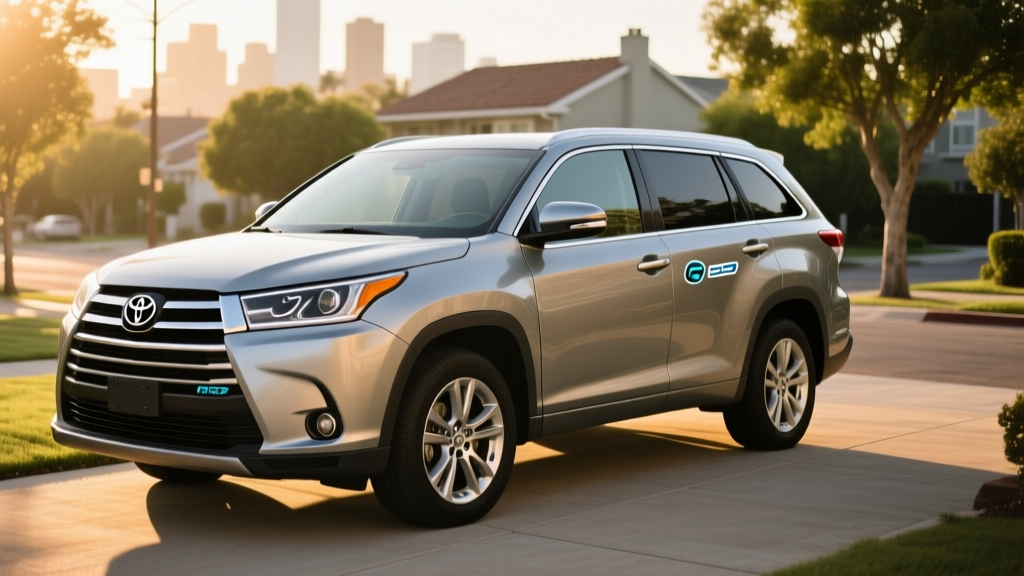
If you're researching the 2015 Toyota Highlander Hybrid 4WD on the used market, you're likely weighing its fuel-sipping hybrid powertrain against a decade of real-world wear. This three-row SUV was one of the few hybrid family haulers of its era with standard electronic all-wheel drive (AWD-i), and in 2026 it remains a compelling used buy — provided you understand what its hybrid battery, fuel economy, and ownership costs actually look like today.
This guide breaks down the EPA numbers, real-world MPG expectations, hybrid battery longevity, and whether the 2015 Highlander Hybrid still makes financial sense compared to a modern PHEV or full EV.
HEV vs PHEV: What the 2015 Highlander Hybrid Actually Is
The 2015 Toyota Highlander Hybrid is a conventional hybrid electric vehicle (HEV), not a plug-in hybrid (PHEV). This distinction matters because it shapes everything from how you fuel it to whether it qualifies for tax credits.
| Feature | HEV (2015 Highlander Hybrid) | PHEV (e.g., Toyota RAV4 Prime) | BEV (e.g., Tesla Model X) |
|---|---|---|---|
| Plug-in charging required? | No — self-charging via regen & engine | Yes — plug in for EV-only miles | Yes — plug in for all driving |
| Electric-only range | ~1 mile at low speed | 25–42 miles typical | 250–350+ miles |
| Battery size | 1.9 kWh (NiMH) | 13.6–18.1 kWh (Li-ion) | 75–100+ kWh (Li-ion) |
| DC fast charge capable? | No | Rarely (some models) | Yes |
| Federal tax credit (§30D)? | No — credit expired for this model years ago | Up to $7,500 (new only, subject to IRS rules) | Up to $7,500 (new, subject to IRS rules) |
| Fuel type | Regular gasoline (regenerative assist) | Gasoline + grid electricity | Electricity only |
Toyota did not offer a plug-in variant of the Highlander in 2015. The Highlander Hybrid recharges its small nickel-metal hydride (NiMH) battery entirely through regenerative braking and the gasoline engine. You never plug it in.
Fuel Economy: EPA Ratings and Real-World MPG
EPA Estimated MPG (2015 Highlander Hybrid AWD-i)
| Driving Cycle | EPA Estimate |
|---|---|
| City | 27 MPG |
| Highway | 28 MPG |
| Combined | 28 MPG |
Source: U.S. EPA / fueleconomy.gov
Real-World MPG: What Owners Actually Report
The 2015 Highlander Hybrid uses Toyota's Hybrid Synergy Drive, which favors city driving where the electric motor handles low-speed acceleration and the engine shuts off at stops. In practice:
- City / suburban driving: Many owners report 28–31 MPG, sometimes exceeding the EPA city estimate thanks to frequent stop-and-go regen opportunities.
- Highway cruising (70+ mph): Expect 25–27 MPG. The aerodynamic penalty of a three-row SUV and the engine running continuously at high speed reduce the hybrid advantage.
- Cold weather (below 32°F): Expect a 10–15% drop, bringing combined MPG to roughly 24–25. The engine runs more often to provide cabin heat, since this model predates Toyota's heat-pump integration.
- Heavy cargo / towing: Towing capacity is 3,500 lbs, but towing will drop fuel economy into the low 20s.
Powertrain Specs: Engine, Motors, and Combined Output
| Specification | 2015 Highlander Hybrid AWD-i |
|---|---|
| Engine | 3.5L V6 (2GR-FXE) Atkinson-cycle |
| Engine horsepower | 236 HP @ 5,800 RPM |
| Front electric motor | 123 kW (165 HP) |
| Rear electric motor (AWD-i) | 50 kW (67 HP) |
| Net combined system output | 280 HP |
| Transmission | eCVT (electronically controlled CVT) |
| Drivetrain | AWD-i (electronic on-demand rear axle) |
| Hybrid battery | 1.9 kWh NiMH (245V nominal) |
| 0–60 mph | ~7.8 seconds |
| Towing capacity | 3,500 lbs |
| Curb weight | ~4,655 lbs |
The AWD-i system is worth understanding: there is no mechanical driveshaft to the rear wheels. Instead, a separate rear electric motor engages the rear axle only when the system detects front-wheel slip or when extra traction is needed during acceleration. This means the AWD is reactive, not full-time — adequate for rain and light snow, but not a substitute for a dedicated off-road SUV.
Hybrid Battery Longevity, Warranty, and Replacement Cost
For any used hybrid buyer, the traction battery is the single largest financial risk. Here's what you need to know about the 2015 Highlander Hybrid's NiMH pack:
Toyota covered the hybrid battery for 10 years / 150,000 miles in CARB states (California, New York, Massachusetts, and others adopting California emissions standards) and 8 years / 100,000 miles in all other states.
In 2026, a 2015 model is 11 years old. Most original hybrid battery warranties have expired unless the vehicle has exceptionally low mileage and is registered in a CARB state. Verify warranty status with a Toyota dealer using the VIN before purchasing.
Battery Degradation and Failure Patterns
The NiMH battery in the 2015 Highlander Hybrid is proven technology — Toyota used similar packs in the Camry Hybrid and earlier Prius models with well-documented longevity. Common patterns:
- Typical lifespan: 150,000–200,000 miles before significant degradation or failure, though many packs last longer.
- Degradation symptoms: Reduced fuel economy (2–4 MPG drop), more frequent engine cycling, "Check Hybrid System" warning light.
- Failure mode: Usually a single weak module within the pack, not the entire battery.
Battery Replacement Cost (2026 Estimates)
| Option | Cost Range | Warranty |
|---|---|---|
| New OEM Toyota battery (dealer) | $3,500–$4,500 installed | 1 year / unlimited miles (parts) |
| Remanufactured battery (specialist shop) | $1,800–$2,800 installed | 1–3 years depending on vendor |
| Individual module replacement | $400–$900 (diagnosis + parts) | Varies; may not solve long-term imbalance |
| Used/salvage battery | $800–$1,500 installed | 30–90 days typical |
If you're buying a 2015 Highlander Hybrid today, budget $2,000–$4,500 as a contingency for hybrid battery service within the first few years of ownership, unless the seller can provide documentation of a recent replacement.
Does the 2015 Highlander Hybrid Qualify for Any Tax Credit?
No. The 2015 Toyota Highlander Hybrid does not qualify for the federal §30D new clean vehicle tax credit. That credit applies only to new vehicle purchases, and even when this model was new, the Toyota Highlander Hybrid's credit eligibility was limited and phased out under the original credit structure.
For used hybrid buyers in 2026, there is no dedicated federal tax credit for conventional HEVs. The Used Clean Vehicle Credit (§25E) provides up to $4,000, but it applies only to used BEVs and PHEVs — not conventional hybrids. Some states offer their own incentives for hybrid purchases; check your state's energy office or DMV for current programs.
For authoritative tax credit rules, refer to IRS.gov §30D guidance.
Used Market Pricing in 2026
As of early 2026, the 2015 Toyota Highlander Hybrid 4WD trades in the used market at:
- Private party (120K–160K miles, good condition): $14,000–$18,000
- Dealer retail (100K–140K miles, certified pre-owned where available): $17,000–$22,000
- Low-mileage examples (under 80K miles): $20,000–$25,000
The Highlander Hybrid commands a $1,500–$3,000 premium over the equivalent gas-only 2015 Highlander V6 AWD, driven by Toyota's hybrid reliability reputation and the fuel economy advantage in a large SUV. That premium is usually justified if the hybrid battery is healthy.
Who Should Buy This Hybrid — And Who Shouldn't
Reasons to Buy
- Proven Toyota hybrid reliability with massive parts/service network
- 28 MPG combined in a three-row AWD SUV — still competitive in 2026
- No plug-in required; fuel it like a gas car
- Strong resale value retention
- Spacious cabin with 8-passenger seating
- AWD-i adequate for snow/rain without the fuel penalty of mechanical AWD
Reasons to Pass
- Hybrid battery likely near end of original warranty — replacement risk
- No electric-only driving to speak of; you're still burning gas 99% of the time
- Dated infotainment (no Apple CarPlay / Android Auto from factory)
- eCVT drone under hard acceleration
- Safety tech is pre-Toyota Safety Sense (no automatic emergency braking standard)
- Modern PHEVs (RAV4 Prime, Grand Highlander Hybrid) offer substantially better efficiency
Decision Framework
Choose the 2015 Highlander Hybrid if: You need three rows and AWD, drive 15,000+ miles/year in mixed city/suburban conditions, don't have access to home charging, and want a proven Toyota powertrain at a sub-$20K price point.
Choose a modern PHEV (e.g., 2025+ Grand Highlander Hybrid) if: You want 35+ MPG combined, have a budget above $45K, and value modern safety tech (AEB, lane-keeping) and infotainment.
Choose a full EV (e.g., Kia EV9, Tesla Model X) if: You have reliable home Level 2 charging, drive under 300 miles between charges, and want zero tailpipe emissions with minimal maintenance.
Hybrid vs PHEV vs EV: Which Fits Your Situation?
The 2015 Highlander Hybrid sits at one end of the electrification spectrum. Here's how the three powertrain types compare for a family-SUV buyer in 2026:
| Factor | HEV (Highlander Hybrid) | PHEV (RAV4 Prime / Tucson PHEV) | BEV (EV9 / Model X) |
|---|---|---|---|
| Upfront cost (used/new) | $14K–$22K (used) | $40K–$55K (new) | $50K–$80K (new) |
| Home charging needed? | No | Recommended for EV range | Essential |
| Fuel cost per mile | ~$0.12–$0.14 (gas) | ~$0.04 (electric) / $0.12 (gas) | ~$0.03–$0.05 (electric) |
| Maintenance | Oil changes, standard hybrid service | Oil changes + EV systems | Minimal — no oil, fewer fluids |
| Federal tax credit (new) | None | Up to $7,500 (§30D, if eligible) | Up to $7,500 (§30D, if eligible) |
| Best for | No-charger households, budget buyers | Short commutes + road trips | Home chargers, daily <300 mi |
Frequently Asked Questions
How many MPG does the 2015 Toyota Highlander Hybrid 4WD get?
The EPA rates it at 27 city / 28 highway / 28 combined MPG. In real-world mixed driving, most owners average 26–28 MPG, with city-heavy routes occasionally pushing past 30 MPG. Highway-only trips at 75+ mph typically yield 25–26 MPG.
Can the 2015 Highlander Hybrid drive on electric power only?
Only at very low speeds (under 25 mph) for roughly one mile or less, and only if the battery has sufficient charge. It is not a plug-in hybrid and has no meaningful electric-only range. The electric motor primarily assists the gasoline engine during acceleration and enables engine-off coasting.
Is the 2015 Highlander Hybrid reliable?
Yes, with a caveat. The 3.5L V6 and eCVT are among Toyota's most proven powertrain components, and the AWD-i system has few failure points. The main reliability risk in 2026 is hybrid battery age — at 11 years old, original NiMH packs are approaching or past their expected service life. A pre-purchase hybrid battery health check (via OBD-II scan of individual module voltages) is strongly recommended. NHTSA records show relatively few powertrain complaints for this model year.
What does a hybrid battery replacement cost?
A new OEM Toyota replacement battery costs $3,500–$4,500 installed at a dealer. Remanufactured options from independent hybrid specialists run $1,800–$2,800. Individual module replacement is possible for $400–$900 but may not resolve long-term pack imbalance in an 11-year-old battery.
Does the 2015 Highlander Hybrid qualify for any tax credit in 2026?
No. The federal §30D credit applies only to new vehicles, and the §25E used clean vehicle credit applies only to BEVs and PHEVs, not conventional hybrids. Some state-level incentives may apply — check your state's energy office for current programs.
What should I check before buying a used 2015 Highlander Hybrid?
Prioritize: (1) hybrid battery health scan showing module voltage delta under 0.3V, (2) service records confirming regular oil changes and inverter coolant service, (3) brake actuator recall status (check NHTSA VIN lookup), and (4) AWD-i rear motor operation during a test drive on wet or loose surfaces.