Why the 2015 Toyota Camry Hybrid MPG Still Matters in 2026
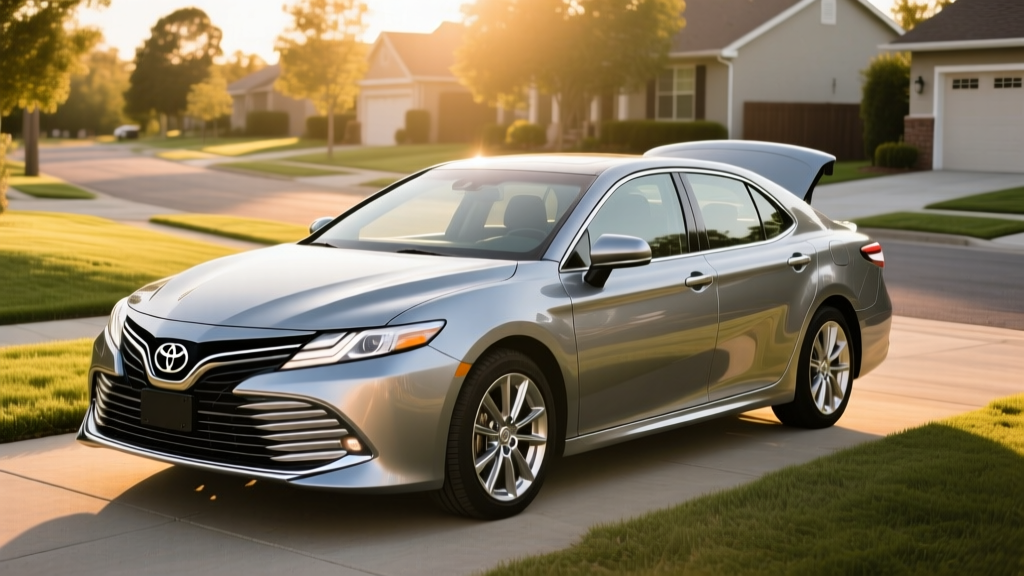
The used hybrid market has exploded, and the 2015 Toyota Camry Hybrid remains one of the most searched midsize sedans among budget-conscious buyers who want maximum fuel economy without plugging in. With an EPA-estimated 40 MPG combined, this generation of Camry Hybrid delivers numbers that rival many newer vehicles — and it does so with a proven 10-year track record of reliability that few competitors can match.
If you're researching 2015 Toyota Camry Hybrid MPG to decide whether this used sedan fits your commute, this guide covers the exact EPA figures, real-world fuel economy data from owners, battery longevity expectations, replacement costs, and how this conventional hybrid (HEV) compares to plug-in hybrids and full EVs available today.
2015 Toyota Camry Hybrid MPG: EPA Ratings and Real-World Data
| Driving Condition | EPA Estimate | Real-World Owner Average |
|---|---|---|
| City | 40 MPG | 41–44 MPG |
| Highway | 38 MPG | 35–38 MPG |
| Combined | 40 MPG | 38–42 MPG |
Source: EPA Fuel Economy Guide — 2015 Toyota Camry Hybrid
The 2015 Camry Hybrid's city MPG advantage is typical of Toyota's Hybrid Synergy Drive system. At low speeds and in stop-and-go traffic, the electric motor handles much of the propulsion, and regenerative braking recaptures energy that a conventional gas car would waste as heat. This is why the city rating actually exceeds the highway number — the opposite of most gas-only vehicles.
HEV vs PHEV vs EV: Where Does the Camry Hybrid Fit?
The 2015 Toyota Camry Hybrid is a conventional hybrid electric vehicle (HEV). It cannot be plugged in. There is no electric-only driving range to speak of — the small 1.6 kWh nickel-metal hydride (NiMH) battery assists the gasoline engine during acceleration and captures energy during braking, but it does not propel the car on electricity alone for meaningful distances.
| Feature | 2015 Camry Hybrid (HEV) | Typical 2026 PHEV (e.g., Toyota RAV4 Prime) | Typical 2026 BEV (e.g., Tesla Model 3) |
|---|---|---|---|
| Plug-in Required? | No | Yes (Level 1/2) | Yes (Level 2/DCFC) |
| Electric-Only Range | ~1 mile at low speed | 42 miles | 300+ miles |
| Battery Capacity | 1.6 kWh (NiMH) | 18.1 kWh (NMC lithium-ion) | 60–82 kWh (NMC/LFP) |
| Combined MPG / MPGe | 40 MPG | 94 MPGe (electric) / 38 MPG (gas) | 120+ MPGe |
| Federal Tax Credit (New) | None | Up to $7,500 (§30D) | Up to $7,500 (§30D) |
| Fuel Cost per Mile (2026 avg) | ~$0.09 | ~$0.04 (electric) / ~$0.10 (gas) | ~$0.04 |
The Camry Hybrid occupies a specific niche: buyers who want excellent fuel economy without any change to their fueling routine. You never plug in, never hunt for a charger, and never worry about range. You simply fill up at any gas station — just less often.
Powertrain Specs: Engine, Motor, and Combined Output
| Specification | 2015 Toyota Camry Hybrid |
|---|---|
| Engine | 2.5L 4-cylinder Atkinson cycle |
| Engine Horsepower | 156 hp @ 5,700 rpm |
| Electric Motor Output | 105 kW (141 hp) |
| Net Combined System HP | 200 hp |
| Transmission | eCVT (planetary gearset, not a belt CVT) |
| Hybrid Battery | 1.6 kWh NiMH (244.8V nominal) |
| 0–60 mph | ~7.6 seconds |
| Curb Weight | ~3,545 lbs |
| Fuel Tank | 17.2 gallons |
Toyota's eCVT is frequently misunderstood. It is not a conventional continuously variable transmission with a steel belt and pulleys. Instead, it uses a planetary gearset that seamlessly blends power from the gasoline engine and electric motor. This design has fewer moving parts than a traditional automatic, which contributes to the Camry Hybrid's strong long-term reliability record.
Battery Longevity, Warranty, and Replacement Cost
How Long Does the Battery Actually Last?
The 2015 Camry Hybrid's NiMH battery pack has proven remarkably durable. Based on fleet data and owner reports across forums like ToyotaNation, most original battery packs last between 150,000 and 200,000 miles before capacity degrades enough to trigger a warning light or noticeably reduce fuel economy. Some packs have exceeded 250,000 miles with only minor MPG reduction.
NiMH chemistry degrades more gradually than early lithium-ion packs. Rather than a sudden failure, owners typically notice a 2–4 MPG drop over several years as the battery holds less charge and the engine kicks in more frequently.
Hybrid Battery Replacement Cost in 2026
If the battery does need replacement, here's what to budget:
- New OEM Toyota battery: $2,500–$3,500 (part) + $500–$800 (labor) = $3,000–$4,300 total
- Refurbished/remanufactured battery: $1,200–$2,000 (part) + $500–$800 (labor) = $1,700–$2,800 total
- Individual cell/module replacement: $500–$1,200 total (specialist shops only)
Many independent hybrid specialists now offer module-level repair, replacing only the degraded cells within the pack rather than the entire assembly. This can extend battery life at a fraction of the full replacement cost.
Does the 2015 Camry Hybrid Qualify for Any Tax Credit?
No. The 2015 Toyota Camry Hybrid is a conventional HEV and does not qualify for the federal §30D Clean Vehicle Credit. That credit applies only to plug-in electric vehicles (PHEVs and BEVs) with sufficient battery capacity and meeting current sourcing and income requirements under IRS rules.
When purchasing a used 2015 Camry Hybrid in 2026, you also cannot claim the §25E Used Clean Vehicle Credit, as that credit similarly requires a plug-in vehicle (PHEV or BEV) with a minimum 7 kWh battery capacity. The Camry Hybrid's 1.6 kWh NiMH pack falls well below that threshold.
Some states and local utilities offer rebates for used hybrid purchases, but these vary widely by jurisdiction. Check your state energy office or utility provider for current programs.
Pricing and Value in the 2026 Used Market
The 2015 Camry Hybrid was offered in two trims:
- LE Hybrid: Original MSRP $27,495
- XLE Hybrid: Original MSRP $31,290
In the 2026 used market, expect to pay approximately:
- 80,000–110,000 miles: $13,000–$16,500
- 110,000–150,000 miles: $10,000–$13,500
- 150,000+ miles: $7,500–$10,500
Prices vary significantly by region, condition, service history, and whether the hybrid battery has been replaced or tested. Always request a pre-purchase inspection that includes a hybrid battery health check — many Toyota dealers and hybrid specialists can pull the battery's State of Health (SoH) data via OBD-II.
Who Should Buy the 2015 Camry Hybrid — and Who Shouldn't
- You drive 12,000–20,000 miles/year and want to minimize fuel costs without changing your fueling routine
- You live in an apartment or lack access to home charging, making a PHEV or EV impractical
- Your budget is under $16,000 and you want a proven, low-risk used vehicle
- Your commute is city/suburban-heavy where the hybrid system delivers its best MPG
- You want Toyota reliability with widely available parts and service
- You have home Level 2 charging and a short commute (a PHEV could run entirely on electricity)
- You want to eliminate gasoline use entirely (BEV)
- You qualify for the §30D tax credit on a new or used plug-in vehicle, improving the economics
- You drive mostly highway miles where the Camry Hybrid's advantage narrows to 35–37 MPG
- 40 MPG combined EPA; often exceeds in city driving
- No plug-in required — zero lifestyle change
- Proven 200k+ mile powertrain durability
- Smooth, quiet eCVT operation
- Spacious midsize cabin with 15.1 cu ft trunk
- Low cost of ownership and maintenance
- No electric-only driving range
- Original hybrid battery warranty now expired
- Dated infotainment (no Apple CarPlay/Android Auto)
- Highway MPG drops at sustained 75+ mph speeds
- No federal tax credit eligibility
- Modest 200 hp — adequate but not quick
Frequently Asked Questions
How many MPG does the 2015 Toyota Camry Hybrid get?
The EPA rates the 2015 Camry Hybrid at 40 MPG city, 38 MPG highway, and 40 MPG combined. In real-world driving, city-dominant commuters often see 42–45 MPG, while highway-heavy drivers average 34–38 MPG. Cold weather reduces these figures by roughly 5–10%.
Does the 2015 Camry Hybrid need to be plugged in?
No. This is a conventional hybrid (HEV), not a plug-in hybrid (PHEV). The battery charges exclusively through regenerative braking and the gasoline engine. You fuel it at any gas station — you just visit less often thanks to 40 MPG and a 17.2-gallon tank.
How far can the 2015 Camry Hybrid go on electric only?
Effectively zero miles in practical terms. The 1.6 kWh NiMH battery can propel the car at very low speeds (under 25 mph) for roughly one mile on a full charge, but this is not a usable electric-only mode. The system is designed to assist the gas engine, not replace it.
Is the 2015 Camry Hybrid reliable, and what does battery replacement cost?
The 2015 Camry Hybrid has an excellent reliability record. The NiMH battery pack typically lasts 150,000–200,000 miles. A new OEM replacement costs $3,000–$4,300 installed; a refurbished pack runs $1,700–$2,800 installed. The eCVT transmission and 2.5L Atkinson-cycle engine are among the most durable powertrain components Toyota has produced.
Does the 2015 Camry Hybrid qualify for any federal tax credit?
No. Federal clean vehicle credits (§30D for new, §25E for used) require plug-in vehicles with minimum battery capacities. The Camry Hybrid's 1.6 kWh NiMH pack does not qualify. Check your state and local utility for possible hybrid-specific rebates.
How does the 2015 Camry Hybrid compare to newer hybrids?
The current-generation Toyota Camry Hybrid (2025–2026) achieves 51 MPG combined with a more modern lithium-ion battery and updated styling, but commands $29,000+ new. The 2015 model delivers roughly 80% of that fuel economy at less than half the price on the used market, making it a strong value play for budget-focused buyers.
What should I check before buying a used 2015 Camry Hybrid?
Request a hybrid battery health report (State of Health percentage via OBD-II scan), verify service records showing regular oil changes, check for any open recalls via NHTSA, and have a technician inspect the inverter cooling system and brake actuator — both known maintenance items on this generation.