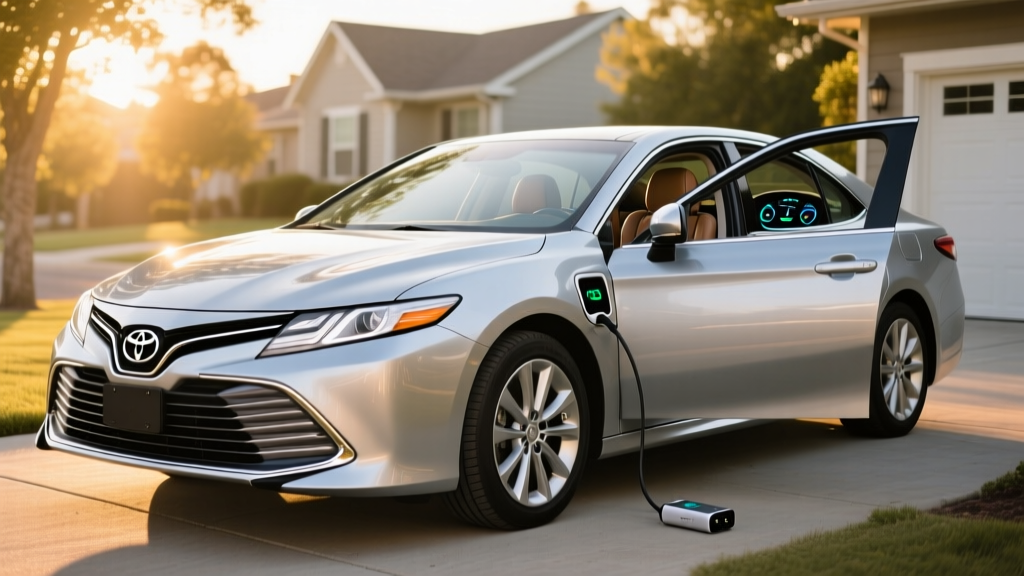
The 2015 Toyota Camry Hybrid LE occupies a specific niche in the used-car market: a midsize sedan that delivers genuine hybrid fuel savings without the complexity of plug-in charging or the range limitations of a full EV. With EPA ratings of 41 city / 38 highway / 40 combined MPG, it remains one of the most efficient non-plug-in sedans you can buy on the secondhand market. But a decade-old hybrid raises legitimate questions — particularly about battery health, replacement costs, and whether the fuel savings still justify the purchase in 2026.
This guide covers everything a used-car buyer needs to know about the 2015 Camry Hybrid LE, from powertrain specs and real-world fuel economy to battery degradation data and total cost of ownership compared to modern alternatives.
2015 Camry Hybrid LE Powertrain and Specifications
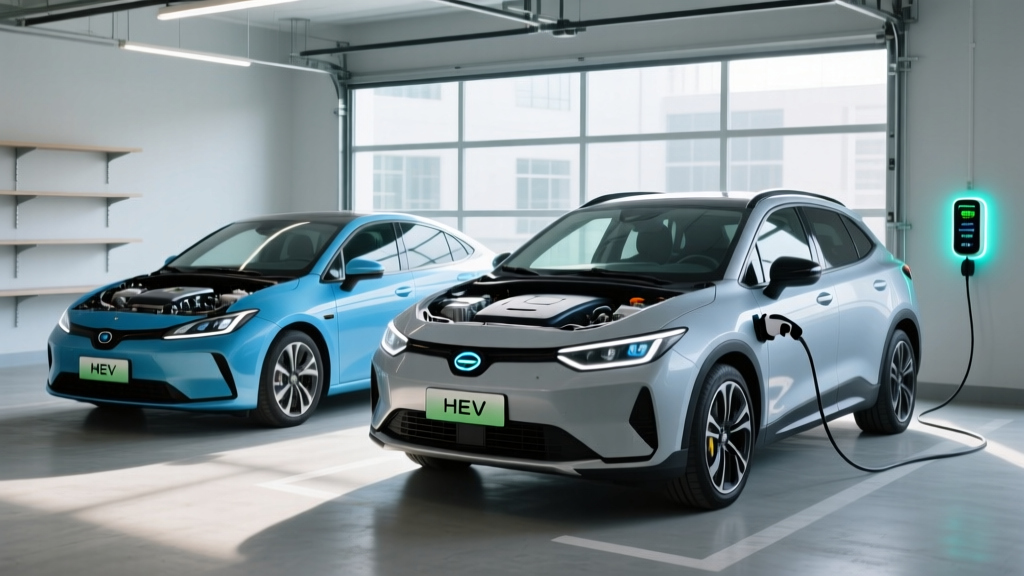
The 2015 Camry Hybrid LE uses Toyota's second-generation Hybrid Synergy Drive system, pairing a 2.5-liter Atkinson-cycle four-cylinder engine with a permanent-magnet electric motor and a nickel-metal hydride (NiMH) battery pack. This is a conventional hybrid electric vehicle (HEV) — it generates its own electricity through regenerative braking and the gasoline engine. There is no plug, no charging cable, and no electric-only driving range to manage.
| Specification | Value |
|---|---|
| Engine | 2.5L Atkinson-cycle I4 |
| Engine Output | 156 hp / 156 lb-ft torque |
| Electric Motor Output | 105 kW (141 hp) |
| Net Combined System Power | 200 hp |
| Transmission | eCVT (planetary gearset) |
| Hybrid Battery Type | NiMH (Nickel-Metal Hydride) |
| Hybrid Battery Capacity | ~1.6 kWh (gross) |
| Drivetrain | Front-wheel drive |
| 0–60 mph | ~7.6 seconds |
| Curb Weight | ~3,545 lbs |
| EPA Fuel Economy | 41 city / 38 highway / 40 combined MPG |
| Fuel Tank Capacity | 17.0 gallons |
| Total Driving Range | ~680 miles (EPA combined) |
| Original MSRP (2015) | $26,995 |
| Typical Used Price (2026) | $12,000–$17,000 (depending on mileage/condition) |
The Atkinson-cycle engine sacrifices some low-end power for thermal efficiency, while the electric motor fills in the torque gap during acceleration. The result is seamless power delivery through Toyota's eCVT — which is not a belt-driven continuously variable transmission but rather a planetary gearset that blends engine and motor output. This design has proven exceptionally durable, with no belts, clutches, or traditional transmission components to wear out.
Fuel Economy: EPA Ratings vs. Real-World MPG
| Driving Condition | EPA Estimate | Real-World Expectation |
|---|---|---|
| City | 41 MPG | 38–44 MPG |
| Highway | 38 MPG | 35–40 MPG |
| Combined | 40 MPG | 37–42 MPG |
Like most conventional hybrids, the 2015 Camry Hybrid LE tends to exceed its EPA city rating in stop-and-go traffic, where regenerative braking recaptures energy and the electric motor handles low-speed propulsion. Highway driving is where efficiency drops slightly — at sustained 70+ mph speeds, the gasoline engine carries most of the load with less regenerative benefit.
Based on aggregated owner data from fueleconomy.gov, real-world combined fuel economy for the 2015 Camry Hybrid clusters around 39–42 MPG for drivers with mixed commuting patterns. Several factors influence your actual results:
- Cold weather: Expect a 5–10% efficiency drop in winter months. The engine runs more frequently to provide cabin heat and maintain catalytic converter temperature.
- Driving style: Aggressive acceleration forces the gasoline engine to dominate. Smooth, anticipatory driving maximizes electric-motor usage.
- Tire condition: The original low-rolling-resistance tires contribute to EPA ratings. Replacement with standard all-season tires may reduce MPG by 1–2.
- Battery health: A degraded hybrid battery reduces the system's ability to store regenerative energy and assist the engine, modestly lowering fuel economy.
For context, the 2015 Camry Hybrid LE's 40 MPG combined represents a roughly 40% improvement over the gasoline-only 2015 Camry LE (28 combined MPG per EPA data). At 12,000 miles per year and $3.40/gallon gasoline, that translates to approximately $540 in annual fuel savings over the gas model.
Hybrid vs. Plug-In Hybrid vs. Full EV: Which Fits You?
The 2015 Camry Hybrid LE is a conventional HEV. Understanding how it differs from plug-in hybrids and battery-electric vehicles is critical for matching a vehicle to your lifestyle.
Conventional Hybrid (HEV) — Like the 2015 Camry Hybrid LE
- No plug required — the system self-charges via regenerative braking and the gasoline engine
- Small battery (~1–2 kWh) provides electric assist, not electric-only driving
- Fuel economy advantage is constant regardless of charging access
- Zero lifestyle change from a gas car — just fill up and drive
Plug-In Hybrid (PHEV) — Like the Toyota Prius Prime
- Larger battery (typically 8–18 kWh) charged via a plug (Level 1 or Level 2)
- 25–45 miles of electric-only range before the gasoline engine engages
- Requires home or workplace charging access to realize full benefit
- Operates as a conventional hybrid once the battery is depleted
- May qualify for federal tax credits (subject to current §30D rules)
Battery Electric Vehicle (BEV) — Like the Tesla Model 3 or Hyundai Ioniq 6
- No gasoline engine — 100% electric propulsion
- 250–400 miles of EPA range depending on model
- Requires reliable home charging (Level 2 strongly recommended)
- Lowest per-mile "fuel" cost but highest upfront price
- Eligible for up to $7,500 federal tax credit (with income, MSRP, and battery-sourcing requirements)
The 2015 Camry Hybrid LE is the right choice if: you lack home charging access, want zero behavioral change from your current gas car, prioritize low purchase price on the used market, and drive a mix of city and highway miles where hybrid efficiency shines.
Consider a PHEV or BEV instead if: you have Level 2 charging at home, your commute is under 40 miles round-trip (ideal for PHEV electric-only range), or you want to minimize or eliminate gasoline consumption entirely.
Battery Health, Degradation, and Replacement Cost
The hybrid battery is the single largest concern for any used-hybrid buyer. The 2015 Camry Hybrid LE uses a nickel-metal hydride (NiMH) pack — a mature, well-understood chemistry that Toyota has deployed across millions of vehicles since the original Prius in 1997.
Toyota Hybrid Battery Warranty
Original coverage: 8 years / 100,000 miles (10 years / 150,000 miles in California and states adopting CARB emissions standards).
What's covered: Battery failure or capacity loss below a functional threshold that impairs hybrid system operation.
2026 status: For a 2015 model, the federal 8-year/100,000-mile warranty has expired for most original-owner vehicles. However, some low-mileage examples in CARB states may still carry residual coverage through the 10-year/150,000-mile provision. Always verify with a Toyota dealer using the VIN.
NiMH batteries degrade gradually rather than failing catastrophically. Data from fleet studies and owner reports indicate that Toyota hybrid NiMH packs typically retain 70–80% of original capacity at 150,000 miles. This degradation manifests as slightly reduced electric-motor assist and marginally lower fuel economy — not a sudden failure.
Battery replacement costs in 2026:
- OEM new battery (Toyota dealer): $3,000–$4,000 including parts and labor
- Refurbished/remanufactured battery: $1,500–$2,500 from specialized hybrid repair shops
- Individual cell/module replacement: $500–$1,200 if only specific modules have failed (requires diagnostic testing)
Before purchasing a used 2015 Camry Hybrid LE, request a hybrid battery health check from a Toyota dealer or qualified hybrid technician. The diagnostic scan will reveal individual module voltages, internal resistance, and any stored fault codes — providing a clear picture of remaining battery life.
Reliability and Long-Term Ownership Data
The 2015 Camry Hybrid benefits from Toyota's extensive hybrid reliability track record. The eCVT planetary gearset has no friction bands, clutch packs, or torque converters — the components that typically fail in conventional automatic transmissions. This simplicity translates to exceptional powertrain longevity.
Common maintenance items for a 2015 Camry Hybrid LE at the 100,000–150,000 mile range include:
- Inverter coolant flush: Every 100,000 miles (often overlooked; critical for hybrid system cooling)
- Hybrid battery cooling fan filter: Clean or replace every 30,000–50,000 miles to prevent overheating
- Brake pads: Often last 80,000–120,000 miles due to regenerative braking reducing friction-brake usage
- 12V auxiliary battery: Replacement every 4–6 years (standard maintenance, not hybrid-specific)
The NHTSA gave the 2015 Camry a 5-star overall safety rating, and the IIHS named it a Top Safety Pick+ when equipped with optional forward-collision warning. These ratings apply equally to the Hybrid LE trim.
Tax Credits and Incentives for Used Hybrid Buyers
The 2015 Toyota Camry Hybrid LE does not qualify for the federal §30D new clean vehicle tax credit — that credit applies only to new PHEVs and BEVs meeting current battery-sourcing, MSRP, and buyer-income requirements as outlined on IRS.gov.
However, used-car buyers should be aware of the Used Clean Vehicle Credit (§25E), which provides up to $4,000 (or 30% of the sale price, whichever is less) for qualifying pre-owned plug-in electric vehicles. The 2015 Camry Hybrid LE, as a conventional HEV without plug-in capability, does not qualify for this credit either. The §25E credit is limited to used BEVs and PHEVs with a minimum 7 kWh battery capacity.
Some states and municipalities offer their own incentives for hybrid vehicle purchases, registration, or HOV-lane access. These vary widely by jurisdiction — check your state's energy office or DMV for current programs.
Total Cost of Ownership: 2015 Camry Hybrid LE vs. Alternatives
To put the value proposition in perspective, here's a five-year ownership cost comparison assuming 12,000 miles/year, $3.40/gallon gasoline, and typical maintenance:
| Cost Category | 2015 Camry Hybrid LE (40 MPG) | 2015 Camry Gas (28 MPG) | Used BEV (~3.5 mi/kWh) |
|---|---|---|---|
| Fuel/Energy (5 years) | $5,100 | $7,286 | $2,571 (at $0.15/kWh) |
| Maintenance (5 years) | $2,500 | $3,000 | $1,500 |
| Insurance (5 years) | $6,000 | $5,500 | $6,500 |
| Estimated Total | $13,600 | $15,786 | $10,571 |
The hybrid saves approximately $2,186 over five years compared to the gasoline Camry. A used BEV saves further on energy costs but carries higher purchase prices and potential battery-replacement risk outside warranty. The Camry Hybrid LE's advantage is predictable, low-risk ownership with no charging infrastructure requirements.
Frequently Asked Questions
How many MPG does the 2015 Toyota Camry Hybrid LE get?
The EPA rates the 2015 Camry Hybrid LE at 41 city / 38 highway / 40 combined MPG. Real-world combined fuel economy typically falls between 37 and 42 MPG depending on driving conditions, climate, and battery health. City driving often exceeds the EPA estimate due to regenerative braking.
Does the 2015 Camry Hybrid need to be plugged in?
No. The 2015 Camry Hybrid LE is a conventional hybrid (HEV). It charges its own small battery through regenerative braking and the gasoline engine. There is no plug, no charging cable, and no electric-only driving mode. You fuel it exclusively at a gas station.
How long will the hybrid battery last, and what does replacement cost?
Toyota's NiMH hybrid batteries commonly last 150,000–200,000 miles with gradual capacity loss. OEM replacement costs $3,000–$4,000 at a dealer; refurbished packs run $1,500–$2,500. The original warranty was 8 years/100,000 miles (10 years/150,000 miles in CARB states), which has likely expired for most 2015 models by 2026.
Is the 2015 Camry Hybrid LE reliable?
Yes. The Camry Hybrid powertrain — particularly the eCVT planetary gearset and NiMH battery — has an extensive reliability record across millions of Toyota hybrids. Common issues are minor (cooling fan filters, 12V battery) rather than powertrain-related. Pre-purchase hybrid diagnostics are recommended for any used example.
Does the 2015 Camry Hybrid qualify for any tax credit?
No federal tax credits are available for the 2015 Camry Hybrid LE. It does not qualify for the §30D new-vehicle credit (it's used and not a plug-in) or the §25E used-vehicle credit (it lacks plug-in capability and a 7+ kWh battery). State or local incentives may apply depending on your jurisdiction.
Should I buy a 2015 Camry Hybrid LE or a newer used EV?
Choose the Camry Hybrid LE if you lack home charging access, want the lowest purchase price, and prefer zero lifestyle change. Choose a used EV if you have Level 2 home charging, want the lowest per-mile energy cost, and can absorb a higher upfront purchase price. The Camry Hybrid is the lower-risk, lower-complexity option; the EV offers greater long-term savings if charging logistics work for you.