Quick Verdict: A Full-Size Sedan That Sips Fuel Like a Compact
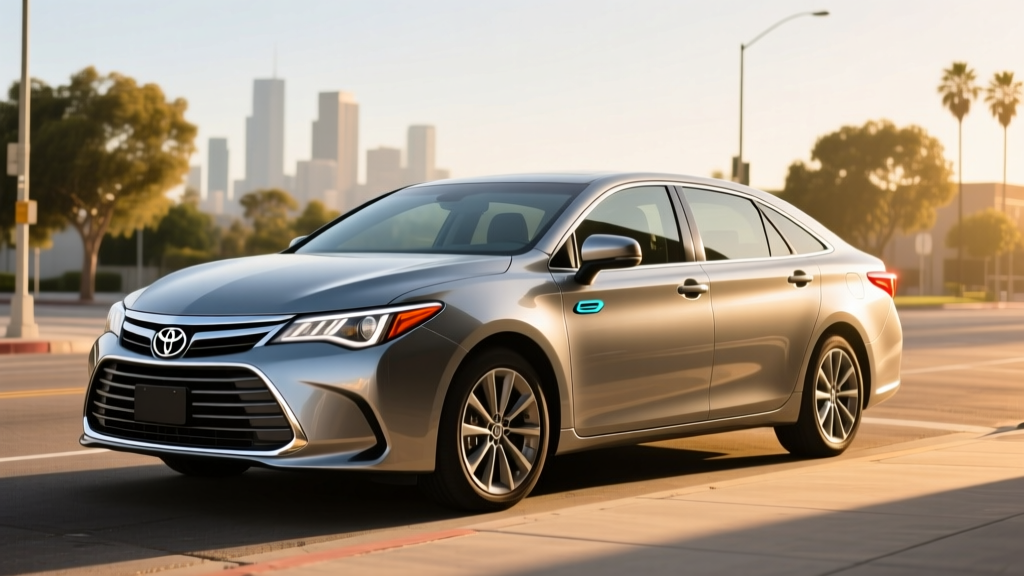
The 2015 Toyota Avalon Hybrid pairs a 2.5-liter four-cylinder engine with an electric motor to deliver a combined 200 horsepower and an EPA-estimated 40 MPG — a remarkable figure for a 3,500-pound flagship sedan. Unlike a plug-in hybrid (PHEV) or a full battery-electric vehicle (BEV), this is a conventional hybrid electric vehicle (HEV). It charges its own battery through regenerative braking and the gasoline engine. You never plug it in.
For 2026 used-car shoppers, the Avalon Hybrid occupies a specific niche: buyers who want full-size comfort and proven Toyota hybrid reliability without worrying about charging infrastructure, plug access, or range planning. The trade-off is that this model is now 11 years old, and its hybrid battery is approaching — or has already passed — the typical warranty window. Understanding what that means in dollars is essential before signing a purchase agreement.
2015 Toyota Avalon Hybrid — Key Specifications
| Spec | Value |
|---|---|
| Powertrain | 2.5L I4 Atkinson-cycle + electric motor (HEV) |
| Combined Horsepower | 200 hp (net system) |
| Transmission | eCVT (planetary gearset, not a belt CVT) |
| Hybrid Battery | 1.6 kWh (nominal), Nickel-Metal Hydride (NiMH) |
| Plug-In Capable? | No — conventional HEV, self-charging only |
| EPA Fuel Economy | 40 city / 39 highway / 40 combined MPG |
| 0–60 mph | ~8.0 seconds |
| Drivetrain | Front-wheel drive |
| Cargo Volume | 16.0 cu ft |
| Original MSRP (base XLE) | ~$36,850 |
| Typical 2026 Used Price | $11,000–$17,000 depending on mileage/condition |
EPA vs. Real-World MPG: What Owners Actually See
The EPA rates the 2015 Avalon Hybrid at 40 city / 39 highway / 40 combined MPG. These figures come from fueleconomy.gov and represent standardized laboratory testing.
In practice, conventional hybrids like this one often exceed their EPA city estimate because stop-and-go driving maximizes regenerative braking and electric-motor assist. Highway driving, where the gasoline engine runs continuously at higher loads, tends to bring numbers slightly below the sticker. Here is what to expect in real-world conditions:
Real-World MPG Estimates — 2015 Avalon Hybrid
| Driving Scenario | Expected MPG |
|---|---|
| City / suburban (frequent stops) | 40–44 MPG |
| Highway (70+ mph, steady cruise) | 35–38 MPG |
| Mixed daily commuting | 38–41 MPG |
| Cold weather (below 35°F, short trips) | 33–37 MPG |
Cold weather hits all hybrids harder. The engine must run more often to generate cabin heat and warm the catalytic converter, reducing electric-only operation. Short winter trips of under 5 miles can drop observed fuel economy into the low 30s. On longer mixed drives in moderate temperatures, many owners report matching or slightly beating the 40 MPG combined figure.
HEV vs. PHEV vs. EV: Where Does the Avalon Hybrid Fit?
The Avalon Hybrid is a conventional hybrid (HEV), and the distinction matters enormously for buyers cross-shopping electrified vehicles in 2026.
Electrified Vehicle Types — Key Differences
| Feature | HEV (e.g., Avalon Hybrid) | PHEV (e.g., RAV4 Prime) | BEV (e.g., Tesla Model 3) |
|---|---|---|---|
| Plug-in charging required? | No — self-charging | Yes — plugs into Level 1/2 | Yes — plugs into Level 1/2/DC |
| Electric-only range | None (EV assist only at low speeds) | 25–42 miles typical | 250–350+ miles (full range) |
| Gasoline engine | Yes — primary power source | Yes — kicks in after battery depletes | None |
| Federal tax credit (new) | $0 — no credit for HEVs | Up to $7,500 (§30D, rules vary) | Up to $7,500 (§30D, rules vary) |
| Home charging install needed | No | Recommended (Level 2) | Essential (Level 2) |
| Best for | No plug access, long trips, simplicity | Short commute + occasional road trips | Home charging available, daily driving |
The Avalon Hybrid makes the most sense if you have no access to plug-in charging — no garage outlet, no workplace charger, no realistic path to installing a Level 2 station. It also suits drivers who regularly take long highway trips where a BEV would require multiple DC fast-charging stops. You fill up at any gas station and never think about electrons.
Powertrain Deep Dive: How 200 HP Moves a Big Sedan
Toyota's Hybrid Synergy Drive in the 2015 Avalon combines a 2.5-liter Atkinson-cycle inline-four (156 hp, 156 lb-ft of torque) with a permanent-magnet electric motor (105 kW / 141 hp, 199 lb-ft). The combined net output is 200 horsepower. The system uses Toyota's eCVT — a planetary gearset that blends engine and motor power seamlessly. Unlike a traditional belt-driven CVT, this gearset has no belts or pulleys to wear out, contributing to long-term durability.
The 1.6 kWh nickel-metal hydride (NiMH) battery pack sits behind the rear seat. It is small by modern standards — a 2026 PHEV typically carries 15–20 kWh — but its job is different. This battery buffers energy for acceleration assist and captures regenerative braking energy. It never powers the car alone for more than brief low-speed EV-mode crawling (under about 25 mph for short distances).
The result is smooth, quiet acceleration from stops (where electric torque fills in before the engine builds revs) and adequate passing power on the highway. The 0–60 mph time of roughly 8.0 seconds is not sporty, but it is appropriate for a comfort-oriented full-size sedan. The powertrain prioritizes efficiency over performance.
Hybrid Battery Lifespan, Warranty & Replacement Cost
This is the single biggest ownership question for any used hybrid, and it is especially relevant for a 2015 model in 2026.
Toyota Hybrid Battery Warranty (Original)
- Standard coverage: 8 years / 100,000 miles (whichever comes first)
- CARB states (CA, NY, MA, and ~12 others): 10 years / 150,000 miles
- Capacity threshold: Warranty applies if the battery cannot hold sufficient charge to maintain normal hybrid operation
- 2026 status: A 2015 model's standard 8-year/100k warranty expired in 2023. CARB-state 10-year/150k coverage expired in 2025.
Most 2015 Avalon Hybrids are now outside the original hybrid battery warranty window. However, Toyota NiMH packs have a strong track record of lasting well beyond warranty. Data from fleet operators and long-term owners suggests these batteries commonly reach 150,000–200,000 miles before significant degradation. The NiMH chemistry is less energy-dense than modern lithium-ion but is exceptionally tolerant of the partial charge/discharge cycles that characterize hybrid use.
Battery Replacement Costs in 2026
| Option | Estimated Cost | Notes |
|---|---|---|
| New OEM Toyota battery | $3,000–$4,000 (parts + labor) | Dealer-installed, full new pack |
| Refurbished/reconditioned pack | $1,500–$2,500 | Aftermarket specialists; varies in quality |
| Used salvage pack | $800–$1,500 | From a wrecked low-mileage Avalon/Camry Hybrid; condition uncertain |
| Individual module replacement | $500–$1,200 | Replace only failed modules; requires a knowledgeable hybrid shop |
Before purchasing any used 2015 Avalon Hybrid, request a hybrid battery health check. A Toyota dealer can run a diagnostic that reports the battery's state of health (SoH) and any stored fault codes. Independent hybrid specialists (shops that focus on Prius and Camry Hybrid service) often provide this check for $50–$100. If the battery shows significant imbalance between modules or a history of repeated recalibration attempts, budget for a replacement.
Pricing, Tax Credits & Total Cost of Ownership
The 2015 Avalon Hybrid originally started at approximately $36,850 for the XLE trim, rising to about $41,000 for the Limited. In the 2026 used market, expect to pay between $11,000 and $17,000 depending on mileage (80k–140k miles is typical), condition, trim level, and region.
Federal Tax Credit Eligibility
The Avalon Hybrid is a conventional HEV and does not qualify for the federal §30D clean vehicle tax credit. That credit applies only to plug-in vehicles (PHEVs and BEVs) meeting specific battery sourcing, MSRP, and buyer income requirements as outlined on IRS.gov. There is no federal incentive for purchasing a conventional hybrid, new or used.
Some states offer minor incentives for hybrids (HOV lane access, reduced registration fees), but these vary by jurisdiction and many have been phased out in favor of plug-in vehicle incentives. Check your state's DMV or energy office for current rules.
Five-Year Fuel Cost Comparison
At 15,000 miles per year and $3.50/gallon regular unleaded:
| Vehicle | Combined MPG | Annual Fuel Cost | 5-Year Fuel Cost |
|---|---|---|---|
| 2015 Avalon Hybrid | 40 | $1,313 | $6,563 |
| 2015 Avalon (gas V6) | 24 | $2,188 | $10,938 |
| 2015 Honda Accord V6 | 26 | $2,019 | $10,096 |
The hybrid saves roughly $4,375 in fuel over five years compared to the gasoline V6 Avalon. That savings goes a long way toward offsetting any hybrid battery maintenance or replacement costs.
Reliability Record & What to Inspect Before Buying
The 2015 Avalon Hybrid benefits from Toyota's mature hybrid system — the same basic architecture that has powered the Camry Hybrid and Prius for years. The eCVT transmission, in particular, has no friction bands, belts, or clutches to wear, making it one of the most durable automatic transmissions on the road. The NHTSA gave the 2015 Avalon a 5-star overall safety rating.
Common Issues to Check (Non-Battery)
- Inverter coolant pump: Listen for a humming sound from the engine bay when the car is ON (READY mode). If the coolant isn't circulating (no turbulence visible in the inverter coolant reservoir), the pump may need replacement ($200–$400).
- Brake actuator: Toyota issued a service campaign for certain model years. Check for any open recalls or campaigns on NHTSA.gov using the VIN.
- 12V auxiliary battery: Like all hybrids, the Avalon has a standard 12V battery (located in the trunk) that powers electronics. These typically last 4–5 years and cost $150–$250 to replace. A dead 12V battery will prevent the car from starting, even if the hybrid battery is fully charged.
- Suspension and bushings: At 100,000+ miles, front strut mounts and rear bushings may show wear. Standard wear items, not hybrid-specific.
Pros and Cons: The Honest Assessment
Pros
- 40 MPG combined in a spacious, quiet full-size sedan
- No plug-in charging required — fill up at any gas station
- Proven, durable powertrain (eCVT, NiMH battery)
- Comfortable ride quality, generous rear-seat legroom
- Strong reliability reputation; low cost of ownership
- 16 cu ft trunk (battery packaging doesn't eat cargo space significantly)
- Smooth, quiet operation at low speeds in EV mode
Cons
- Hybrid battery is out of warranty; replacement may be needed soon
- No electric-only driving range (not a plug-in vehicle)
- No federal tax credit eligibility for HEVs
- Dated infotainment by 2026 standards (no Apple CarPlay/Android Auto)
- Firm ride on Limited trim with 18-inch wheels
- 8.0-second 0–60 time is adequate but not quick
- NiMH battery chemistry is older tech (heavier, less efficient than modern Li-ion)
Who Should Buy This Car in 2026?
Choose the 2015 Avalon Hybrid If:
- You want a comfortable, fuel-efficient sedan but have no access to plug-in charging (apartment, street parking, no garage).
- Your commute is long and mixed (city + highway), where 40 MPG saves real money over a gas V6.
- You prioritize reliability and low maintenance costs over cutting-edge technology.
- You find a well-maintained example under $15,000 with under 120,000 miles and a clean hybrid health report.
Look Elsewhere If:
- You want electric-only driving for short commutes — consider a used PHEV like the Toyota Prius Prime or Honda Clarity Plug-In Hybrid.
- You have home charging access and want to eliminate gasoline entirely — a used BEV like the Chevrolet Bolt EV or Nissan Leaf may offer lower operating costs.
- You want modern infotainment, Apple CarPlay, and advanced driver-assist features — the 2015 Avalon's tech suite is dated.
- The specific vehicle you're evaluating shows hybrid battery degradation or has no maintenance records for the hybrid system.
Frequently Asked Questions
How many MPG does the 2015 Toyota Avalon Hybrid get?
The EPA rates it at 40 city / 39 highway / 40 combined MPG. In real-world driving, expect 38–44 MPG depending on conditions. City driving with frequent stops tends to yield the best results thanks to regenerative braking. Highway cruising at 75+ mph may drop to the mid-30s.
Does the 2015 Avalon Hybrid need to be plugged in?
No. This is a conventional hybrid (HEV), not a plug-in hybrid (PHEV). The battery charges itself through regenerative braking and the gasoline engine. You never plug it in — you simply refuel at a gas station like any other car.
How far can it drive on electric power alone?
Essentially zero miles at meaningful speeds. The Avalon Hybrid can creep in EV mode at very low speeds (under ~25 mph) for a fraction of a mile — useful in a parking lot or driveway. It does not have a usable electric-only range for commuting. If you want electric-only driving, you need a PHEV or BEV.
Is the hybrid battery reliable, and what does replacement cost?
Toyota's NiMH hybrid batteries are among the most durable in the industry, commonly lasting 150,000–200,000 miles. However, a 2015 model is now 11 years old and likely out of warranty. A new OEM replacement costs $3,000–$4,000 installed; refurbished packs run $1,500–$2,500. Always get a hybrid battery health check before purchasing.
Does the 2015 Avalon Hybrid qualify for any tax credit?
No. The federal §30D clean vehicle credit applies only to plug-in vehicles (PHEVs and BEVs). Conventional hybrids like the Avalon Hybrid are not eligible for any federal purchase incentive. Some states may offer minor perks (HOV lane stickers, reduced registration), but these vary and many have expired for HEVs.
How does the Avalon Hybrid compare to the Camry Hybrid?
The Camry Hybrid of the same era achieves slightly better fuel economy (41–43 MPG combined) in a smaller, lighter package. The Avalon Hybrid trades a few MPG for significantly more rear-seat legroom, a quieter cabin, and a more refined ride. If you need full-size sedan space, the Avalon is the pick; if you want maximum efficiency, the Camry Hybrid edges ahead.
What should I check before buying a used 2015 Avalon Hybrid?
Priority checks: (1) Hybrid battery state-of-health diagnostic from a Toyota dealer or hybrid specialist. (2) Inverter coolant pump operation. (3) Open recalls via NHTSA VIN lookup. (4) Service records showing regular oil changes and brake inspections. (5) Condition of the 12V auxiliary battery in the trunk. (6) Standard pre-purchase inspection for suspension, brakes, and tires.