Quick Verdict: A Mild Hybrid Ahead of Its Time
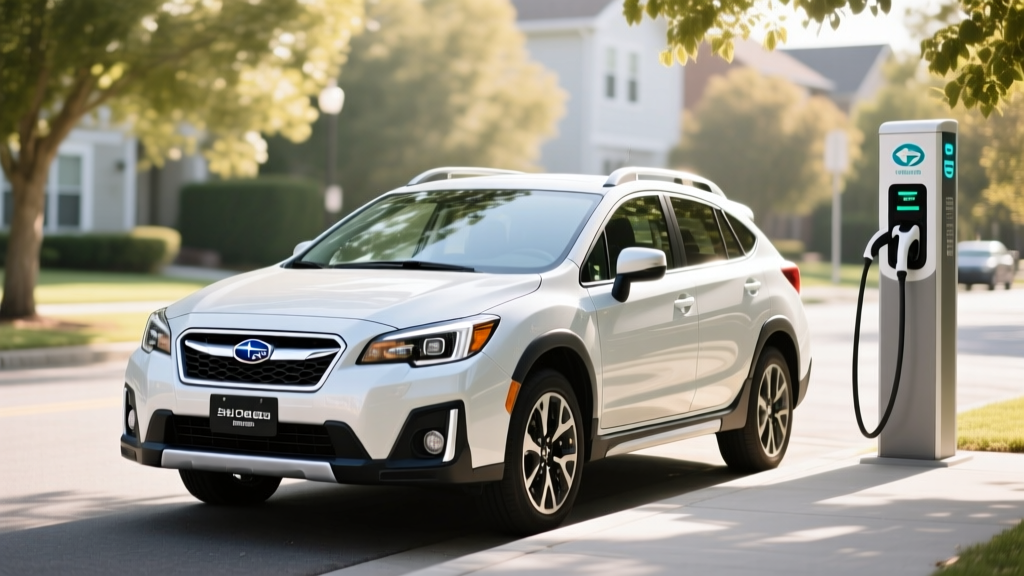
The 2015 Subaru XV Hybrid (sold in the U.S. as the XV Crosstrek Hybrid) was Subaru's first serious attempt at electrifying a compact crossover. It pairs a 2.0-liter flat-four boxer engine with a small electric motor integrated into the Lineartronic CVT, delivering a combined 160 horsepower and Subaru's signature symmetrical all-wheel drive. Nearly a decade later, it remains a relevant used-car option for buyers who want hybrid efficiency with genuine off-road capability — but its modest electric assist and tiny battery mean expectations should be calibrated accordingly.
This is a conventional hybrid (HEV), not a plug-in hybrid (PHEV). You never plug it in. The 0.6 kWh nickel-metal hydride (NiMH) battery recharges through regenerative braking and the gasoline engine. There is no meaningful electric-only driving range — the motor assists during acceleration and enables brief low-speed electric creep, but the gas engine is always the primary power source.
HEV vs PHEV: What the XV Hybrid Actually Is
Conventional Hybrid (HEV) — 2015 Subaru XV Hybrid:
- No plug, no external charging required
- 0.6 kWh NiMH battery (very small)
- Electric motor assists the gas engine; no real EV-only range
- Refuels at any gas station
- No federal tax credit eligibility
Plug-in Hybrid (PHEV) — e.g., 2026 Subaru Crosstrek Hybrid (PHEV):
- Plug-in capable (Level 1/Level 2 AC charging)
- ~13-18 kWh battery (much larger)
- 17+ miles of electric-only driving before the gas engine engages
- May qualify for federal §30D tax credit (subject to income, MSRP, and battery-sourcing rules)
If you're researching the 2015 Subaru XV Hybrid hoping for plug-in capability, this isn't it. Think of it as a more fuel-efficient Crosstrek with a slight electric boost, not a bridge to full electric driving.
Fuel Economy: EPA Ratings and Real-World MPG
The EPA rated the 2015 XV Crosstrek Hybrid at 31 MPG combined — a meaningful improvement over the non-hybrid 2015 Crosstrek's 28 MPG combined with the CVT. Here's the full breakdown:
| Metric | XV Hybrid (HEV) | XV Gas (CVT) | Difference |
|---|---|---|---|
| City MPG | 29 | 26 | +3 MPG |
| Highway MPG | 33 | 30 | +3 MPG |
| Combined MPG | 31 | 28 | +3 MPG |
Source: fueleconomy.gov
Real-World MPG Expectations
Conventional hybrids like the XV often exceed their EPA city rating in stop-and-go traffic because regenerative braking recaptures energy that a gas car wastes as heat. Owners on FuelEconomy.gov's MyMPG tracker report averages between 28-33 MPG combined in mixed driving.
Expect the lower end (~27-28 MPG) if you drive predominantly highway at 75+ mph, carry heavy cargo, or live in a cold climate where the engine runs more often for cabin heat. Expect the higher end (~33-34 MPG) in warm-weather city commuting where regen braking shines. The hybrid system's benefit is most pronounced in urban driving — on long highway cruises, the difference between the hybrid and gas Crosstrek narrows considerably.
Powertrain Specs: What's Under the Hood
| Specification | 2015 Subaru XV Crosstrek Hybrid |
|---|---|
| Engine | 2.0L DOHC flat-4 (boxer) |
| Engine Output | 148 hp @ 6,000 rpm / 145 lb-ft @ 4,200 rpm |
| Electric Motor | 10 kW (13.4 hp) integrated into CVT |
| Combined System Output | 160 hp |
| Transmission | Lineartronic CVT with electric motor |
| Drivetrain | Symmetrical AWD (full-time) |
| Battery Type | NiMH (nickel-metal hydride) |
| Battery Capacity | 0.6 kWh (nominal) |
| 0-60 mph | ~9.2 seconds |
| Curb Weight | ~3,400 lbs (320 lbs more than gas model) |
| Cargo Volume | 22.3 cu ft (rear seats up) / 51.9 cu ft (folded) |
| Ground Clearance | 8.7 inches |
The 10 kW electric motor doesn't transform this into a quick car — 0-60 in roughly 9.2 seconds is leisurely by modern standards. But the motor fills in the torque gap that plagues small naturally-aspirated engines at low RPM, making around-town acceleration feel slightly more responsive than the gas-only Crosstrek. The added 320 lbs of hybrid hardware is noticeable in cornering, though the low-mounted boxer engine and battery placement keep the center of gravity reasonable.
Battery Longevity, Warranty, and Replacement Costs
Original Battery Warranty: Subaru covered the hybrid battery for 8 years / 100,000 miles (in CARB states: 10 years / 150,000 miles). For a 2015 model, factory warranty coverage has expired as of 2023-2025 depending on mileage and state.
How Long Does the XV Hybrid Battery Last?
The 0.6 kWh NiMH pack in the XV Hybrid is intentionally small and conservatively managed. Subaru engineered it to operate within a narrow state-of-charge window — it never fully charges or fully depletes — which significantly reduces degradation stress. This is fundamentally different from a PHEV or BEV battery that cycles through a wider range daily.
NiMH batteries in mild-hybrid applications like this have proven durable. Many Toyota Prius NiMH packs (similar chemistry and management philosophy) exceed 150,000-200,000 miles before significant capacity loss. The XV Hybrid's battery sees even less stress due to its smaller role in the powertrain.
That said, any 2015 model you're considering in 2026 is at least 11 years old. NiMH batteries degrade with time as well as use. Expect some capacity reduction — but because the electric motor plays a supporting role, even a degraded battery won't catastrophically affect drivability the way a degraded BEV battery would affect range.
Battery Replacement Cost
If the hybrid battery fails out of warranty:
- OEM replacement (dealer): $2,000–$3,500 including labor
- Refurbished/remanufactured pack: $1,000–$2,000
- Individual cell replacement (specialist shop): $500–$1,200
Before purchasing a used 2015 XV Hybrid, request a hybrid battery health check. A Subaru dealer can read the battery's state-of-health (SoH) via the OBD-II diagnostic port. Look for SoH above 70% — below that, budget for eventual replacement.
Pricing in 2026: Used Market and Tax Credits
The 2015 XV Crosstrek Hybrid originally started at approximately $26,795 MSRP (about $4,000 more than the gas-only Premium trim). In the 2026 used market, expect to pay:
- $8,000–$11,000 for examples with 100,000–140,000 miles
- $11,000–$14,000 for lower-mileage examples (60,000–90,000 miles) in good condition
- $14,000–$16,000 for well-maintained, low-mileage Touring trims under 50,000 miles
Tax Credit Eligibility
The 2015 XV Hybrid does not qualify for any current federal tax credit. The IRS §30D new clean vehicle credit applies only to new PHEVs and BEVs meeting battery-sourcing, MSRP, and buyer-income requirements. As a conventional hybrid (HEV), the XV was never eligible for the federal credit even when new.
The federal used clean vehicle credit (up to $4,000 or 30% of sale price, whichever is less) under IRC §25E also does not apply — it requires the vehicle to be a qualified plug-in electric vehicle with at least 7 kWh of battery capacity. The XV's 0.6 kWh NiMH pack falls far short.
Some states offer their own incentives for used hybrids, but these vary widely and change frequently. Check your state's energy or environmental agency website for current programs.
Reliability and Known Issues
The 2015 XV Crosstrek Hybrid inherits the generally solid reliability of Subaru's FB20 boxer engine and Lineartronic CVT, with a few model-specific considerations:
- Hybrid system: The electric motor and inverter have proven reliable. Most reported hybrid-system issues relate to 12V auxiliary battery failures (common to all Subarus of this era) rather than the traction battery itself.
- CVT: Subaru's CVT has had a mixed reputation. The hybrid variant's CVT is slightly different (integrated motor), but shares the same fundamental design. Regular fluid changes (every 60,000 miles) are strongly recommended.
- Head gaskets: The FB20 engine in the XV is less prone to head gasket issues than older Subaru EJ engines, but it's still worth checking for coolant leaks at higher mileage.
- Infotainment: The 2015 Starlink system is dated by 2026 standards — no Apple CarPlay or Android Auto, small screen, slow response. Many owners upgrade to an aftermarket head unit.
- Rust: Check the undercarriage, rear subframe, and suspension mounting points, especially on examples from the Rust Belt or coastal areas.
The NHTSA gave the 2015 XV Crosstrek 5 stars overall in crash testing. The IIHS rated it Good in most crashworthiness categories, though headlight ratings were Poor (a common complaint across Subaru's 2015 lineup).
Who Should Buy the 2015 XV Hybrid vs Alternatives
Pros
- Standard symmetrical AWD — genuine all-weather and light off-road capability
- 8.7 inches of ground clearance (more than most compact crossovers)
- 31 MPG combined is solid for an AWD crossover of this era
- Conservative hybrid system = low battery-degradation risk
- Practical cargo space and roof-rail utility
- Lower used-market price than comparable PHEV crossovers
Cons
- Only 3 MPG improvement over the gas Crosstrek — modest hybrid payoff
- No plug-in capability or electric-only range
- Sluggish acceleration (9.2s 0-60) and added weight
- Dated infotainment with no smartphone integration
- Hybrid battery is an age-related liability at 11+ years old
- No tax credit eligibility (new or used)
Decision Framework
Choose the 2015 XV Hybrid if: You want an affordable used AWD crossover with slightly better fuel economy, you regularly drive on unplowed roads or trails, and you don't have access to home charging (making a PHEV or EV less practical).
Choose a used PHEV (e.g., Toyota RAV4 Prime, Mitsubishi Outlander PHEV) if: You have home Level 2 charging, your daily commute is under 30 miles, and you want meaningful electric-only driving to cut fuel costs.
Choose a used BEV (e.g., Hyundai Kona Electric, Chevrolet Bolt EUV) if: You have reliable home charging, your daily driving is under 200 miles, you want zero tailpipe emissions, and you're comfortable with the charging infrastructure in your area.
Choose the gas-only 2015 Crosstrek if: You want the lowest purchase price, the simplest powertrain, and the 3 MPG difference doesn't justify the hybrid's premium on the used market (often $1,000-$2,000 more).
Frequently Asked Questions
How many MPG does the 2015 Subaru XV Hybrid get?
The EPA rates it at 29 city / 33 highway / 31 combined MPG. Real-world owner reports cluster between 28-33 MPG combined depending on driving style, climate, and city-vs-highway mix. City drivers often see 32-34 MPG thanks to regenerative braking.
Can the 2015 XV Hybrid drive on electric power alone?
Not in any practical sense. The 10 kW electric motor can move the car at very low speeds (parking lots, creeping in traffic) for brief moments, but the gas engine engages almost immediately under any real acceleration. There is no EV-mode button and no plug. This is a mild assist hybrid, not a plug-in.
Is the hybrid battery reliable, and what does replacement cost?
The 0.6 kWh NiMH battery is conservatively managed and generally reliable to 150,000+ miles. At 11 years old, some degradation is expected. OEM replacement runs $2,000–$3,500 at a dealer, or $1,000–$2,000 for a refurbished pack. Get a battery SoH check before purchasing.
Does the 2015 Subaru XV Hybrid qualify for any tax credit?
No. It's a conventional hybrid (HEV) with a 0.6 kWh battery — far below the 7 kWh minimum for any federal electrified-vehicle credit, new or used. It was never eligible for the §30D credit even when sold new. Check your state's energy office for any local hybrid incentives, which vary by jurisdiction.
How does the XV Hybrid compare to the newer Subaru Crosstrek Hybrid (PHEV)?
The 2019+ Crosstrek Hybrid is a fundamentally different vehicle — it's a plug-in hybrid based on Toyota's hybrid synergy drive (similar to the Prius Prime), with a larger lithium-ion battery, ~17 miles of electric-only range, and significantly better combined MPGe. It also costs substantially more on the used market ($20,000–$28,000 in 2026). The 2015 XV Hybrid is a budget-friendly, mild-efficiency option; the newer PHEV is a true bridge to electric driving.
Is the 2015 XV Hybrid good for off-road use?
It's surprisingly capable for a hybrid crossover. With 8.7 inches of ground clearance, full-time symmetrical AWD, and X-Mode traction management, it handles forest roads, snow, and moderate trails competently. The hybrid system adds weight low in the chassis, which doesn't hurt off-road stability. Just don't expect Wrangler-level articulation — this is a soft-roader with genuine dirt-road credentials.