The 2015 Subaru XV Crosstrek Hybrid: What Used Buyers Need to Know
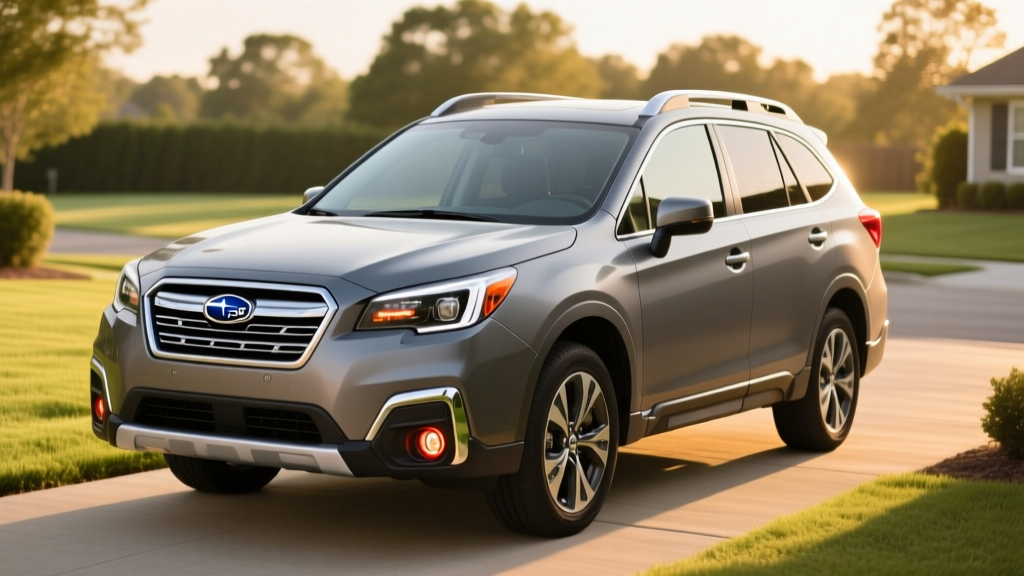
Search for a 2015 Subaru SUV hybrid and you'll find exactly one model: the Subaru XV Crosstrek Hybrid. It was Subaru's first foray into hybrid powertrains, pairing the brand's signature symmetrical all-wheel drive with a mild parallel-hybrid system. A decade later, these vehicles are hitting the used market at attractive prices, but the hybrid battery is now 10+ years old — raising legitimate questions about longevity, replacement cost, and whether the fuel savings justify the complexity.
This guide breaks down the real-world ownership picture: exact MPG figures, battery health expectations, repair costs, and how this aging hybrid stacks up against modern alternatives in 2026.
HEV vs PHEV: The 2015 Crosstrek Hybrid Is a Conventional Hybrid
Before diving into specs, it's critical to understand what this vehicle is — and isn't.
Conventional Hybrid (HEV) — This Is the 2015 Crosstrek Hybrid
- No plug required. The battery charges through regenerative braking and the gasoline engine.
- Small battery: 0.45 kWh nickel-metal hydride (NiMH) pack.
- No electric-only driving range of any meaningful distance — the motor assists the engine but cannot propel the car alone at speed.
- No federal tax credit for used or new HEVs under current IRS §30D rules.
Plug-in Hybrid (PHEV) — This Is NOT the 2015 Crosstrek
- Requires plug-in charging (Level 1 or Level 2).
- Larger battery (typically 8–18 kWh) enabling 17–40 miles of electric-only driving.
- May qualify for federal or state incentives (new PHEVs only, subject to §30D sourcing and income rules).
Subaru did not offer a plug-in Crosstrek until the 2019 model year (the Crosstrek PHEV, which used Toyota's hybrid system and is now also discontinued). The 2015 model is strictly a conventional HEV — you fuel it with gasoline and never plug it in.
Fuel Economy: EPA MPG and Real-World Expectations
The 2015 XV Crosstrek Hybrid was rated by the EPA at 29 MPG city / 33 MPG highway / 31 MPG combined. For comparison, the non-hybrid 2015 Crosstrek with the 2.0L engine and CVT was rated at 26/34/29 MPG combined.
| Configuration | City MPG | Highway MPG | Combined MPG |
|---|---|---|---|
| 2015 Crosstrek Hybrid (HEV) | 29 | 33 | 31 |
| 2015 Crosstrek 2.0i CVT (gas) | 26 | 34 | 29 |
| 2015 Crosstrek 2.0i Manual (gas) | 23 | 31 | 26 |
Source: fueleconomy.gov
Real-World MPG vs EPA Sticker
Owner-reported data on Fuelly and Subaru forums consistently shows the 2015 Crosstrek Hybrid averaging 28–31 MPG combined in mixed driving. The hybrid advantage is most noticeable in stop-and-go city traffic, where regenerative braking recaptures energy. On the highway, the benefit narrows — the non-hybrid CVT model actually matches or slightly exceeds the hybrid at steady 70+ MPH speeds because the hybrid system adds approximately 225 lbs of weight without meaningful electric assist at cruise.
Cold-weather reality: In sub-freezing temperatures, expect a 2–4 MPG drop. The engine runs more often to provide cabin heat and maintain battery temperature, reducing the hybrid system's contribution.
Does the Hybrid Save Enough Fuel to Justify the Cost?
At 2 MPG combined improvement over the gas CVT model, and assuming 12,000 miles/year at $3.50/gallon, the hybrid saves roughly $28–35 per year in fuel. Over five years, that's about $150 — not enough to offset a potential hybrid battery replacement. The value proposition here is AWD capability and Subaru utility, not fuel savings.
Powertrain Specs: Engine, Motor, and Combined Output
| Specification | 2015 Subaru XV Crosstrek Hybrid |
|---|---|
| Engine | 2.0L FB20 Boxer 4-cylinder |
| Engine Output | 148 HP @ 6,000 RPM / 145 lb-ft torque |
| Electric Motor | 10 kW (13.4 HP) integrated in CVT |
| Combined System Output | 160 HP / 163 lb-ft torque |
| Transmission | Lineartronic CVT with hybrid motor integration |
| Drivetrain | Symmetrical All-Wheel Drive (full-time) |
| Hybrid Battery | 0.45 kWh NiMH (nickel-metal hydride) |
| Battery Location | Under cargo floor (reduces cargo space slightly) |
| Curb Weight | ~3,400 lbs (225 lbs heavier than gas model) |
| 0–60 MPH | ~9.8 seconds (estimated) |
| Towing Capacity | 1,000 lbs |
The 10 kW electric motor is integrated directly into the CVT housing. It provides low-speed torque fill, assists during acceleration, and enables brief engine-off coasting at low speeds. It is not powerful enough to drive the vehicle independently — this is an assist-type hybrid, similar in philosophy to early Honda IMA systems rather than Toyota's full hybrid system.
Battery Health, Warranty, and Replacement Cost
Hybrid Battery Warranty (Original)
Subaru warranted the 2015 Crosstrek Hybrid's NiMH battery pack for 8 years / 100,000 miles (extended to 10 years / 150,000 miles in California Air Resources Board states: CA, CT, MA, ME, MD, NJ, NY, OR, RI, VT, WA).
In 2026, all factory battery warranties have expired. Any battery failure is the owner's responsibility.
How Long Does the Battery Actually Last?
The NiMH pack in the 2015 Crosstrek Hybrid is small (0.45 kWh) and operates within a conservative state-of-charge window — it never fully charges or fully depletes, which reduces stress on the cells. Owner reports and mechanic surveys suggest these batteries typically last 120,000–180,000 miles before significant degradation, though individual results vary based on climate (extreme heat is the primary enemy of NiMH chemistry) and driving patterns.
At 10+ years old, some 2015 models are showing hybrid system warnings or reduced assist. This doesn't make the car undrivable — the gasoline engine continues to operate normally — but the hybrid fuel-economy benefit diminishes.
Battery Replacement Cost
As of 2026, replacement options include:
- New OEM battery (Subaru dealer): $2,500–$3,500 (part + labor)
- Remanufactured battery: $1,500–$2,200 from specialty hybrid shops
- Used/salvage battery: $600–$1,000 (risky — unknown remaining life)
- Individual cell replacement: Some independent hybrid specialists can replace failed NiMH cells for $800–$1,200, but availability is limited for this specific pack.
The replacement cost is a significant factor in the used purchase decision. Budget $2,000–$3,500 as a contingency.
Pricing in 2026: What Does a Used 2015 Crosstrek Hybrid Cost?
As of early 2026, used 2015 Subaru XV Crosstrek Hybrid listings typically fall in the $8,000–$13,000 range, depending on mileage, condition, and battery health. Lower-mileage examples (under 80,000 miles) with service records command the top of that range.
For context, a non-hybrid 2015 Crosstrek 2.0i in similar condition sells for $7,000–$11,000. The hybrid premium is minimal on the used market — typically $500–$1,500 — because buyers are skeptical of aging hybrid batteries.
Tax Credit Eligibility
The 2015 Crosstrek Hybrid does not qualify for any federal tax credit. Under current IRS §30D rules, only new plug-in electric vehicles (BEVs and PHEVs with sufficient battery capacity) are eligible. Conventional hybrids (HEVs) have never qualified for the federal credit, and the used-EV credit (§25E, up to $4,000) applies only to used BEVs and PHEVs — not HEVs. No state incentives apply to conventional hybrids in most jurisdictions.
Who Should Buy the 2015 Subaru SUV Hybrid (and Who Shouldn't)
Reasons to Buy
- You need AWD in snow/rain and value Subaru's reputation for all-weather capability
- You want a compact crossover with good ground clearance (8.7 inches) for light off-road use
- You prefer a conventional hybrid — no plug, no charging anxiety, just fill up with gas
- The specific vehicle you're considering has a verified healthy hybrid battery (pre-purchase scan confirms)
- You drive primarily in city/stop-and-go conditions where the hybrid system delivers its best MPG advantage
Reasons to Skip
- The hybrid fuel savings (~2 MPG combined) don't justify the battery replacement risk
- You want meaningful electric-only driving — this car offers essentially zero EV range
- You want modern safety tech (the 2015 model lacks automatic emergency braking, lane-keeping, and adaptive cruise)
- You want Apple CarPlay/Android Auto (not available in the 2015 Crosstrek)
- You prioritize fuel economy above all — a used Toyota Prius or a modern PHEV delivers far better MPG
Hybrid vs PHEV vs Full EV: Which Fits You?
If you're cross-shopping a used 2015 Crosstrek Hybrid, consider where you fall on the electrification spectrum:
- Choose the 2015 Crosstrek Hybrid (HEV) if: You want AWD, have no home charging access, drive in a rural or cold-climate area with limited charging infrastructure, and want zero behavioral change from a gas car.
- Choose a used PHEV (e.g., Toyota RAV4 Prime, Subaru Crosstrek PHEV 2019–2023) if: You have Level 2 home charging, your daily commute is under 25 miles, and you want electric-only driving for most trips with gas-engine backup for road trips.
- Choose a used full EV (e.g., Chevrolet Bolt EUV, Hyundai Kona Electric) if: You have reliable home charging, want the lowest per-mile operating cost, and don't need AWD or long road-trip range.
Safety Ratings and Reliability Record
The 2015 XV Crosstrek earned an IIHS Top Safety Pick rating with Good scores in all crashworthiness tests. However, it received a Poor rating for headlight performance (a common issue for vehicles of this era) and lacks the advanced driver-assistance features (EyeSight) that Subaru began offering on later models.
The National Highway Traffic Safety Administration (NHTSA) gave the 2015 Crosstrek a 5-star overall safety rating.
Reliability-wise, the FB20 engine and CVT are well-documented. The CVT has had a mixed reputation in Subaru's lineup — some units require replacement between 100,000–150,000 miles. Subaru extended the CVT warranty to 10 years/100,000 miles for affected model years, but that extension has now expired for 2015 vehicles. A pre-purchase inspection by a Subaru-savvy mechanic is strongly recommended.
Frequently Asked Questions
How many MPG does the 2015 Subaru Crosstrek Hybrid get?
The EPA rates it at 29 city / 33 highway / 31 combined MPG. Real-world owner averages cluster around 28–31 MPG combined, with city driving yielding the best results and sustained highway driving narrowing the advantage over the gas model.
Can the 2015 Crosstrek Hybrid drive on electric power alone?
Not in any practical sense. The 10 kW electric motor can assist at very low speeds and enable brief engine-off coasting, but it cannot propel the vehicle at normal driving speeds. There is no meaningful electric-only range — this is an assist hybrid, not a plug-in.
Is the 2015 Subaru Crosstrek Hybrid reliable?
The powertrain (FB20 engine + CVT) is generally reliable with proper maintenance. The primary concern at this vehicle's age is hybrid battery degradation (10+ years old) and CVT longevity (check for shuddering, whining, or hesitation). A pre-purchase diagnostic scan of the hybrid battery's state of health is essential.
What does a hybrid battery replacement cost for the 2015 Crosstrek?
Expect $2,500–$3,500 for a new OEM replacement at a dealer, or $1,500–$2,200 for a remanufactured unit from a hybrid specialist. Used/salvage batteries are available for $600–$1,000 but carry unknown remaining life.
Does the 2015 Subaru Crosstrek Hybrid qualify for any tax credit?
No. Conventional hybrids (HEVs) do not qualify for the federal §30D new clean vehicle credit or the §25E used clean vehicle credit. Those credits apply only to plug-in vehicles (BEVs and PHEVs). Most state incentive programs also exclude conventional hybrids.
Should I buy a 2015 Crosstrek Hybrid or the gas-only version?
Unless you find a hybrid with a recently replaced battery at a comparable price, the gas-only 2015 Crosstrek 2.0i is the safer used purchase. The 2 MPG combined fuel savings rarely justifies the hybrid battery risk at this vehicle's age. Choose the hybrid only if the battery has been verified healthy, replaced, or you're getting a significant price discount.
Does the hybrid battery affect cargo space?
Yes, slightly. The NiMH battery pack sits under the cargo floor, raising the load floor by approximately 1 inch and eliminating the spare tire (a tire inflator kit is provided instead). Cargo volume drops from 22.3 to approximately 20.5 cubic feet behind the rear seats.