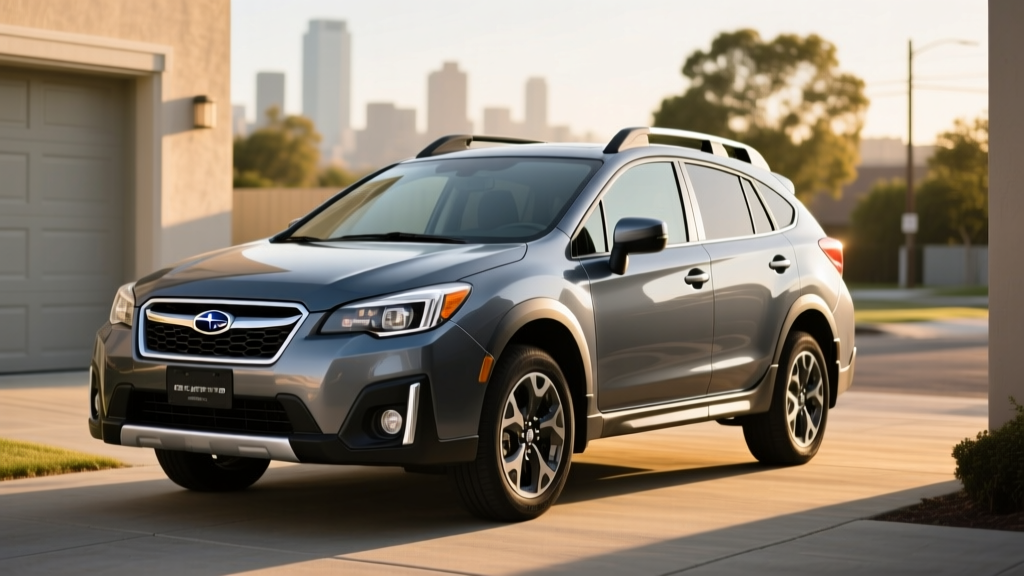
The 2015 Subaru XV Crosstrek Hybrid AWD: A Pioneering HEV Revisited
Subaru's first attempt at electrification was the 2014-2016 XV Crosstrek Hybrid, a conventional hybrid electric vehicle (HEV) built on the popular first-generation Crosstrek platform. If you're researching a used 2015 Subaru XV Crosstrek Hybrid AWD in 2026, you're likely weighing its modest fuel-economy gains against the realities of a decade-old hybrid battery, Subaru's symmetrical all-wheel-drive reputation, and whether a newer PHEV or full EV might serve you better. This guide breaks down every number that matters.
Before we dig in, a critical distinction: the 2015 XV Crosstrek Hybrid is a conventional hybrid (HEV), not a plug-in hybrid (PHEV). It cannot be plugged in, has no electric-only driving range to speak of, and does not qualify for federal EV tax credits. Subaru did not offer a Crosstrek PHEV until the 2019 model year.
HEV vs PHEV — Where Does the 2015 Crosstrek Hybrid Fit?
| Feature | 2015 Crosstrek Hybrid (HEV) | Plug-In Hybrid (PHEV) |
|---|---|---|
| Plugs in to charge? | No — charges via engine & regen | Yes — Level 1 or Level 2 |
| Electric-only range | ~1 mile at very low speed | Typically 20-45 miles |
| Battery size | 0.45 kWh (NiMH) | 10-20 kWh (Li-ion) |
| Federal tax credit | None | Up to $7,500 (new, if eligible) |
| Fueling | Gasoline only | Gasoline + electricity |
EPA Fuel Economy: What the Sticker Says
According to fueleconomy.gov, the 2015 Subaru XV Crosstrek Hybrid AWD carries the following EPA ratings:
| Metric | Value |
|---|---|
| EPA City MPG | 29 mpg |
| EPA Highway MPG | 33 mpg |
| EPA Combined MPG | 31 mpg |
| Annual fuel cost (est.) | ~$1,750 (15,000 mi/yr at $3.50/gal) |
For comparison, the non-hybrid 2015 Crosstrek 2.0i with the CVT achieved 26 city / 34 highway / 29 combined. The hybrid's advantage is most pronounced in stop-and-go city driving, where the electric motor assists the engine more frequently and regenerative braking recovers energy. On the highway, the gap narrows considerably — the hybrid actually trails the gas model's 34 mpg highway figure by 1 mpg due to the added weight of the battery pack and electric motor (the hybrid weighs roughly 300 lbs more).
Real-World MPG: What Owners Actually Report
EPA stickers are a starting point, not a guarantee. Owner-reported data from Fuelly and Subaru forums paints a more nuanced picture for the 2015 XV Crosstrek Hybrid:
- City driving (stop-and-go, suburban): 28-32 mpg — the hybrid system shines here, with the electric motor handling low-speed launches and regen braking capturing energy.
- Highway cruising (70+ mph): 28-31 mpg — the weight penalty of the hybrid system offsets the electric assist at sustained speeds. Expect numbers close to the gas CVT model.
- Combined real-world average: 28-30 mpg across owner logs — slightly below the EPA combined estimate of 31 mpg.
- Cold weather penalty: In sub-freezing temperatures, expect a 10-15% drop to roughly 24-27 mpg combined. The engine runs more frequently to maintain cabin heat and battery temperature, reducing electric-assist time.
The takeaway: if your commute is primarily city and suburban driving at moderate speeds, the hybrid delivers a tangible 2-3 mpg advantage over the gas model. If you're a highway-dominant driver, the fuel savings shrink to near-zero, and the gas Crosstrek CVT may actually edge it out.
Powertrain and Performance Specifications
| Specification | 2015 XV Crosstrek Hybrid |
|---|---|
| Engine | 2.0L FB20 flat-4 (Boxer) |
| Engine horsepower | 148 hp @ 6,000 rpm |
| Electric motor output | 13.4 hp (10 kW) |
| Combined system horsepower | ~160 hp (net) |
| Transmission | Lineartronic CVT |
| Drivetrain | Symmetrical AWD (full-time) |
| 0-60 mph | ~10.2 seconds |
| Hybrid battery | 0.45 kWh NiMH (nickel-metal hydride) |
| Curb weight | ~3,515 lbs |
| Ground clearance | 8.7 inches |
| Cargo volume (rear seats up) | 20.8 cu ft |
The hybrid system is modest by modern standards. The 13.4 hp electric motor sits between the engine and CVT, providing torque fill at low RPMs and enabling brief electric-only crawling under about 15 mph. It's an assist-heavy design, not a parallel full-hybrid system like Toyota's Hybrid Synergy Drive. The 2.0L FB20 Boxer engine remains the primary motivator, and the 0-60 time of roughly 10.2 seconds reflects that — this is not a quick vehicle, hybrid or otherwise.
The symmetrical AWD system is the Crosstrek's defining feature and operates identically to the gas model: a full-time system with an active torque split that sends power front and rear as needed. The hybrid adds no AWD-specific electric motor (unlike modern e-AWD systems on newer Subaru PHEVs).
Hybrid Battery Lifespan, Warranty, and Replacement Cost
⚡ Battery Warranty & Replacement — Key Numbers
- Original factory warranty: 8 years / 100,000 miles (hybrid battery & components) — now expired on all 2015 models as of 2023.
- Battery chemistry: Nickel-metal hydride (NiMH), not lithium-ion.
- Battery capacity: 0.45 kWh — extremely small; degradation has limited impact on drivability.
- Expected lifespan: NiMH hybrid packs in mild-assist systems like this typically last 150,000-200,000+ miles before significant capacity loss.
- Replacement cost (2026 estimate): $2,000-$3,500 for a refurbished or aftermarket NiMH pack; $4,000-$5,500 for a new OEM pack from Subaru (limited availability).
Because the 2015 Crosstrek Hybrid uses a small 0.45 kWh NiMH battery in a mild-assist configuration, the battery undergoes relatively shallow charge-discharge cycles compared to PHEVs or full EVs. This is favorable for longevity. Most owner reports indicate these packs hold up well past 150,000 miles with minimal capacity loss.
If the battery does fail, the small capacity keeps replacement costs moderate compared to larger EV battery packs. Independent hybrid battery shops and refurbished options have brought costs down. However, because Subaru only produced this hybrid for three model years (2014-2016), OEM replacement parts are less readily available than for high-volume hybrids like the Toyota Prius.
Signs of hybrid battery degradation to watch for on a used 2015 Crosstrek Hybrid:
- Noticeable drop in city MPG (falling below 25 mpg in stop-and-go traffic)
- The engine running more frequently and at higher RPMs than expected
- A dashboard warning light or "Check Hybrid System" message
- Reduced regenerative braking feel
Used Pricing and Tax Credit Eligibility in 2026
The 2015 Subaru XV Crosstrek Hybrid was offered in a single trim level with an original MSRP of approximately $26,795 (including destination). It came well-equipped with standard EyeSight driver-assist (on most builds), a 6.5-inch touchscreen, heated front seats, and the full AWD system.
As of 2026, used market pricing for the 2015 Crosstrek Hybrid typically falls in the following range:
- 80,000-120,000 miles: $9,000-$12,000
- 120,000-160,000 miles: $7,000-$9,500
- 160,000+ miles: $5,500-$7,500
Prices vary by region, condition, service history, and whether the hybrid battery has been tested or replaced. Examples with documented battery health checks command a premium.
Federal Tax Credit: Not Eligible
The 2015 Crosstrek Hybrid does not qualify for any federal EV or PHEV tax credit. Under IRS §30D rules (current through 2026), only plug-in electric vehicles — battery EVs (BEVs) and plug-in hybrids (PHEVs) with a minimum battery capacity of 4 kWh — are eligible. The Crosstrek Hybrid's 0.45 kWh NiMH pack falls far short of this threshold. There is no separate federal tax credit for conventional hybrids.
Some states previously offered hybrid-specific rebates or HOV lane access, but most of these programs have sunset or shifted to PHEV/BEV-only eligibility. Check your state's current energy office or DMV for any remaining incentives, but plan your purchase assuming no government incentive.
Who Should Buy the 2015 Crosstrek Hybrid — and Who Shouldn't
✓ Choose This Hybrid If...
- You need AWD and 8.7" ground clearance for snow, dirt roads, or light trail use
- Your commute is primarily city/suburban (where the hybrid system saves 2-3 mpg)
- You want Subaru reliability and EyeSight safety tech on a sub-$12,000 budget
- You can't charge at home and aren't ready for a PHEV or BEV
- You value the simplicity of no plug-in routine — just fill up with gas
✗ Look Elsewhere If...
- You drive mostly highway — the hybrid offers little to no fuel savings over the gas model
- You want meaningful electric-only range — consider a PHEV like the Crosstrek PHEV (2019+) or RAV4 Prime
- You want maximum fuel savings — a used Prius AWD-e or a newer PHEV will dramatically outperform 31 mpg combined
- You're concerned about hybrid battery replacement on a 10-year-old vehicle
- You want modern infotainment, Apple CarPlay, or advanced ADAS — the 2015 interior tech is dated
Hybrid vs PHEV vs Full EV: Which Fits Your Situation?
If you're cross-shopping the 2015 Crosstrek Hybrid against newer electrified options, here's a practical decision framework:
- Conventional hybrid (HEV) like this Crosstrek: Best for drivers without home charging access who want modest fuel savings with zero behavioral change. You drive it exactly like a gas car. Budget-friendly on the used market.
- Plug-in hybrid (PHEV): Best for drivers with home Level 1 or Level 2 charging who want 20-40 miles of electric-only commuting but also need gas-engine range for road trips. Higher upfront cost but dramatically lower per-mile cost on short commutes. Examples: Toyota RAV4 Prime, Subaru Crosstrek PHEV (2019-2023), Hyundai Tucson PHEV.
- Full battery EV (BEV): Best for drivers with reliable home charging who travel under 250 miles daily and want the lowest operating cost and zero tailpipe emissions. Requires planning for road trips around DC fast-charging infrastructure. Examples: Hyundai Ioniq 5, Tesla Model Y, Subaru Solterra.
Reliability and Common Issues
The 2015 Crosstrek Hybrid shares most of its mechanicals with the gas Crosstrek, which is known for solid long-term reliability. Key reliability considerations:
- FB20 engine: The 2.0L Boxer is generally reliable but can develop head gasket issues past 120,000 miles — a known Subaru flat-4 concern, though less prevalent on the FB series than older EJ engines.
- CVT transmission: Subaru's Lineartronic CVT has improved significantly, but early-gen units (2013-2015) had some reports of shudder or valve body wear past 100,000 miles. Check for smooth acceleration without hesitation.
- Hybrid system: The mild-assist hybrid components (inverter, electric motor, NiMH pack) have a strong reliability record due to the shallow cycling and modest power output. Failures before 150,000 miles are uncommon.
- EyeSight system: The stereo camera-based ADAS can be affected by windshield replacement (requires recalibration) and may throw warnings in heavy rain or direct sun glare. Functional but not comparable to modern Level 2 systems like Subaru's current EyeSight 4.0.
NHTSA safety ratings gave the 2015 Crosstrek (gas and hybrid share the same structure) an overall 5-star rating, with 4 stars in the frontal crash test and 5 stars in side and rollover tests. The IIHS rated it a Top Safety Pick when equipped with EyeSight.
Frequently Asked Questions
How many MPG does the 2015 Subaru XV Crosstrek Hybrid AWD get?
The EPA rates it at 29 city / 33 highway / 31 combined mpg. Real-world owner averages tend to fall between 28-30 mpg combined, with city driving yielding the best results and highway driving delivering slightly less than the EPA highway estimate due to the hybrid system's added weight.
Can the 2015 Crosstrek Hybrid drive on electric power only?
Only marginally. The 13.4 hp electric motor can propel the car at very low speeds (under ~15 mph) for roughly one mile on a fully charged hybrid battery — essentially in parking lots or heavy crawl traffic. This is not a usable electric-only range for commuting. For meaningful electric-only driving, you need a PHEV with at least a 10 kWh battery.
Does the 2015 Crosstrek Hybrid qualify for any tax credit?
No. Under current IRS §30D rules, only plug-in vehicles (BEVs and PHEVs with ≥4 kWh batteries) qualify for the federal EV tax credit. The 2015 Crosstrek Hybrid's 0.45 kWh NiMH battery does not meet this threshold. There is no federal tax credit for conventional hybrids. Some states may have offered incentives historically, but most have expired.
Is the hybrid battery expensive to replace?
Replacement costs range from $2,000-$3,500 for a refurbished NiMH pack to $4,000-$5,500 for a new OEM unit (availability may be limited). The small 0.45 kWh pack is far cheaper to replace than a full EV battery. Because the NiMH pack undergoes shallow cycles, most units last 150,000+ miles without issues. Have the battery health checked before purchasing a used example.
How does the 2015 Crosstrek Hybrid compare to the gas Crosstrek in fuel economy?
The hybrid gains 2 mpg combined (31 vs 29 mpg) over the gas CVT model, with the biggest advantage in city driving (29 vs 26 mpg). On the highway, the hybrid actually rates 1 mpg lower (33 vs 34 mpg) due to the ~300 lbs of added weight from the battery and electric motor. If your driving is highway-heavy, the gas model is marginally more efficient.
Is the 2015 Crosstrek Hybrid AWD system different from the gas model?
No. It uses the same symmetrical full-time AWD with active torque split. The electric motor does not drive the rear axle independently — there is no e-AWD or rear electric motor. AWD performance in snow and on loose surfaces is identical to the gas Crosstrek, which is among the best in the compact crossover segment.
Should I buy a used 2015 Crosstrek Hybrid or a newer Crosstrek PHEV?
It depends on budget and charging access. The 2015 Hybrid costs $7,000-$12,000 used and needs no plug-in infrastructure but delivers only modest fuel savings. A used 2019-2023 Crosstrek PHEV (17 miles electric-only range, 90 MPGe) costs $20,000-$28,000 and requires home charging to realize its benefits. If you can charge at home and have a short commute, the PHEV will save significantly more fuel. If charging isn't an option or budget is tight, the 2015 HEV is a capable, affordable AWD crossover.
Sources: EPA Fuel Economy Guide — 2015 Subaru XV Crosstrek Hybrid | NHTSA Safety Ratings | IRS §30D Clean Vehicle Credit Rules