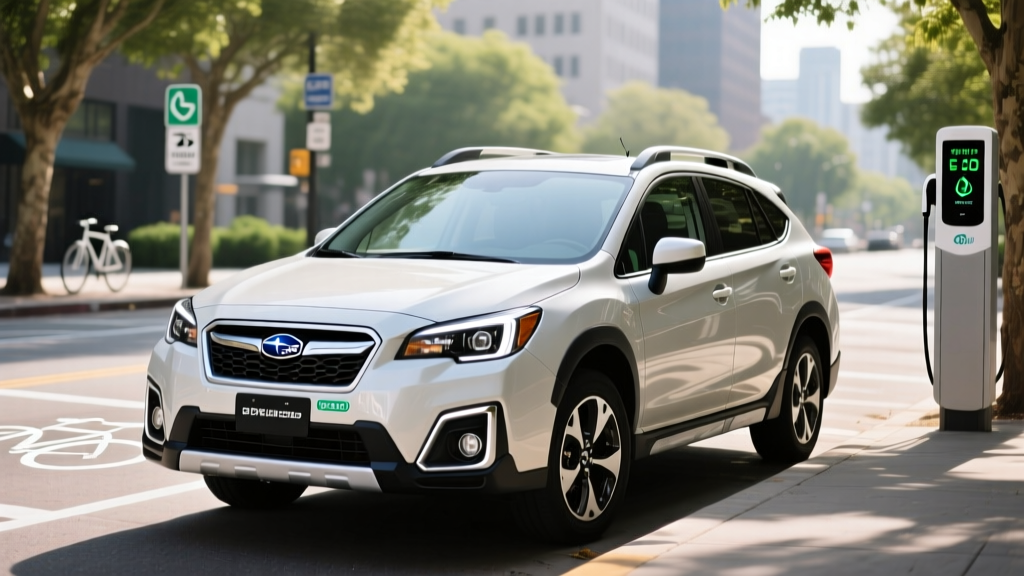
The 2015 Subaru Crosstrek Hybrid was Subaru's first attempt at a gasoline-electric compact crossover, slotting a 13-horsepower electric motor between the boxer engine and the CVT. As a conventional hybrid (HEV), it never needed a plug — it recaptured energy through regenerative braking and engine assist. More than a decade later, used examples still circulate on dealer lots and private sales, making this a relevant model for budget-conscious buyers seeking all-wheel-drive efficiency without the complexity of a plug-in system.
This guide covers everything a 2026 used-car shopper needs: exact EPA fuel economy, real-world MPG expectations, the hybrid battery's longevity and replacement cost, and how the Crosstrek Hybrid stacks up against modern PHEVs and full EVs.
HEV vs PHEV: Where the 2015 Crosstrek Hybrid Fits
Before diving into specs, it's critical to understand what the 2015 Crosstrek Hybrid is — and what it isn't.
| Feature | HEV (2015 Crosstrek Hybrid) | PHEV (e.g., 2026 Crosstrek Hybrid) | BEV (e.g., Solterra) |
|---|---|---|---|
| Plug-in charging | No — self-charging via regen | Yes — Level 1/Level 2 | Yes — Level 1/2/DC fast |
| Electric-only range | None (motor assists only) | ~17 miles (EPA) | ~222 miles (EPA) |
| Battery size | ~0.5 kWh (NiMH) | ~8.8 kWh (lithium-ion) | ~71.4 kWh (lithium-ion) |
| Gasoline engine | Yes — 2.0L boxer | Yes — 2.0L boxer | No |
| Federal tax credit (new) | None | Up to $7,500 (§30D) | Up to $7,500 (§30D) |
The 2015 Crosstrek Hybrid is a conventional hybrid (HEV). It cannot be plugged in, has no meaningful electric-only driving mode, and its small nickel-metal hydride (NiMH) battery exists solely to assist the gasoline engine during acceleration and capture braking energy. If you want electric-only commuting, you'd need a PHEV or BEV.
Fuel Economy: EPA Ratings vs Real-World MPG
The headline question for any hybrid buyer: how many MPG does it actually get?
| Driving Cycle | 2015 Crosstrek Hybrid (EPA) | 2015 Crosstrek Gas (EPA) | Real-World Hybrid Expectation |
|---|---|---|---|
| City | 29 MPG | 25 MPG | 28–32 MPG |
| Highway | 33 MPG | 33 MPG | 30–34 MPG |
| Combined | 29 MPG | 28 MPG | 28–32 MPG |
Source: EPA Fuel Economy
A few observations stand out. The hybrid's city MPG (29) matches its combined rating — unusual for most vehicles but typical of hybrids, which benefit most from stop-and-go driving where regenerative braking recharges the battery and the electric motor handles low-speed launches. Highway driving sees less hybrid advantage because the gasoline engine does most of the work at sustained speeds.
Real-World MPG: What Owners Actually Report
Owner-reported data on Fuelly and Subaru forums clusters around 27–31 MPG combined over mixed driving. Drivers who do predominantly city commuting with frequent stops often see 30+ MPG, while highway-heavy commutes at 75+ MPH tend to drop toward 27–28 MPG. Cold weather (below 30°F) reduces fuel economy by roughly 5–8% due to longer engine warm-up cycles and increased rolling resistance — a factor in northern climates where the Crosstrek's AWD system sees heavy use.
The improvement over the gas-only 2015 Crosstrek (28 MPG combined) is modest — roughly 1 MPG combined. That translates to about 15–20 gallons saved per year at 12,000 annual miles, or approximately $45–$60 in fuel savings at $3.00/gallon. The hybrid premium at original purchase was roughly $3,000 over the gas model, meaning the payback period on fuel alone was extremely long.
Powertrain Specs: Engine, Motor, and Combined Output
| Specification | 2015 Subaru Crosstrek Hybrid |
|---|---|
| Engine | 2.0L horizontally opposed 4-cylinder (FB20) |
| Engine output | 148 hp @ 6,000 rpm / 145 lb-ft @ 4,200 rpm |
| Electric motor | 13 hp (10 kW) integrated in transmission |
| Combined system output | 160 hp / 163 lb-ft |
| Transmission | Lineartronic CVT |
| Drivetrain | Symmetrical AWD (full-time) |
| Hybrid battery | ~0.5 kWh NiMH (nickel-metal hydride) |
| 0–60 mph | ~10.0 seconds (est.) |
| Curb weight | ~3,395 lbs (Hybrid) vs ~3,109 lbs (gas) |
| Cargo volume | 20.8 cu ft (rear seats up) / 50.2 cu ft (folded) |
The 13-hp electric motor is sandwiched between the engine and CVT — a "mild full hybrid" layout that allows brief engine-off coasting at very low speeds but cannot propel the car on electricity alone at meaningful distances or speeds. The added battery and motor hardware increased curb weight by nearly 300 lbs over the gas model, which partially offsets the hybrid system's efficiency gains, particularly on the highway.
Hybrid Battery Lifespan, Warranty, and Replacement Cost
For a 2015 model now over a decade old, battery health is the single most important pre-purchase consideration.
Original Battery Warranty: Subaru warranted the hybrid battery for 8 years / 100,000 miles (10 years / 150,000 miles in CARB states including California, New York, Massachusetts, and others adopting California emissions standards). This warranty has expired for virtually all 2015 examples as of 2026 unless the vehicle has exceptionally low mileage and is registered in a CARB state.
Degradation Reality for 2015 Models
The NiMH battery pack in the 2015 Crosstrek Hybrid is small (~0.5 kWh) and operates within a conservative state-of-charge window — the hybrid system rarely fully charges or fully depletes it. This shallow-cycling strategy extends NiMH lifespan, and many Toyota and Subaru hybrids from this era still operate on original batteries past 150,000 miles.
However, NiMH cells are susceptible to calendar aging and heat degradation. At 10+ years old, some capacity loss is expected. Symptoms of a weakening hybrid battery include:
- Reduced fuel economy (the engine runs more often to compensate)
- More frequent engine cycling on and off
- Dashboard warning lights (check engine or hybrid system warning)
- Diagnostic codes P0A80 or similar (hybrid battery pack performance)
Battery Replacement Cost
If the hybrid battery fails outside warranty, replacement options in 2026 include:
- OEM replacement (Subaru dealer): $2,500–$3,500 for the battery pack plus $500–$800 labor
- Refurbished/remanufactured pack: $1,200–$2,000 from aftermarket suppliers
- Individual cell replacement: $300–$800 if only specific modules have failed (requires a hybrid-savvy technician)
- Bypass/disconnect: Some owners disconnect the hybrid system entirely and drive the car as a conventional gas Crosstrek — this eliminates hybrid functionality and slightly reduces fuel economy but avoids battery cost
Before purchasing a used 2015 Crosstrek Hybrid, request a hybrid battery health report from a Subaru dealer or an independent shop with hybrid diagnostic tools. A simple OBD-II scan can reveal the battery's state of health (SoH) percentage and any stored fault codes.
Pricing, Tax Credits, and Used-Buyer Economics
The 2015 Crosstrek Hybrid originally carried an MSRP starting around $26,795 (Hybrid trim) to $29,295 (Hybrid Touring). In the 2026 used market, examples typically trade between $9,000 and $14,000 depending on mileage, condition, and battery health.
Federal Tax Credit Eligibility
The 2015 Crosstrek Hybrid does not qualify for any federal tax credit as a new vehicle — it was a conventional HEV, and §30D credits have never applied to non-plug-in hybrids. As a used vehicle, it would theoretically fall under the Used Clean Vehicle Credit (§25E), which offers up to $4,000 or 30% of the sale price (whichever is less) for qualified used plug-in EVs and fuel cell vehicles with a sale price under $25,000. However, conventional hybrids (HEVs) are not eligible for the used credit — only plug-in electric vehicles and fuel cell vehicles qualify.
Bottom line: expect to pay full used-market price with no federal incentive offset.
Who Should Buy the 2015 Crosstrek Hybrid (and Who Shouldn't)
Pros
- Standard symmetrical AWD — excellent for snow and rain
- Modest fuel economy improvement over gas model in city driving
- 8.7 inches of ground clearance for light off-road use
- Proven Subaru FB20 engine with widespread parts availability
- Lower used price than comparable PHEVs or EVs
- No charging infrastructure needed
Cons
- Only 1 MPG combined improvement over gas Crosstrek
- Added 300 lbs of weight reduces agility and cargo efficiency
- Hybrid battery is 10+ years old — replacement risk is real
- No electric-only driving capability
- No federal tax credit eligibility (new or used)
- Slow 0–60 time (~10 seconds) with CVT drone under hard acceleration
Choose the 2015 Crosstrek Hybrid If:
- You need AWD and live in a region with harsh winters
- Your driving is predominantly city/stop-and-go where the hybrid system provides its maximum benefit
- You have no access to home or workplace charging (making PHEVs and EVs impractical)
- You find a well-maintained example with a documented battery health check under $12,000
Look Elsewhere If:
- Fuel savings are your primary motivation — the 1 MPG gain doesn't justify a battery-risk premium
- You want electric-only commuting — consider a used Toyota RAV4 Prime (PHEV, ~42 miles electric) or a used Chevrolet Bolt EV (BEV, ~238 miles range)
- The hybrid battery shows any warning codes or is below 70% state of health without a price reduction to offset replacement cost
2015 Crosstrek Hybrid vs Modern Alternatives
For buyers cross-shopping the used 2015 Crosstrek Hybrid, here's how it compares to electrified alternatives at various price points in the 2026 used market:
| Vehicle | Type | EPA Combined | Electric Range | Used Price (2026) | Tax Credit |
|---|---|---|---|---|---|
| 2015 Subaru Crosstrek Hybrid | HEV | 29 MPG | None | $9,000–$14,000 | None |
| 2017 Toyota Prius Prime | PHEV | 54 MPG / 133 MPGe | 25 mi | $14,000–$18,000 | Up to $4,000 (§25E) |
| 2019 Chevrolet Bolt EV | BEV | 118 MPGe | 238 mi | $12,000–$16,000 | Up to $4,000 (§25E) |
| 2022 Subaru Crosstrek (gas) | Gas | 30 MPG | None | $18,000–$23,000 | None |
The Prius Prime and Bolt EV both qualify for the federal used clean vehicle credit if purchased from a dealer for under $25,000 and the buyer meets income requirements — potentially saving $4,000 that the Crosstrek Hybrid cannot offer. However, neither provides AWD, which is the Crosstrek's defining advantage.
Frequently Asked Questions
How many MPG does the 2015 Subaru Crosstrek Hybrid get?
The EPA rates it at 29 MPG city, 33 MPG highway, and 29 MPG combined. Real-world driving typically yields 27–31 MPG combined depending on driving mix, climate, and battery health.
Can the 2015 Crosstrek Hybrid be plugged in?
No. It is a conventional hybrid (HEV), not a plug-in hybrid (PHEV). The battery charges exclusively through regenerative braking and engine-driven generation. There is no charging port.
How far can it go on electric only?
It cannot. The electric motor assists the gasoline engine but cannot propel the vehicle on its own at any meaningful speed or distance. This is a key difference from PHEVs like the Toyota RAV4 Prime, which offers ~42 miles of electric-only range.
Is the 2015 Crosstrek Hybrid reliable?
The FB20 engine and CVT are generally reliable with proper maintenance. The main concern at this age is hybrid battery degradation. The NiMH pack was designed for longevity, but at 10+ years, capacity loss is possible. A pre-purchase hybrid battery diagnostic is strongly recommended.
What does a hybrid battery replacement cost?
Expect $2,500–$3,500 for an OEM replacement at a Subaru dealer, $1,200–$2,000 for a refurbished pack, or $300–$800 for individual cell module replacement. Factor this into your purchase negotiation if the battery shows any signs of degradation.
Does the 2015 Crosstrek Hybrid qualify for any tax credit?
No. As a conventional hybrid (HEV), it is ineligible for both the new-vehicle §30D credit and the used-vehicle §25E credit. Only plug-in electric vehicles and fuel cell vehicles qualify for federal clean vehicle credits.
Should I buy the hybrid or the gas 2015 Crosstrek?
Unless the hybrid is priced at or below the gas model and the battery checks out, the gas version is often the smarter used buy. The 1 MPG combined difference saves roughly $50/year in fuel, which doesn't offset the battery replacement risk or the hybrid's added weight and complexity. Buy the hybrid only if it's priced competitively and you value the slight city-driving efficiency boost.