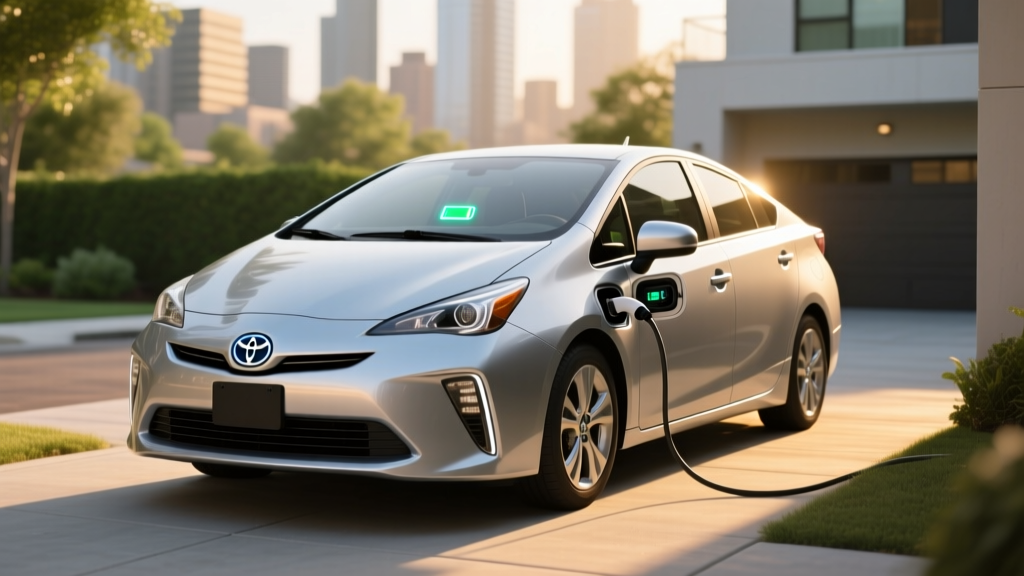
If you're searching for a 2015 Toyota Prius Plug-In Hybrid on the used market in 2026, you're likely looking for a dirt-cheap commuter that sips fuel and offers a taste of electric driving. Toyota only sold this plug-in variant (sometimes badged as the Prius PHV) for a few model years before replacing it with the far more capable Prius Prime in 2017. That makes the 2015 model a niche find today — but one that can still make financial sense if you understand exactly what you're getting.
This guide breaks down the real-world fuel economy, the very short electric-only range, battery longevity concerns on a decade-old pack, and whether any federal or state incentives still apply to a used purchase. Let's get into the numbers.
HEV vs PHEV: What the 2015 Prius Plug-In Actually Is
Toyota's Prius lineup in 2015 included two distinct vehicles that buyers frequently confuse:
2015 Prius (Standard HEV)
- Type: Conventional hybrid — no plug, no EV-only mode beyond ~1 mile at low speed
- Battery: ~1.3 kWh nickel-metal hydride (NiMH)
- EPA Combined: 50 MPG
- How it fuels: Gas station only; regenerative braking recharges the small battery
2015 Prius Plug-In Hybrid (PHEV)
- Type: Plug-in hybrid — has a charge port and a usable EV-only driving mode
- Battery: 4.4 kWh lithium-ion (Li-ion) with ~3.1 kWh usable for EV mode
- EPA Combined: 50 MPG (hybrid mode) / 95 MPGe (EV+hybrid blended)
- How it fuels: Plug in to recharge for short EV trips; gas station for longer drives
The critical difference: the plug-in version lets you drive approximately 11 miles on electricity alone before the gasoline engine kicks in. The standard HEV cannot do this. If you have a short commute and can charge at home, the PHEV version eliminates most weekday gasoline use. If you never plug it in, it simply operates as a slightly heavier standard Prius with marginally lower fuel economy.
Fuel Economy: EPA Numbers and Real-World MPG
| Metric | EPA Estimate | Real-World Expectation |
|---|---|---|
| EV-only range | 11 miles | 9–12 miles (less in cold or at highway speed) |
| MPGe (EV + hybrid blended) | 95 MPGe | 80–100 MPGe depending on plug-in frequency |
| City MPG (hybrid mode) | 51 MPG | 48–55 MPG (hybrids often beat EPA in city) |
| Highway MPG (hybrid mode) | 49 MPG | 44–48 MPG |
| Combined MPG (hybrid mode) | 50 MPG | 47–52 MPG |
| Total combined range | ~540 miles (EV + gas) | ~480–560 miles |
The 2015 Prius Plug-In uses Toyota's 1.8-liter four-cylinder Atkinson-cycle engine paired with an electric motor for a combined system output of 134 horsepower. It's not quick — expect a 0–60 mph time around 9.8 seconds — but efficiency is the point, not acceleration.
Real-world note: owners who plug in nightly for a sub-10-mile commute may go months without visiting a gas station. Owners who never plug in will see fuel economy dip to roughly 47–48 MPG combined because the car hauls around a heavier lithium-ion pack without using its EV advantage. According to fueleconomy.gov, the 2015 Prius Plug-In's official combined rating in charge-sustaining (hybrid-only) mode is 50 MPG.
Battery, Charging, and the 4.4 kWh Pack
The 2015 Prius Plug-In carries a 4.4 kWh lithium-ion battery (approximately 3.1 kWh usable). By 2026 standards, this is tiny — a modern Prius Prime offers 13.5 kWh and 44 miles of EV range. But in 2015, it was competitive with other PHEVs on the market.
| Charging Spec | Detail |
|---|---|
| Battery capacity | 4.4 kWh total / ~3.1 kWh usable |
| Chemistry | Lithium-ion (Li-ion) |
| Level 1 (120V household outlet) | ~3 hours for a full charge |
| Level 2 (240V home/public charger) | ~1.5 hours for a full charge (3.3 kW onboard charger) |
| DC fast charging | Not supported — no CCS, CHAdeMO, or NACS port |
| Charge port | J1772 (Level 1 and Level 2 only) |
Because the battery is so small, Level 1 charging from a standard 120V wall outlet is genuinely practical here. You'll recover the full 11 miles of range overnight without installing a dedicated 240V circuit. That said, a Level 2 home charger cuts charge time in half and is worthwhile if you plan to make multiple short EV trips per day with charging in between.
There is no DC fast charging capability. This vehicle was designed for home and destination charging, not highway corridor fast-charging stops.
Reliability, Battery Health, and Replacement Costs
The 2015 Prius Plug-In benefits from Toyota's long-standing hybrid reliability reputation. The 1.8L 2ZR-FXE engine and hybrid transaxle are well-proven, with many standard Prius models exceeding 200,000 miles with basic maintenance. The lithium-ion pack in the Plug-In is generally durable, but at 10–11 years old in 2026, capacity degradation is a legitimate concern.
Original Battery Warranty
Toyota warranted the 2015 Prius Plug-In's hybrid battery for 8 years / 100,000 miles (extended to 10 years / 150,000 miles in CARB states including California, New York, Massachusetts, and others adopting California emissions standards). For a 2015 model, this factory warranty has expired in most cases unless the vehicle has exceptionally low mileage and is registered in a CARB state — verify with a Toyota dealer using the VIN.
Expected degradation: Lithium-ion packs of this era typically lose 15–25% of original capacity over 10 years, depending on climate and charge habits. On a 4.4 kWh pack, a 20% loss means your EV-only range drops from 11 miles to roughly 8–9 miles. The hybrid-mode MPG is largely unaffected because the engine compensates.
Battery replacement cost (2026 estimates):
- Refurbished/remanufactured pack: $1,500–$2,500 installed
- New OEM Toyota pack: $3,000–$4,500 installed
- Individual module replacement (independent hybrid specialists): $600–$1,200 if only a few cells have failed
Before buying, request a hybrid battery health check from a Toyota dealer or qualified independent shop. A scan tool can read the battery's state of health (SoH) and individual module voltages. Avoid cars where the battery warning light is illuminated or where the EV-only range has dropped below 6 miles — both signal significant degradation or cell imbalance.
Used Pricing and Tax Credit Eligibility
The 2015 Prius Plug-In originally started around $30,755 MSRP (including destination) before any incentives. The original federal tax credit for this model was up to $2,500 when new, but that credit was claimed at the time of original purchase and does not transfer to subsequent owners.
2026 used-market pricing: Expect to pay between $8,000 and $14,000 depending on mileage, condition, and battery health. Low-mileage examples with verified battery SoH command a premium.
Federal Used Clean Vehicle Credit (§25E) — 2026 Rules
The 2015 Prius Plug-In may qualify for the federal Used Clean Vehicle Credit under IRS §25E, which provides up to $4,000 or 30% of the sale price (whichever is less). To qualify, per IRS guidelines:
- Sale price must be $25,000 or less (most 2015 Prius PHEVs qualify)
- Buyer's adjusted gross income must not exceed $75,000 (single), $112,500 (head of household), or $150,000 (joint)
- Vehicle must be purchased from a licensed dealer (private-party sales do not qualify)
- Vehicle must have a battery capacity of at least 7 kWh — the 2015 Prius Plug-In's 4.4 kWh pack does NOT meet this threshold
- The same vehicle can only receive the used credit once every three years per buyer
Bottom line: The 2015 Prius Plug-In's battery is too small (4.4 kWh vs. the 7 kWh minimum) to qualify for the federal used-EV credit. Check with a tax professional and your state's DMV for any state-level PHEV rebates that may still apply — some states offer separate incentives for used hybrid purchases.
Who Should Buy the 2015 Prius Plug-In in 2026?
Pros
- Exceptional fuel economy — 50 MPG combined even without plugging in
- Low used-car entry price ($8K–$14K)
- Reliable Toyota hybrid powertrain with widely available parts
- Level 1 (120V) charging is practical due to small battery
- Proven safety record; available Toyota Safety Sense on higher trims
- Short EV commutes can eliminate weekday gasoline use entirely
Cons
- Only 11 miles of EV range — far below modern PHEVs (Prius Prime: 44 mi)
- 4.4 kWh battery may show degradation at 10+ years old
- No DC fast charging capability
- Modest 134 HP; slow acceleration
- Does not qualify for the federal used clean vehicle credit (battery too small)
- Dated infotainment and interior materials by 2026 standards
- Factory battery warranty has expired for most examples
Hybrid vs PHEV vs EV: Which Fits Your Commute?
Decision Framework
Choose the 2015 Prius Plug-In (PHEV) if: Your one-way commute is under 11 miles, you can charge at home every night (even from a regular 120V outlet), and you want the flexibility to take longer road trips without range concerns. It's ideal as a second car or ultra-cheap commuter.
Choose a standard Prius HEV (2015 or newer) if: You don't have access to any charging (apartment, street parking), your commute is longer than 15 miles one way, or you want simpler ownership with no battery-plug-in routine. The HEV still delivers 50 MPG with zero behavior change.
Choose a full BEV (e.g., used Chevrolet Bolt, Nissan LEAF, or Tesla Model 3) if: You want to eliminate gasoline entirely, have reliable home Level 2 charging, and your daily driving stays under 200 miles. A used BEV in the $12K–$18K range will deliver far lower per-mile fuel costs and may qualify for the $4,000 used clean vehicle credit — something this Prius PHEV cannot do.
Choose a modern PHEV (e.g., 2023+ Prius Prime, RAV4 Prime) if: You want meaningful EV range (40+ miles), current safety tech, and a fresh battery warranty. The trade-off is a significantly higher purchase price ($33K+).
Pre-Purchase Checklist for a Used 2015 Prius Plug-In
- Hybrid battery health scan: Have a dealer or hybrid specialist read the battery SoH and individual module delta voltages. Reject any car with more than 15–20% capacity loss or a lit battery warning lamp.
- Charge port and cable test: Verify the J1772 charge port latches properly and that the included Level 1 charging cord functions without error codes.
- EV-mode verification: On a full charge, confirm the car can travel at least 8–10 miles in EV mode before the engine engages. Significantly less suggests pack degradation.
- Maintenance records: Confirm regular oil changes (every 5,000–10,000 miles), inverter coolant service, and transaxle fluid checks.
- Recall status: Check the VIN at NHTSA.gov for any open recalls, particularly related to the hybrid system or airbags.
- Title and ownership: Verify a clean title. Salvage or rebuilt titles can complicate hybrid battery warranty claims and insurance.
Frequently Asked Questions
How many MPG does the 2015 Toyota Prius Plug-In Hybrid get?
The EPA rates it at 51 city / 49 highway / 50 combined MPG when operating in hybrid (charge-sustaining) mode. In blended EV+hybrid use, it earns 95 MPGe. Real-world owners typically see 47–52 MPG combined depending on driving style, climate, and whether they regularly plug in.
How far can the 2015 Prius Plug-In go on electric only?
The EPA-rated EV-only range is 11 miles. In real-world driving, expect 9–12 miles in mild weather at moderate speeds. Cold weather (below 40°F) and highway speeds above 55 mph can reduce this to 7–9 miles. The total combined range (EV + a full 10.6-gallon gas tank) is approximately 540 miles.
Is the 2015 Prius Plug-In reliable, and what does a battery replacement cost?
Yes — the powertrain is among the most reliable Toyota has produced. The lithium-ion battery typically loses 15–25% capacity over 10 years. A refurbished replacement pack costs $1,500–$2,500 installed; a new OEM pack runs $3,000–$4,500. Many independent hybrid shops can replace individual modules for $600–$1,200 if only partial degradation has occurred.
Does the 2015 Prius Plug-In qualify for any tax credit in 2026?
It does not qualify for the federal Used Clean Vehicle Credit (§25E) because its 4.4 kWh battery falls below the 7 kWh minimum requirement. The original new-vehicle credit was claimed by the first owner and is not transferable. Some state or local utility rebates for used PHEVs may still apply — check your state energy office or utility provider.
Can I charge the 2015 Prius Plug-In from a regular wall outlet?
Yes. The included Level 1 charging cord plugs into a standard 120V household outlet and fully recharges the 4.4 kWh battery in approximately 3 hours. Because the battery is small, Level 1 charging is practical for daily use. A Level 2 (240V) charger reduces charge time to about 1.5 hours.
Should I buy the 2015 Prius Plug-In or a newer Prius Prime?
If budget allows, the 2017+ Prius Prime is substantially better: 25 miles of EV range (2017–2022) or 44 miles (2023+), modern safety tech, faster charging, and a fresh battery warranty. However, a 2015 Prius Plug-In at $8K–$14K is a fraction of the cost of a new Prime and still an excellent short-commute runabout if the battery checks out.
What's the difference between the Prius Plug-In and the standard Prius?
The standard 2015 Prius is a conventional hybrid (HEV) — it never plugs in and has no meaningful EV-only driving mode. The Plug-In (PHEV) has a larger 4.4 kWh lithium-ion battery, a J1772 charge port, and can drive 11 miles on electricity alone before switching to hybrid mode. Both share the same 1.8L engine and achieve 50 MPG combined in hybrid operation.