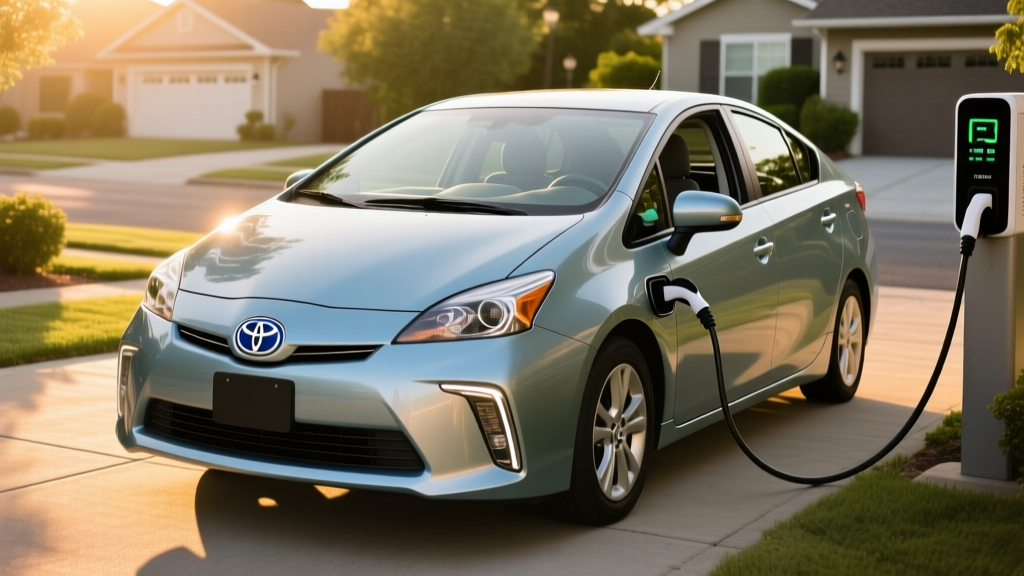
If you're researching the 2015 Prius Plug-In Hybrid on the used market in 2026, you're likely looking for maximum fuel efficiency on a tight budget. This third-generation Prius Plug-In (sold in the US from 2012–2015) was Toyota's first mass-market PHEV, blending a modest electric-only range with the legendary Prius hybrid powertrain. Below, we break down every number that matters — from EPA MPG to battery degradation, real-world range, and what you'll actually pay at the pump and the charger.
HEV vs. PHEV: Where the 2015 Prius Plug-In Fits
Conventional Hybrid (HEV): The standard 2015 Prius Liftback is a self-charging hybrid. It never plugs in. A small battery (1.3 kWh) recovers energy from braking and the gasoline engine, then uses it to assist acceleration and enable brief electric-only driving at low speeds. You fuel it exclusively with gasoline.
Plug-In Hybrid (PHEV): The 2015 Prius Plug-In Hybrid adds a larger 4.4 kWh lithium-ion battery and a more powerful electric motor, plus a charge port (J1772 connector). You can plug it into a standard 120V outlet (Level 1) or a 240V Level 2 charger to fill the battery, giving you a limited electric-only range before the gasoline engine kicks in.
Full EV (BEV): A battery-electric vehicle has no gasoline engine at all. It relies entirely on plug-in charging and offers 200–400+ miles of range depending on the model.
The 2015 Prius Plug-In sits between these worlds: it rewards you with a short electric-only commute, then operates as a highly efficient hybrid once the battery depletes. This makes it ideal for drivers who want some EV-like daily driving but lack consistent charging access or frequently take longer trips.
Fuel Economy & Electric Range: The Numbers That Matter
| Metric | EPA Rating | Real-World Expectation |
|---|---|---|
| EV-only range | 11 miles | 8–13 miles (depends on speed, temperature, terrain) |
| EV mode efficiency | 95 MPGe | 85–100 MPGe |
| Hybrid mode – City | 51 MPG | 48–55 MPG (hybrids often beat EPA in stop-and-go) |
| Hybrid mode – Highway | 49 MPG | 44–50 MPG |
| Hybrid mode – Combined | 50 MPG | 46–52 MPG |
| Total combined range | ~540 miles | ~480–560 miles (10.6-gal tank + EV range) |
According to fueleconomy.gov, the 2015 Prius Plug-In Hybrid achieves an EPA-estimated 50 MPG combined once operating in hybrid mode, and 95 MPGe in charge-depleting (EV) mode. The electric-only range is rated at just 11 miles — modest by 2026 PHEV standards (the current RAV4 Prime delivers 42 miles), but still enough to cover a short neighborhood commute or grocery run without burning a drop of gas.
Real-world range reality: The EPA's 11-mile EV estimate assumes moderate temperatures and mixed driving at moderate speeds. Expect 8–9 miles on the highway or in cold weather (below 40°F), where cabin heating and battery chemistry reduce efficiency. In warm, city-speed driving, some owners report squeezing out 13 miles. Once the battery depletes, the car seamlessly transitions to hybrid mode at 50 MPG combined.
Powertrain, Battery & Charging Specs
| Specification | 2015 Prius Plug-In Hybrid |
|---|---|
| Engine | 1.8L 4-cylinder Atkinson-cycle (98 hp) |
| Electric motor | 60 kW (80 hp) AC synchronous |
| Combined system output | 134 hp |
| Transmission | eCVT (planetary gearset) |
| Battery chemistry | Lithium-ion |
| Battery capacity | 4.4 kWh total (~3.6 kWh usable) |
| Charge port | J1772 (Level 1 / Level 2 AC only) |
| DC fast charging | Not supported |
| Level 1 charge time (120V) | ~3 hours (full from empty) |
| Level 2 charge time (240V, 3.3 kW) | ~1.5 hours (full from empty) |
| 0–60 mph | ~9.1 seconds |
| Drivetrain | Front-wheel drive |
The 2015 Prius Plug-In's 4.4 kWh lithium-ion battery was a significant upgrade over the standard Prius's 1.3 kWh nickel-metal hydride pack, enabling genuine electric-only driving at speeds up to 52 mph. However, the onboard charger is limited to 3.3 kW, meaning even on a Level 2 station, you'll need about 90 minutes for a full charge. There is no DC fast charging capability — this is strictly an AC-charging vehicle, which is typical for PHEVs of this era.
Charging on a standard 120V household outlet (Level 1) takes roughly three hours, which is manageable if you can plug in at work or overnight. Many owners find that plugging in every night at home is sufficient to capture the full 11-mile EV range each morning.
Used Pricing & Tax Credit Eligibility in 2026
The 2015 Prius Plug-In Hybrid is no longer in production and is available only on the used market. As of early 2026, expect pricing in the following ranges:
- $9,000–$12,000: Higher-mileage examples (100,000+ miles), fair condition
- $12,000–$16,000: Average mileage (60,000–100,000 miles), good condition
- $16,000–$20,000: Low mileage (under 60,000 miles), excellent condition, Advanced trim
Federal tax credit status: The 2015 Prius Plug-In originally qualified for up to $2,500 under the old §30D credit structure (based on battery capacity). However, under current IRS rules, the used clean vehicle credit (up to $4,000 or 30% of sale price, whichever is less) applies only to vehicles with a model year at least two years prior to the purchase year — so a 2015 model qualifies on age. However, the used credit requires the sale price to be $25,000 or less (most 2015 Prius Plug-Ins meet this), the buyer to fall under income caps ($75,000 single / $150,000 married filing jointly), and the vehicle to be purchased from a licensed dealer. The vehicle must also have its battery in acceptable condition. Always verify current eligibility with a tax professional and consult irs.gov for the latest rules before purchasing.
Note: This vehicle does not qualify for the new-vehicle §30D credit (up to $7,500), which applies only to new purchases meeting current battery-sourcing and critical-mineral requirements.
Reliability, Battery Health & Replacement Costs
Original hybrid battery warranty: Toyota covered the 2015 Prius Plug-In's lithium-ion traction battery for 8 years / 100,000 miles (10 years / 150,000 miles in CARB states including California, New York, Massachusetts, and others adopting California emissions standards).
Warranty status in 2026: All 2015 models are now outside the original 8-year/100,000-mile warranty window, and most are outside even the 10-year CARB extension. Battery replacement, if needed, is an out-of-pocket expense.
The Prius Plug-In's lithium-ion battery has proven reasonably durable, but at 10–11 years of age, capacity degradation is a real consideration. Owners typically report 15–30% loss of original EV range over this timeframe — meaning your 11-mile electric range might now be closer to 8–9 miles on a full charge. The hybrid-mode fuel economy is largely unaffected because the gasoline engine compensates.
Battery replacement costs:
- Toyota dealership (new OEM battery): $3,500–$5,000 installed
- Refurbished/remanufactured battery: $1,500–$2,500 installed (from specialists like Green Bean Battery or similar)
- Individual module replacement: $500–$1,200 if only specific cells have failed (requires a qualified hybrid technician)
Before purchasing any 2015 Prius Plug-In, request a hybrid battery health check. A Toyota dealer or qualified hybrid specialist can read the battery's State of Health (SoH) via the OBD-II port. Look for a pack with minimal cell-voltage variance and at least 70% of original capacity. Also check whether the previous owner regularly plugged the vehicle in — batteries that were never charged and only operated in hybrid mode may show different wear patterns than those cycled daily.
According to reliability data aggregated by NHTSA and owner surveys, the third-generation Prius platform (2010–2015) is among the most dependable vehicles Toyota has built. The eCVT transmission is a simple planetary gearset with no clutches or bands to wear out, and the 1.8L Atkinson-cycle engine is under-stressed, routinely lasting 200,000+ miles with basic maintenance.
Driving Experience & Trim Levels
The 2015 Prius Plug-In was offered in a single well-equipped base trim and an Advanced trim. Standard features include:
- Toyota Display Audio with 6.1-inch touchscreen and navigation
- Bluetooth, USB, and HD Radio
- Toyota Safety Sense (pre-collision system, lane departure alert on Advanced)
- EV/EV-Auto/Hybrid drive modes
- Remote climate control via smartphone app (requires active subscription, now discontinued)
- Heated front seats (Advanced trim)
- LED headlamps and fog lights (Advanced trim)
- Dynamic radar cruise control (Advanced trim)
On the road, the 2015 Prius Plug-In drives much like the standard third-generation Prius: quiet at low speeds, composed but not sporty, with a ride tuned firmly for comfort. The 134 combined horsepower delivers adequate but unhurried acceleration — the 9.1-second 0–60 time won't win any drag races, but it's perfectly sufficient for merging and city driving. Regenerative braking is well-integrated, and the transition between EV and hybrid modes is nearly imperceptible.
Who Should Buy This PHEV — and Who Shouldn't
Pros
- Exceptional 50 MPG combined in hybrid mode
- Proven Toyota reliability; 200k+ mile powertrains common
- Low used pricing ($9k–$20k range)
- Charges on any standard 120V outlet — no expensive home install required
- 540-mile total range eliminates range anxiety
- Hatchback cargo versatility (21.6 cu ft behind rear seats)
Cons
- Only 11 miles of EV range — very short by modern standards
- No DC fast charging capability
- 3.3 kW onboard charger is slow for Level 2
- Dated infotainment (no Apple CarPlay/Android Auto)
- Original battery warranty expired; replacement is $1,500–$5,000
- Modest 134 hp; highway passing requires planning
Choose the 2015 Prius Plug-In Hybrid if:
- Your daily commute is under 15 miles round-trip and you can plug in at home or work
- You want EV-like city driving but need the flexibility for occasional 300+ mile road trips
- Your budget is under $20,000 and you want the lowest possible fuel cost per mile
- You don't have access to DC fast charging and need a car that works with a standard outlet
Consider a full EV or newer PHEV instead if:
- You want 25+ miles of electric-only range (look at a used 2019+ Prius Prime or a 2021+ RAV4 Prime)
- You want modern safety tech, Apple CarPlay, or faster charging
- Your daily commute exceeds 15 miles and you want to drive entirely on electricity
- You want DC fast charging for road-trip convenience (consider a used Chevrolet Bolt EV or Hyundai Kona Electric)
Frequently Asked Questions
How many MPG does the 2015 Prius Plug-In Hybrid get?
The EPA rates it at 51 city / 49 highway / 50 combined MPG in hybrid mode (after the battery depletes). In EV mode, it achieves 95 MPGe. Real-world owners frequently report 48–55 MPG in daily driving, with city driving often exceeding the EPA estimate thanks to regenerative braking.
How far can it go on electric only?
The EPA rates the 2015 Prius Plug-In at 11 miles of electric-only range. Real-world results vary from 8 miles (highway, cold weather) to 13 miles (warm, city-speed driving). This is enough for short errands or a brief commute, but not sufficient for most drivers to go fully electric on a daily basis.
Does the 2015 Prius Plug-In qualify for any tax credit?
It may qualify for the federal used clean vehicle credit (up to $4,000 or 30% of the sale price, whichever is less) if you purchase from a licensed dealer, the sale price is $25,000 or less, and your income falls under IRS caps ($75,000 single / $150,000 married filing jointly). It does not qualify for the new-vehicle §30D credit. Consult a tax professional and irs.gov before relying on credit eligibility.
Is the 2015 Prius Plug-In reliable, and what does battery replacement cost?
Yes — the third-generation Prius platform is widely regarded as one of Toyota's most reliable. The powertrain routinely exceeds 200,000 miles with basic maintenance. The lithium-ion traction battery is now outside its original warranty (8 yr/100,000 mi). If replacement is needed, expect $1,500–$2,500 for a refurbished pack or $3,500–$5,000 for a new OEM battery from Toyota.
Can I charge it at a public DC fast charger?
No. The 2015 Prius Plug-In only accepts AC charging via a J1772 connector. It supports Level 1 (120V, ~3 hours for a full charge) and Level 2 (240V at 3.3 kW, ~1.5 hours). It cannot connect to CCS, CHAdeMO, or NACS DC fast chargers.
Hybrid vs. PHEV vs. EV — which is right for me?
A conventional hybrid (HEV) like the standard 2015 Prius is best if you never want to plug in and just want maximum MPG. A PHEV like the 2015 Prius Plug-In is ideal if you can charge at home and want some electric-only miles for short trips while retaining gasoline flexibility. A full EV (BEV) makes sense if you have reliable home charging, want zero tailpipe emissions, and your daily driving is within the vehicle's range (typically 200–350 miles for modern EVs).
Does it need to be plugged in to work?
No. If you never plug it in, the 2015 Prius Plug-In operates as a conventional hybrid and still achieves approximately 50 MPG combined. Plugging in simply unlocks the 11-mile electric-only range, which reduces gasoline consumption for short trips.