The Hypercar That Pioneered Plug-In Hybrid Performance
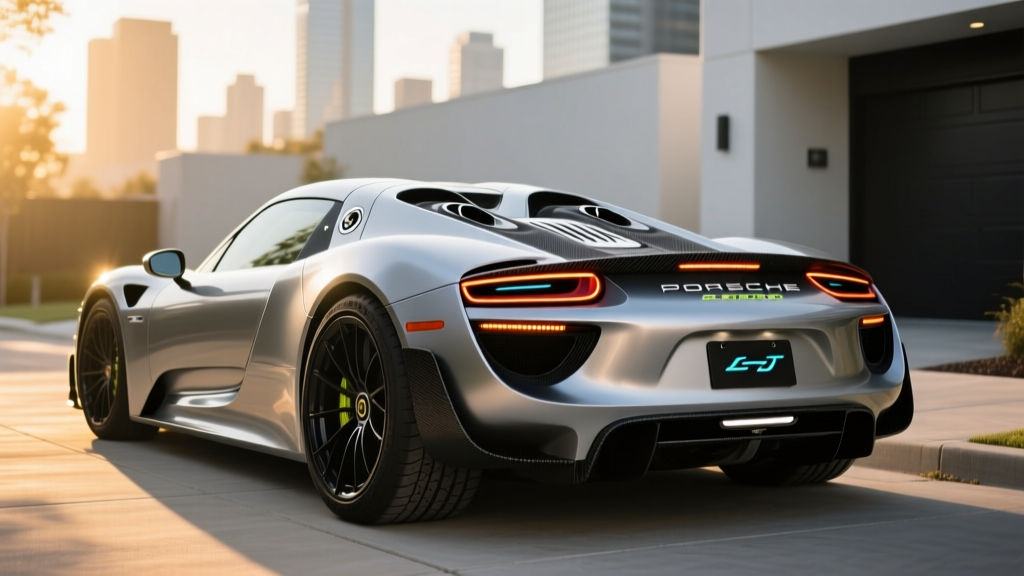
The 2015 Porsche 918 Spyder occupies a singular space in automotive history: a limited-production plug-in hybrid hypercar that proved electrification could shatter lap records rather than merely commute. With just 918 units built globally between 2013 and 2015, Porsche's flagship PHEV paired a 4.6-liter naturally aspirated V8 with two electric motors to deliver 887 combined horsepower and an EPA-rated 67 MPGe — figures that seemed contradictory when the car launched and remain impressive a decade later.
This guide breaks down exactly what owning a 918 Spyder means in 2026: real-world fuel economy, electric-only range, charging logistics, battery longevity, and whether this collector-grade PHEV makes sense versus a modern full EV or a conventional hybrid. If you're researching the 2015 Porsche 918 Spyder hybrid as a purchase, a benchmark, or simply to understand how far PHEV technology has come, this is your spec-driven reference.
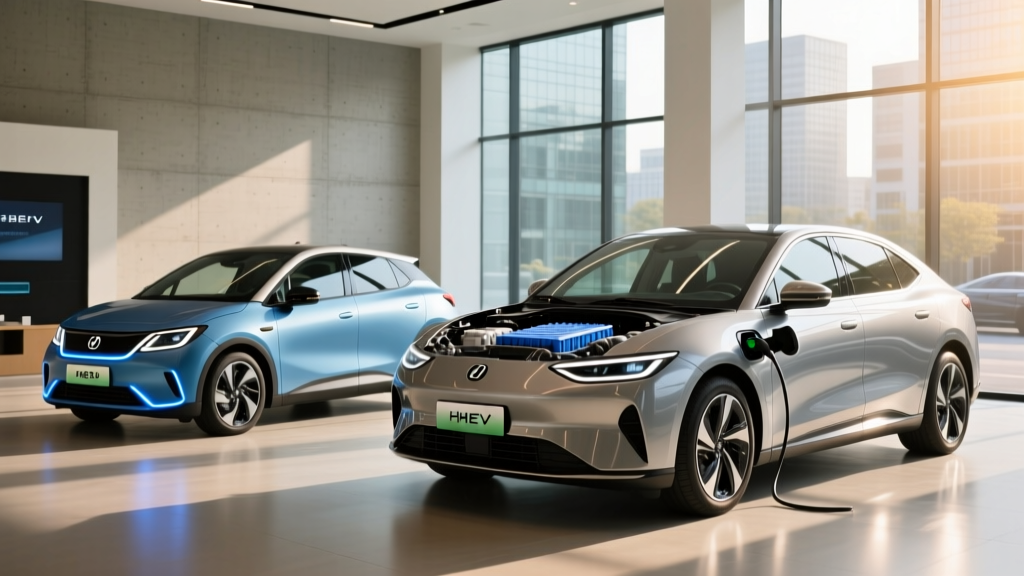
HEV vs PHEV: Where the 918 Spyder Fits
Conventional Hybrid (HEV)
A conventional hybrid like the Toyota Prius uses a small battery (typically 1-2 kWh) charged exclusively through regenerative braking and the gasoline engine. It never plugs in. Electric-only propulsion is limited to low speeds and short distances. The HEV's advantage is simplicity: no charging infrastructure needed, just refuel with gasoline.
Plug-In Hybrid (PHEV) — The 918 Spyder's Category
A plug-in hybrid carries a substantially larger battery pack that can be recharged from an external power source via a charging cable. The 918 Spyder's 6.8 kWh lithium-ion battery enables a genuine electric-only driving mode — up to 12 miles per the EPA — before the V8 engine engages. PHEVs bridge the gap between full battery-electric vehicles (BEVs) and conventional hybrids: you can drive short trips on electricity alone while retaining a gasoline engine for longer journeys without range anxiety.
The 918 Spyder is unambiguously a PHEV. It charges via a dedicated AC charging port (no DC fast-charge capability) and offers selectable drive modes that prioritize electric-only operation, combined hybrid operation, or full performance deployment of both power sources simultaneously.
Fuel Economy and Electric Range: The Official Numbers
| Metric | EPA Rating | Real-World Expectation |
|---|---|---|
| Combined MPGe (electric + gas) | 67 MPGe | 55-65 MPGe with regular plug-in use |
| Gasoline-only combined MPG | 22 MPG | 18-20 MPG (spirited driving typical) |
| City MPG (gas-only mode) | 20 MPG | 18-22 MPG |
| Highway MPG (gas-only mode) | 24 MPG | 22-26 MPG at steady cruise |
| Electric-only range | 12 miles | 9-11 miles (climate control, aggressive throttle reduce range) |
| Total combined range | ~340 miles | ~280-320 miles depending on driving style |
Source: EPA Fuel Economy Guide — 2015 Porsche 918 Spyder
The 918 Spyder's fuel economy is entirely dependent on how you use it. Owners who plug in daily and commute within the 12-mile electric envelope will see MPGe figures approaching or exceeding the EPA's 67 MPGe rating. Owners who rarely charge and drive aggressively — which describes most 918 Spyder usage in practice — will see gasoline consumption closer to 15-18 MPG. This is the fundamental PHEV paradox: the sticker number assumes regular charging discipline that real-world supercar ownership rarely delivers.
Battery Warranty and Replacement Reality
Porsche originally warranted the 918 Spyder's high-voltage battery for 8 years or 100,000 miles, whichever came first. As of 2026, every 918 Spyder has exceeded its factory battery warranty period. Porsche Classic and authorized dealers can service the hybrid system, but out-of-warranty battery replacement is estimated at $30,000-$45,000 including labor — a figure that reflects the car's low-volume, bespoke construction rather than mainstream PHEV pricing. Most 918 Spyder batteries have aged well due to conservative state-of-charge management and low accumulated mileage (many examples have under 10,000 miles), but buyers should commission a pre-purchase hybrid system health check through a Porsche-authorized service center.
Powertrain Architecture: V8 Meets Electric Motors
| Specification | Detail |
|---|---|
| Combined system output | 887 HP / 944 lb-ft torque |
| Gasoline engine | 4.6L naturally aspirated V8, 608 HP @ 8,700 RPM |
| Rear electric motor | 156 HP (115 kW), integrated into 7-speed PDK transmission |
| Front electric motor | 129 HP (95 kW), driving front axle independently |
| Battery capacity | 6.8 kWh lithium-ion (liquid-cooled) |
| 0-60 mph | 2.5 seconds (with launch control) |
| Top speed | 214 mph (hybrid mode) / 94 mph (electric-only) |
| Drivetrain | All-wheel drive (electric front axle, engine+motor rear axle) |
| Transmission | 7-speed dual-clutch (PDK) |
| Curb weight | ~3,692 lbs |
The 918 Spyder's powertrain was revolutionary in 2015 and remains technically sophisticated today. The front electric motor provides independent all-wheel-drive torque vectoring without a mechanical driveshaft — a concept now common in dual-motor EVs but exotic at the time. The rear motor fills torque gaps between V8 power pulses and during PDK gear shifts, creating seamless acceleration that feels continuous rather than stepped. Porsche's thermal management system liquid-cools the battery pack, which was critical for sustaining repeated hard laps at the Nürburgring (where the 918 set a 6:57 production-car record in 2013).
Charging the 918 Spyder: What You Need to Know
The 918 Spyder charges via a proprietary AC charging connection (not a standard J1772 or modern NACS connector). Porsche supplied a dedicated wall-mounted charging station with each vehicle, and replacements or relocations require Porsche-specific equipment.
| Charging Level | Power (kW) | Time to Full Charge | Notes |
|---|---|---|---|
| Level 1 (120V standard outlet) | ~1.2 kW | ~6-7 hours | Trickle charge; usable for overnight if no L2 available |
| Level 2 (dedicated Porsche station, 240V) | ~3.6 kW | ~2-2.5 hours | Recommended; original Porsche wallbox included with car |
| DC Fast Charging | Not supported | N/A | No DCFC hardware on the 918 Spyder |
The 6.8 kWh battery is small by modern PHEV standards (the 2026 Toyota RAV4 Prime carries 18.1 kWh), so full charges are relatively quick even on Level 2. However, the absence of DC fast charging means road-trip recharging isn't practical — you're limited to destination or home charging. For a hypercar that averages under 2,000 miles per year in typical collector use, this limitation is largely academic.
kW (kilowatts) measures charging power — the rate of energy flow. kWh (kilowatt-hours) measures battery capacity — the total energy stored. The 918's 3.6 kW charge rate fills its 6.8 kWh battery in roughly two hours.
Ownership Costs, Pricing, and Tax Credit Eligibility
The 2015 Porsche 918 Spyder launched with an MSRP of $845,000 (base) to $930,000 (Weissach Package, which shed ~90 lbs through magnesium wheels, titanium fasteners, and deleted sound deadening). As of early 2026, used-market values range from $1.5 million to over $2.5 million depending on mileage, specification, and provenance, per auction results from Bring a Trailer and RM Sotheby's.
Does the 918 Spyder Qualify for Federal Tax Credits?
No — not in 2026. The federal §30D plug-in hybrid tax credit (up to $7,500) applies only to new qualifying vehicles purchased from an authorized dealer. Since the 918 Spyder ceased production in 2015 and is available only on the used market, it is ineligible for the new-vehicle credit. The used-EV credit (§25E, up to $4,000 for vehicles under $25,000) also does not apply, as the 918's price far exceeds the $25,000 used-vehicle cap. Consult IRS.gov's clean vehicle credit guidance for current eligibility rules.
Operating costs for the 918 Spyder are dominated by insurance (typically $8,000-$15,000 annually for agreed-value collector policies), scheduled maintenance through Porsche Classic, and tire replacement (Michelin Pilot Sport Cup 2 tires at roughly $2,500 per set). Fuel costs are modest given the low annual mileage most examples accumulate.
Reliability and Long-Term Battery Health
The 918 Spyder's hybrid system has proven robust in the field, largely because most examples see limited, gentle use rather than daily commuting stress. The liquid-cooled battery pack's state-of-charge management avoids deep cycling, which is the primary driver of lithium-ion degradation. Porsche's hybrid system control units have received firmware updates through dealer service campaigns, and the high-voltage architecture benefits from the same engineering rigor Porsche applied to the 919 Hybrid LMP1 race car.
Known concerns include:
- 12V auxiliary battery drain if the car sits unplugged for extended periods (a common issue with all PHEVs and EVs)
- Coolant system maintenance — the liquid-cooled battery and power electronics require periodic coolant flushes per Porsche's schedule
- PDK transmission service — the dual-clutch gearbox requires fluid changes at prescribed intervals, and repairs are costly
- Brake system — carbon-ceramic rotors last exceptionally long under normal use but cost $15,000+ per axle to replace if damaged
For reliability context, the 918 Spyder benefits from Porsche's motorsport-derived engineering but suffers from low-volume parts availability. Any hybrid system repair will require a Porsche-authorized technician with high-voltage certification, and turnaround times can stretch to weeks or months for specialized components.
Who Should Choose the 918 Spyder vs a Modern PHEV or Full EV?
Reasons to Consider the 918 Spyder
- Collector-grade appreciation asset (values have roughly doubled since MSRP)
- Unmatched driving experience: V8 soundtrack + electric torque fill + AWD
- Historically significant as one of the "Holy Trinity" hypercars (alongside McLaren P1, Ferrari LaFerrari)
- Functional PHEV capability for short electric-only urban drives
- Nürburgring-proven performance credibility
Reasons to Look Elsewhere
- $1.5M+ acquisition cost — not a practical daily driver
- Expired battery warranty with $30K-$45K replacement exposure
- No DC fast charging; limited to slow AC charging
- 12-mile EV range is symbolic, not practical for real commuting
- Maintenance requires specialized Porsche Classic service access
- Modern PHEVs (e.g., 2026 Porsche Panamera E-Hybrid: 45-mile EV range, $110K) offer vastly more daily usability
Hybrid vs PHEV vs EV: Which Fits You?
Choose a conventional hybrid (HEV) if you want fuel savings without any charging behavior change — ideal for apartment dwellers or those without home charging access. Examples: Toyota Prius (57 MPG combined), Honda Accord Hybrid (48 MPG combined).
Choose a plug-in hybrid (PHEV) if you have home charging and a commute within the EV range envelope (typically 25-50 miles on modern PHEVs) but need gasoline flexibility for road trips. The 918 Spyder is an extreme, impractical PHEV; modern alternatives like the Toyota RAV4 Prime (42-mile EV range, 94 MPGe) or Porsche Cayenne E-Hybrid (32-mile EV range) deliver daily usability.
Choose a full battery-electric vehicle (BEV) if you have reliable home charging, drive under 300 miles daily, and want the lowest operating cost and zero tailpipe emissions. Modern BEVs like the Hyundai Ioniq 5 (310-mile EPA range) or Tesla Model Y (320-mile range) offer mainstream practicality the 918 was never designed to provide.
Frequently Asked Questions
How many MPG does the 2015 Porsche 918 Spyder hybrid get?
The EPA rates the 918 Spyder at 67 MPGe when combining electric and gasoline operation, and 22 MPG combined on gasoline alone. Real-world gasoline-only driving typically yields 18-20 MPG given the car's performance-oriented use. MPGe (miles per gallon equivalent) converts electricity consumption into a gasoline-equivalent figure for comparison purposes.
How far can the 918 Spyder go on electric only?
The EPA-rated electric-only range is 12 miles at a maximum speed of 94 mph. In real-world conditions with climate control and normal acceleration, expect 9-11 miles. This range was competitive in 2015 but is modest by 2026 PHEV standards — the Chrysler Pacifica Hybrid offers 32 miles electric-only, for comparison.
Is the 918 Spyder reliable, and what does a battery replacement cost?
The hybrid system has proven reliable in collector use, with most examples accumulating minimal mileage. The original 8-year/100,000-mile battery warranty has expired on all examples. Out-of-warranty high-voltage battery replacement is estimated at $30,000-$45,000. Pre-purchase hybrid system diagnostics through a Porsche dealer are strongly recommended.
Does the 918 Spyder qualify for any federal tax credit?
No. The §30D new clean vehicle credit applies only to new purchases, and the §25E used-vehicle credit caps eligibility at vehicles priced under $25,000. At $1.5M+, the 918 Spyder qualifies for neither. Consult IRS.gov for current credit rules.
Can the 918 Spyder charge at public charging stations?
Technically yes, but only at AC Level 2 stations with compatible connectors, and the proprietary Porsche connection may require an adapter or the original Porsche-supplied cable. It cannot use DC fast chargers. Most owners charge exclusively at home using the included Porsche wallbox.
How does the 918 Spyder compare to modern Porsche PHEVs?
The 2026 Porsche Panamera Turbo E-Hybrid delivers 729 HP, approximately 45 miles of electric range, DC fast-charge capability, and a ~$195,000 MSRP — vastly more practical as a daily vehicle. The 918 Spyder's value proposition is exclusivity, collector significance, and raw analog driving engagement that no modern PHEV replicates.