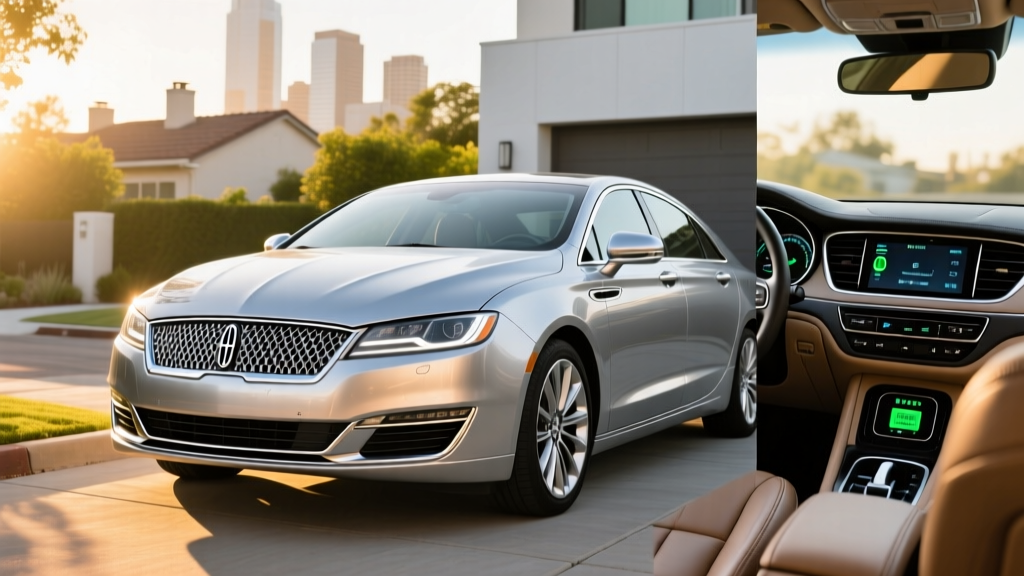
The 2015 Lincoln MKZ Hybrid sedan occupies a specific niche in the used luxury-hybrid market: it offers genuine fuel efficiency in a midsize premium package without the complexity of plug-in charging. Built on the Ford Fusion Hybrid platform, this conventional hybrid (HEV) uses regenerative braking and an integrated electric motor to boost economy — no plug, no charging anxiety, and no battery range to monitor. For buyers in 2026 researching whether a decade-old luxury hybrid still makes financial sense, this guide covers the exact MPG figures, battery longevity data, and total cost of ownership you need before signing a purchase agreement.
HEV vs PHEV: What the 2015 MKZ Hybrid Actually Is
Before evaluating specs, it is essential to classify this vehicle correctly. The 2015 Lincoln MKZ Hybrid is a conventional hybrid electric vehicle (HEV), not a plug-in hybrid (PHEV). Lincoln did not offer a plug-in variant of the MKZ until the 2017 model year refresh.
| Feature | HEV (2015 MKZ Hybrid) | PHEV (e.g., 2017+ MKZ Energi) | Full EV (BEV) |
|---|---|---|---|
| Plug-in charging required | No | Yes | Yes |
| Electric-only range | ~1 mile at low speed | ~21 miles (2017 Energi) | 200–400+ miles |
| Battery size | 1.4 kWh (usable ~1.0 kWh) | 7.6 kWh | 60–100+ kWh |
| Federal tax credit (new) | None | Up to $4,007 (expired) | Up to $7,500 (§30D) |
| Home charging needed | No | Yes (Level 1/2) | Yes (Level 2 recommended) |
The 2015 MKZ Hybrid charges its small lithium-ion battery exclusively through regenerative braking and the gasoline engine. You fuel it like any conventional car and drive away. This is a meaningful advantage for apartment dwellers, street parkers, or anyone without access to home or workplace charging infrastructure.
Fuel Economy: EPA Ratings and Real-World MPG
The EPA rated the 2015 Lincoln MKZ Hybrid sedan at the following fuel economy figures, which you can verify at fueleconomy.gov:
| Driving Cycle | EPA Rating | Real-World Expectation |
|---|---|---|
| City | 41 MPG | 40–45 MPG (hybrids often exceed EPA city) |
| Highway | 36 MPG | 33–37 MPG (highway reduces regen advantage) |
| Combined | 38 MPG | 36–41 MPG depending on driving mix |
For a 15,000-mile/year driver averaging 38 MPG combined, annual fuel consumption is approximately 395 gallons. At $3.50/gallon (a reasonable 2026 national average), that translates to roughly $1,382 per year in fuel costs. A comparable gas-only 2015 MKZ with the 2.0L EcoBoost (rated 22 city / 33 highway / 26 combined) would consume about 577 gallons annually — roughly $2,020 per year. The hybrid saves approximately $638 per year at the pump.
Powertrain Specs: Engine, Motor, and Combined Output
| Specification | 2015 Lincoln MKZ Hybrid |
|---|---|
| Engine | 2.0L Atkinson-cycle inline-4 |
| Engine horsepower | 141 hp @ 6,000 rpm |
| Engine torque | 129 lb-ft @ 4,000 rpm |
| Electric motor | Permanent-magnet AC synchronous |
| Electric motor output | 88 kW (118 hp) |
| Combined system horsepower | 188 hp |
| Transmission | eCVT (planetary gearset, no fixed gears) |
| Drivetrain | Front-wheel drive |
| 0–60 mph | ~8.4 seconds |
| Battery type | Lithium-ion (1.4 kWh total) |
| Battery location | Behind rear seat (trunk intrusion) |
| Curb weight | ~3,713 lbs |
| Fuel tank capacity | 13.5 gallons |
| Total driving range | ~513 miles (13.5 gal × 38 MPG) |
The powertrain pairs Ford's 2.0L Atkinson-cycle four-cylinder with an electric motor integrated into the eCVT transaxle. The Atkinson cycle sacrifices low-end torque for higher thermal efficiency — exactly the trade-off a hybrid can afford, since the electric motor fills in the torque gap off the line. The 188 combined horsepower is adequate for highway merging and passing, though the MKZ Hybrid is tuned for smooth, quiet cruising rather than sporty acceleration.
The eCVT is not a traditional belt-and-cone CVT. It uses a planetary gearset to blend engine and motor power with no shifting, which contributes to both smoothness and long-term reliability — there are no clutch packs, bands, or conventional transmission fluid to service at short intervals.
Battery Longevity, Warranty, and Replacement Cost
Battery durability is the single largest concern for used-hybrid buyers, and it deserves a thorough, data-driven answer.
Real-world degradation data: Ford's hybrid battery packs from this generation (shared with the Fusion Hybrid and C-Max Hybrid) have demonstrated strong longevity. Taxi fleets running the Ford Fusion Hybrid have documented 200,000+ miles on original battery packs. The 1.4 kWh lithium-ion pack in the MKZ is small and operates in a narrow state-of-charge window (roughly 40–60% SoC), which minimizes stress and extends cycle life considerably compared to a full EV battery that cycles through deep charge and discharge events daily.
Battery replacement cost in 2026: If the hybrid battery does fail outside of warranty, here is what to expect:
- New OEM battery from Lincoln/Ford: $3,000–$4,200 (parts + dealer labor)
- Remanufactured/reconditioned battery: $1,500–$2,500 (installed at independent hybrid shops)
- Individual cell/module replacement: $500–$1,200 (if only specific modules have degraded — requires diagnostic testing)
Given that the average used 2015 MKZ Hybrid sells for $9,000–$14,000 in 2026 depending on mileage and condition, a full battery replacement represents a significant percentage of the vehicle's value. Before purchasing, request a hybrid battery health report from a Ford/Lincoln dealer or an independent shop with Ford IDS diagnostic capability. This will show battery capacity retention and individual module voltage balance — the two key indicators of remaining life.
Tax Credits, Pricing, and 2026 Used-Car Economics
The 2015 Lincoln MKZ Hybrid never qualified for a federal plug-in vehicle tax credit because it is a conventional HEV, not a PHEV or BEV. The IRS §30D clean vehicle credit applies only to plug-in vehicles meeting battery-capacity, critical-mineral sourcing, MSRP, and buyer income requirements.
Used EV credit (IRS §25E): The Inflation Reduction Act introduced a used clean vehicle credit of up to $4,000 (30% of sale price, capped at $4,000). However, this credit applies only to used PHEVs and BEVs — not conventional hybrids. The 2015 MKZ Hybrid does not qualify.
Current used-market pricing (2026):
- 2015 MKZ Hybrid, 80,000–100,000 miles, good condition: $10,500–$13,000
- 2015 MKZ Hybrid, 100,000–140,000 miles, good condition: $8,500–$11,000
- 2015 MKZ Hybrid, 140,000+ miles or fair condition: $6,500–$9,000
For comparison, a 2015 MKZ with the 2.0L EcoBoost gasoline engine typically trades for $1,000–$2,000 less at equivalent mileage, meaning the hybrid premium on the used market is modest. Given the $638/year fuel savings calculated earlier, the hybrid premium pays for itself within 2–3 years for an average driver.
Reliability and Known Issues
The 2015 MKZ Hybrid benefits from the mature second-generation Ford hybrid system, which had most early-production bugs resolved by this model year. Key reliability notes:
- Hybrid system: The eCVT, inverter, and electric motor have proven extremely durable. NHTSA complaint data shows very few powertrain-related complaints for this model year.
- 12V battery: Like all hybrids and EVs, the MKZ has a conventional 12V battery that powers accessories and computers. This battery typically lasts 4–6 years and costs $150–$250 to replace. A dead 12V battery will prevent the car from starting, even if the hybrid battery is fully charged.
- Brakes: Regenerative braking significantly reduces wear on the friction brakes. Owners commonly report 80,000–120,000 miles on original brake pads and rotors.
- Infotainment: The 2015 MKZ uses Ford SYNC with MyFord Touch, which was widely criticized for lag and unresponsiveness. Ford released software updates that improved performance, but the system remains dated by 2026 standards.
- Electric power steering: Some owners report intermittent stiffness or wandering at highway speeds — check for TSB-related software updates at a Ford dealer.
The NHTSA vehicle page for the 2015 MKZ Hybrid lists any open recalls and technical service bulletins. Always run the VIN through NHTSA's recall lookup before purchase.
Who Should Buy the 2015 MKZ Hybrid vs. a PHEV or Full EV
Choose the 2015 MKZ Hybrid if:
- You lack access to home or workplace charging (apartment, street parking, no garage)
- You want luxury-car quietness and comfort with minimal fuel cost
- Your budget is under $15,000 and you want low total cost of ownership
- You drive primarily in city/suburban conditions where regenerative braking maximizes MPG
- You want zero lifestyle change — fuel and go, no apps, no charging planning
Choose a PHEV (like a used Ford Fusion Energi or Chrysler Pacifica Hybrid) if:
- You have home Level 2 charging and a short commute (under 25 miles each way)
- You want to drive mostly on electricity with gas backup for road trips
- You want to reduce fuel consumption by 60–80% without range anxiety
Choose a full EV (like a used Tesla Model 3, Chevy Bolt, or Hyundai Ioniq 5) if:
- You have reliable home Level 2 charging
- You want zero tailpipe emissions and the lowest per-mile energy cost
- Your daily driving is under 200 miles and you are comfortable with public DC fast charging for road trips
Pros and Cons at a Glance
- 38 MPG combined EPA; often exceeds 40 MPG in city driving
- No plug-in charging required — zero infrastructure dependency
- Quiet, comfortable luxury cabin with standard leather
- Proven hybrid powertrain with strong reliability record
- Reduced brake wear from regenerative braking
- Low used-market price ($8,500–$13,000 in 2026)
- 513-mile total range eliminates any range concern
- No federal or state tax credits available (HEV, not PHEV/BEV)
- Dated MyFord Touch infotainment system
- Hybrid battery replacement cost ($1,500–$4,200) is significant relative to vehicle value
- eCVT drone under hard acceleration
- Trunk space reduced by battery pack (11.1 cu ft vs 15.4 cu ft gas model)
- Modest 188 hp — not a performance-oriented sedan
- No DC fast charging capability (not applicable for HEV)
Frequently Asked Questions
How many MPG does the 2015 Lincoln MKZ Hybrid get?
The EPA rates it at 41 city / 36 highway / 38 combined MPG. In real-world city and suburban driving, many owners report 39–42 MPG. Highway-only driving at 75+ mph drops economy to approximately 33–34 MPG.
Does the 2015 MKZ Hybrid need to be plugged in?
No. The 2015 MKZ Hybrid is a conventional HEV. It charges its battery through regenerative braking and the gasoline engine. You never plug it in. Lincoln did not offer a plug-in MKZ (the MKZ Energi) until the 2017 model year.
How far can the 2015 MKZ Hybrid drive on electric power alone?
Approximately 1 mile at very low speeds (under 25 mph) on a fully charged battery. This is not a meaningful electric-only range — the system is designed to use the electric motor as an assist to the gas engine, not as a standalone propulsion source. If you need real electric-only driving, look at the 2017+ MKZ Energi PHEV (21 miles electric-only) or a full EV.
Is the 2015 MKZ Hybrid reliable, and what does a battery replacement cost?
The Ford hybrid system in this generation has proven highly reliable, with taxi fleets exceeding 200,000 miles on original battery packs. If replacement is needed outside warranty, expect $1,500–$2,500 for a reconditioned pack or $3,000–$4,200 for a new OEM battery. Always request a hybrid battery health diagnostic before purchasing.
Does the 2015 Lincoln MKZ Hybrid qualify for any tax credit?
No. Federal tax credits under IRS §30D and §25E apply only to plug-in vehicles (PHEVs and BEVs). As a conventional hybrid, the MKZ Hybrid has never qualified for federal purchase incentives. Some states previously offered hybrid rebates, but most have ended or transitioned to plug-in-only programs. Check your state's current energy office website for any remaining incentives.
How does the 2015 MKZ Hybrid compare to the Toyota Camry Hybrid?
The 2015 Camry Hybrid (40/38/40 MPG EPA) edges out the MKZ in fuel economy and has a stronger long-term reliability reputation per Consumer Reports data. However, the MKZ offers a more premium interior, standard leather, and a quieter ride. The Camry Hybrid typically commands a $1,000–$2,500 premium on the used market. If luxury matters more than absolute lowest cost of ownership, the MKZ Hybrid is the better pick; if maximizing MPG and minimizing repair risk is paramount, the Camry Hybrid wins.
What should I check before buying a used 2015 MKZ Hybrid?
Run the VIN through the NHTSA recall database to confirm all recalls are addressed. Request a hybrid battery state-of-health report from a Ford dealer. Check the 12V battery age. Verify the eCVT fluid was serviced per the maintenance schedule (Ford recommends every 150,000 miles under normal conditions, but many hybrid specialists recommend 60,000–100,000 miles). Test-drive in both city stop-and-go and highway conditions to confirm smooth engine/motor transitions and proper regenerative braking feel.