Quick Verdict: A Used Luxury Hybrid That Still Delivers
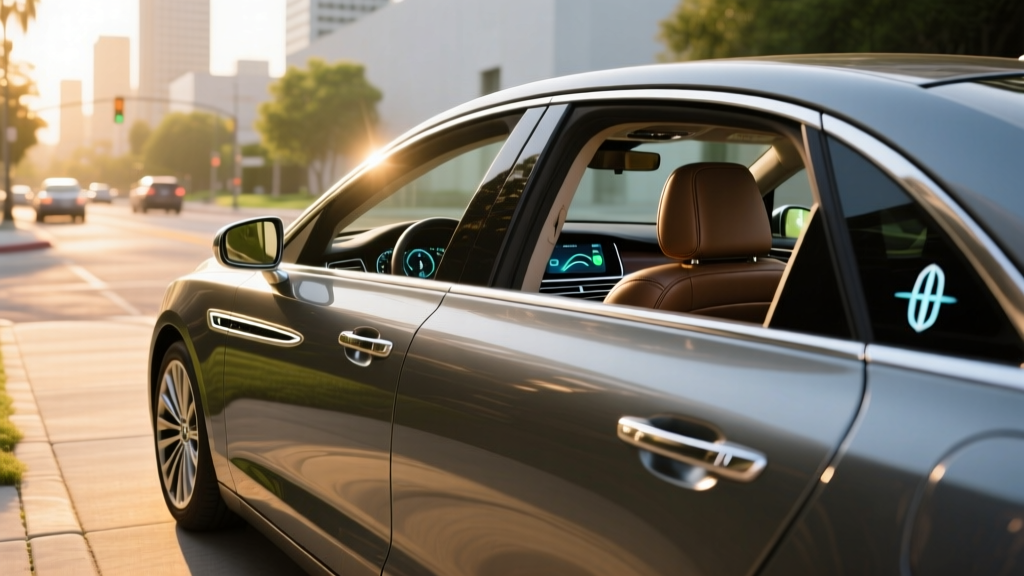
The 2015 Lincoln MKZ Hybrid occupies a specific niche in today's used-car market: a midsize luxury sedan with genuine hybrid fuel savings, no plug required, and Ford's well-proven hybrid powertrain underneath its premium sheet metal. With EPA ratings of 41 MPG city and 39 MPG highway, it remains competitive against newer hybrids more than a decade after its debut. For buyers seeking a comfortable, tech-forward daily driver without the upfront cost of a new electrified vehicle, the MKZ Hybrid warrants serious consideration — provided you understand what a decade-old hybrid battery entails.
2015 Lincoln MKZ Hybrid: Full Specifications
| Specification | Value |
|---|---|
| Powertrain Type | Conventional Hybrid (HEV) — no plug |
| Engine | 2.0L Atkinson-cycle inline-4 |
| Engine Power | 141 hp @ 6,000 rpm |
| Electric Motor Power | 118 hp (88 kW) |
| Combined System Output | 188 hp (net) |
| Transmission | eCVT (planetary gearset, no fixed gears) |
| Hybrid Battery | 1.4 kWh (usable), Lithium-ion |
| EPA Fuel Economy | 41 city / 39 highway / 40 combined MPG |
| Fuel Tank | 13.5 gallons |
| Total Driving Range | ~540 miles (EPA combined) |
| 0-60 mph | ~8.5 seconds |
| Drivetrain | Front-wheel drive |
| Cargo Volume | 11.1 cu ft (trunk) |
| Original MSRP (Base) | $38,995 (2015) |
| Typical Used Price (2026) | $9,000–$14,000 depending on mileage/condition |
Fuel Economy: EPA Ratings vs Real-World MPG
The EPA rates the 2015 MKZ Hybrid at 41 MPG city, 39 MPG highway, and 40 MPG combined, according to fueleconomy.gov. These numbers were class-leading when the car was new, and they hold up well today against competitors like the 2015 Lexus ES 300h (40/39/40) and the Toyota Camry Hybrid of the same era (43/39/41).
Real-World MPG: What Owners Actually See
Conventional hybrids like the MKZ often exceed their EPA city rating in stop-and-go driving because regenerative braking recovers energy that a gas car wastes as heat. In mixed real-world use, owners commonly report:
- City driving: 40–44 MPG (regen braking maximizes efficiency)
- Highway cruising (70+ mph): 35–38 MPG (aerodynamic drag and reduced regen benefit)
- Cold weather (below 35°F): 33–37 MPG combined (engine runs more to heat the cabin and warm the battery)
- Mixed daily commute: 38–42 MPG combined
The MKZ Hybrid's Atkinson-cycle 2.0L engine sacrifices some peak power for thermal efficiency, and the eCVT keeps the engine in its most efficient RPM range. The result is remarkably consistent fuel economy across driving styles — though aggressive acceleration and sustained high-speed driving will push you toward the low-to-mid 30s.
| Vehicle | City MPG | Highway MPG | Combined MPG |
|---|---|---|---|
| 2015 Lincoln MKZ Hybrid | 41 | 39 | 40 |
| 2015 Lexus ES 300h | 40 | 39 | 40 |
| 2015 Toyota Camry Hybrid LE | 43 | 39 | 41 |
| 2015 Ford Fusion Hybrid | 44 | 41 | 42 |
| 2015 Honda Accord Hybrid | 50 | 45 | 47 |
| 2015 Lincoln MKZ (2.0L EcoBoost gas) | 22 | 33 | 26 |
The MKZ Hybrid's 40 MPG combined represents a 54% improvement over the gasoline-only MKZ with the 2.0L EcoBoost engine. That's a meaningful fuel-cost advantage: at $3.50/gallon and 12,000 miles/year, the hybrid saves roughly $1,100 annually compared to the gas MKZ.
Powertrain Deep Dive: How the MKZ Hybrid Works
The 2015 MKZ Hybrid shares its powertrain with the Ford Fusion Hybrid — a 2.0-liter Atkinson-cycle four-cylinder paired with an electric motor integrated into the eCVT transaxle. Combined output is 188 horsepower, routed to the front wheels.
Engine and Motor Details
The Atkinson-cycle engine keeps the intake valve open slightly longer during the compression stroke, reducing pumping losses and improving thermal efficiency at the cost of peak power. The 141 hp engine alone wouldn't excite anyone, but the 118 hp electric motor fills in torque instantly from a stop, giving the MKZ Hybrid responsive off-the-line acceleration that belies its 8.5-second 0-60 time.
The eCVT isn't a traditional belt-and-pulley continuously variable transmission. It's a planetary gearset that seamlessly blends engine and motor power without fixed gear ratios. This design — pioneered by Toyota and licensed widely — has proven exceptionally reliable because it has no clutch packs, bands, or friction materials to wear out.
The Hybrid Battery: Size, Chemistry, and Role
The MKZ Hybrid uses a 1.4 kWh (usable) lithium-ion battery pack located behind the rear seats. This is a small battery by modern standards — a PHEV typically carries 12–20 kWh, and a full EV carries 60–100+ kWh. But the HEV battery doesn't need to be large. Its job is to buffer energy: capturing regenerative braking, smoothing engine load, and enabling brief electric-only motoring at low speeds (typically under 25 mph for short distances).
Because the battery is small and never deeply discharged (the hybrid system keeps state of charge in a narrow band, typically 40–60%), degradation is minimal compared to EVs. The battery experiences shallow charge cycles, which is gentler on lithium-ion chemistry than the deep cycles in an EV.
Battery Longevity, Warranty, and Replacement Cost
How Long Do MKZ Hybrid Batteries Actually Last?
The Ford Fusion Hybrid / Lincoln MKZ Hybrid platform has demonstrated strong battery longevity in real-world use. Fleet data and owner reports suggest:
- Typical lifespan: 150,000–200,000+ miles before significant degradation
- Capacity loss at 150k miles: Often 10–15% (noticeable as slightly reduced electric-only motoring time, but not catastrophic)
- Failure mode: Individual cell imbalance rather than wholesale pack death — repairable by replacing individual modules in some cases
This is one area where the MKZ Hybrid's Ford-sourced powertrain works in its favor. The Fusion Hybrid has been in taxi and rideshare fleets logging 200,000+ miles with original batteries, which is strong evidence of durability.
Battery Replacement Cost
If the battery does fail outside warranty, replacement options in 2026 include:
- New OEM battery (Lincoln dealer): $2,500–$3,500 for the battery pack, plus $500–$800 labor — total approximately $3,000–$4,300
- Remanufactured/reconditioned battery: $1,500–$2,200 installed from hybrid battery specialists
- Individual module replacement: Some independent hybrid shops can replace only the failed cells/modules for $500–$1,000
Given that a well-maintained 2015 MKZ Hybrid might cost $10,000–$13,000 in 2026, a $3,000+ battery replacement represents a significant percentage of the car's value. This is the key financial risk of buying a decade-old hybrid — budget accordingly.
Hybrid vs PHEV vs EV: Which Should You Choose?
The 2015 MKZ Hybrid is a conventional HEV — no plug, no electric-only highway driving, no tax credit. Here's how it compares to the other electrified options in the used market:
| Factor | HEV (MKZ Hybrid) | PHEV (e.g., Fusion Energi) | BEV (e.g., Model S, Leaf) |
|---|---|---|---|
| Plug-in Required? | No | Yes (for EV range) | Yes |
| Electric-Only Range | ~0.5 mi at low speed | 15–25 mi (2015-era) | 80–300+ mi |
| Total Range | ~540 mi | ~500+ mi combined | 80–300+ mi |
| Home Charging Needed? | No | Recommended (120V ok) | Essential (240V ideal) |
| Used Price (2026) | $9k–$14k | $10k–$16k | $12k–$35k+ |
| Battery Replacement Risk | Low ($3k–$4k) | Moderate ($5k–$8k) | High ($8k–$20k+) |
| Federal Tax Credit (Used) | Not eligible | Not eligible (§30D is new-vehicle only) | Up to $4,000 used-EV credit (§25E) if income-eligible |
| Best For | No home charging access; long highway commutes | Short daily commute + home charging + road trips | Home charging + daily driving under 200 mi |
Choose the MKZ Hybrid If:
- You don't have access to home or workplace charging
- Your commute is highway-heavy (where PHEV electric range is less useful)
- You want luxury-car comfort at a sub-$15,000 price point
- You drive 15,000+ miles/year and want consistent fuel savings without lifestyle changes
- You want minimal maintenance complexity — no charging cables, no EV-specific infrastructure
Look Elsewhere If:
- You have a short commute and home charging — a PHEV or EV will save more on fuel
- You want the §25E used clean vehicle credit (up to $4,000) — only BEVs and PHEVs qualify, not conventional hybrids
- You want the latest driver-assistance technology — the 2015 MKZ's safety suite is dated by 2026 standards
- You need all-wheel drive — the MKZ Hybrid was FWD only
Reliability, Safety, and Ownership Costs
The 2015 MKZ Hybrid benefits from sharing its powertrain with the Ford Fusion Hybrid, which has accumulated millions of fleet and consumer miles. The eCVT design, in particular, has proven nearly bulletproof — there are no transmission fluid changes required under normal service, and the planetary gearset has no wear components.
Common Issues to Watch
- 12V auxiliary battery: Like all hybrids, the MKZ has a standard 12V battery that powers electronics. If it dies, the car won't start even though the hybrid battery is full. Replace every 4–5 years proactively.
- Brake actuator recalls: Ford issued recalls for brake system components on 2013–2015 Fusion/MKZ models. Verify recall completion via NHTSA's VIN lookup.
- Coolant intrusion (2.0L engine): Some Ford 2.0L engines of this era have experienced coolant intrusion into cylinders. Check for white exhaust smoke, coolant loss, or misfire codes.
- Infotainment (MyLincoln Touch): The SYNC/MyLincoln Touch system from this era is slow and occasionally unresponsive. Software updates help but don't fully resolve the issue.
Safety Ratings
The 2015 MKZ earned a 5-star overall rating from NHTSA and was an IIHS Top Safety Pick with Good ratings in all crash tests. Standard safety features include front and side airbags, stability control, and a rearview camera. Available features include adaptive cruise control, blind-spot monitoring, and lane-keeping assist — though these are first-generation systems and don't match the capability of 2026-era ADAS.
2015 MKZ Hybrid Trim Levels and Used Pricing
The 2015 MKZ Hybrid came in a single well-equipped trim with several option packages:
| Configuration | 2015 MSRP | 2026 Used Price (est.) |
|---|---|---|
| Base MKZ Hybrid | $38,995 | $9,000–$11,000 |
| With Reserve Package | ~$42,000–$44,000 | $10,500–$13,000 |
| With Technology Package (adaptive cruise, lane-keep) | ~$45,000–$48,000 | $11,500–$14,000 |
| Black Label (top trim, concierge service) | ~$50,000+ | $12,000–$15,000 |
Tax Credit Eligibility
The 2015 Lincoln MKZ Hybrid does not qualify for any federal tax credit. The IRS clean vehicle tax credits (§30D for new vehicles, §25E for used) apply only to plug-in electric vehicles — BEVs and PHEVs with sufficient battery capacity. Conventional hybrids like the MKZ Hybrid have never qualified for the federal credit.
Some states offer their own incentives for hybrid purchases, but these are typically aimed at new vehicles. Check your state's energy or environmental agency for current programs.
Pros and Cons: The Honest Assessment
Pros
- 40 MPG combined is still excellent for a luxury sedan
- Proven, reliable Ford hybrid powertrain with massive fleet mileage data
- Quiet, comfortable ride quality with genuine luxury materials
- eCVT requires no transmission fluid changes
- No charging infrastructure needed — just drive it
- Strong NHTSA/IIHS safety ratings
- Sub-$14,000 entry price for a luxury hybrid
Cons
- Hybrid battery warranty has expired (8-year/100k mile limit reached)
- Battery replacement cost ($3,000–$4,300) is significant vs. car value
- No federal or state tax credit eligibility
- MyLincoln Touch infotainment is dated and frustrating
- FWD only — no AWD option for snow-belt buyers
- Trunk space reduced to 11.1 cu ft due to battery placement
- ADAS features are rudimentary by 2026 standards
- 8.5-second 0-60 is leisurely for a luxury sedan
Frequently Asked Questions
How many MPG does the 2015 Lincoln MKZ Hybrid get?
The EPA rates it at 41 MPG city, 39 MPG highway, and 40 MPG combined. In real-world driving, owners typically see 38–44 MPG depending on conditions. City driving often exceeds the EPA rating thanks to regenerative braking, while sustained highway speeds above 70 mph and cold weather will drop it into the mid-to-low 30s.
Does the 2015 MKZ Hybrid need to be plugged in?
No. This is a conventional hybrid (HEV), not a plug-in hybrid. The battery charges through regenerative braking and the gasoline engine. You fuel it like any other car — just with significantly better mileage.
How far can it drive on electric power alone?
Only about half a mile at very low speeds (under 25 mph) in ideal conditions. The 1.4 kWh battery is too small for meaningful electric-only driving. This is by design — the hybrid system uses the electric motor to assist the engine and capture braking energy, not to replace the engine.
Is the 2015 MKZ Hybrid reliable?
The powertrain is among the most reliable Ford/Lincoln has ever built. The eCVT has no wear components, and the hybrid system has been proven across millions of Fusion Hybrid and Escape Hybrid miles in taxi and consumer use. The main reliability concern for a 2026 buyer is the age of the hybrid battery — at 11 years old, it's past its warranty period and could require replacement.
What does a hybrid battery replacement cost for the MKZ?
A new OEM battery from a Lincoln dealer runs $3,000–$4,300 installed. Remanufactured batteries from hybrid specialists cost $1,500–$2,200 installed. Individual cell/module repairs can be as low as $500–$1,000 if only a few cells have failed.
Does the 2015 MKZ Hybrid qualify for any tax credit?
No. Federal clean vehicle tax credits (§30D for new vehicles, §25E for used vehicles) apply only to plug-in vehicles — battery electric vehicles (BEVs) and plug-in hybrids (PHEVs). Conventional hybrids like the MKZ Hybrid are not eligible for any federal tax incentive. Check your state's programs for any local hybrid incentives.
How does the MKZ Hybrid compare to a new hybrid like the Toyota Camry?
A 2026 Toyota Camry Hybrid achieves around 52 MPG combined and starts at approximately $30,000 — significantly more efficient but also more than double the price of a used 2015 MKZ Hybrid. The Camry also has a full factory warranty, modern safety tech, and current infotainment. The MKZ Hybrid makes sense if your budget is under $15,000 and you value Lincoln's luxury ride quality over cutting-edge efficiency.
Should I buy a 2015 MKZ Hybrid or a used EV like a Nissan Leaf?
It depends on your charging situation. If you have reliable home charging (Level 2, 240V), a used Leaf or similar EV will cost far less per mile to operate and may qualify for the $4,000 §25E used clean vehicle credit. If you lack charging access or regularly drive 300+ miles in a day, the MKZ Hybrid eliminates range and charging concerns entirely — at the cost of higher per-mile fuel expenses.