Quick Verdict: The 2015 Lexus NX 300h at a Glance
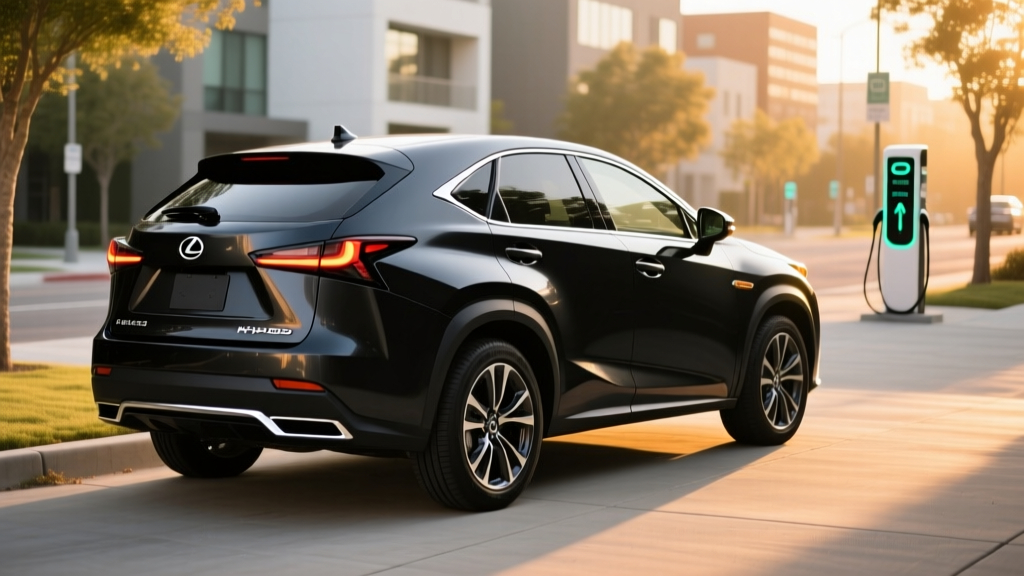
The 2015 Lexus NX 300h is a conventional hybrid (HEV), not a plug-in. It pairs a 2.5-liter Atkinson-cycle four-cylinder engine with two electric motors through Toyota's proven e-CVT powertrain to deliver 194 combined horsepower and an EPA-estimated 33 MPG combined. As a used luxury compact SUV in 2026, it occupies a specific niche: buyers who want premium badging, all-wheel drive, and strong fuel economy without ever plugging in.
There was never a plug-in hybrid (PHEV) version of the first-generation NX. If you're searching for a "2015 NX hybrid" expecting electric-only range or a charging port, you won't find one. The NX 300h is strictly a self-charging hybrid that recovers energy through regenerative braking and the gasoline engine. That distinction matters — and we'll break down exactly what it means for your wallet and daily driving.
| Spec | Value |
|---|---|
| Powertrain | 2.5L I4 Atkinson + 2 electric motors (e-CVT) |
| Combined Horsepower | 194 HP |
| Drivetrain | AWD (E-Four rear electric motor) |
| EPA MPG (City / Hwy / Combined) | 33 / 30 / 33 |
| Hybrid Battery | ~1.6 kWh NiMH (sealed, self-charging) |
| Plug-In / Electric-Only Range | None — HEV only |
| 0-60 mph | ~9.1 seconds |
| Cargo Volume (behind rear seats) | 17.7 cu ft |
| Original MSRP (2015) | ~$39,720 (base AWD) |
| Typical Used Price (2026) | $14,000–$20,000 depending on mileage |
HEV vs PHEV: What the NX 300h Actually Is
Understanding the difference between a conventional hybrid and a plug-in hybrid is essential before evaluating any used hybrid purchase.
| Feature | HEV (NX 300h) | PHEV (e.g., Toyota RAV4 Prime) | BEV (e.g., Tesla Model Y) |
|---|---|---|---|
| Plug-In Required? | No | Yes (Level 1 or 2) | Yes (Level 2 or DC) |
| Battery Size | ~1.6 kWh | ~18.1 kWh | 60–100+ kWh |
| Electric-Only Range | ~1 mile at low speed | 42 miles (RAV4 Prime) | 250–330+ miles |
| Gas Engine | Yes (primary) | Yes (backup) | No |
| Fuel Economy | 33 MPG combined | 94 MPGe / 38 MPG gas-only | N/A (kWh/mi) |
| Federal Tax Credit (New) | None | Up to $7,500 (§30D) | Up to $7,500 (§30D) |
The NX 300h's small nickel-metal hydride (NiMH) battery assists the gasoline engine during acceleration and captures energy during braking. It can propel the vehicle on electric power alone for very short distances at low speeds (roughly under 25 mph), but this is measured in feet and fractions of a mile — not meaningful electric-only range. You will never plug this vehicle in. You fuel it with regular unleaded gasoline and let the hybrid system optimize efficiency automatically.
Fuel Economy: EPA Ratings and Real-World MPG
| Driving Cycle | EPA Rating |
|---|---|
| City | 33 MPG |
| Highway | 30 MPG |
| Combined | 33 MPG |
Source: fueleconomy.gov
The city-highway inversion is characteristic of Toyota's hybrid synergy drive. In stop-and-go traffic, the electric motor handles low-speed propulsion and regenerative braking recaptures energy that a conventional car wastes as heat. On the highway, the gasoline engine carries most of the load with less regenerative opportunity, so efficiency drops slightly.
Real-World MPG: What Owners Actually Report
Real-world fuel economy for the NX 300h tends to cluster around 29–34 MPG combined depending on driving style and climate. Owners doing predominantly city and suburban driving frequently report matching or slightly exceeding the 33 MPG combined EPA figure. Highway-heavy commutes at 75+ mph typically return 28–30 MPG. In cold weather (below 30°F), expect a 2–4 MPG reduction as the engine runs more frequently to maintain cabin heat and battery temperature.
Compared to the gas-only 2015 NX 200t (24 MPG combined EPA, 22 city / 28 highway with AWD), the hybrid saves roughly 3–4 gallons per 1,000 miles driven. At $3.50/gallon and 12,000 miles per year, that translates to approximately $150–$170 in annual fuel savings — meaningful but not transformative. The hybrid's value proposition is refinement and efficiency, not dramatic cost elimination.
Powertrain and Driving Experience
The NX 300h's powertrain is a variant of the system found in the Toyota Camry Hybrid and Lexus ES 300h. The 2.5-liter four-cylinder produces 154 HP on its own, supplemented by a front electric motor (105 kW / 141 HP) and a rear electric motor (50 kW / 67 HP) that provides all-wheel-drive traction. Combined system output is rated at 194 HP.
The e-CVT (electronically controlled continuously variable transmission) is not a belt-driven CVT like those in some competitors. It uses a planetary gearset to blend engine and motor power seamlessly. There are no fixed gears, no shift shock, and no rubber-band sensation. Acceleration is linear but unhurried — the 0-60 mph time of approximately 9.1 seconds places the NX 300h at the slower end of the luxury compact SUV segment. This is a vehicle optimized for efficiency and smoothness, not performance.
The E-Four AWD system engages the rear motor only when additional traction is needed — during hard acceleration, wet conditions, or loose surfaces. Under steady-state cruising, the NX 300h operates primarily as a front-wheel-drive vehicle to minimize parasitic losses. This system has no mechanical driveshaft, reducing weight and drivetrain friction.
Hybrid Battery: Reliability, Lifespan, and Replacement Cost
The most common concern among used hybrid buyers is battery longevity. The 2015 NX 300h uses a sealed NiMH hybrid battery pack rated at approximately 1.6 kWh. This is a mature, well-understood chemistry that Toyota and Lexus have deployed in millions of vehicles since the 1997 Prius.
Battery Warranty Coverage
When new, the 2015 NX 300h's hybrid battery was covered by Lexus's hybrid system warranty: 8 years / 100,000 miles (extended to 10 years / 150,000 miles in California and states that adopted CARB emissions standards). As a 2015 model, factory hybrid battery warranty has expired for most vehicles unless the car has exceptionally low mileage and is registered in a CARB state.
Real-World Battery Longevity
NiMH hybrid batteries in Toyota/Lexus vehicles have demonstrated strong longevity in practice. Many Prius and Camry Hybrid owners report 150,000–200,000+ miles on the original battery pack. The NX 300h's battery is relatively small and is never deeply discharged — the hybrid system maintains the state of charge between roughly 40% and 80%, which significantly reduces degradation stress.
That said, at 11 years old in 2026, some NX 300h battery packs will be approaching end of life. Heat is the primary enemy of NiMH chemistry, so vehicles in hot climates (Arizona, Texas, Florida) may see earlier capacity loss than those in cooler regions.
Battery Replacement Cost
If the hybrid battery does fail, replacement options include:
- New OEM Lexus battery: $3,000–$4,500 installed at a dealership
- Refurbished/remanufactured battery: $1,500–$2,500 installed at an independent hybrid specialist
- Individual cell/module replacement: $500–$1,200 if only specific modules have degraded (requires diagnostic expertise)
Before purchasing a used NX 300h, request a hybrid battery health check from a Lexus dealer or qualified independent shop. A scan tool can read the battery's internal resistance and module voltage balance, providing a reliable indicator of remaining life.
Pricing, Tax Credits, and Ownership Costs
The 2015 NX 300h originally started at approximately $39,720 for the base AWD trim, with well-equipped examples pushing past $45,000 with options like the Luxury Package, navigation, and the F Sport appearance upgrade.
In the 2026 used market, expect to pay:
- $14,000–$16,000: Higher mileage (100,000+), average condition
- $16,000–$18,000: Moderate mileage (60,000–90,000), good condition
- $18,000–$20,000+: Lower mileage (under 60,000), excellent condition, CPO eligible
Tax Credit Eligibility
The 2015 NX 300h does not qualify for the federal §30D clean vehicle credit. That credit applies only to plug-in electric vehicles (PHEVs and BEVs) meeting battery sourcing, MSRP, and buyer income requirements as outlined by the IRS. Conventional hybrids like the NX 300h have not been eligible for a federal purchase incentive since the early Toyota Prius credits expired.
Some states offer modest incentives for used hybrid purchases or for registering efficient vehicles, but these vary by jurisdiction and change frequently. Check your state's energy or DMV website for current programs.
Five-Year Ownership Cost Estimate
Assuming 12,000 miles/year, $3.50/gallon regular unleaded, and no major repairs:
- Fuel: ~$1,275/year (436 gallons × $3.50)
- Insurance: ~$1,400–$1,800/year (varies by profile)
- Maintenance: ~$500–$700/year (Lexus reliability helps; no plug-in system to service)
- Estimated 5-year fuel cost: ~$6,375
Who Should Buy the 2015 NX 300h — And Who Shouldn't
Pros
- 33 MPG combined is excellent for a luxury AWD SUV
- No plug-in infrastructure needed — works anywhere with a gas station
- Lexus build quality, quiet cabin, strong reliability record
- Proven Toyota hybrid powertrain with deep service network
- Smooth, linear power delivery ideal for city and suburban driving
Cons
- Slow acceleration (9.1 sec 0-60) — not a performance SUV
- Small cargo area (17.7 cu ft) vs. competitors
- No electric-only range; cannot reduce tailpipe emissions to zero for short trips
- NiMH battery is aging tech; replacement adds cost at 10+ years
- No federal tax credit; limited state incentives
Decision Framework: Is the NX 300h Right for You?
Choose the 2015 NX 300h if: You want a luxury compact SUV with strong MPG, you lack home charging access, your commute is city/suburban-heavy, and you plan to keep the vehicle 3–5 years without major battery concerns.
Choose a PHEV (e.g., 2023+ RAV4 Prime or Lexus NX 450h+) if: You have home Level 2 charging, want 35–42 miles of electric-only range for daily commuting, and qualify for the §30D federal tax credit on a new purchase.
Choose a BEV (e.g., Tesla Model Y, Hyundai Ioniq 5) if: You want zero tailpipe emissions, have reliable charging access, drive under 300 miles between charges, and want lower per-mile energy costs (~$0.04–$0.06/mi on home electricity vs. ~$0.11/mi for the NX 300h on gas).
How the 2015 NX 300h Compares Today
The first-generation NX 300h was discontinued after the 2021 model year. Lexus replaced it with the current-generation NX 350h (HEV, 36 MPG combined) and NX 450h+ (PHEV, 37 miles electric-only range). If you're considering the 2015 NX 300h as a budget entry, here's how it stacks up against alternatives in the used market:
- 2015–2017 Toyota RAV4 Hybrid: Similar powertrain, more cargo space, lower price (~$12,000–$16,000), but less premium interior.
- 2016–2018 Lexus RX 450h: Larger, more powerful, 30 MPG combined, but significantly more expensive used (~$22,000–$30,000).
- 2017–2019 Honda CR-V Hybrid (if available in your market): Competitive MPG, more modern infotainment, but no luxury badge.
Frequently Asked Questions
How many MPG does the 2015 Lexus NX 300h hybrid get?
The EPA rates the 2015 NX 300h at 33 MPG city, 30 MPG highway, and 33 MPG combined. Real-world results typically range from 29–34 MPG combined depending on driving conditions. City-heavy driving tends to match or slightly exceed the EPA figure thanks to regenerative braking, while sustained highway driving at higher speeds reduces efficiency to around 28–30 MPG.
Can the 2015 NX 300h drive on electric power only?
Only in very limited circumstances. The NX 300h can creep on electric power alone at low speeds (under ~25 mph) for short distances — typically a few hundred feet in a parking lot or driveway. It has no meaningful electric-only range and no plug-in capability. It is a conventional hybrid (HEV), not a plug-in hybrid (PHEV).
Is the 2015 NX 300h reliable, and what does battery replacement cost?
The NX 300h uses Toyota's mature hybrid synergy drive system, which has an extensive reliability track record across millions of vehicles. The NiMH hybrid battery typically lasts 150,000–200,000+ miles. If replacement is needed, expect $3,000–$4,500 for a new OEM battery at a dealer, or $1,500–$2,500 for a refurbished unit at an independent shop. A pre-purchase hybrid health scan is strongly recommended for any 10+ year-old hybrid.
Does the 2015 Lexus NX 300h qualify for any tax credit?
No. The federal §30D clean vehicle credit applies only to plug-in vehicles (PHEVs and BEVs). Conventional hybrids like the NX 300h are not eligible. Some states may offer small incentives for fuel-efficient used vehicles, but these vary by jurisdiction. Check your state's energy office or DMV for current programs.
Hybrid vs PHEV vs EV — which should I choose?
If you lack reliable home charging access and want maximum flexibility with no lifestyle changes, a conventional hybrid like the NX 300h is the pragmatic choice. If you can install a Level 2 home charger and want to drive most daily miles on electricity (with a gas backup for road trips), a PHEV like the current NX 450h+ offers the best of both worlds. If you have charging access, drive under 300 miles daily, and want the lowest per-mile energy cost with zero tailpipe emissions, a full BEV is the most forward-looking option — though it requires a larger upfront investment and charging planning for longer trips.
What maintenance does the NX 300h hybrid system require?
Virtually none beyond standard vehicle maintenance. The hybrid battery is sealed and requires no service. The e-CVT has no belts or fluid changes on a standard interval (Lexus recommends inspection only). Regenerative braking reduces wear on the friction brake pads — many owners report original brake pads lasting 80,000+ miles. Follow Lexus's standard maintenance schedule for oil changes, coolant checks, and tire rotations, and the hybrid system will largely take care of itself.
Sources: U.S. EPA fueleconomy.gov, IRS §30D Clean Vehicle Credits, Lexus USA specifications archive.