Quick Verdict: A Proven Hybrid Hatchback Entering Its Second Decade
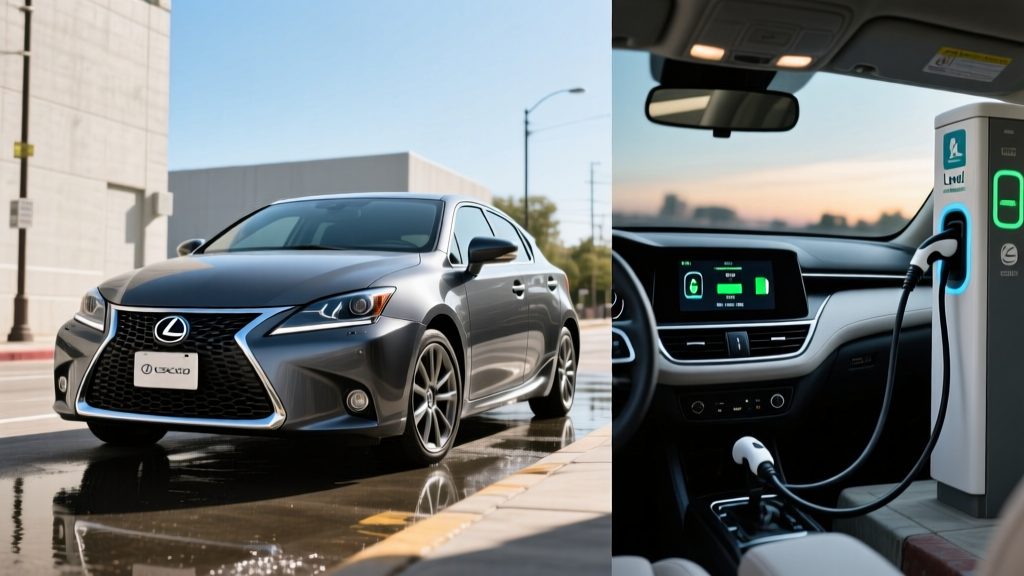
The 2015 Lexus CT 200h occupies a specific niche in the used-hybrid market: a premium compact hatchback that sips fuel, carries the Toyota Hybrid Synergy Drive pedigree, and costs a fraction of its original $32,000+ MSRP. Built on the same powertrain architecture as the Prius, the CT 200h delivers 42 MPG combined in EPA testing — and frequently beats that figure in real-world city driving thanks to aggressive regenerative braking and stop-start efficiency.
As of 2026, well-maintained examples trade between $11,000 and $17,000 depending on mileage and condition. For buyers who want Lexus build quality without EV charging infrastructure requirements, the CT 200h remains one of the most rational used-hybrid purchases available. But there are battery-age considerations, technology gaps, and performance limitations you need to understand before signing a check.
| Spec | Value |
|---|---|
| Powertrain | 1.8L 4-cyl Atkinson-cycle + electric motor (HEV) |
| Combined Horsepower | 134 hp (net system output) |
| Engine Output | 98 hp @ 5,200 rpm / 105 lb-ft torque |
| Electric Motor Output | 80 hp (60 kW) / 153 lb-ft torque |
| Transmission | ECVT (planetary gearset, not a belt-driven CVT) |
| Hybrid Battery | 1.3 kWh (usable ~0.9 kWh), NiMH, 168 cells |
| EPA MPG (City / Hwy / Combined) | 43 / 40 / 42 |
| 0–60 mph | 9.8 seconds |
| Drivetrain | Front-wheel drive |
| Cargo Volume | 14.3 cu ft (behind rear seats) |
| Curb Weight | ~3,130 lbs |
| Original MSRP (Base) | $32,050 (2015) |
| Used Price Range (2026) | $11,000 – $17,000 |
HEV vs PHEV: What the CT 200h Actually Is
Before evaluating the CT 200h, it's essential to understand where it sits in the electrification spectrum. The 2015 Lexus CT 200h is a conventional hybrid electric vehicle (HEV), not a plug-in hybrid (PHEV) and not a battery electric vehicle (BEV).
| Feature | HEV (CT 200h) | PHEV (e.g., Prius Prime) | BEV (e.g., Model 3) |
|---|---|---|---|
| Plugs in? | No — self-charging via regen + engine | Yes — Level 1/2 AC | Yes — Level 1/2/DC |
| Electric-only range | ~1 mile at low speed | 25–44 miles (model-dependent) | 250–360+ miles |
| Battery size | 1.3 kWh (NiMH) | 13.6–18.1 kWh (Li-ion) | 50–82 kWh (Li-ion) |
| Gas engine? | Yes — primary propulsion | Yes — backup/extender | No |
| Tailpipe emissions | Low (not zero) | Low (zero in EV mode) | Zero (tailpipe) |
| Home charging needed? | No | Recommended for EV range | Essential |
The CT 200h's 1.3 kWh nickel-metal hydride (NiMH) battery is charged entirely through regenerative braking and the gasoline engine. You never plug it in. The electric motor assists the engine during acceleration and can propel the car solo at very low speeds (typically under 25 mph for less than a mile), but this is not meaningful "electric-only range" in the way a PHEV or BEV delivers it.
What this means practically: If you want electric-only commuting without ever visiting a gas station, the CT 200h won't deliver that. If you want a car that requires zero behavior change from a gas vehicle but cuts your fuel consumption nearly in half, this is exactly what the CT 200h does.
Fuel Economy: EPA Numbers vs Real-World MPG
The EPA rates the 2015 Lexus CT 200h at 43 city / 40 highway / 42 combined MPG. These figures come from fueleconomy.gov and represent standardized laboratory testing.
| Driving Cycle | EPA MPG | Real-World Expectation |
|---|---|---|
| City | 43 MPG | 44–48 MPG (hybrids excel in stop-and-go) |
| Highway | 40 MPG | 37–40 MPG (aero drag + less regen benefit) |
| Combined | 42 MPG | 40–45 MPG (varies by driving mix) |
| Cold weather (below 32°F) | — | 35–39 MPG (engine runs more for cabin heat) |
Real-world context from owner data: Hybrid vehicles consistently exceed their EPA city ratings in actual urban driving because regenerative braking recaptures energy that conventional cars waste as heat. The CT 200h's city MPG advantage is genuine — many owners report 45+ MPG on commute routes heavy with traffic lights and congestion.
Highway driving tells a different story. At sustained 70–80 mph speeds, the electric motor contributes less, aerodynamic drag dominates, and the 1.8L Atkinson-cycle engine operates closer to its efficiency ceiling. Expect 37–40 MPG on long highway trips. This is still excellent, but the city/highway split is inverted compared to gas-only cars (which typically get higher highway MPG).
Cold-weather penalty: In sub-freezing temperatures, the gasoline engine runs more frequently to provide cabin heat and maintain battery temperature. Owners in northern climates report a 5–8 MPG drop in winter, landing around 35–38 MPG combined. This is normal hybrid behavior, not a defect.
Powertrain Deep Dive: The Toyota Hybrid Synergy Drive
The CT 200h uses the third-generation Toyota Hybrid Synergy Drive (THS-III), the same system found in the 2010–2015 Prius. This is a series-parallel full hybrid system, meaning the car can operate on the engine alone, the electric motor alone, or both simultaneously, with a planetary gearset (the ECVT) seamlessly blending power sources.
Engine: The 2ZR-FXE is a 1.8-liter inline-4 running the Atkinson cycle, which delays intake valve closure to improve thermal efficiency at the cost of peak power. It produces 98 hp and 105 lb-ft of torque. This is not a performance engine — it's optimized for fuel efficiency, and it shows in the 9.8-second 0–60 time.
Electric motor: The permanent-magnet synchronous motor generates 80 hp (60 kW) and 153 lb-ft of torque. Because electric torque is available from zero RPM, the motor fills in the low-end gaps the Atkinson-cycle engine leaves, providing responsive initial acceleration from stops.
Net system output: Combined, the system delivers 134 hp. Note that this is not a simple sum of engine + motor peak outputs — the power curves don't align at their peaks, and the planetary gearset manages the blend. The result is adequate for city merging and suburban driving but noticeably leisurely on highway on-ramps and passing situations.
Driving modes: The CT 200h offers four selectable modes:
- Normal: Default balance of efficiency and response
- Eco: Softens throttle response, reduces A/C load, maximizes MPG
- EV Mode: Forces electric-only at very low speeds (under ~25 mph, short distances, low battery demand) — useful for creeping through parking garages
- Sport: Sharpens throttle, increases steering weight, raises the RPM at which the engine engages — marginal performance improvement, noticeable fuel consumption increase
Battery Health, Warranty, and Replacement Costs
For any used hybrid buyer in 2026, battery condition is the single most important variable. The 2015 CT 200h's NiMH hybrid battery is now 11 years old, and while Toyota/Lexus hybrid batteries are among the most durable in the industry, age and heat are the primary degradation factors.
Hybrid Battery Warranty & Lifespan
- Original warranty: 8 years / 100,000 miles (10 years / 150,000 miles in CARB states: CA, CT, ME, MD, MA, NJ, NY, OR, RI, VT, WA, and others adopting CARB standards)
- Warranty status in 2026: Expired for virtually all 2015 CT 200h vehicles unless under 100k miles AND in a CARB state with the 10-year provision
- Typical battery lifespan: 12–15 years or 150,000–200,000+ miles with proper use
- Expected degradation at 11 years: 15–25% capacity loss is normal; the car remains fully drivable but may show slightly reduced EV-mode duration and marginally lower MPG
Battery replacement cost (2026):
- New OEM battery (Lexus dealer): $2,500 – $3,500 installed
- Refurbished/remanufactured battery: $1,200 – $2,000 installed (independent hybrid shops)
- Used/salvage battery: $500 – $900 (risky — unknown remaining life)
- Individual cell/module replacement: $50 – $150 per module (168 cells in 28 modules); viable if only 1–2 modules have failed, identified by a scan tool reading individual block voltages
How to check battery health before buying: Request a hybrid battery health report from a Toyota/Lexus dealer or an independent hybrid specialist. This reads individual module voltages — healthy batteries show all modules within 0.2V of each other. A spread greater than 0.3V indicates weak modules that may trigger a check-engine light (P0A80 or similar) within months. Apps like Dr. Prius paired with an OBD-II dongle can perform a similar test for under $30.
Signs of a failing hybrid battery:
- Check engine light with hybrid system codes
- Rapid state-of-charge swings (battery meter jumping from full to near-empty)
- Engine running constantly, even at stops
- Noticeable MPG drop (below 35 combined in normal conditions)
- Reduced regenerative braking feel
Reliability Record and Common Issues
The CT 200h benefits from one of the most proven hybrid powertrains ever built. The THS-III system has been in millions of Prius vehicles since 2009, and its failure modes are well-documented and generally inexpensive to address compared to conventional powertrain failures.
Strong reliability areas:
- Hybrid battery: NiMH chemistry is extremely stable; most failures occur after 150k+ miles and are often single-module issues
- ECVT transmission: The planetary gearset has no belts, clutches, or bands to wear — failures are rare and typically related to fluid neglect
- Inverter/cooling system: The inverter cooling pump was subject to a recall on earlier model years; verify recall completion on any 2015 example
- Engine (2ZR-FXE): Timing chain (not belt), simple valvetrain, low-stress Atkinson cycle — 200,000+ mile engines are routine with basic maintenance
Known issues to inspect:
- 12V auxiliary battery: Located in the rear cargo area; AGM type, ~$200 replacement. If the car won't start or shows hybrid system errors, check this first — a dead 12V battery prevents the hybrid system from booting
- Brake actuator assembly: The electronically controlled brake system (ECB) can develop faults after 100k+ miles; replacement is $1,200–$1,800. Listen for unusual grinding or a firm pedal that doesn't modulate smoothly
- Water pump (electric): The engine's electric water pump can fail silently; verify coolant circulation by checking for warm air from the heater at idle
- EGR valve and intake carbon buildup: The Atkinson-cycle engine recirculates exhaust gas, which can clog the EGR valve and intake ports over 100k+ miles, causing rough idle and misfires. An EGR cleaning (~$200–$400) is preventive maintenance worth performing
Driving Experience, Interior, and Technology
The CT 200h was marketed as a sporty premium hatchback, but the driving reality is closer to a well-appointed Prius with a Lexus badge. The 134 hp combined output and 3,130-lb curb weight produce a 0–60 time of 9.8 seconds — adequate for daily driving but slow by 2026 standards. Highway passing requires planning, and the ECVT's characteristic drone under hard acceleration is a constant reminder that this powertrain prioritizes efficiency over excitement.
Ride and handling: The CT 200h sits on a shortened MC platform (shared with the Toyota Corolla/Matrix of its era). The suspension is tuned firmly for a compact hybrid, and the low center of gravity from the rear-mounted battery contributes to composed cornering. However, road noise is noticeable at highway speeds, and the ride quality falls short of the Lexus ES or RX in isolation.
Interior quality: This is where the Lexus badge earns its premium. Soft-touch materials, NuLuxe (synthetic leather) or optional genuine leather seats, and tight panel gaps distinguish the CT 200h from its Toyota siblings. The dashboard layout is functional if dated — a 7-inch infotainment screen (non-touch, controlled by a console-mounted Remote Touch mouse-style controller) handles navigation, audio, and vehicle settings. Bluetooth and USB connectivity are standard; Apple CarPlay and Android Auto are not available on the 2015 model year.
Cargo practicality: 14.3 cubic feet behind the rear seats is modest for a hatchback — the hybrid battery placement under the cargo floor limits depth. Folding the 60/40 rear seat opens up roughly 35 cubic feet, sufficient for grocery runs and weekend luggage but not competitive with compact crossovers.
Safety: The 2015 CT 200h earned an IIHS Top Safety Pick designation with Good ratings in all crash tests. Standard safety equipment includes 8 airbags, stability control, and whiplash-reducing front seats. The Lexus Safety System+ suite (pre-collision, lane departure alert, adaptive cruise) was not available on the 2015 CT 200h — these features arrived in later model years on other Lexus models.
Pricing, Value, and Tax Credit Reality
As a used vehicle in 2026, the 2015 CT 200h is no longer eligible for the federal §30D new clean vehicle tax credit — that credit applies only to new vehicle purchases and has MSRP, income, and battery-sourcing requirements. The CT 200h was never eligible for the full $7,500 credit during its production run, as the credit structure was different pre-2023 and Toyota had already exceeded its manufacturer cap.
Used EV tax credit (§25E): The Inflation Reduction Act created a used clean vehicle credit of up to $4,000 (30% of sale price, capped at $4,000) for vehicles purchased from a dealer for under $25,000. However, this credit applies to qualified plug-in EVs and fuel cell vehicles. The CT 200h, as a conventional HEV that does not plug in, does not qualify for the §25E used credit. Neither does it qualify for any current federal hybrid-specific incentive — those programs have largely been phased out in favor of PHEV and BEV incentives.
Used pricing in 2026:
- 60,000–80,000 miles, clean title: $14,000 – $17,000
- 80,000–120,000 miles: $11,500 – $14,500
- 120,000+ miles or cosmetic issues: $8,500 – $11,500
- Low-mileage examples (under 50k): $16,000 – $19,000 (collector-condition premium)
5-year ownership cost estimate (2026, 12,000 miles/year):
- Fuel: ~$950/year at 42 MPG and $3.30/gallon = ~$4,750 over 5 years
- Insurance: ~$1,100–$1,400/year = ~$6,250 over 5 years
- Maintenance: ~$400–$600/year (oil changes, cabin filters, brake pads last 80k+ miles due to regen) = ~$2,500 over 5 years
- Potential battery replacement: Budget $1,500–$2,500 once during ownership if the original battery hasn't been replaced
- Estimated 5-year total (excluding purchase price): ~$13,500 – $16,000
Who Should Buy the 2015 CT 200h — and Who Shouldn't
Pros
- 42 MPG combined EPA — often exceeded in city driving
- Proven Toyota hybrid powertrain with massive service network
- Lexus build quality and interior materials at a used Toyota price
- No plug-in charging required — zero infrastructure dependency
- Low maintenance costs (brakes last 80k+ miles, no timing belt)
- Strong reliability record; 200k+ mile examples are common
- Hatchback versatility in a compact footprint
Cons
- 9.8-second 0–60 is slow even by compact standards
- Hybrid battery is 11 years old — replacement is likely within 3–5 years
- No Apple CarPlay / Android Auto
- No advanced driver-assist features (no adaptive cruise, no lane-keep)
- Cargo space (14.3 cu ft) is tight for a hatchback
- Remote Touch infotainment controller is widely disliked
- No federal tax credits available (HEV, not PHEV or BEV)
- Highway MPG drops below EPA sticker at sustained 75+ mph speeds
Choose the 2015 CT 200h if:
- You want maximum fuel efficiency without changing your refueling habits
- You lack access to home or workplace charging (apartment, street parking)
- Your commute is city-heavy with frequent stops
- You value Lexus reliability and want to minimize maintenance surprises
- Your budget is $12,000–$17,000 and you want a premium-badge hatchback
Look elsewhere if:
- You want electric-only commuting — consider a used Chevy Volt (PHEV, ~38 miles electric) or Prius Prime
- You want zero tailpipe emissions — a used Nissan Leaf or Chevy Bolt EV fits that goal
- Performance matters — the Ford Fusion Hybrid (195 hp) or a used Tesla Model 3 delivers meaningfully quicker acceleration
- You need cargo space — a Toyota RAV4 Hybrid (used, 2016+) offers 38 cu ft and 32–34 MPG
- You want modern safety tech — look at 2018+ models with Toyota Safety Sense or Lexus Safety System+
Frequently Asked Questions
How many MPG does the 2015 Lexus CT 200h get?
The EPA rates the 2015 CT 200h at 43 city / 40 highway / 42 combined MPG. In real-world city driving, many owners report 44–48 MPG thanks to regenerative braking. Highway driving at 70–80 mph typically returns 37–40 MPG. Cold weather can drop combined MPG to 35–38.
Does the 2015 Lexus CT 200h plug in?
No. The CT 200h is a conventional hybrid (HEV), not a plug-in hybrid (PHEV). The battery charges through regenerative braking and the gasoline engine. You fuel it exclusively at gas stations — there is no charging port and no electric-only commuting range beyond a few hundred yards at very low speeds.
How far can the CT 200h go on electric only?
Effectively less than 1 mile, and only at speeds under ~25 mph with light throttle input and sufficient battery charge. The EV Mode button forces electric-only operation in limited conditions (parking lots, residential streets), but the 1.3 kWh NiMH battery simply doesn't store enough energy for meaningful electric driving. If electric-only range is your goal, you need a PHEV or BEV.
Is the 2015 CT 200h reliable?
Yes. The CT 200h uses the Toyota THS-III hybrid system, which has been installed in millions of vehicles and has one of the strongest reliability records in the automotive industry. The engine, ECVT transmission, and hybrid electronics are proven to reach 200,000+ miles with basic maintenance. The primary age-related expense is hybrid battery degradation, which is manageable and repairable.
What does it cost to replace the hybrid battery?
A new OEM Lexus hybrid battery costs $2,500–$3,500 installed at a dealer. Refurbished batteries from independent hybrid specialists run $1,200–$2,000 installed. If only individual modules have failed, targeted module replacement can cost $200–$500. Most 2015 CT 200h batteries still have usable life remaining in 2026, but budgeting for replacement within 3–5 years is prudent.
Does the 2015 Lexus CT 200h qualify for any tax credit?
No. As a conventional hybrid (HEV), the CT 200h does not qualify for the federal §30D new clean vehicle credit or the §25E used clean vehicle credit. These credits require plug-in capability (PHEV or BEV). Some states historically offered hybrid-specific rebates, but most have been discontinued or redirected to plug-in vehicles. Check your state's current incentive programs at the Alternative Fuels Data Center.
HEV vs PHEV vs EV — which should I choose?
It depends on your charging access and driving pattern. Choose HEV (CT 200h) if you can't plug in at home and want maximum MPG with zero behavior change. Choose PHEV (Prius Prime, RAV4 Prime) if you can install a Level 2 charger and want 25–44 miles of electric commuting with a gas backup for road trips. Choose BEV (Model 3, Bolt, Ioniq 5) if you have reliable home charging, drive under 250 miles daily, and want zero tailpipe emissions and the lowest per-mile energy cost.
What should I check before buying a used 2015 CT 200h?
Prioritize these inspections: (1) Hybrid battery health report showing module voltage spread under 0.2V. (2) Verify the 12V auxiliary battery is under 3 years old. (3) Check for the inverter cooling pump recall completion. (4) Inspect the EGR valve for clogging if the car has over 100k miles. (5) Confirm brake actuator operation (smooth pedal modulation, no grinding). (6) Pull a CarFax for accident history and maintenance records.
Sources: EPA fuel economy data from fueleconomy.gov; federal tax credit rules from IRS.gov §30D; state incentive lookup via Alternative Fuels Data Center.