Quick Verdict: A Proven Efficiency Bargain on the Used Market
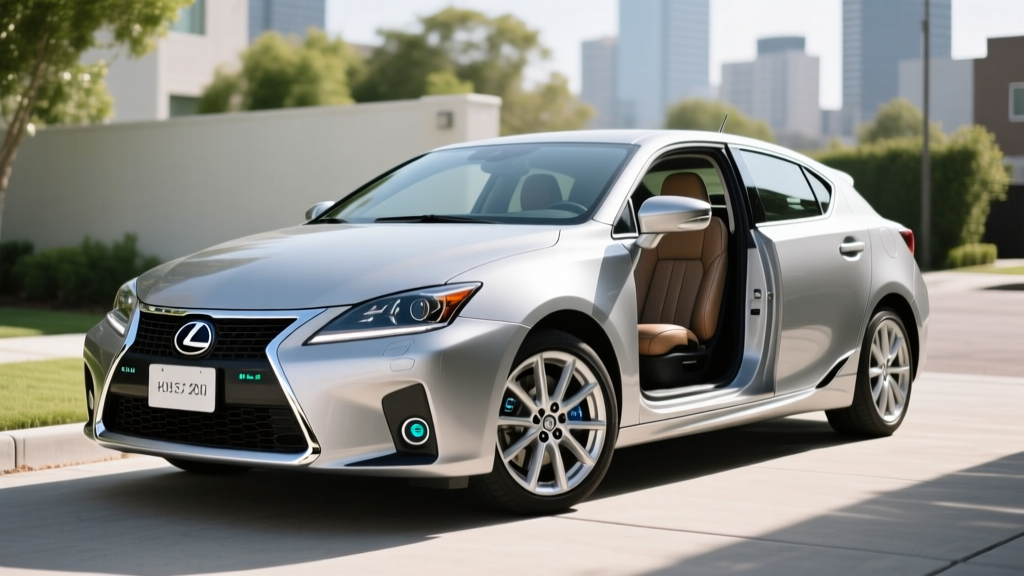
The 2015 Lexus CT 200h hybrid hatchback occupies a specific niche in 2026: it's one of the most affordable entry points into Lexus reliability paired with Toyota's fourth-generation Hybrid Synergy Drive. Discontinued in the U.S. after the 2017 model year, the CT 200h remains a popular used purchase for commuters who want premium build quality without premium fuel bills. At current used-market prices ranging from roughly $11,000 to $18,000 depending on mileage and condition, it undercuts most new subcompact crossovers while delivering 42 MPG combined on the EPA cycle.
But the CT 200h is not without compromises. Its 134 combined horsepower makes it one of the slowest vehicles in the Lexus lineup, cargo space is tight at 14.3 cubic feet, and the nickel-metal hydride (NiMH) traction battery is now aging past the decade mark. This guide covers everything a 2026 buyer needs to know before signing the paperwork.
2015 Lexus CT 200h Specifications at a Glance
| Specification | Value |
|---|---|
| Powertrain | 1.8L 4-cyl Atkinson-cycle + electric motor (HEV) |
| Combined Horsepower | 134 hp (net system output) |
| Gasoline Engine Output | 98 hp @ 5,200 rpm / 105 lb-ft torque |
| Electric Motor Output | 80 hp / 153 lb-ft torque |
| Transmission | ECVT (electronically controlled continuously variable) |
| Drivetrain | Front-wheel drive |
| Traction Battery | NiMH, ~1.3 kWh (nominal) |
| EPA Fuel Economy | 42 MPG combined (43 city / 40 highway) |
| Fuel Tank Capacity | 10.6 gallons |
| Total Driving Range | ~445 miles (EPA estimate) |
| 0–60 mph | 9.8 seconds |
| Cargo Volume | 14.3 cu ft (rear seats up) / 37.4 cu ft (folded) |
| Curb Weight | ~3,130 lbs |
| Original MSRP (2015) | $31,250 (base) – $37,000+ (loaded) |
| 2026 Used Price Range | ~$11,000 – $18,000 |
Fuel Economy: EPA Numbers vs. Real-World MPG
The EPA rates the 2015 CT 200h at 43 MPG city, 40 MPG highway, and 42 MPG combined. These figures come from the U.S. Department of Energy's fueleconomy.gov database, which remains the authoritative source for standardized fuel-economy testing.
| Driving Scenario | EPA Estimate | Real-World Expectation |
|---|---|---|
| City / Stop-and-Go | 43 MPG | 44–48 MPG (regenerative braking excels here) |
| Highway (70+ mph) | 40 MPG | 36–39 MPG (aero drag, less regen benefit) |
| Combined (mixed) | 42 MPG | 39–44 MPG |
| Cold Weather (below 35°F) | Not rated | 34–38 MPG (engine runs more for cabin heat) |
Like most Toyota/Lexus hybrids, the CT 200h tends to exceed its EPA city rating in real-world stop-and-go driving. The hybrid system's ability to shut off the gasoline engine at stops, recapture energy during braking, and launch on electric torque alone makes city commuting its strongest suit. Highway driving is where the car loses ground — the 1.8-liter Atkinson-cycle engine lacks the power to maintain high speeds without running continuously, and aerodynamic drag penalizes efficiency above 70 mph.
In cold weather, expect a 10–15% drop in fuel economy. The gasoline engine must run more frequently to provide cabin heat (the CT 200h uses a conventional heater core, not a heat pump), and the NiMH battery operates less efficiently at low temperatures.
HEV vs. PHEV vs. EV: Where Does the CT 200h Fit?
The 2015 Lexus CT 200h is a conventional hybrid electric vehicle (HEV). It cannot be plugged in. The small 1.3 kWh NiMH battery charges exclusively through regenerative braking and the gasoline engine. There is no electric-only driving mode beyond very low-speed, short-distance creep (roughly 1 mile at under 25 mph in EV mode under ideal conditions).
HEV vs. PHEV vs. BEV — Key Distinctions
| Feature | HEV (CT 200h) | PHEV (e.g., Prius Prime) | BEV (e.g., Model 3) |
|---|---|---|---|
| Plug-in Charging | No | Yes | Yes |
| Electric-Only Range | ~1 mi (low speed) | 25–44 mi (typical) | 250–360 mi |
| Battery Size | ~1.3 kWh | 10–18 kWh | 50–100 kWh |
| Gasoline Engine | Yes (always available) | Yes (backup) | No |
| Federal Tax Credit (new) | None | Up to $7,500 (§30D) | Up to $7,500 (§30D) |
| Home Charging Needed | No | Recommended | Essential |
Who should choose the CT 200h (HEV)? Buyers who want maximum fuel efficiency with zero lifestyle change — no charging cables, no outlet installation, no range planning. You fuel it like any gas car and simply get far more miles per gallon.
Who should look at a PHEV instead? Drivers with short commutes (under 30 miles round-trip) and access to home or workplace charging. A PHEV like the current Toyota Prius Prime (44 miles electric-only) lets you commute on electricity alone while retaining a gas engine for road trips.
Who should go full BEV? Buyers with reliable home Level 2 charging, mostly predictable daily driving under 200 miles, and a willingness to plan around DC fast charging on road trips.
Hybrid Battery Health, Warranty, and Replacement Cost
Battery Warranty & Lifespan
Original Warranty: Lexus covered the 2015 CT 200h hybrid battery for 8 years / 100,000 miles (extended to 10 years / 150,000 miles in California Air Resources Board states and states that adopted CARB standards).
Current Status (2026): Most 2015 CT 200h vehicles have aged out of the standard 8-year warranty. However, examples registered in CARB states (CA, CT, ME, MD, MA, NJ, NY, OR, RI, VT, WA, and others) may still carry coverage through 2025 at up to 150,000 miles — verify with a Lexus dealer using the VIN.
Expected Lifespan: Toyota/Lexus NiMH hybrid batteries commonly last 150,000–200,000 miles before significant degradation. Many Prius and CT 200h owners report original batteries still functioning beyond 200,000 miles with moderate capacity loss.
Battery Replacement Cost
If the NiMH traction battery fails outside warranty, here's what to expect in 2026:
- New OEM battery (Lexus dealer): $2,500–$3,500 including labor
- Refurbished/remanufactured battery: $1,200–$2,000 including labor
- Individual module replacement (specialist shops): $500–$1,000 if only a few cells are degraded
The CT 200h shares its hybrid powertrain with the Toyota Prius (third generation), which means parts availability is excellent and independent hybrid specialists are widespread. A full battery replacement is rarely needed — more commonly, one or two modules degrade and can be swapped individually.
Pre-Purchase Battery Health Check
Before buying a used 2015 CT 200h, request a hybrid battery health check from a Lexus dealer or qualified hybrid technician. This diagnostic reads individual module voltages and internal resistance to identify weak cells. A healthy battery should show module voltages within 0.2V of each other at a given state of charge. Also check for the hybrid system warning light on the dashboard during a cold start — its illumination suggests battery or inverter issues.
Powertrain and Driving Experience
The CT 200h pairs a 1.8-liter Atkinson-cycle four-cylinder engine (98 hp) with an 80 hp electric motor, delivering a net system output of 134 horsepower. Power flows through an ECVT — Toyota's planetary-gear power-split device that seamlessly blends engine and motor output. There are no fixed gear ratios or shift points.
The result is smooth, linear acceleration that feels adequate around town but strained during highway merging. The 0–60 mph time of 9.8 seconds was leisurely in 2015 and feels more so in 2026, when many competing compact hatchbacks and EVs hit 60 in the 6–8 second range.
Driving modes include Normal, Eco, Sport, and EV. Eco mode dulls throttle response and adjusts climate control to maximize efficiency. Sport mode sharpens throttle mapping and adds steering weight, but cannot mask the fundamental power deficit. EV mode allows electric-only driving at very low speeds for roughly one mile — useful for creeping through a parking garage, but not a practical commuting mode.
Ride quality reflects the CT 200h's platform (shared with the Toyota Prius and Scion iM/Corolla iM). The suspension is firm, and road noise is noticeable at highway speeds — an area where the CT 200h falls short of the refinement expected in a Lexus. The F Sport package (available on some trims) adds sport-tuned suspension, 17-inch wheels, and cosmetic upgrades but does not add power.
Interior, Technology, and Practicality
The 2015 CT 200h interior uses high-quality soft-touch materials, real aluminum trim on higher trims, and Lexus's signature perforated leather (NuLuxe synthetic or genuine, depending on trim). The cabin is quiet at low speeds and the seats are comfortable for long commutes.
Technology is dated by 2026 standards:
- Infotainment: 7-inch display with Lexus Remote Touch controller (the joystick-like mouse interface). No Apple CarPlay or Android Auto — these were not offered until later Lexus models.
- Audio: 6-speaker standard; 10-speaker Mark Levinson premium system available.
- Safety: Standard 8 airbags, Stability Control, ABS. Available Pre-Collision System with adaptive cruise control on the Premium package.
- Rear camera: Standard on all 2015 trims (federally mandated from 2018, but Lexus included it earlier).
- Bluetooth: Standard for phone and audio streaming.
Cargo space is the CT 200h's most practical limitation. At 14.3 cubic feet behind the rear seats, it trails the Prius (21.6 cu ft) and most modern compact crossovers. Folding the 60/40 rear seats opens up 37.4 cubic feet, but the load floor isn't flat due to the hybrid battery placement beneath the rear seat.
Pricing, Tax Credits, and Total Cost of Ownership
Used Market Pricing (2026)
| Condition / Mileage | Price Range |
|---|---|
| Excellent, under 60k miles | $15,000 – $18,000 |
| Good, 60k–100k miles | $12,500 – $15,500 |
| Fair, 100k–150k miles | $11,000 – $13,000 |
| High mileage, 150k+ miles | $8,500 – $11,000 |
Tax Credit Eligibility
As a conventional hybrid (HEV), the 2015 Lexus CT 200h does not qualify for the federal §30D clean vehicle tax credit, which is reserved for plug-in electric vehicles (BEVs and PHEVs) meeting battery-sourcing, MSRP, and buyer income requirements under current IRS rules. The hybrid-specific tax incentives that existed under the Energy Policy Act of 2005 expired for Toyota/Lexus vehicles in 2010 after the manufacturer hit the 60,000-unit cap.
Some states offer modest incentives for used hybrid purchases or registration, but these vary by jurisdiction. Check your state's department of revenue or energy office for current programs.
Five-Year Ownership Cost Estimate
| Category | Estimated Cost |
|---|---|
| Purchase Price (avg, good condition) | $14,000 |
| Fuel (42 MPG, $3.50/gal avg) | $5,000 |
| Insurance (national avg, good driver) | $5,500 – $7,000 |
| Maintenance (oil, brakes, tires, fluids) | $2,500 – $3,500 |
| Potential Hybrid Battery Reserve | $0 – $2,500 |
| Total (5 years) | $27,000 – $29,500 |
For comparison, a new 2026 compact gas crossover averaging 28 MPG would cost roughly $6,800 in fuel alone over the same period. The CT 200h saves approximately $1,800–$2,000 in fuel over five years compared to a typical gas-only compact.
Reliability and Common Issues
The 2015 CT 200h benefits from one of the most thoroughly proven hybrid powertrains ever built. The third-generation Prius/CT 200h Hybrid Synergy Drive has accumulated hundreds of billions of real-world miles across the Toyota and Lexus fleet. Major reliability concerns are rare, but buyers should watch for:
- Hybrid battery degradation: As discussed above. More likely at high mileage and in hot climates (AZ, TX, FL).
- Hybrid inverter coolant pump: A known wear item on third-gen systems. Replacement runs $300–$500. Check for inverter coolant flow by inspecting the inverter coolant reservoir (under the hood) for turbulence when the car is in Ready mode.
- EGR (Exhaust Gas Recirculation) valve clogging: Common on the 2ZR-FXE engine at 100,000+ miles. Symptoms include rough idle and check-engine light. Cleaning or replacement costs $200–$400.
- Brake actuator: The regenerative braking system uses an electro-hydraulic actuator that can fail at high mileage. Replacement is expensive ($1,200–$1,800). Test for unusual brake pedal feel or a brake-system warning light.
- 12V auxiliary battery: Located in the rear cargo area. Like any car, it needs replacement every 4–6 years. A weak 12V battery can prevent the hybrid system from booting, even if the traction battery is healthy.
Overall, the CT 200h consistently earns strong reliability scores from owner surveys and is widely regarded as one of the lowest-risk used luxury vehicles to own. The NHTSA rated the 2015 CT 200h with an overall 4-star safety rating (out of 5).
Pros and Cons at a Glance
Pros
- 42 MPG combined — excellent real-world city efficiency
- Lexus build quality and interior materials
- Proven, widely serviced Toyota hybrid powertrain
- No plug-in charging required — zero lifestyle change
- Affordable used entry to luxury hatchback segment
- Strong parts availability (shared with Prius)
- Low annual maintenance costs for a luxury brand
Cons
- Slow acceleration (9.8 sec 0–60) — underpowered for highway merging
- Dated infotainment — no CarPlay, Android Auto, or touchscreen
- Small cargo area (14.3 cu ft) for a hatchback
- Firm ride and noticeable road noise at highway speeds
- NiMH battery aging — potential $1,500–$3,000 replacement cost
- No federal tax credit (HEV, not PHEV or BEV)
- Rear seat space is tight for taller passengers
Frequently Asked Questions
How many MPG does the 2015 Lexus CT 200h get?
The EPA rates the 2015 CT 200h at 43 MPG city, 40 MPG highway, and 42 MPG combined. In real-world driving, expect 44–48 MPG in city traffic (where regenerative braking shines) and 36–39 MPG at sustained highway speeds above 70 mph. Cold weather can reduce efficiency by 10–15%.
Can the 2015 CT 200h be plugged in?
No. The 2015 CT 200h is a conventional hybrid (HEV), not a plug-in hybrid (PHEV). Its small NiMH battery charges exclusively through regenerative braking and the gasoline engine. There is no charging port and no electric-only commuting capability beyond very low-speed creeping.
How far can the CT 200h drive on electric power alone?
Under ideal conditions, the CT 200h can travel approximately 1 mile at speeds below 25 mph in EV mode. This is a parking-lot feature, not a practical driving mode. For meaningful electric-only range, consider a PHEV like the Toyota Prius Prime (44 miles) or a full BEV.
Is the 2015 CT 200h reliable, and what does a battery replacement cost?
Yes — the CT 200h uses Toyota's extensively proven third-generation hybrid system and is among the most reliable used luxury vehicles available. The NiMH traction battery typically lasts 150,000–200,000 miles. Replacement costs range from $1,200–$2,000 for a refurbished unit to $2,500–$3,500 for a new OEM battery at a Lexus dealer. Individual module replacement by a hybrid specialist can cost as little as $500–$1,000.
Does the 2015 Lexus CT 200h qualify for any tax credit?
No. As a conventional hybrid, the CT 200h does not qualify for the federal §30D Clean Vehicle tax credit, which applies only to plug-in vehicles (BEVs and PHEVs). The original hybrid tax credit for Toyota/Lexus vehicles expired in 2010. Used buyers purchasing through a dealer also cannot claim the up-to-$4,000 used clean vehicle credit (§25E), as that applies only to eligible plug-in vehicles. Consult a tax professional for your specific situation.
What should I check before buying a used 2015 CT 200h?
Request a hybrid battery health diagnostic (module voltage balance), check for inverter coolant flow, inspect the EGR valve for clogging, test brake pedal feel for actuator issues, and verify the 12V auxiliary battery age. A pre-purchase inspection by a Lexus dealer or hybrid specialist is strongly recommended for any example over 80,000 miles.
How does the CT 200h compare to the Toyota Prius?
The 2015 CT 200h and 2015 Prius share the same 1.8L hybrid powertrain and achieve nearly identical fuel economy (42 vs. 44 MPG combined for the Prius). The CT 200h offers a more premium interior, Lexus dealership experience, and sportier styling, but sacrifices cargo space (14.3 vs. 21.6 cu ft), rear-seat room, and about 2 MPG. The Prius is the more practical choice; the CT 200h is the more refined one.