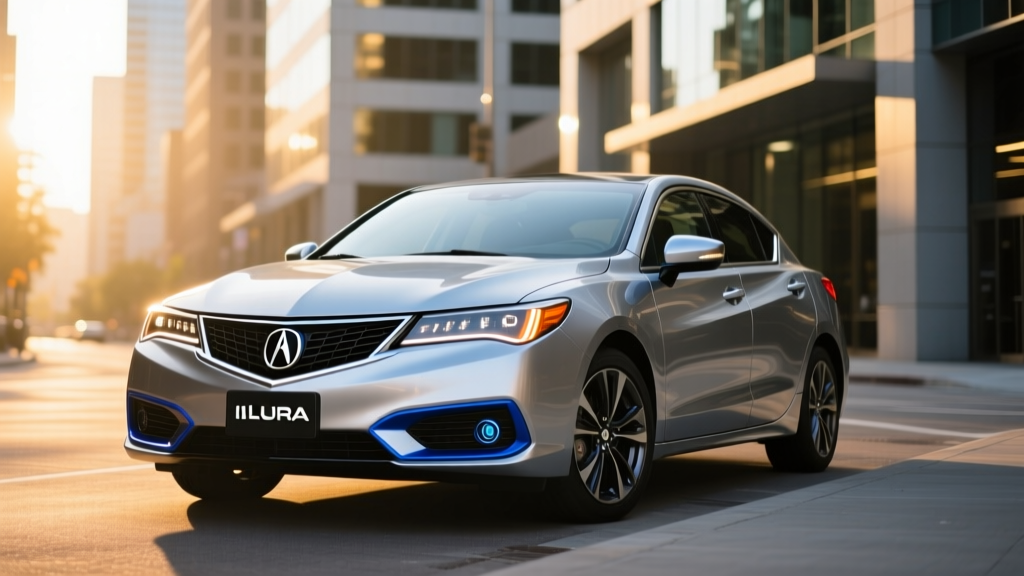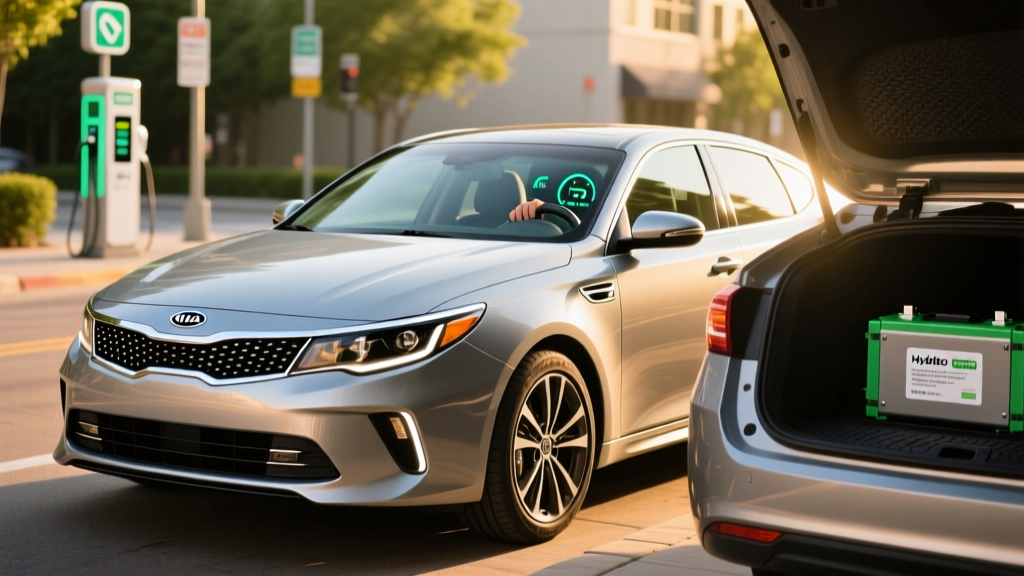
Quick Verdict: A Solid Used Hybrid Sedan With Caveats
The 2015 Kia Optima Hybrid is a conventional hybrid electric vehicle (HEV) — not a plug-in — that pairs a 2.4-liter four-cylinder engine with an electric motor for an EPA-estimated 36 MPG combined. On the used market in 2026, it represents an affordable entry into hybrid ownership, typically priced between $8,000 and $13,000 depending on mileage and condition. However, buyers need to understand what they're getting: a first-generation Kia hybrid system that prioritizes fuel economy over refinement, with a battery warranty that has likely expired on most examples by now.
This guide breaks down the real-world fuel economy, powertrain specs, battery longevity expectations, and ownership economics so you can decide whether the 2015 Optima Hybrid fits your commute — or whether a newer hybrid, PHEV, or full EV makes more sense for your budget.
HEV vs PHEV: What the 2015 Optima Hybrid Actually Is
Before diving into specs, it's critical to understand the distinction between hybrid types, because the 2015 Optima lineup included both:
Conventional Hybrid (HEV)
2015 Kia Optima Hybrid (this review):
- No plug — the battery charges via regenerative braking and the gas engine
- Small battery (~1.4 kWh usable)
- Electric motor assists the engine; very limited electric-only driving at low speeds
- Fuel economy: 36 MPG combined EPA
- No federal tax credit eligibility
Plug-In Hybrid (PHEV)
2015 Kia Optima Plug-In Hybrid (separate model):
- Plugs into a wall outlet or Level 2 charger
- Larger battery (~9.8 kWh)
- Up to 27 miles electric-only range (EPA)
- Fuel economy: 38 MPG combined (after battery depleted), 99 MPGe on electric
- Qualified for up to $2,500 federal tax credit when new (now expired)
This article focuses on the conventional HEV. If you need plug-in capability for short electric-only commutes, you want the Optima PHEV — a different vehicle with different economics.
Fuel Economy: EPA Ratings vs Real-World MPG
| Metric | EPA Estimate | Real-World Expectation |
|---|---|---|
| City | 36 MPG | 34–40 MPG (hybrids often exceed EPA in stop-and-go) |
| Highway | 40 MPG | 35–38 MPG (highway speeds reduce hybrid advantage) |
| Combined | 36 MPG (Note: EPA revised; original sticker showed 36 combined) | 34–38 MPG depending on driving mix |
How many MPG does the 2015 Kia Optima Hybrid get? The EPA rates it at 36 MPG city, 40 MPG highway, and 36 MPG combined per fueleconomy.gov. However, the real-world picture is more nuanced.
Like most conventional hybrids, the Optima HEV benefits most from city driving where regenerative braking recaptures energy and the electric motor handles low-speed acceleration. Owners who do mostly urban commuting frequently report 38–40 MPG in warm weather. Highway-heavy drivers, especially at speeds above 70 mph, should expect 33–36 MPG — the aerodynamic penalty and reduced regen opportunities erode the hybrid advantage.
Cold-weather impact: In winter conditions (below 35°F), expect a 5–10% fuel economy reduction, bringing combined MPG to roughly 32–34. The engine runs more frequently to provide cabin heat and maintain battery temperature, reducing electric-motor assist time.
Powertrain Specs: Engine, Motor, and Combined Output
| Specification | 2015 Kia Optima Hybrid |
|---|---|
| Engine | 2.4L inline-4 (Atkinson cycle) |
| Engine Power | 169 hp @ 6,000 rpm |
| Electric Motor | 35 kW (47 hp) |
| Combined System Output | 199 hp |
| Transmission | 6-speed automatic |
| Hybrid Battery | 1.4 kWh (lithium-polymer) |
| 0–60 mph | ~8.5 seconds |
| Drivetrain | Front-wheel drive |
| Curb Weight | ~3,496 lbs |
The 2015 Optima Hybrid uses a parallel hybrid architecture — both the gasoline engine and electric motor can drive the wheels, either independently or together. The 2.4-liter engine runs the Atkinson cycle (delayed intake valve closing for better thermal efficiency at the cost of peak power), while the 35 kW electric motor fills in torque gaps during acceleration and enables brief electric-only operation at low speeds.
The 6-speed automatic is a conventional torque-converter transmission, not the CVT or e-CVT found in Toyota and Ford hybrids. This gives the Optima a more familiar shift feel but sacrifices some efficiency optimization that planetary gearset hybrids achieve. The result is competent but not class-leading acceleration — 199 combined horsepower is adequate for merging and passing, but the powertrain can feel coarse under hard acceleration compared to the smoother Toyota Hybrid Synergy Drive system.
Battery Lifespan, Warranty, and Replacement Cost
Hybrid Battery Warranty (Original)
- Term: 8 years / 100,000 miles (10 years / 150,000 miles in CARB states: CA, CT, ME, MA, NJ, NY, OR, RI, VT, WA)
- Coverage: Defects and capacity loss below a threshold (typically ~60–70% of original capacity)
- 2026 Status: Most 2015 Optima Hybrids have exceeded the 8-year standard warranty window. CARB-state vehicles may still have coverage through 2025 if under 150,000 miles.
Is the 2015 Kia Optima Hybrid reliable, and what does battery replacement cost?
The lithium-polymer hybrid battery in the 2015 Optima is generally durable, but it's now 11 years old. Based on owner reports and hybrid battery degradation data across the industry, most 2015 Optima Hybrid batteries retain 75–85% of original capacity at this age, assuming normal use. Complete battery failure before 150,000 miles is uncommon, but capacity loss accelerates in hot climates (Arizona, Texas, Florida) where sustained high temperatures stress lithium cells.
Replacement cost: A new OEM hybrid battery pack from Kia runs approximately $2,000–$3,500 including parts and labor at a dealership. Third-party refurbished or reconditioned batteries are available for $1,200–$2,000 installed. Individual cell module replacement (if only one or two modules have failed) can cost $400–$800 at a hybrid specialist shop.
Warning signs of battery degradation:
- Noticeable drop in fuel economy (3–5+ MPG below historical averages)
- Engine running more frequently, especially at stoplights or low speeds
- Reduced regenerative braking feel
- Hybrid system warning light on the dashboard
- Rapid state-of-charge swings on the energy display
Before purchasing a used 2015 Optima Hybrid, have the battery's state of health (SoH) checked with an OBD-II scanner that reads hybrid battery data (tools like Torque Pro with a compatible adapter can pull this). A pre-purchase inspection at a hybrid-experienced shop is worth the $100–$150 cost.
Ownership Economics: What You'll Actually Spend
At 2026 used-car prices, the 2015 Kia Optima Hybrid typically lists between $8,000 and $13,000 depending on mileage (80,000–130,000 miles is common), condition, and trim level (LX or EX).
Does the 2015 Kia Optima Hybrid qualify for any tax credit? No. The federal §30D tax credit applies only to new plug-in electric vehicles (BEVs and PHEVs) meeting current battery-sourcing and MSRP requirements per IRS guidelines. The conventional Optima HEV never qualified for a federal credit, and the PHEV variant's credit eligibility expired with the vehicle's production. Some states offer used-EV credits, but these apply only to plug-in vehicles, not conventional hybrids.
Annual fuel cost estimate: At 12,000 miles/year and $3.25/gallon regular unleaded:
- Optima Hybrid (36 MPG combined): ~$1,083/year
- 2015 Optima gas-only 2.4L (27 MPG combined): ~$1,444/year
- Annual hybrid fuel savings: ~$361/year
At that savings rate, a $2,000 price premium for the hybrid over the gas model pays back in roughly 5.5 years — though on the used market, the hybrid and gas variants often price within $500–$1,000 of each other, making the hybrid the clear value pick.
| Cost Category | 5-Year Estimate |
|---|---|
| Purchase Price (avg) | $10,500 |
| Fuel (12k mi/yr) | $5,415 |
| Insurance (avg) | $5,500 |
| Maintenance | $2,800 |
| Potential Battery Replacement | $0–$2,500 |
| Estimated 5-Year Total | $24,215–$26,715 |
Pros and Cons: The Honest Assessment
Pros
- Strong city fuel economy (36–40 MPG real-world in urban driving)
- Low used-car entry price ($8,000–$13,000)
- No plug-in charging required — fuel like a normal gas car
- Spacious midsize sedan cabin with comfortable ride
- Conventional 6-speed automatic avoids the "drone" of CVTs
- Regenerative braking extends brake pad life (often 80,000+ miles on original pads)
Cons
- Hybrid battery warranty likely expired on most examples
- Powertrain coarseness under hard acceleration vs Toyota/Camry Hybrid
- Highway MPG less impressive than city (35–38 real-world)
- Small trunk reduced by battery placement (~10.8 cu ft vs 15.4 cu ft gas model)
- Early-generation hybrid system — less refined than 2020+ Kia hybrids
- No DC fast charging capability (not applicable to HEVs, but worth noting vs PHEV)
Who Should Buy This Hybrid — And Who Shouldn't
Hybrid vs PHEV vs EV — which fits you?
Choose the 2015 Optima Hybrid if:
- You want better fuel economy without changing your refueling habits
- You lack access to home or workplace charging (apartment, street parking)
- Your budget caps around $12,000 for a used vehicle
- You drive 10,000–15,000 miles/year with a mix of city and highway
- You want a midsize sedan with a large back seat and don't need a huge trunk
Choose a PHEV (e.g., 2017+ Optima PHEV, Toyota Prius Prime) if:
- You have home Level 2 charging and a commute under 30 miles
- You want to drive mostly on electricity with gas as backup
- You're willing to spend $15,000–$22,000 on a used PHEV
Choose a full EV (e.g., used Chevrolet Bolt, Nissan Leaf) if:
- You have reliable home charging and your daily driving stays under 200 miles
- You want the lowest per-mile fuel cost ($0.03–$0.05/mile on home electricity vs $0.09/mile in this hybrid)
- You're ready to eliminate oil changes and gas station visits entirely
The 2015 Optima Hybrid occupies a specific niche: budget-conscious buyers who want hybrid fuel savings without the complexity, cost, or charging requirements of a PHEV or BEV. It's a pragmatic used-car choice, not an exciting one — and that's exactly the point.
Frequently Asked Questions
How many MPG does the 2015 Kia Optima Hybrid get?
The EPA rates it at 36 city / 40 highway / 36 combined MPG. Real-world results vary: city-heavy drivers often see 38–40 MPG, while highway-heavy driving at 70+ mph typically yields 33–36 MPG. Cold weather reduces economy by 5–10%.
Does the 2015 Kia Optima Hybrid need to be plugged in?
No. This is a conventional hybrid (HEV), not a plug-in. The small 1.4 kWh battery charges entirely through regenerative braking and the gasoline engine. You fuel it like any other gas car — just at the pump less often.
How far can the 2015 Optima Hybrid drive on electric only?
Less than 1 mile, and only at very low speeds (under 25 mph). The electric motor primarily assists the gas engine rather than powering the car independently. If you want meaningful electric-only range (25+ miles), you need the Optima Plug-In Hybrid (PHEV) variant or a full EV.
Is the hybrid battery reliable, and what does replacement cost?
The lithium-polymer battery is generally reliable for 150,000+ miles, though capacity degradation is expected at 11 years old. OEM replacement costs $2,000–$3,500 at a dealer; refurbished options run $1,200–$2,000. Most owners never need a full replacement, but budget for the possibility when buying used.
Does the 2015 Kia Optima Hybrid qualify for a tax credit?
No. Conventional hybrids (HEVs) do not qualify for the federal §30D clean vehicle credit, which applies only to plug-in electric vehicles (BEVs and PHEVs) meeting current battery sourcing and MSRP requirements. Check IRS.gov for current rules.
How does it compare to a Toyota Camry Hybrid of the same year?
The 2015 Camry Hybrid rates 41 MPG combined (vs 36 for the Optima) and uses Toyota's more refined e-CVT system. However, used Camry Hybrids typically command $2,000–$4,000 more than Optima Hybrids. The Optima offers better value if you accept slightly lower fuel economy and a less polished hybrid system.
What maintenance does the hybrid system require?
Beyond standard gas-engine maintenance (oil changes, air filters, spark plugs), the hybrid system requires minimal upkeep. The hybrid battery cooling fan filter should be inspected and cleaned periodically. Regenerative braking significantly extends brake pad and rotor life — many owners report 80,000+ miles on original brakes.