Quick Verdict: The 2015 Kia Optima Hybrid in 2026
If you're searching for a 2015 Kia hybrid, you're almost certainly looking at the used market for the Kia Optima Hybrid (the brand's only hybrid offering that model year). A decade later, this midsize sedan remains a practical entry point into hybrid ownership — delivering EPA-rated 35 MPG combined without ever needing a plug. But with a 10-year-old hybrid battery and discontinued production, buyers need to go in with eyes wide open about battery health, replacement costs, and how this car stacks up against modern hybrids and EVs.
This guide covers the 2015 Optima Hybrid's real-world fuel economy, battery specifications and degradation, reliability track record, and whether it still makes sense versus a newer hybrid or a full battery-electric vehicle in 2026.
| Specification | Value |
|---|---|
| Powertrain | 2.4L 4-cyl + electric motor (parallel hybrid) |
| Combined Horsepower | 199 hp (net system output) |
| Engine | 159 hp @ 5,500 rpm / 154 lb-ft torque |
| Electric Motor | 38 kW (51 hp) / 151 lb-ft torque |
| Transmission | 6-speed automatic |
| Battery Chemistry | Lithium-polymer (Li-Po) |
| Battery Capacity | 1.4 kWh (gross) |
| EPA MPG (City / Hwy / Combined) | 36 / 40 / 35 (Note: revised to 35/39/34 for later builds) |
| 0–60 mph | ~8.6 seconds |
| Cargo Volume | 9.9 cu ft (reduced vs. gas Optima) |
| Original MSRP (base EX) | $26,795 |
| Typical Used Price (2026) | $7,500 – $11,000 depending on mileage/condition |
| Hybrid Battery Warranty (Original) | 10 years / 100,000 miles |
Understanding the 2015 Kia Hybrid Lineup: HEV vs. PHEV
It's critical to understand what Kia actually offered in 2015, because the terminology matters for your wallet and your expectations.
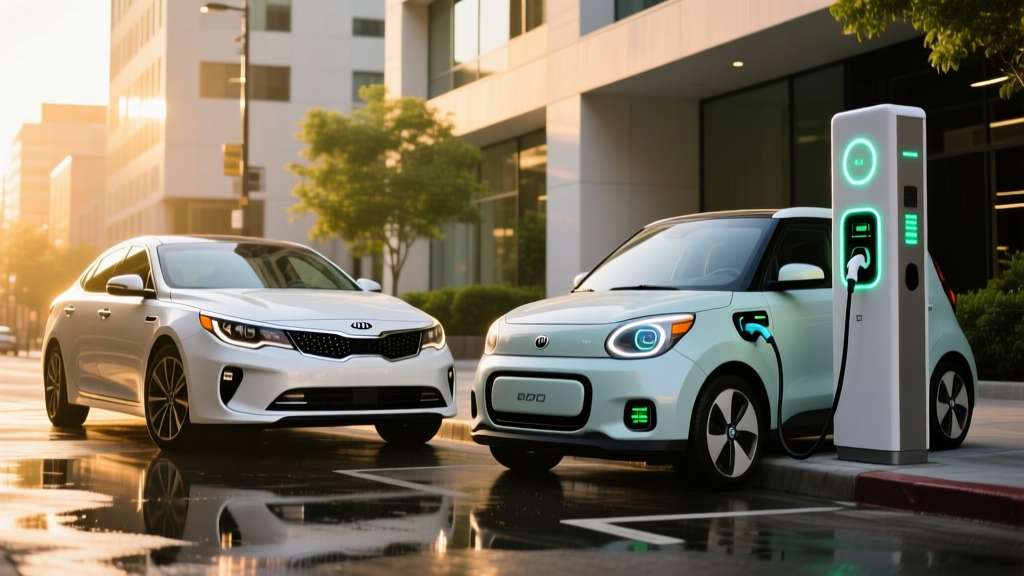
| Model | Type | Needs Plugging In? | EPA MPG / MPGe | Electric-Only Range |
|---|---|---|---|---|
| Optima Hybrid | Conventional Hybrid (HEV) | No — charges via regen & engine | 35 MPG combined | ~1 mile at low speed |
| Soul EV | Battery Electric (BEV) | Yes — Level 2 or DC fast charge | 93 MPGe (93 mi range) | 93 miles (full battery) |
Key distinction: The 2015 Kia Optima Hybrid is a conventional hybrid (HEV). It has a small 1.4 kWh battery that charges itself through regenerative braking and the gasoline engine. You never plug it in. Kia did not offer a plug-in hybrid (PHEV) variant of the Optima until the 2017 model year. If you see listings for a "2015 Kia plug-in hybrid," they are incorrect — verify the badge and VIN.
The only other electrified Kia in 2015 was the Soul EV, a fully electric vehicle with a 27 kWh battery and 93 miles of EPA range. We'll compare all three options later in this guide.
Fuel Economy: EPA Ratings vs. Real-World MPG
The 2015 Optima Hybrid carries an EPA rating of 36 city / 40 highway / 35 combined MPG for early-build models, though Kia revised estimates to 35/39/34 for later production runs. Either way, it's competitive with the 2015 Toyota Camry Hybrid (40/38/40) and 2015 Ford Fusion Hybrid (44/41/42), though the Fusion edges it out in city driving.
| Model | City | Highway | Combined |
|---|---|---|---|
| 2015 Kia Optima Hybrid | 36 | 40 | 35 |
| 2015 Toyota Camry Hybrid LE | 40 | 38 | 40 |
| 2015 Ford Fusion Hybrid | 44 | 41 | 42 |
| 2015 Hyundai Sonata Hybrid | 36 | 40 | 37 |
Real-world expectations: Hybrid sedans typically exceed their EPA city rating in stop-and-go traffic (more regenerative braking = more electric assist) but can fall 2–4 MPG short on sustained highway trips where the gasoline engine does most of the work. Owner-reported data on fueleconomy.gov shows 2015 Optima Hybrid drivers averaging between 31 and 38 MPG combined, with a user-reported mean around 34 MPG.
Factors that reduce real-world MPG in a 10-year-old hybrid:
- Battery degradation: A weakened hybrid battery reduces electric assist, forcing the gas engine to work harder. Expect 2–4 MPG loss if the battery is significantly degraded.
- Tire condition: Worn or non-LRR (low rolling resistance) replacement tires can cost 1–3 MPG.
- Climate: Cold weather reduces battery efficiency and increases engine idle time for cabin heat — expect 30–33 MPG in sub-freezing winters.
- Driving style: Aggressive acceleration bypasses the electric motor and engages the 2.4L engine directly.
Powertrain Deep Dive: How the 2015 Optima Hybrid Works
The 2015 Optima Hybrid uses a parallel hybrid architecture, meaning both the gasoline engine and electric motor can drive the wheels — either independently or together. Here's the breakdown:
- Gasoline engine: 2.4-liter inline-4 producing 159 hp and 154 lb-ft of torque. This is a naturally aspirated engine tuned for efficiency over performance.
- Electric motor: 38 kW (51 hp) permanent-magnet synchronous motor integrated between the engine and transmission, delivering 151 lb-ft of torque from near-zero RPM.
- Combined system output: 199 hp — less than the sum of the two because peak outputs occur at different RPMs.
- Transmission: 6-speed automatic with a torque converter (not a CVT like Toyota or Ford hybrids). This gives more traditional shift feel but slightly less seamless electric-to-gas transitions.
The 1.4 kWh lithium-polymer battery pack sits behind the rear seats, which reduces trunk space from 15.4 cu ft (gas Optima) to 9.9 cu ft — a meaningful compromise if you regularly haul cargo. The battery weighs approximately 110 lbs and contributes to the Optima Hybrid's ~3,500-lb curb weight.
Acceleration to 60 mph takes about 8.6 seconds — adequate for merging and passing but noticeably slower than the turbocharged gas Optima (7.1 sec for the 2.0T). The transition between electric-only and hybrid mode is generally smooth, though you'll feel a slight shudder during engine start-stop events at low speeds.
Battery Health, Degradation, and Replacement Cost
For any 10-year-old hybrid, the traction battery is the single biggest financial risk. Here's what 2015 Kia hybrid buyers need to know.
Original Battery Warranty
Kia covered the 2015 Optima Hybrid's lithium-polymer battery for 10 years or 100,000 miles (whichever comes first) for the original owner. For second and subsequent owners, coverage drops to 5 years / 60,000 miles in most states. In 2026, a 2015 model's original warranty has expired unless the car was sold very late and has extremely low mileage. California and states adopting CARB emissions rules may offer extended hybrid component coverage — verify with a Kia dealer using your VIN.
Degradation reality: The 1.4 kWh Li-Po battery in the Optima Hybrid is small and works hard. Lithium-polymer chemistry offers good energy density but is more susceptible to capacity loss from heat cycling than the nickel-metal hydride (NiMH) batteries in older Toyota hybrids. Based on owner reports and hybrid battery testing data:
- Years 1–5: Minimal noticeable degradation (~5–8% capacity loss). Most owners report no change in MPG.
- Years 5–8: Moderate degradation (10–18% loss). Slight MPG reduction, more frequent engine engagement.
- Years 8–12: Significant degradation possible (20–35% loss). Noticeable power reduction, check-engine or hybrid-system warnings may appear, MPG can drop to 28–32 combined.
Battery replacement cost (2026 estimates):
- New OEM battery from Kia: $2,800 – $3,600 (parts) + $500 – $800 (labor) = $3,300 – $4,400 total
- Refurbished/remanufactured battery: $1,500 – $2,200 installed from independent hybrid specialists
- Individual cell/module replacement: $400 – $900 if only one or two modules are weak (requires diagnostic testing)
Pre-purchase tip: Before buying any 2015 Optima Hybrid, request a hybrid battery health report from a Kia dealer or hybrid specialist. This reads the battery's State of Health (SoH) via OBD-II and tells you remaining capacity percentage. Avoid examples below 75% SoH unless the price reflects a pending $3,000+ battery replacement.
Reliability and Common Issues
The 2015 Optima Hybrid's reliability record is mixed — better than early Kia hybrids but trailing the segment-leading Camry Hybrid. According to owner complaint databases and NHTSA records, the most reported issues include:
- Hybrid system warnings: Intermittent "Check Hybrid System" messages, often tied to battery temperature sensor faults or inverter cooling fan failures. Repair: $200–$600 for sensor/fan; much more if the inverter is damaged.
- Transmission shudder: Some owners report hesitation or shuddering during electric-to-gas transitions at 20–40 mph. Often resolved with a transmission fluid flush and software update.
- 12V auxiliary battery drain: Like all hybrids, the Optima has a conventional 12V battery for accessories. If the car sits for 2+ weeks, the 12V can die, preventing the hybrid system from booting. A $150 AGM replacement solves this.
- Brake actuator noise: The regenerative braking system can produce a low groan at very low speeds. This is often normal, but loud grinding warrants inspection of the brake accumulator ($800–$1,200 replacement).
On the positive side, the 2.4L naturally aspirated engine is proven and simple — no turbocharger to fail, no direct injection carbon buildup issues. With regular oil changes (5W-20 synthetic every 5,000–7,500 miles), these engines routinely reach 200,000+ miles.
Tax Credits and 2026 Used-Buying Economics
When new, the 2015 Optima Hybrid did not qualify for the federal §30D plug-in vehicle tax credit because it is a conventional hybrid with no plug. This remains true today — no federal tax credit is available for purchasing a used conventional hybrid.
However, there are some financial considerations for 2026 buyers:
- Used EV credit (§25E): This credit applies only to used BEVs and PHEVs — not conventional hybrids like the Optima Hybrid. The Soul EV would qualify (up to $4,000 credit, subject to income limits and the $25,000 sale-price cap). See IRS §25E guidelines for details.
- State incentives: A handful of states offer rebates or HOV lane access for hybrids, but most have shifted incentives to PHEVs and BEVs. Check your state's energy office for current programs.
- Total cost of ownership: At $8,000–$11,000 used and 35 MPG, the Optima Hybrid costs roughly $0.10–$0.12 per mile in fuel (at $3.40/gallon). That's about 40% less fuel cost than a comparable 25-MPG gas sedan, saving ~$600–$800/year at 12,000 miles driven.
2015 Kia Hybrid vs. Full EV vs. Gas Car: Which Fits You?
Choose the 2015 Optima Hybrid If:
- You want better fuel economy without changing your fueling habits (no plugs, no apps, no charging networks)
- Your budget is under $12,000 and you need a reliable daily commuter
- You drive 10,000–15,000 miles/year in mixed city/highway conditions
- You don't have access to home or workplace charging
- You want lower fuel costs with zero range anxiety
Consider a Full EV or Newer PHEV Instead If:
- You have home Level 2 charging and want $0.04–$0.06/mile "fuel" costs
- You want modern safety tech (AEB, lane-keeping, adaptive cruise — mostly absent on the 2015 Optima)
- You're concerned about a $3,000–$4,000 hybrid battery replacement risk
- You qualify for the used EV tax credit (up to $4,000 on qualifying used BEVs/PHEVs under $25,000)
- You want a warranty — a new 2026 Kia Niro Hybrid starts around $29,000 with a full 10-year/100,000-mile powertrain warranty
Decision Framework: 2015 Optima Hybrid vs. Alternatives
| Your Situation | Best Choice | Why |
|---|---|---|
| Budget under $10K, no home charging | 2015 Optima Hybrid | Low entry cost, no plug needed, 35 MPG |
| Budget $10K–$18K, have home charging | Used 2019–2021 PHEV (e.g., Niro PHEV) | 26 mi electric range + gas backup, possible §25E credit |
| Budget $15K–$25K, reliable home charging | Used BEV (Bolt EV, Leaf Plus, Model 3) | Lowest running cost, minimal maintenance, §25E credit eligible |
| Budget $25K+, want warranty & latest tech | New 2026 Niro Hybrid or PHEV | Full warranty, modern ADAS, 50+ MPG (HEV) or 33 mi EV range (PHEV) |
FAQ: 2015 Kia Hybrid Questions Answered
How many MPG does the 2015 Kia Optima Hybrid get?
The EPA rates it at 36 city / 40 highway / 35 combined MPG. Real-world owner averages cluster around 33–36 MPG combined. In heavy city traffic with frequent stops, some drivers report 37–39 MPG thanks to regenerative braking. On sustained highway trips above 70 mph, expect 33–36 MPG.
Does the 2015 Kia Optima Hybrid need to be plugged in?
No. This is a conventional hybrid (HEV). The 1.4 kWh battery charges itself through regenerative braking and the gasoline engine. You fuel it exactly like a normal car — just with better mileage. Kia did not make a plug-in Optima until 2017.
Is the 2015 Kia hybrid reliable?
Moderately reliable. The 2.4L engine and 6-speed transmission are proven components, but the hybrid-specific parts (inverter, battery, brake actuator) add complexity. The biggest risk is hybrid battery degradation at 10+ years old. Budget $3,000–$4,000 for a potential battery replacement within your first few years of ownership, or buy one with a recent battery replacement and documentation.
What does a replacement hybrid battery cost for the 2015 Optima?
A new OEM battery from Kia costs approximately $3,300–$4,400 installed. Refurbished batteries from hybrid specialists run $1,500–$2,200 installed. Individual module repairs (if only one cell group is bad) can be as low as $400–$900. Always get a State of Health diagnostic before committing to a replacement.
Does the 2015 Kia Optima Hybrid qualify for any tax credit?
No federal tax credit is available for conventional hybrids, new or used. The federal §30D credit (up to $7,500) and the used §25E credit (up to $4,000) apply only to plug-in vehicles (PHEVs and BEVs). Some states may offer minor hybrid incentives — check your state energy office. The 2015 Kia Soul EV, by contrast, may qualify for the used EV credit if purchased from a dealer for under $25,000 and buyer income is under $75,000 (single) or $150,000 (joint).
What's the difference between the 2015 Optima Hybrid and the 2015 Soul EV?
They're fundamentally different vehicles. The Optima Hybrid is a gasoline-electric sedan you never plug in (35 MPG, ~450-mile total range). The Soul EV is a fully electric crossover with a 27 kWh battery, 93 miles of EPA range, and DC fast charging capability (CHAdeMO connector, ~50 kW peak). The Soul EV is best for short commutes with home charging; the Optima Hybrid works for any driving pattern without infrastructure requirements.
Should I buy a 2015 Kia hybrid or a newer model?
If your budget is strictly under $12,000, the 2015 Optima Hybrid is a reasonable choice — just factor in battery replacement risk. If you can stretch to $18,000–$25,000, a 2020–2023 Kia Niro Hybrid or Niro PHEV gives you modern ADAS (automatic emergency braking, lane-keeping), Apple CarPlay/Android Auto, better fuel economy (50 MPG for the Niro HEV), and remaining factory warranty. The technology gap between 2015 and 2020+ hybrids is substantial.