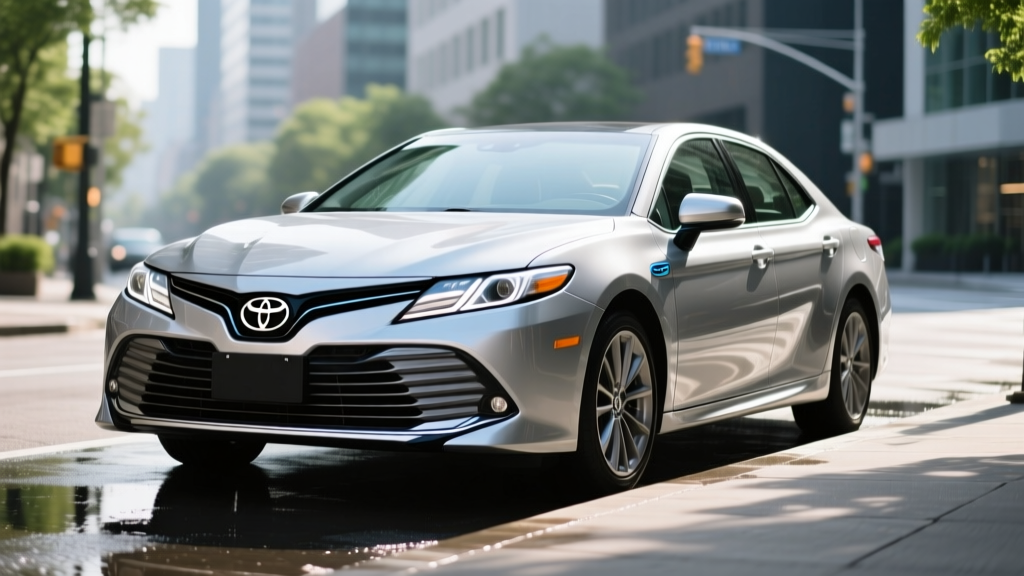
The Toyota Camry has long been America's default midsize sedan, and the hybrid variant has been its efficiency ace. If you're researching the 2015 hybrid Camry mpg figures — whether you're shopping the used market or validating what you already own — you're looking at one of the most proven hybrid powertrains Toyota ever built. This guide covers the EPA numbers, what you'll actually see at the pump, battery longevity, and whether a decade-old HEV still holds up against modern hybrids, PHEVs, and full EVs.
2015 Toyota Camry Hybrid: EPA MPG and Real-World Fuel Economy
The 2015 Camry Hybrid (LE and XLE trims) carries official EPA ratings that remain competitive even by 2026 standards for non-plug-in midsize sedans. Here's the breakdown directly from fueleconomy.gov:
| Metric | LE Trim | XLE Trim |
|---|---|---|
| City MPG | 43 | 40 |
| Highway MPG | 39 | 38 |
| Combined MPG | 41 | 39 |
| Gallons per 100 miles | 2.4 | 2.6 |
| Annual fuel cost (est.) | ~$1,350 | ~$1,450 |
Note: The LE trim's higher MPG comes from lighter weight, lower rolling-resistance tires, and fewer parasitic electrical loads (no heated seats, premium audio amplifier, or sunroof motor drawing from the system).
The 2015 Camry Hybrid is one of those rare vehicles where real-world city driving often matches or exceeds the EPA city number. Toyota's Hybrid Synergy Drive recovers energy aggressively in stop-and-go traffic, where the electric motor handles most low-speed propulsion. Owners on Fuelly report median real-world combined figures of 38–43 MPG for the LE and 36–40 MPG for the XLE. Highway-only trips at 75+ mph tend to drop to 35–37 MPG, as the 2.5-liter Atkinson-cycle engine does more of the work without regen assistance.
In cold weather (below 35°F), expect a 5–10% MPG reduction as the engine runs longer to heat the cabin and keep the hybrid battery at optimal temperature. Short-trip winter city driving may dip into the low 30s.
Powertrain: How the 2015 Camry Hybrid Makes Its Power
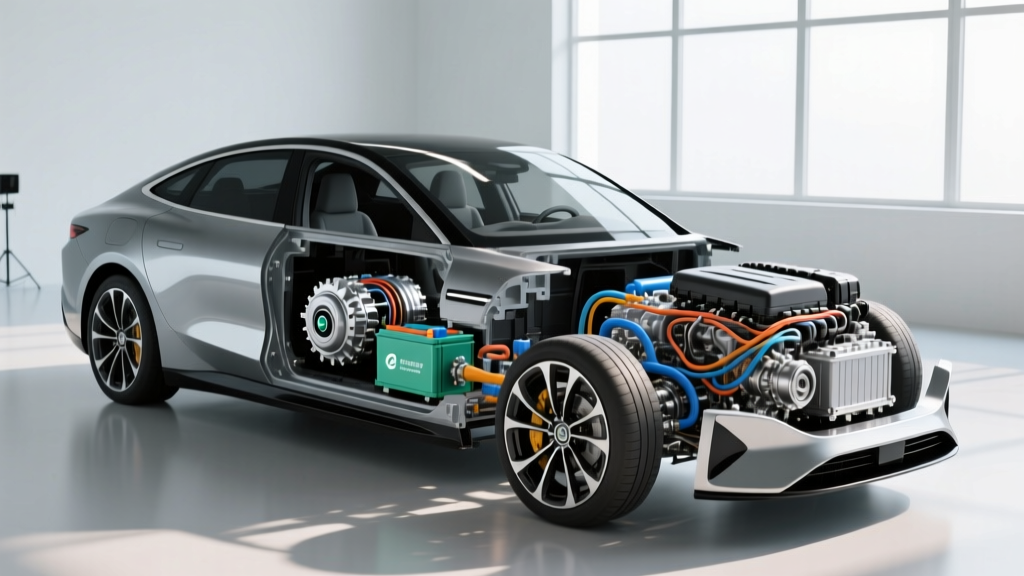
The 2015 model year was significant — Toyota introduced a refreshed Camry with revised styling and a retuned hybrid system. This is not a plug-in hybrid (PHEV); it's a conventional self-charging hybrid (HEV). You never plug it in. The gasoline engine and regenerative braking handle all battery charging.
| Engine | 2.5L 4-cyl Atkinson cycle (2AR-FXE) |
| Engine horsepower | 156 hp @ 5,700 rpm |
| Electric motor output | 105 kW (141 hp) |
| Net combined system horsepower | 200 hp |
| Hybrid battery | 1.6 kWh nickel-metal hydride (NiMH) |
| Transmission | eCVT (planetary gearset, no fixed gears) |
| Drivetrain | Front-wheel drive |
| 0–60 mph | ~7.6 seconds |
| Curb weight | 3,495–3,585 lbs |
The 200 hp combined output was class-competitive in 2015 and still feels adequate today. The eCVT is not a belt-driven CVT like those in some competitors — it's a power-split device with no belts or cones to wear, which is a major factor in Toyota hybrid longevity.
HEV vs. PHEV vs. EV: Where Does the 2015 Camry Hybrid Fit?
Because the 2015 Camry Hybrid is a conventional HEV, it's critical to understand what it does and doesn't offer compared to plug-in alternatives available in today's market.
| Feature | HEV (2015 Camry Hybrid) | PHEV (e.g., 2026 RAV4 Prime) | BEV (e.g., 2026 Model 3) |
|---|---|---|---|
| Plug-in charging | No | Yes (Level 1/2) | Yes (Level 1/2/DC) |
| Electric-only range | ~0.5 mi at low speed | 35–42 mi | 250–350+ mi |
| Gas engine | Yes (always available) | Yes (always available) | No |
| Fuel needed | Yes | Yes (reduced) | No |
| Home charging install | Not required | Recommended (Level 2) | Required (Level 2) |
| Federal tax credit (§30D) | Not eligible | Up to $7,500* | Up to $7,500* |
*§30D credit subject to MSRP caps, buyer income limits, and battery-sourcing requirements per IRS guidelines. Used-vehicle credit (§25E) may apply to the 2015 Camry Hybrid — see tax section below.
The 2015 Camry Hybrid is ideal for drivers who want maximum simplicity: no charging infrastructure, no range planning, no plug-in routine. You drive it exactly like a gas car, and it returns roughly double the MPG of the non-hybrid 4-cylinder Camry (which was rated at 25/35/28 MPG for 2015).
Battery Longevity, Warranty, and Replacement Cost
For any used hybrid buyer, the traction battery is the single biggest concern. The 2015 Camry Hybrid uses a 1.6 kWh NiMH pack — a chemistry Toyota has deployed in millions of vehicles since the 1997 Prius. NiMH is less energy-dense than modern lithium-ion but is exceptionally tolerant of daily shallow cycling, which is exactly how Toyota's hybrid system uses it.
- Federal emissions states: 8 years / 100,000 miles
- CARB states (CA, NY, MA, and others adopting California emissions standards): 10 years / 150,000 miles
- Coverage threshold: Battery must retain sufficient capacity to function in hybrid mode; Toyota defines failure as inability to hold charge or deliver assist power.
By 2026, most 2015 Camry Hybrids are past the 8-year/100k federal warranty window. However, CARB-state vehicles with under 150,000 miles may still have residual coverage. Check your state's emissions designation on your original window sticker or through a Toyota dealer.
Real-world battery lifespan: Data from iFixit, Green Car Reports, and Toyota owner forums shows the NiMH pack in the 2015 Camry Hybrid commonly lasts 150,000–200,000+ miles before significant degradation. Complete failures before 120,000 miles are uncommon and usually covered under the original warranty.
Replacement cost in 2026:
- New OEM battery (Toyota dealer): $2,500–$3,800 installed
- Refurbished/remanufactured pack: $1,200–$2,000 installed
- Individual module replacement: Some independent hybrid shops replace only the degraded NiMH modules within the pack for $400–$800, extending battery life at a fraction of full replacement cost.
Unlike full EV batteries ($10,000–$20,000+), the Camry Hybrid's small NiMH pack is affordable to replace and widely available from both OEM and aftermarket sources.
Used Market Pricing and Tax Credit Eligibility
As of early 2026, the 2015 Toyota Camry Hybrid trades in the used market at approximately:
- 80,000–100,000 miles, clean title: $13,000–$16,500
- 100,000–140,000 miles: $10,000–$13,500
- 140,000+ miles: $7,500–$10,500
Prices vary by region, trim (LE vs. XLE), condition, and battery health. Always request a hybrid battery health check (State of Charge / State of Health readout via OBD-II) before purchasing.
The 2015 Camry Hybrid may qualify for the federal used-EV credit of up to $4,000 (or 30% of sale price, whichever is less) under IRS §25E, provided:
- Sale price is $25,000 or less (virtually all 2015 Camry Hybrids qualify)
- Buyer's modified AGI does not exceed $75,000 (single) / $112,500 (head of household) / $150,000 (joint)
- The vehicle is purchased from a licensed dealer (private-party sales do not qualify)
- The vehicle has not previously been claimed for the §25E credit after August 16, 2022 (first transfer rule)
- The vehicle is at least 2 model years old (2015 easily qualifies)
The §25E credit applies to both HEVs and PHEVs/BEBs in the used market — unlike the new-vehicle §30D credit, which excludes conventional hybrids. Consult a tax professional or IRS.gov to confirm your eligibility, as rules are subject to legislative changes.
Reliability, Maintenance, and Common Issues
The 2015 Camry Hybrid benefits from Toyota's reputation for durability, and the hybrid system adds surprisingly few failure points. The eCVT has no friction bands, clutch packs, or torque converter — just a planetary gearset with three permanent-mesh gear elements. There is no transmission fluid to change on a scheduled basis (Toyota calls it "lifetime" fluid, though many hybrid specialists recommend a drain-and-fill at 100,000 miles as preventive care).
Common maintenance items specific to the hybrid:
- Hybrid battery cooling fan filter: Located behind the rear seat, this filter should be cleaned or replaced every 30,000–50,000 miles. A clogged filter causes the battery to overheat, accelerating degradation. Cost: $15–$30 DIY.
- Inverter coolant: Toyota recommends replacement at 100,000 miles, then every 50,000 miles. The inverter converts DC battery power to AC for the motor. Neglect can lead to inverter failure ($1,500–$3,000 repair).
- 12V auxiliary battery: Like all cars, the 12V lead-acid battery (located in the trunk) will need replacement every 4–6 years. If it dies, the car cannot boot the hybrid system even if the main traction battery is full.
- Brake pads: Regenerative braking handles most deceleration, so friction brake pads often last 80,000–120,000 miles — far longer than in a conventional Camry.
According to NHTSA records, the 2015 Camry Hybrid has no widespread safety recalls specific to the hybrid system. Toyota did issue a voluntary service campaign for certain 2012–2014 Camry Hybrids related to the hybrid system software, but the 2015 model year is not affected.
Who Should Buy the 2015 Camry Hybrid in 2026?
- You want 40+ MPG without plugging in or changing your driving habits
- You lack access to home or workplace charging (apartment, street parking)
- Your budget is under $16,000 and you want a proven, low-risk sedan
- You drive primarily in city or suburban stop-and-go traffic (where hybrids shine)
- You want low maintenance costs and a powertrain known to reach 200,000+ miles
- You have home Level 2 charging and want electric-only daily commuting
- You want the new-vehicle §30D tax credit (up to $7,500) — unavailable on a 2015 model
- You prioritize modern ADAS features (the 2015 Camry Hybrid lacks automatic emergency braking and lane-keeping assist, which became standard on the 2018+ Camry)
- You want Apple CarPlay / Android Auto (not available on the 2015 infotainment system)
Pros
- 41 MPG combined (LE) — still excellent for a midsize sedan
- No plug-in required; zero infrastructure investment
- NiMH battery proven to 150k–200k+ miles
- Affordable battery replacement ($1,200–$3,800)
- eCVT is virtually maintenance-free
- Strong resale value and parts availability
- Potential §25E used-vehicle credit up to $4,000
Cons
- No electric-only driving beyond parking-lot speeds
- Dated infotainment (no CarPlay/Android Auto)
- No automatic emergency braking or lane-keeping
- XLE trim gives up 2 MPG for premium features
- Hybrid battery out of warranty for most examples
- Modest 200 hp — adequate but not quick
2015 Camry Hybrid MPG vs. Modern Competitors
How does a decade-old Camry Hybrid stack up against today's midsize hybrid sedans? The gap is narrower than you'd expect:
| Vehicle | City | Highway | Combined | System HP |
|---|---|---|---|---|
| 2015 Toyota Camry Hybrid LE | 43 | 39 | 41 | 200 |
| 2026 Toyota Camry Hybrid LE | 53 | 50 | 52 | 225 |
| 2026 Honda Accord Hybrid | 51 | 44 | 48 | 204 |
| 2026 Hyundai Sonata Hybrid | 44 | 51 | 47 | 192 |
| 2026 Kia K5 Hybrid | 42 | 49 | 45 | 192 |
The 2026 Camry Hybrid's 52 MPG combined represents an 11-MPG improvement over the 2015 model, largely thanks to Toyota's fifth-generation hybrid system with a lithium-ion battery, lighter components, and a more efficient 2.5L Dynamic Force engine. However, the 2015 model's 41 MPG combined still beats nearly every non-hybrid midsize sedan on the road today and remains a meaningful fuel-cost saver.
At 12,000 miles per year and $3.20/gallon gas, the 2015 Camry Hybrid LE saves roughly $700–$900 annually compared to the non-hybrid 2015 Camry 4-cylinder (28 MPG combined). Over five years of ownership, that's $3,500–$4,500 in fuel savings — enough to offset a significant portion of the purchase price.
Frequently Asked Questions
How many MPG does the 2015 Hybrid Camry get?
The EPA rates the 2015 Camry Hybrid LE at 43 city / 39 highway / 41 combined MPG. The XLE trim is rated at 40/38/39 MPG. Real-world owner data shows most drivers achieve 38–43 MPG combined, with city driving often matching or exceeding the EPA estimate thanks to regenerative braking.
Does the 2015 Camry Hybrid need to be plugged in?
No. The 2015 Camry Hybrid is a conventional hybrid (HEV), not a plug-in hybrid (PHEV). The battery charges entirely through the gasoline engine and regenerative braking. There is no plug, no charging port, and no electric-only driving mode beyond very low-speed maneuvers.
Is the 2015 Camry Hybrid battery expensive to replace?
A new OEM NiMH battery costs $2,500–$3,800 installed at a Toyota dealer. Refurbished packs run $1,200–$2,000, and individual module replacement can be done for $400–$800 at a hybrid specialist. The NiMH battery commonly lasts 150,000–200,000+ miles, making it one of the most affordable hybrid batteries to maintain.
Does the 2015 Camry Hybrid qualify for any tax credit?
It does not qualify for the new-vehicle §30D credit (that applies only to new PHEVs and EVs). However, it may qualify for the used clean vehicle credit (§25E) of up to $4,000 if purchased from a dealer for $25,000 or less, subject to buyer income limits. Verify eligibility with a tax professional or at IRS.gov.
How does the 2015 Camry Hybrid compare to a full EV for daily commuting?
If you have home charging, a full EV will cost less per mile to operate (electricity at ~$0.04–$0.06/mile vs. gas at ~$0.08–$0.10/mile for the Camry Hybrid). However, the Camry Hybrid requires zero infrastructure investment, has no range limitations, and works for apartment dwellers or anyone without charging access. For commutes under 40 miles round-trip with home charging, a PHEV like the Prius Prime (25–40 miles electric-only) offers the best of both worlds.
Is the 2015 Camry Hybrid reliable?
Yes. The 2015 Camry Hybrid carries Toyota's strong reliability record. The eCVT powertrain has no wear-prone friction components, the NiMH battery is proven to 200,000+ miles, and there are no widespread recalls or failure patterns. The main maintenance concern is keeping the hybrid battery cooling fan filter clean — a simple, inexpensive task often overlooked.