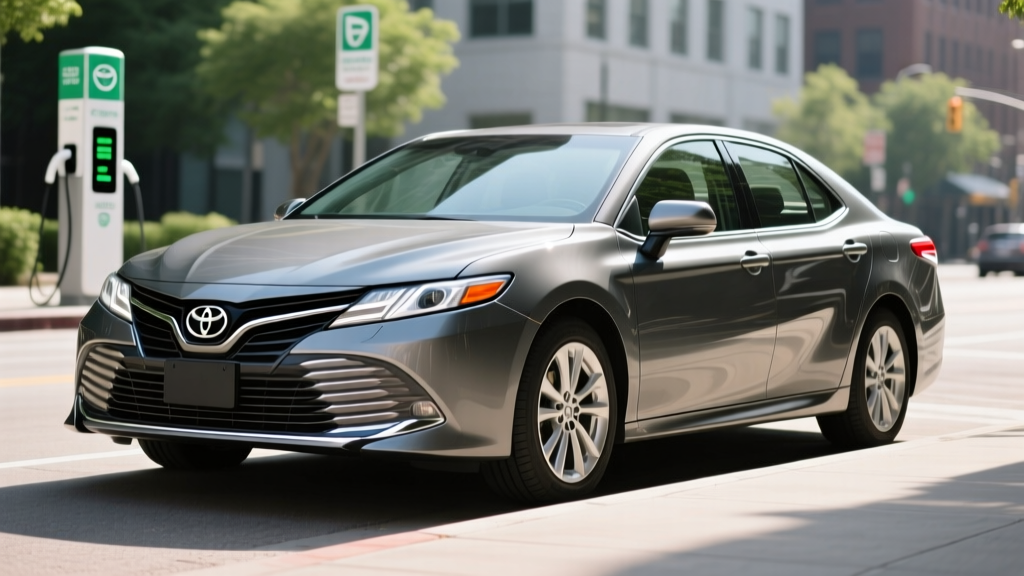
The 2015 Toyota Camry Hybrid occupies a specific niche in the used-car market: it's a midsize sedan that delivers genuine hybrid efficiency without requiring any change in driving habits. No plugs, no range anxiety, no charging infrastructure to navigate. For buyers in 2026 weighing a used hybrid against a new EV or a conventional gas car, the 2015 Camry Hybrid remains a compelling data point — especially with examples now trading well under $15,000.
This guide covers the exact EPA fuel economy figures, real-world MPG observations, battery longevity and replacement costs, powertrain specs, and a clear framework for deciding whether this 11-year-old hybrid fits your commute and budget.
EPA Fuel Economy: What the Numbers Actually Say
The 2015 Camry Hybrid was offered in two trims — LE and XLE — and the EPA ratings differ slightly between them due to wheel size and weight. Here's the official breakdown from fueleconomy.gov:
| Trim | City MPG | Highway MPG | Combined MPG | Annual Fuel Cost* |
|---|---|---|---|---|
| LE (17" wheels) | 43 | 39 | 41 | ~$1,350 |
| XLE (18" wheels) | 40 | 38 | 39 | ~$1,450 |
*Annual fuel cost based on 15,000 miles/year and $3.50/gallon regular unleaded. Your actual cost varies with local fuel prices and driving mix.
Toyota's Hybrid Synergy Drive system is one of the few powertrains that routinely meets or exceeds its EPA city rating in actual driving. In stop-and-go urban traffic, the electric motor handles low-speed propulsion and regenerative braking recaptures energy that a gas car wastes as heat. Owners on Fuelly and similar tracking platforms report sustained averages of 38–44 MPG combined over tens of thousands of miles. Highway-only driving at 75+ mph tends to drop to 35–37 MPG, since the aerodynamic drag of a midsize sedan overwhelms the electric assist at higher speeds. In cold weather (below 30°F), expect a 5–10% reduction as the engine runs more frequently to maintain cabin heat and battery temperature.
Powertrain Specs: Engine, Motor, and Combined Output
The 2015 Camry Hybrid pairs a 2.5-liter Atkinson-cycle inline-four engine with a permanent-magnet AC synchronous motor, connected through Toyota's eCVT (electronically controlled continuously variable transmission). This is not a traditional belt-and-pulley CVT — it uses a planetary gearset to blend power from the engine and motor, which is why Toyota hybrids don't suffer the "rubber-band" acceleration feel associated with some CVTs.
| Specification | Value |
|---|---|
| Gas Engine | 2.5L Atkinson-cycle I4, 156 hp / 156 lb-ft |
| Electric Motor | Permanent-magnet AC synchronous, 141 hp / 199 lb-ft |
| Net Combined Horsepower | 200 hp |
| Transmission | eCVT (planetary gearset) |
| Hybrid Battery | 1.6 kWh nickel-metal hydride (NiMH), 244.8V nominal |
| 0–60 mph | ~7.6 seconds |
| Curb Weight | ~3,545 lbs (LE) |
| Fuel Tank | 17.2 gallons |
| Total Range | ~705 miles (LE, at 41 MPG combined) |
The 1.6 kWh battery is small by modern standards — it's roughly 1/50th the size of a current EV battery. But in a conventional hybrid (HEV), that's intentional. The battery acts as a buffer, not a primary energy source. It captures regenerative braking energy and feeds the electric motor during acceleration, then recharges from the engine during cruising. You never plug it in.
HEV vs. PHEV vs. EV: Which Fits Your Situation?
The 2015 Camry Hybrid is a conventional hybrid electric vehicle (HEV). It has no plug, no electric-only driving range to speak of (the EV mode button allows roughly 0.5–1 mile at very low speeds on battery alone), and it refuels exclusively at gas stations. This is a critical distinction from plug-in hybrids (PHEVs) and battery electric vehicles (BEVs).
| Factor | HEV (2015 Camry Hybrid) | PHEV (e.g., RAV4 Prime) | BEV (e.g., Model 3, Ioniq 5) |
|---|---|---|---|
| Plug-in Required? | No | Yes (Level 1 or 2) | Yes (Level 2 or DC fast) |
| Electric-Only Range | <1 mile | 25–42 miles typical | 250–350+ miles |
| Home Charging Needed? | No | Strongly recommended | Essential |
| Federal Tax Credit (New) | None | Up to $7,500 (§30D) | Up to $7,500 (§30D) |
| Best For | No home charging access; apartment dwellers; simple ownership | Home charging + daily commute under 40 mi; road trips | Home charging; lower running costs; zero tailpipe emissions |
| Used Price (2026) | $10,000–$16,000 | $25,000–$40,000 | $18,000–$45,000+ |
- You rent or live somewhere without charging access (apartment, street parking)
- Your budget is under $16,000 and you want maximum fuel efficiency
- You want zero behavioral change — just gas up and drive
- Your commute is city-heavy, where hybrid efficiency peaks
Battery Longevity, Warranty, and Replacement Cost
Battery degradation is the single most common concern among used hybrid buyers. Here's what the data shows for the 2015 Camry Hybrid's NiMH pack:
- Original warranty: 8 years / 100,000 miles (10 years / 150,000 miles in CARB states including CA, NY, MA, and others)
- Warranty coverage threshold: Battery must retain sufficient capacity to function normally; Toyota defines failure as inability to hold charge for hybrid system operation
- Real-world lifespan data: NiMH packs in Toyota hybrids routinely last 150,000–200,000+ miles before requiring replacement. Taxi fleets using Camry and Prius hybrids have documented 300,000+ mile battery life
- 2026 status: Most 2015 Camry Hybrids are now past the original 8-year warranty window (expired 2023), but many remain within the 10-year CARB-state coverage through 2025
What Does a Replacement Battery Cost?
If the hybrid battery does fail, here are the realistic options in 2026:
- New OEM Toyota battery: $3,000–$4,000 (parts + dealer labor)
- Remanufactured battery (e.g., Green Bean Battery, Dorman): $1,500–$2,500 installed, often with a lifetime or 5-year warranty
- Used/salvage battery: $500–$1,200, but condition is uncertain — not recommended unless from a verified low-mileage donor
- Individual cell/module replacement: $300–$800 at a hybrid specialist shop, where only the degraded modules are swapped rather than the entire pack
The 1.6 kWh NiMH pack in the 2015 Camry Hybrid is far simpler and cheaper to replace than a modern EV's 60–80 kWh lithium-ion traction battery. This is one of the economic arguments for used hybrids: even a worst-case battery replacement at $2,500 keeps the car on the road for another 100,000 miles, and the total cost of ownership remains competitive with newer vehicles.
Reliability Track Record and Common Issues
Toyota's hybrid system is among the most proven electrified powertrains in automotive history. The Hybrid Synergy Drive in the 2015 Camry shares its core architecture with millions of Prius, Camry, and Highlander hybrids on the road. NHTSA data shows no systemic hybrid-system-related recalls for this model year.
Common issues reported by owners and documented by repair databases include:
- 12V auxiliary battery drain: Like all hybrids, the Camry has a conventional 12V battery that powers electronics. If the car sits unused for weeks, this battery can die. A jump-start or trickle charger resolves it — this is not the hybrid traction battery.
- Brake actuator assembly: Some 2015 Camry models (hybrid and gas) have reported premature wear in the brake actuator, which can cost $1,200–$1,800 to replace. Check for any open recalls or service campaigns.
- Inverter coolant pump: A known wear item around 100,000–150,000 miles. Replacement runs $400–$700. Failure can cause the hybrid system to overheat and enter limp mode.
- EGR valve clogging: The exhaust gas recirculation system can accumulate carbon deposits over time, causing rough idle. A $150–$300 cleaning at 100,000+ miles is common maintenance.
Overall, the 2015 Camry Hybrid scores well in long-term reliability. Consumer Reports historically rated this generation as "Above Average" for predicted reliability, and the model remains a staple of high-mileage owner forums.
Used Pricing in 2026 and Tax Credit Reality
As of early 2026, the 2015 Camry Hybrid trades in the used market at the following approximate ranges:
- 80,000–100,000 miles: $13,000–$16,000
- 100,000–140,000 miles: $10,500–$13,500
- 140,000–180,000 miles: $8,000–$11,000
Prices vary by region, condition, service history, and trim level (XLE commands a $1,000–$2,000 premium over LE).
Does It Qualify for Any Tax Credit?
No. The 2015 Camry Hybrid does not qualify for the federal §30D Clean Vehicle Credit. There are two reasons:
- It's a conventional HEV, not a PHEV or BEV. The §30D credit requires the vehicle to have a battery capacity of at least 7 kWh and the ability to be recharged from an external source. The Camry Hybrid's 1.6 kWh NiMH pack doesn't plug in and falls far below this threshold.
- The used-EV credit (§25E) also doesn't apply. The used clean vehicle credit of up to $4,000 applies only to used PHEVs and BEVs, not conventional hybrids.
Some states offer their own incentives for used hybrids, but these are rare and typically small ($250–$500 rebates). Check your state's energy or environmental agency for current programs. The economic case for the 2015 Camry Hybrid rests entirely on its low purchase price, strong fuel economy, and low maintenance costs — not on government incentives.
Ownership Costs: What 5 Years Actually Looks Like
Here's a realistic 5-year ownership projection for a 2015 Camry Hybrid purchased at $12,000 with 120,000 miles, driven 15,000 miles/year:
| Category | 5-Year Cost | Notes |
|---|---|---|
| Purchase Price | $12,000 | Cash or financed; no tax credit |
| Fuel (75,000 mi at 41 MPG, $3.50/gal) | $6,400 | ~1,829 gallons over 5 years |
| Insurance | $5,500–$7,000 | ~$1,100–$1,400/year; older vehicles are cheaper to insure |
| Maintenance & Repairs | $2,500–$4,500 | Oil changes, brakes, tires, potential inverter pump or EGR service |
| Potential Hybrid Battery Replacement | $0–$2,500 | Not guaranteed to fail; budget for possibility |
| Total (with battery reserve) | $26,400–$32,400 | $5,280–$6,480/year all-in |
Compare this to a new 2026 midsize sedan at $32,000 with a $600/month payment, $1,800/year insurance, and 30 MPG: the used Camry Hybrid often costs significantly less per year even with a battery replacement factored in.
Buying Checklist: What to Inspect Before You Buy
If you're evaluating a specific 2015 Camry Hybrid, prioritize these checks:
- Hybrid battery health check: Ask a Toyota dealer or hybrid specialist to run a battery health diagnostic. This shows individual module voltages and identifies weak cells before they cause a failure.
- Service records: Regular oil changes (every 5,000–10,000 miles) and inverter coolant checks are essential. A car with documented maintenance is a lower-risk buy.
- Brake actuator history: Ask if the brake actuator has been replaced. If not, factor $1,500 into your budget as a potential future expense.
- Tire condition: The LE's 17-inch tires are cheaper to replace (~$500–$700 for a set) than the XLE's 18-inch rubber (~$700–$900).
- CARB state history: If the car was originally sold and registered in a CARB state (CA, NY, MA, CT, ME, MD, NJ, OR, RI, VT, WA, CO), its hybrid battery warranty extended to 10 years / 150,000 miles — meaning coverage may have expired in 2025.
Frequently Asked Questions
How many MPG does the 2015 Camry Hybrid get?
The EPA rates the LE trim at 43 city / 39 highway / 41 combined MPG, and the XLE at 40/38/39. Real-world driving in city-heavy conditions often matches or slightly exceeds the EPA city figure, while sustained highway driving at 75+ mph drops to the mid-30s.
Does the 2015 Camry Hybrid need to be plugged in?
No. This is a conventional hybrid (HEV), not a plug-in hybrid (PHEV). The 1.6 kWh battery recharges entirely through regenerative braking and the gas engine. You fuel it exclusively at gas stations.
How far can it drive on electric power alone?
Effectively less than one mile. The EV mode button allows very low-speed electric-only movement (under 25 mph) for short distances — useful for creeping through a parking garage, but not meaningful for commuting. This is not a PHEV with 25+ miles of electric range.
Is the hybrid battery reliable, and what does replacement cost?
Toyota's NiMH hybrid batteries are among the most durable in the industry, with documented lifespans of 150,000–200,000+ miles. If replacement is needed, expect $1,500–$2,500 for a remanufactured pack or $3,000–$4,000 for new OEM. Individual module replacement at a hybrid specialist can cost as little as $300–$800.
Is the 2015 Camry Hybrid a good buy in 2026?
For buyers who want maximum fuel efficiency without plugging in, have a budget under $16,000, and prioritize low operating costs, it remains one of the strongest used-vehicle values available. The main risks are age-related mechanical wear (brake actuator, coolant pump) rather than hybrid-system failure.
Does it qualify for any federal or state tax credit?
No federal tax credit applies. The §30D credit requires a plug-in vehicle with at least 7 kWh of battery capacity. The used-EV credit (§25E) similarly excludes conventional hybrids. Some states may offer small rebates for used hybrids, but these are uncommon and vary by jurisdiction.