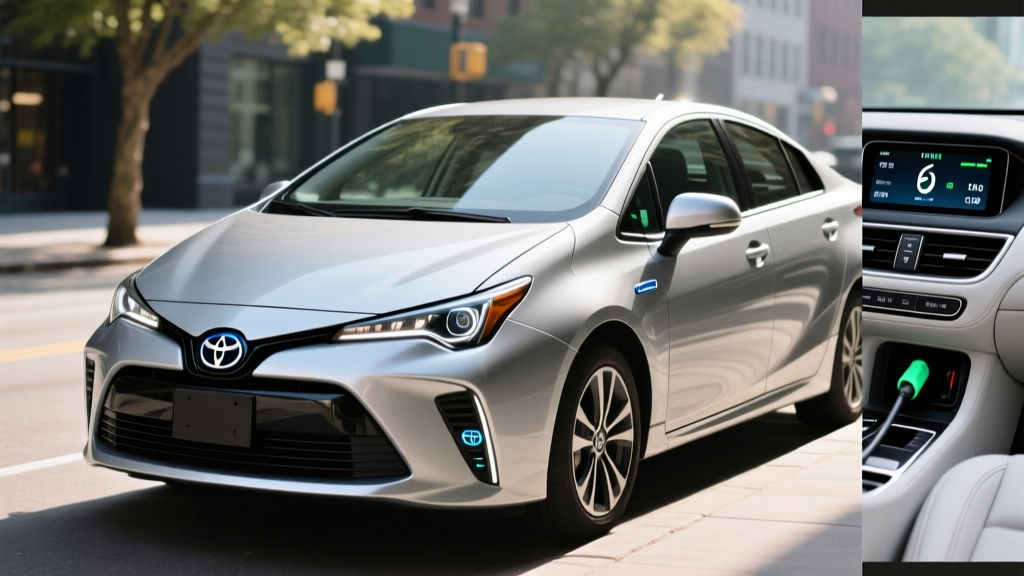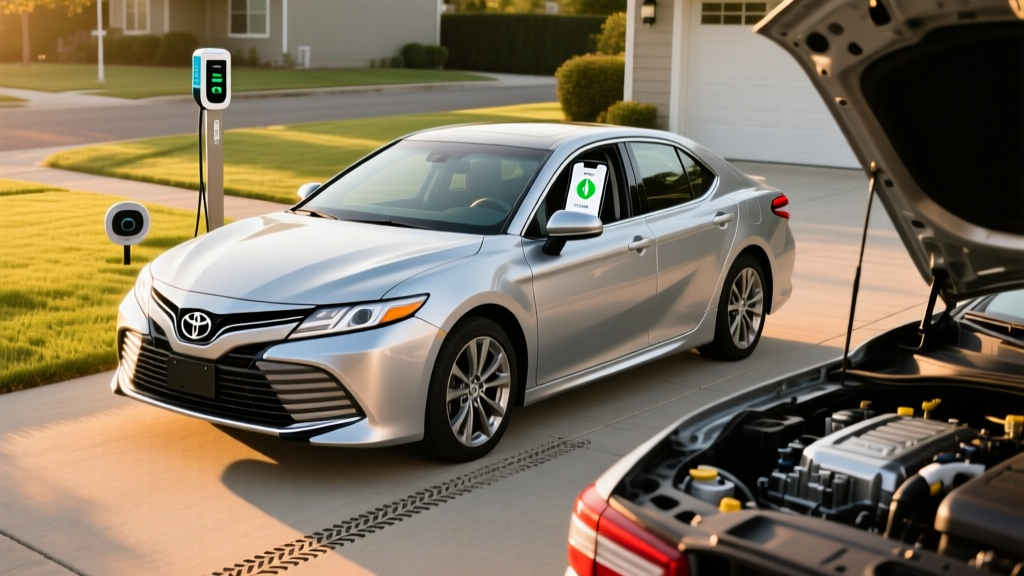
The 2015 Toyota Camry Hybrid occupies a specific niche in the used-car market of 2026: a midsize sedan that delivers genuine hybrid efficiency without plug-in complexity, and with the long-term reliability Toyota has built its reputation on. If you're researching the 2015 Camry Hybrid fuel economy before buying one on the pre-owned market, this guide gives you exact EPA numbers, real-world expectations, battery longevity data, and a clear-eyed look at whether this HEV still makes sense versus a newer hybrid, PHEV, or full EV.
Quick Clarification: HEV vs. PHEV
The 2015 Camry Hybrid is a conventional hybrid (HEV). It cannot plug in. Its small battery recharges through regenerative braking and the gasoline engine. This is fundamentally different from a plug-in hybrid (PHEV) like the Toyota RAV4 Prime or Prius Prime, which offers 25–42 miles of electric-only driving and requires a wall outlet to realize its full efficiency benefit. If you see "Camry Hybrid" at a dealership, it is an HEV — no charging cord needed, no electric-only mode for highway driving.
2015 Camry Hybrid Fuel Economy: EPA Numbers and Real-World MPG
The EPA rated the 2015 Camry Hybrid at 40 MPG city / 38 MPG highway / 40 MPG combined for the LE trim, and 40/37/39 MPG for the XLE and SE trims (slightly heavier, wider tires). These figures come from fueleconomy.gov and represent the official test-cycle results.
| Trim | City MPG | Highway MPG | Combined MPG |
|---|---|---|---|
| LE | 40 | 38 | 40 |
| XLE | 40 | 37 | 39 |
| SE | 40 | 37 | 39 |
Real-World MPG: What Owners Actually See
Hybrids tend to beat their EPA city ratings in stop-and-go driving because regenerative braking recovers energy that a gas car wastes as heat. On the highway, however, the advantage narrows — the electric motor contributes less at sustained 70+ MPH speeds, and aerodynamic drag dominates.
Based on owner-reported data and long-term testing patterns:
- City driving (suburban, 25–45 MPH): Expect 41–46 MPG. Short trips with frequent stops maximize regen benefit.
- Highway driving (70–80 MPH sustained): Expect 35–38 MPG. The 2.5-liter Atkinson-cycle engine does most of the work.
- Cold weather (below 35°F): Expect a 5–10% reduction, roughly 36–38 MPG combined. The engine runs more often to provide cabin heat and maintain battery temperature.
- Mixed commuting (realistic daily average): Most owners report 38–43 MPG combined in temperate climates, aligning closely with or slightly exceeding the EPA sticker.
Battery Age and MPG in a 2026 Used Purchase
A 2015 Camry Hybrid is now 11 years old. The nickel-metal hydride (NiMH) traction battery may have lost 10–20% of its original capacity depending on climate, mileage, and usage patterns. Moderate degradation (10–15%) typically reduces fuel economy by only 1–3 MPG — the engine compensates. Severe degradation triggers a check-engine light and limp mode. If the battery has been replaced, ask for documentation and whether OEM or aftermarket cells were used.
Powertrain Specs: Engine, Motor, and Combined Output
| Specification | Value |
|---|---|
| Gasoline Engine | 2.5L 4-cylinder Atkinson cycle (156 HP, 156 lb-ft) |
| Electric Motor | Permanent-magnet AC synchronous (105 kW / 141 HP) |
| Net Combined System HP | 200 HP |
| Transmission | eCVT (planetary gearset, not a belt-driven CVT) |
| Traction Battery | NiMH, ~1.6 kWh (not plug-in capable) |
| 0–60 MPH | ~7.6 seconds |
| Curb Weight | 3,545–3,615 lbs (varies by trim) |
| Fuel Tank | 17.0 gallons (regular 87 octane) |
| Total Driving Range | ~680 miles (at 40 MPG combined) |
Toyota's Hybrid Synergy Drive in this generation pairs the engine and motor through a planetary gearset — there are no fixed gears and no clutch packs to wear out. This eCVT design is one reason the Camry Hybrid's drivetrain longevity is exceptional. The 200 combined HP figure is not simply additive (the engine and motor don't peak simultaneously); it represents the maximum system output the power-control unit allows at any given moment.
2015 Camry Hybrid Battery: Warranty, Lifespan, and Replacement Cost
The hybrid battery is the single biggest concern for any used HEV buyer. Here are the facts for the 2015 model year:
- Original factory warranty: 8 years / 100,000 miles (10 years / 150,000 miles in CARB states including California, New York, Massachusetts, and others adopting California emissions standards).
- Warranty status in 2026: Expired for virtually all 2015 vehicles unless an extended warranty was purchased separately.
- Typical battery lifespan: NiMH packs in the Camry Hybrid commonly last 150,000–200,000+ miles before significant degradation. Many original batteries are still functional at 11 years old in moderate climates.
- Heat is the enemy: Vehicles in Arizona, Texas, and the Southeast see faster degradation. Battery cooling ducts (behind the rear seat) should be kept clear of debris.
Battery Replacement Cost in 2026
If the NiMH battery fails or degrades beyond usability:
- OEM new battery (Toyota dealer): $3,000–$4,000 installed
- Refurbished/remanufactured battery: $1,500–$2,500 installed (common choice for an 11-year-old vehicle)
- Individual cell/module replacement: $500–$1,200 at independent hybrid specialists (only viable if a few modules are weak, not the entire pack)
Before buying, request a hybrid battery health check — many Toyota dealers and hybrid specialists can read the battery's State of Health (SoH) via the OBD-II port using Techstream or equivalent scan tools. Look for voltage delta between modules; a spread greater than 0.3V under load suggests uneven aging and near-term failure risk.
Pricing and Tax Credit Eligibility in 2026
The 2015 Camry Hybrid is available only on the used market. Pricing varies by mileage, condition, and region:
- Private-party range (80,000–130,000 miles): $10,000–$15,000
- Dealer retail range: $12,000–$17,000
- Low-mileage examples (under 60,000 miles): $16,000–$20,000
Does the 2015 Camry Hybrid Qualify for Any Tax Credit?
No. The federal §30D new clean vehicle credit applies only to new vehicles, and the 2015 Camry Hybrid is a conventional HEV (not a PHEV or BEV), so it would not have qualified even when new. The Used Clean Vehicle Credit (§25E, up to $4,000) applies only to used BEVs and PHEVs — conventional hybrids are excluded. There is no federal tax incentive for purchasing a used Camry Hybrid.
Some states or local utilities offer rebates for used hybrid purchases, but these are uncommon and change frequently. Check your state energy office or utility provider for current programs.
Camry Hybrid vs. PHEV vs. Full EV: Which Should You Choose?
| Factor | 2015 Camry Hybrid (HEV) | PHEV (e.g., Prius Prime) | Full EV (e.g., Tesla Model 3) |
|---|---|---|---|
| Plug-in Required? | No | Yes (for EV mode) | Yes |
| Electric-Only Range | ~1 mile (low-speed creep) | 25–44 miles | 250–360 miles |
| Combined MPG / MPGe | 39–40 MPG | ~50 MPG + 120+ MPGe | 120–140 MPGe |
| Home Charging Needed? | No | Recommended (Level 2) | Essential (Level 2) |
| Used Price Range (2026) | $10K–$17K | $20K–$32K | $18K–$35K |
| Federal Tax Credit (Used) | None | Up to $4,000 (§25E) | Up to $4,000 (§25E) |
| Road-Trip Convenience | Excellent (gas stations) | Excellent (gas backup) | Requires DC fast charging planning |
| Maintenance Complexity | Low (proven HEV system) | Moderate (dual powertrains) | Low (fewer moving parts) |
Pros
- 40 MPG combined with zero plug-in requirement
- Proven, low-maintenance Hybrid Synergy Drive
- ~680-mile total range on a single tank
- Comfortable midsize cabin, smooth ride
- Low entry price ($10K–$17K used)
- No range anxiety — works anywhere gas is sold
Cons
- No electric-only driving (not a PHEV)
- No federal or state tax credit eligibility
- NiMH battery aging risk at 11 years old
- eCVT "drone" under hard acceleration
- Dated infotainment (no Apple CarPlay/Android Auto)
- Higher emissions than PHEV or EV alternatives
Reliability and Long-Term Ownership Costs
The 2015 Camry Hybrid benefits from Toyota's Hybrid Synergy Drive, which has no traditional transmission fluid to change, no starter motor, no alternator, and no accessory belt. The eCVT planetary gearset is among the most durable drivetrain components in any vehicle class. NHTSA data shows no pattern of hybrid-system-related recalls for this model year.
Key Maintenance Items
- Hybrid battery cooling fan filter: Clean or replace every 30,000 miles. A clogged filter causes battery overheating and accelerated degradation. Located behind the rear passenger seat vent.
- Inverter coolant: Toyota recommends replacement at 100,000 miles, then every 50,000 miles. Neglect risks inverter failure ($2,000+ repair).
- Brake pads: Regenerative braking reduces pad wear significantly. Original pads often last 80,000–120,000 miles.
- Engine oil: Standard 0W-20 synthetic, 10,000-mile intervals.
Estimated Annual Operating Cost
At 12,000 miles/year, $3.40/gallon regular, and 40 MPG combined: approximately $1,020/year in fuel. A comparable 2015 Camry gas model (28 MPG combined) would cost roughly $1,457/year — a savings of about $437 annually, or $4,370 over 10 years of ownership.
Who Should Buy the 2015 Camry Hybrid in 2026?
Choose the 2015 Camry Hybrid If:
- You want 40 MPG without installing a home charger or changing your fueling habits
- Your budget is $10K–$17K and you need a reliable daily driver
- You take frequent long road trips and don't want to plan around charging stations
- You live in an apartment or lack access to Level 2 charging
- You value low maintenance costs and proven mechanical simplicity
Look at a PHEV or EV Instead If:
- You have home charging access and a commute under 30 miles (a PHEV eliminates most gas use)
- You want to qualify for the used clean vehicle credit (up to $4,000 for qualifying used BEVs and PHEVs)
- You want electric-only driving for air quality, HOV lane access, or driving refinement
- You drive fewer than 8,000 miles/year (fuel savings won't offset a higher purchase price for a newer PHEV/EV)
Frequently Asked Questions
How many MPG does the 2015 Camry Hybrid actually get?
The EPA rates it at 40 city / 38 highway / 40 combined (LE trim). In real-world driving, most owners report 38–43 MPG combined. City driving often yields 41–46 MPG thanks to regenerative braking, while sustained highway speeds above 70 MPH drop to 35–38 MPG. Cold weather reduces efficiency by roughly 5–10%.
Can the 2015 Camry Hybrid be plugged in to charge?
No. The 2015 Camry Hybrid is a conventional HEV, not a PHEV. It has no charge port. The small NiMH battery charges exclusively through regenerative braking and the gasoline engine. You fuel it like any other car — at a gas station.
How long does the hybrid battery last, and what does replacement cost?
Toyota's NiMH batteries in the Camry Hybrid typically last 150,000–200,000+ miles. At 11 years old, many original batteries are still functional, especially in moderate climates. A refurbished replacement costs $1,500–$2,500 installed; a new OEM battery runs $3,000–$4,000. The original warranty (8yr/100K mi or 10yr/150K mi in CARB states) has expired for nearly all 2015 examples.
Does the 2015 Camry Hybrid qualify for any tax credits?
No. It does not qualify for the federal §30D new vehicle credit (it's not a new vehicle, and conventional HEVs are excluded regardless). It also does not qualify for the §25E used clean vehicle credit, which applies only to used BEVs and PHEVs. Check your state and utility for any local hybrid incentives, though these are rare.
Is the 2015 Camry Hybrid reliable compared to the gas Camry?
Yes — in many respects, more reliable. The hybrid system eliminates the starter, alternator, and accessory belt. Regenerative braking extends pad life. The eCVT has no belts or clutch packs to fail. The primary added risk is the traction battery, but at typical replacement cost ($1,500–$2,500 refurbished), it's comparable to a transmission repair on a conventional vehicle.
How does the 2015 Camry Hybrid compare to a 2026 Camry Hybrid?
The current-generation Camry Hybrid (2025+ redesign) uses a more efficient fifth-generation hybrid system with a lithium-ion battery, achieving up to 51 MPG combined. However, a new 2026 Camry Hybrid starts around $30,000+. The 2015 model at $10K–$17K delivers roughly 75% of the efficiency at 40–50% of the cost — a strong value proposition for budget-conscious buyers who don't need the latest technology.