Quick Verdict: A Futuristic PHEV Sports Car — With Caveats
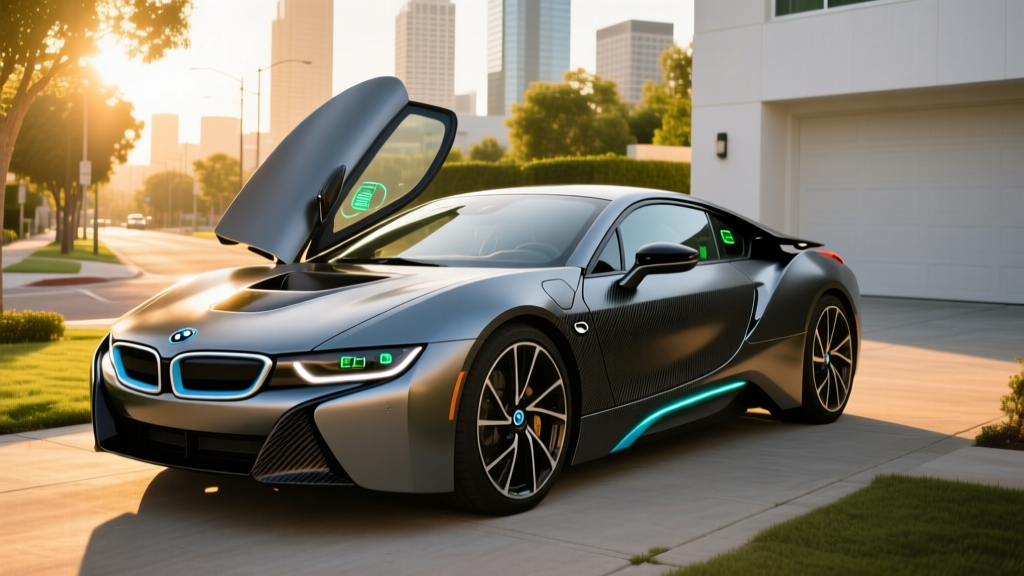
The 2015 BMW i8 hybrid was one of the most ambitious plug-in hybrids ever built: a carbon-fiber-reinforced plastic (CFRP) sports car pairing a 1.5-liter turbocharged three-cylinder engine with an electric motor for a combined 357 horsepower. As a used PHEV in 2026, it remains a head-turner with genuine electric-only commuting capability and sports-car performance. But prospective buyers need to understand its real-world efficiency, aging high-voltage battery risks, and what ownership actually costs before signing paperwork.
This guide covers everything a used-car shopper needs: real-world MPG versus EPA estimates, electric-only range, charging logistics, battery longevity, and whether this decade-old PHEV still makes sense against modern alternatives.
HEV vs PHEV: Where the 2015 BMW i8 Fits
The BMW i8 is a plug-in hybrid electric vehicle (PHEV), not a conventional hybrid (HEV). The distinction matters for daily driving and charging expectations:
| Feature | Conventional Hybrid (HEV) | Plug-in Hybrid (PHEV) — BMW i8 |
|---|---|---|
| Needs to plug in? | No — charges via regenerative braking and engine | Yes — plug in to access electric-only range |
| Electric-only driving | Very limited (usually under 1 mile at low speed) | Up to 15 miles EPA on battery alone |
| Battery size | Small (1–2 kWh) | 7.1 kWh total (5.1 kWh usable) |
| Fuel economy advantage | Better MPG in city stop-and-go | Can commute gas-free on short trips; engine for longer drives |
| Tax credit (new) | Generally none | Qualified for up to $7,500 when new (expired) |
The i8's PHEV architecture lets you drive roughly 15 miles on electricity alone — enough for many short commutes — then the gasoline engine kicks in seamlessly for longer trips. If you never plug it in, it functions as a conventional hybrid, but you'll sacrifice the efficiency gains that justify its PHEV design.
EPA MPG, MPGe, and Real-World Fuel Economy
The 2015 BMW i8 carries two fuel-economy ratings from the EPA: an MPGe figure for electric+gas operation and a standard MPG figure for gas-only driving.
| Metric | EPA Rating | Real-World Expectation |
|---|---|---|
| Combined MPGe (electric + gas) | 76 MPGe | 65–80 MPGe depending on charging frequency |
| Combined MPG (gas only) | 28 MPG | 25–30 MPG; highway can reach 32 MPG |
| City MPG (gas only) | 26 MPG | 24–28 MPG |
| Highway MPG (gas only) | 29 MPG | 28–32 MPG |
| Electric-only range | 15 miles | 11–14 miles (less in cold weather or at highway speed) |
| Total combined range | 330 miles | 300–340 miles with full tank + full charge |
According to fueleconomy.gov, the i8 achieves 76 MPGe when blending its electric and gasoline systems. That figure is heavily dependent on how often you charge. Owners who plug in nightly and commute under 15 miles may use almost no gasoline during the week. Those who never charge will see roughly 28 MPG combined — respectable for a 357-HP sports car, but unremarkable versus a modern four-cylinder sedan.
Real-world data from owner forums and long-term tests suggests highway driving at 75+ MPH reduces the electric-only range to roughly 10–12 miles, as the i8's electric motor works harder against aerodynamic drag. Cold weather (below 40°F) further reduces battery range by 15–25%, a characteristic of all lithium-ion packs.
Battery, Charging, and Electric-Only Range
The 2015 i8 uses a 7.1 kWh lithium-ion battery pack (5.1 kWh usable, with the remainder serving as a protective buffer to prevent deep discharge). BMW located the battery in the center tunnel between the seats, contributing to the car's low center of gravity and 50/50 weight distribution.
| Charging Metric | Specification |
|---|---|
| Battery capacity (total / usable) | 7.1 kWh / 5.1 kWh |
| Battery chemistry | Lithium-ion (NMC-type) |
| Level 1 charging (120V household) | ~3.5 hours from empty (1.4 kW) |
| Level 2 charging (240V) | ~1.5 hours from empty (3.7 kW) |
| DC fast charging | Not supported |
| Charge connector | SAE J1772 (Level 1 and Level 2) |
| EPA electric-only range | 15 miles |
| Top speed in EV mode | 75 MPH |
The i8 does not support DC fast charging — a limitation that's largely irrelevant given its small battery. A full Level 2 charge in about 90 minutes is practical for overnight or workplace top-ups. On a standard 120V outlet, expect roughly 3.5 hours, which is manageable for overnight charging but slow for mid-day replenishment.
One practical note: the i8's J1772 connector is the legacy standard. Most modern public Level 2 stations still support J1772, but the industry's shift to NACS (Tesla's connector) means adapters may become necessary at some networks in coming years.
Powertrain and Performance
The 2015 i8's powertrain was genuinely innovative for its era — and remains impressive today:
- Gasoline engine: 1.5-liter turbocharged 3-cylinder, 228 HP and 236 lb-ft of torque, driving the rear wheels through a 6-speed automatic transmission
- Electric motor: 129 HP and 184 lb-ft, driving the front wheels through a 2-speed automatic
- Combined system output: 357 HP and 420 lb-ft of torque
- 0–60 MPH: 4.2 seconds (Motor Trend verified)
- Top speed: 155 MPH (electronically limited)
- Drivetrain: All-wheel drive (engine rear, motor front)
This through-the-road hybrid AWD system means there's no mechanical connection between the front and rear axles. The computer coordinates torque delivery between the electric front and gasoline rear, providing confident launches and agile cornering. The i8's carbon-fiber passenger cell keeps curb weight to roughly 3,455 lbs — lighter than most PHEVs and critical to its sports-car dynamics.
Driving modes include Comfort, Sport (which keeps the engine running for maximum responsiveness), and eDrive (pure electric). In Sport mode, the three-cylinder engine sound is augmented through the cabin speakers — a divisive design choice that some owners love and others disable.
Used Pricing and Tax Credit Reality
Because the 2015 BMW i8 is now over a decade old, it is only available on the used market. Pricing as of early 2026:
- Original MSRP (2015): $137,450 (base), $140,000+ with options
- Used market range (2026): $45,000–$75,000 depending on mileage, condition, and service history
- Low-mileage examples (under 30K miles): $65,000–$80,000
The i8 originally qualified for the full $7,500 federal EV tax credit under pre-2023 rules. However, under current IRS §30D regulations (updated by the Inflation Reduction Act), used EVs and PHEVs may qualify for a used clean vehicle credit of up to $4,000 or 30% of the sale price, whichever is less. Key requirements per IRS guidelines include:
- Sale price must be $25,000 or less (the i8 typically exceeds this threshold)
- Buyer income limits: $75,000 single / $112,500 head of household / $150,000 joint
- Vehicle must be at least two model years old (i8 qualifies)
- Must purchase from a licensed dealer
- Credit is non-refundable and can only be claimed once per vehicle
Bottom line: Most 2015 i8 examples sell well above the $25,000 used-credit price cap, meaning the majority of buyers will not qualify for any federal tax credit. Consult a tax professional for your specific situation.
Reliability, Battery Lifespan, and Replacement Cost
BMW's high-voltage battery warranty for the 2015 i8 was 8 years/100,000 miles against defects and excessive capacity loss (defined as dropping below 70% of original capacity). As of 2026, all 2015 models have exceeded the 8-year warranty window, meaning any battery failure is an out-of-pocket expense.
- Original warranty: 8 years / 100,000 miles (expired for all 2015 models)
- Battery degradation (typical at 10 years): 15–30% capacity loss depending on climate and charging habits
- Expected electric range at 10 years: 10–13 miles (down from 15 EPA)
- High-voltage battery replacement cost: $12,000–$18,000 (parts + labor at BMW dealer)
- 12V auxiliary battery: Standard replacement, ~$300–$500
Owner reports and independent analyses from sources like IIHS and BMW forums suggest the i8's powertrain is generally reliable, with the gasoline engine being a proven BMW design. The most common complaints involve:
- Battery degradation: Moderate; most 2015 models retain 70–85% of original battery capacity. Cars in hot climates (Arizona, Texas) tend toward the lower end.
- Electric motor: Very few reported failures
- Turbo engine: Reliable with proper maintenance; watch for oil consumption and coolant system issues common to BMW turbo engines
- Carbon fiber body: Extremely durable but very expensive to repair after collision damage — specialized body shops required
- Butterfly doors: Gas struts wear over time; replacement struts are an affordable fix (~$100–$200 pair)
The critical financial risk is the high-voltage battery. A full replacement at a BMW dealer runs $12,000–$18,000. Some independent EV shops offer refurbished battery modules for $6,000–$10,000. Before purchasing, request a battery State of Health (SoH) readout from a BMW dealer or qualified technician — this single diagnostic (usually $100–$200) tells you exactly how much capacity remains.
Who Should Buy the 2015 BMW i8 — And Who Shouldn't
- Exotic supercar styling at a fraction of supercar prices
- CFRP construction — lightweight and corrosion-resistant
- 357 HP with 4.2-second 0–60 time
- 15-mile EV range covers many short commutes
- 28 MPG gas-only is efficient for a sports car
- Strong enthusiast community and parts availability
- Expired battery warranty — replacement costs $12K–$18K
- Tiny back seats (best used as cargo space)
- Small 11.8-gallon fuel tank limits highway range
- No DC fast charging
- Carbon fiber body repairs are extremely expensive after collision
- Infotainment and tech feel dated vs. 2026 vehicles
- Rarely qualifies for used EV tax credit (price exceeds $25K cap)
Choose the 2015 BMW i8 if:
- You want a weekend sports car that can also serve as a weekday commuter on electric power
- You have home Level 2 charging and a commute under 15 miles
- You value exotic design and carbon-fiber engineering
- You're comfortable budgeting $2,000–$4,000/year for maintenance and potential battery work
Look elsewhere if:
- You need a practical daily driver with rear seats and cargo room (consider a used BMW 330e or Toyota RAV4 Prime instead)
- You want 30+ miles of electric range (modern PHEVs like the Toyota Prius Prime offer 44 miles)
- You cannot tolerate the risk of a $15,000 out-of-warranty battery replacement
- You want the latest ADAS features, over-the-air updates, or modern infotainment
2015 BMW i8 vs. Modern PHEVs and Used EVs
For buyers cross-shopping the i8 against other electrified options in the $45,000–$75,000 used market:
| Vehicle | Type | EV Range | Combined MPG/MPGe | 0–60 MPH | Used Price (2026) |
|---|---|---|---|---|---|
| 2015 BMW i8 | PHEV | 15 mi | 76 MPGe / 28 MPG | 4.2 sec | $45K–$75K |
| 2021 Toyota RAV4 Prime | PHEV | 42 mi | 94 MPGe / 38 MPG | 5.7 sec | $35K–$45K |
| 2020 Tesla Model 3 LR | BEV | 322 mi | 141 MPGe | 4.2 sec | $25K–$35K |
| 2019 BMW 330e | PHEV | 22 mi | 75 MPGe / 28 MPG | 5.6 sec | $22K–$30K |
The i8 occupies a unique niche: it's the only vehicle in this group that turns heads at a Cars & Coffee. But if practicality, range, or cost-of-ownership are your priorities, the RAV4 Prime and Model 3 offer more utility and lower risk for less money.
Frequently Asked Questions
How many MPG does the 2015 BMW i8 hybrid get?
The EPA rates the 2015 i8 at 76 MPGe combined (electric + gas) and 28 MPG combined on gasoline alone (26 city / 29 highway). Real-world gas-only driving typically yields 25–30 MPG depending on driving style, and the MPGe figure varies dramatically based on how often you charge the battery.
How far can the 2015 BMW i8 go on electric only?
The EPA rates the i8 at 15 miles of electric-only range. In real-world conditions, expect 11–14 miles in moderate weather, and as little as 9–11 miles in cold weather or at sustained highway speeds. Aged batteries in 2026 may deliver 10–13 miles depending on degradation.
Is the 2015 BMW i8 reliable and what does battery replacement cost?
The powertrain is generally reliable with proper maintenance. The main risk is the high-voltage battery, which is now out of its 8-year/100,000-mile warranty on all 2015 models. A full battery replacement costs $12,000–$18,000 at a BMW dealer, or $6,000–$10,000 through independent EV specialists using refurbished modules. Always get a battery State of Health (SoH) diagnostic before purchasing.
Does the 2015 BMW i8 qualify for any tax credit in 2026?
Under current IRS §30D used clean vehicle credit rules, the i8 would need to sell for $25,000 or less to qualify for up to $4,000. Since most examples sell for $45,000–$75,000, the vast majority will not qualify. The original $7,500 new-vehicle credit is long expired. Consult a tax professional for your specific eligibility.
Hybrid vs PHEV vs EV — which is right for me?
If you have reliable home charging and a short commute, a PHEV like the i8 lets you drive gas-free most weekdays while keeping a gas engine for road trips. A conventional hybrid (HEV) like a Toyota Prius requires no plug-in but can't drive on electricity alone. A full battery-electric vehicle (BEV) eliminates gasoline entirely but requires charging infrastructure and planning for long trips. The i8 specifically appeals to enthusiasts who want sports-car performance with some electric commuting — it's not a practical-first choice.
Can the 2015 BMW i8 DC fast charge?
No. The i8 only supports Level 1 (120V, ~1.4 kW) and Level 2 (240V, ~3.7 kW) AC charging via a J1772 connector. Given the small 7.1 kWh battery, a full Level 2 charge takes about 90 minutes, making DC fast charging unnecessary for most use cases.
What should I check before buying a used 2015 BMW i8?
Prioritize a pre-purchase inspection at a BMW dealer or i8-experienced specialist. Key items: high-voltage battery State of Health readout, service records for the gasoline engine (oil changes, coolant), condition of the door gas struts, tire age and wear (the i8 uses specific narrow tires), and a clean Carfax — collision damage to the carbon-fiber body is extraordinarily expensive to repair.