The 2015 Toyota Avalon Hybrid occupies a specific niche in the used-car market: a full-size sedan that delivers mid-size hybrid fuel economy without requiring a plug, a charging routine, or any change in driving habits. For buyers in 2026 weighing a used hybrid against a newer plug-in hybrid (PHEV) or a battery-electric vehicle (BEV), the Avalon Hybrid offers a compelling low-friction entry into electrified ownership — provided you understand what you're getting, what the battery costs to replace, and where this car fits in today's landscape.
This guide covers the 2015 Avalon Hybrid's EPA fuel economy, real-world MPG expectations, powertrain specs, battery longevity and replacement costs, and how it compares to modern alternatives. Whether you're considering one as a budget commuter or a reliable daily driver, here are the numbers that matter.
2015 Avalon Hybrid Fuel Economy: EPA vs. Real-World MPG
The 2015 Avalon Hybrid is a conventional hybrid electric vehicle (HEV), not a plug-in. It charges its own small battery through regenerative braking and the gasoline engine — you never plug it in. That simplicity is a major selling point for apartment dwellers or anyone without home charging access.
| Metric | Value |
|---|---|
| City MPG | 40 MPG |
| Highway MPG | 39 MPG |
| Combined MPG | 40 MPG |
| Fuel Tank Capacity | 17.0 gallons |
| EPA Estimated Total Range | ~680 miles |
Source: fueleconomy.gov
Toyota's Hybrid Synergy Drive system excels in stop-and-go city driving, where the electric motor handles low-speed propulsion and regenerative braking recaptures energy. Many owners report 42-45 MPG in city driving, exceeding the EPA estimate. Highway cruising at 75+ MPH tends to yield 35-38 MPG, as the 2.5-liter four-cylinder engine does more of the work. In cold weather (below 35°F), expect a 5-10% reduction due to the engine running more frequently to heat the cabin and warm the hybrid battery.
Powertrain Specs: Engine, Motor, and Combined Output
The 2015 Avalon Hybrid pairs a 2.5-liter Atkinson-cycle four-cylinder gasoline engine with an electric motor and a continuously variable transmission (eCVT). This is the same proven powertrain architecture Toyota used in the Camry Hybrid of the same era.
| Specification | Value |
|---|---|
| Gasoline Engine | 2.5L 4-cylinder Atkinson-cycle |
| Engine Horsepower | 156 HP @ 5,700 RPM |
| Electric Motor Output | 105 kW (141 HP) |
| Net Combined Horsepower | 200 HP |
| Transmission | eCVT (planetary gearset) |
| 0-60 MPH (estimated) | ~8.0 seconds |
| Drivetrain | Front-wheel drive |
| Hybrid Battery Type | Nickel-metal hydride (NiMH) |
| Hybrid Battery Capacity | ~1.6 kWh (nominal) |
The 200 HP combined output is adequate for a 3,500-pound sedan. Acceleration is smooth and linear thanks to the eCVT, which has no fixed gear ratios and thus no shift shock. Passing power on the highway is confident, though this is a car tuned for comfort, not sportiness.
HEV vs. PHEV vs. EV: Where the Avalon Hybrid Fits in 2026
Understanding the distinction between hybrid types is critical before you buy. The 2015 Avalon Hybrid is an HEV (Hybrid Electric Vehicle) — it cannot plug in and has no meaningful electric-only driving range. Here's how it compares to the other electrified options on the used and new market:
| Feature | HEV (e.g., 2015 Avalon Hybrid) | PHEV (e.g., Toyota Prius Prime) | BEV (e.g., Tesla Model 3) |
|---|---|---|---|
| Plug-in Charging? | No | Yes (Level 1/2) | Yes (Level 1/2/DC) |
| Electric-Only Range | ~1 mile at low speed | 25-44 miles (typical) | 250-400+ miles |
| Gasoline Required? | Yes, always | Yes, for longer trips | No |
| Home Charging Needed? | No | Recommended for EV range | Essential |
| Typical Used Price (2026) | $10,000-$16,000 | $18,000-$30,000 | $18,000-$40,000+ |
| Federal Tax Credit (Used) | None | Up to $4,000 (§25E) | Up to $4,000 (§25E) |
The Avalon Hybrid is ideal if you want better fuel economy with zero lifestyle change. No plug, no charging apps, no range planning. You fill up at any gas station and drive. The trade-off is that you'll always burn gasoline, and your per-mile fuel cost will be higher than a BEV charged on off-peak residential electricity.
Hybrid Battery Lifespan, Warranty, and Replacement Cost
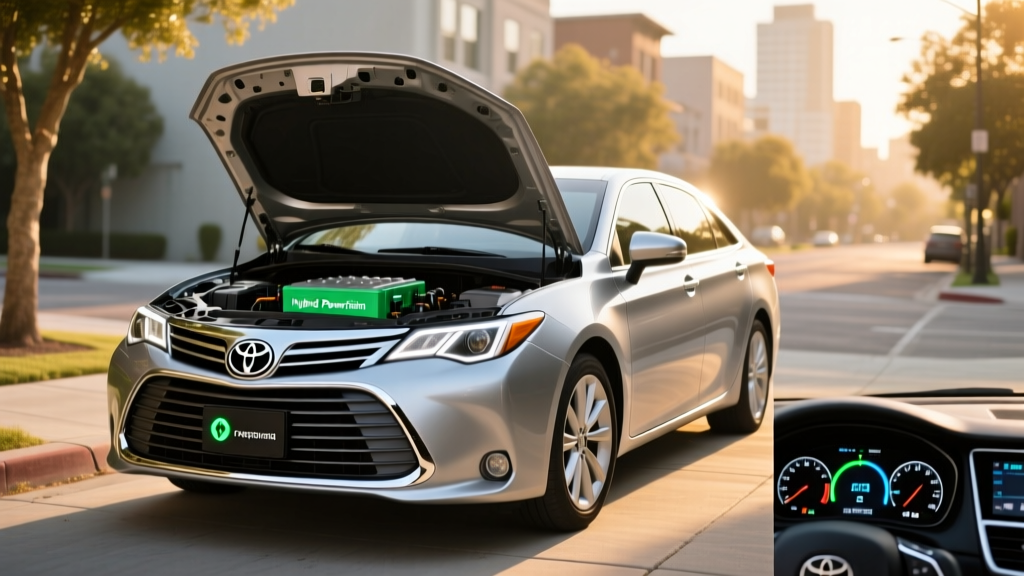
The hybrid battery is the single biggest concern for any used HEV buyer. The 2015 Avalon Hybrid uses a nickel-metal hydride (NiMH) battery pack — a chemistry that Toyota has refined over two decades of Prius production. These packs are durable, but they are not immortal.
When new, the 2015 Avalon Hybrid's battery was covered for 8 years / 100,000 miles (10 years / 150,000 miles in California and states that follow CARB emissions standards). As of 2026, the original factory warranty has expired for virtually all examples on the road. Any remaining coverage would come from an extended warranty or aftermarket hybrid battery warranty, if purchased.
Expected battery lifespan: Real-world data from Toyota Hybrids (Prius, Camry Hybrid, Avalon Hybrid) suggests NiMH packs typically last 150,000 to 200,000+ miles before significant degradation. Many first-generation Prius taxis exceeded 300,000 miles on the original pack. However, age also matters — a 2015 model is now 11 years old, and heat exposure, frequent deep cycling, and long periods of inactivity can accelerate degradation.
Battery replacement cost (2026):
- Toyota dealership (new OEM pack): $3,000 - $4,000 installed
- Remanufactured pack (independent hybrid specialist): $1,500 - $2,500 installed
- Used pack from salvage yard: $500 - $1,000 (risky — unknown remaining life)
- Individual module replacement (reconditioning): $800 - $1,500 — a specialist replaces only the weak modules within the pack
If you're evaluating a 2015 Avalon Hybrid with 120,000+ miles, ask for a hybrid battery health check. A Toyota dealer can pull the battery's State of Health (SoH) via the OBD-II diagnostic port. Look for a car where the hybrid system warning light has never appeared and where maintenance records show regular use (batteries degrade faster when a car sits for weeks at a time).
Does the 2015 Avalon Hybrid Qualify for a Tax Credit?
No. The 2015 Avalon Hybrid does not qualify for any federal tax credit — new or used — in 2026.
- The §30D New Clean Vehicle Credit (up to $7,500) applies only to new BEVs and PHEVs meeting battery sourcing, MSRP caps, and buyer income limits. Conventional HEVs have never qualified.
- The §25E Previously-Owned Clean Vehicle Credit (up to $4,000) applies to used BEVs and PHEVs with a sale price under $25,000. Conventional HEVs are excluded.
- Some states offer their own hybrid incentives, but most have expired or shifted focus to PHEVs and BEVs. Check your state's energy office or AFDC state incentive database for current programs.
The lack of a tax credit means the Avalon Hybrid's value proposition rests entirely on its low purchase price, strong fuel economy, and Toyota reliability — not government subsidies.
Pricing in 2026: What You'll Pay on the Used Market
As of early 2026, the 2015 Toyota Avalon Hybrid trades in the following ranges on the used market, depending on mileage, condition, and trim level (XLE Premium was the standard Hybrid trim):
| Mileage Range | Typical Asking Price |
| 60,000 - 80,000 miles | $14,000 - $16,500 |
| 80,000 - 120,000 miles | $11,000 - $14,000 |
| 120,000 - 160,000 miles | $8,500 - $11,000 |
| 160,000+ miles | $6,500 - $9,000 |
At the lower end, you're looking at one of the most fuel-efficient full-size sedans available for under $10,000. The value case is strong, especially if the hybrid battery checks out.
Pros and Cons of the 2015 Avalon Hybrid in 2026
- EPA 40 MPG combined; often exceeds 42 MPG in city driving
- No plug required — works for apartment dwellers and street parkers
- Spacious, quiet cabin with generous rear legroom (40.1 inches)
- Proven Toyota Hybrid Synergy Drive — decades of reliability data
- Low annual fuel cost (~$1,050/year at 15,000 miles and $2.80/gallon)
- Smooth, comfortable ride quality ideal for commuting
- No tax credit eligibility (new or used)
- Hybrid battery replacement risk ($1,500-$4,000) on a 11-year-old car
- Dated infotainment — no Apple CarPlay, no Android Auto, small 6.1-inch screen
- eCVT drone under hard acceleration (common Toyota hybrid trait)
- No DC fast charging (HEV — not applicable)
- Outdated safety tech vs. 2026 models — no automatic emergency braking standard
Who Should Buy the 2015 Avalon Hybrid — And Who Shouldn't
Choose the 2015 Avalon Hybrid if: You want a comfortable, fuel-efficient sedan under $15,000 that requires no charging infrastructure, you drive 12,000-20,000 miles per year (mostly city or mixed), and you plan to keep the car for 3-5 years. It's an excellent choice for commuters, rideshare drivers, and anyone who wants Toyota reliability with minimal complexity.
Look at a PHEV or BEV instead if: You have access to home or workplace Level 2 charging, you want electric-only driving for daily commutes, you want to qualify for the §25E used EV tax credit (up to $4,000 on eligible PHEVs/BEVs under $25,000), or you want modern ADAS features like automatic emergency braking and lane-keeping assist.
Choose a conventional gas car instead if: You drive fewer than 8,000 miles per year (the fuel savings won't justify the hybrid premium), or you want the lowest possible purchase price under $7,000.
Frequently Asked Questions
How many MPG does the 2015 Avalon Hybrid get?
The EPA rates it at 40 MPG city, 39 MPG highway, and 40 MPG combined. In real-world driving, city MPG often reaches 42-45, while sustained highway driving at 75+ MPH typically yields 35-38 MPG. Cold weather reduces efficiency by roughly 5-10%.
How far can the 2015 Avalon Hybrid drive on electric only?
Effectively zero meaningful electric-only range. As a conventional HEV, it can creep at very low speeds (under 25 MPH) on electric power for roughly one mile or less before the engine engages. This is not a plug-in — it cannot operate as an electric car.
Is the 2015 Avalon Hybrid reliable, and what does a battery replacement cost?
Yes — Toyota's Hybrid Synergy Drive is one of the most proven electrified powertrains ever built. The NiMH hybrid battery typically lasts 150,000-200,000 miles. If replacement is needed, expect to pay $1,500-$2,500 for a remanufactured pack or $3,000-$4,000 for a new OEM pack at a Toyota dealer. Independent hybrid specialists can often recondition the pack for $800-$1,500.
Does the 2015 Avalon Hybrid qualify for any tax credit in 2026?
No. Conventional hybrids (HEVs) do not qualify for the §30D new vehicle credit or the §25E used vehicle credit. Only BEVs and PHEVs are eligible under current IRS rules.
How does the 2015 Avalon Hybrid compare to a modern hybrid like the 2026 Toyota Camry Hybrid?
The 2026 Camry Hybrid (5th-gen Toyota Hybrid System) delivers EPA 51 MPG combined in LE FWD trim — an 11 MPG improvement over the Avalon Hybrid. It also includes Toyota Safety Sense 3.0 with standard automatic emergency braking, adaptive cruise control, and a modern infotainment system with wireless CarPlay. However, a new Camry Hybrid starts around $30,000, versus $10,000-$15,000 for a used 2015 Avalon Hybrid. If budget is the priority, the Avalon remains a strong value; if you want modern efficiency and safety tech, the newer Camry Hybrid is the better car.
What should I check before buying a used 2015 Avalon Hybrid?
Prioritize a hybrid battery health check (SoH diagnostic via OBD-II), verify there are no hybrid system warning lights, review maintenance records for regular oil changes and inverter coolant service, and confirm the 12V auxiliary battery is recent. A pre-purchase inspection at a Toyota dealer or hybrid specialist is strongly recommended for any example over 100,000 miles.