Quick Verdict: A Discontinued Hybrid Worth Considering on the Used Market
The 2014 Volkswagen Jetta Hybrid pairs a turbocharged 1.4-liter gasoline engine with a compact electric motor and a small lithium-ion battery pack to deliver an EPA-rated 45 MPG combined. Volkswagen discontinued the Jetta Hybrid after the 2016 model year, so every example on the road today is a used vehicle — and that changes the buying calculus entirely. You're not evaluating a new car with a factory warranty; you're assessing a 12-year-old hybrid's battery health, maintenance history, and long-term reliability.
For used-car shoppers who want hybrid fuel economy without committing to a plug-in hybrid or full EV, the 2014 Jetta Hybrid remains a viable option — provided you understand what you're getting into with an aging high-voltage battery and Volkswagen's reputation for complex engineering. Here's the data-driven breakdown.
HEV vs. PHEV vs. EV: Where the 2014 Jetta Hybrid Fits
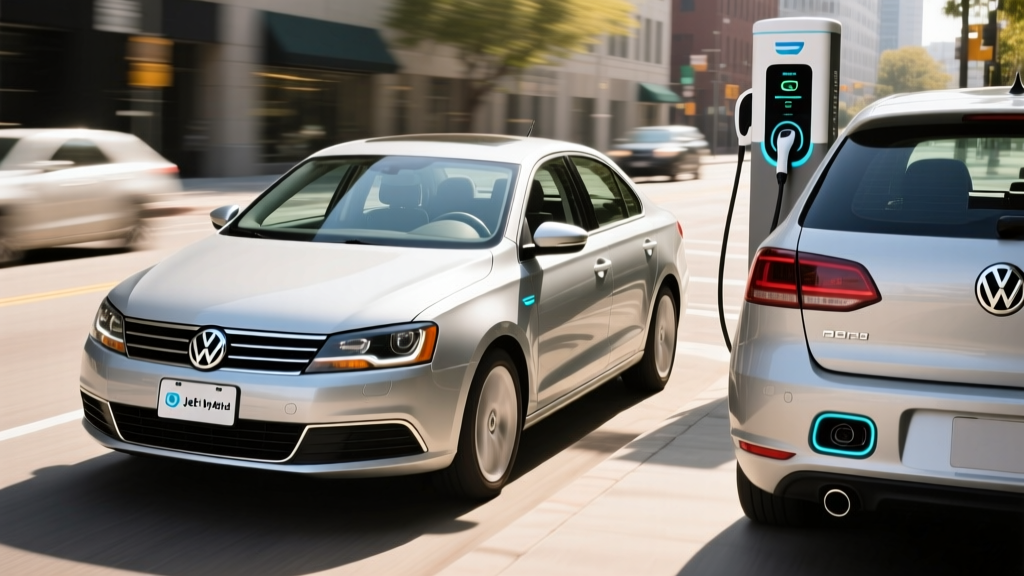
The 2014 VW Jetta Hybrid is a conventional hybrid electric vehicle (HEV). This distinction matters because buyers sometimes confuse it with a plug-in hybrid. Here's the difference:
| Feature | HEV (2014 Jetta Hybrid) | PHEV (e.g., Toyota Prius Prime) | BEV (e.g., Tesla Model 3) |
|---|---|---|---|
| Plugs in to charge? | No — charges via regen & engine | Yes — Level 1/Level 2 | Yes — Level 1/2/DC fast |
| Electric-only driving | Brief, low-speed only (~1 mi) | 25–45 miles typical | 250–350+ miles |
| Gasoline engine | Yes — primary power source | Yes — backup after battery depletes | None |
| Fuel needed | Yes — runs on gasoline | Yes — but less with regular charging | No — electricity only |
| Home charging install | Not required | Recommended (Level 2) | Essential (Level 2) |
The Jetta Hybrid recovers energy through regenerative braking and the gasoline engine to keep its 1.1 kWh lithium-ion pack charged. You never plug it in. The electric motor assists during acceleration and enables very short electric-only movement at low speeds, but this is not a vehicle you can commute in on electricity alone.
Fuel Economy: EPA Ratings vs. Real-World MPG
Volkswagen rated the 2014 Jetta Hybrid at 42 MPG city / 48 MPG highway / 45 MPG combined per the EPA. These figures remain the benchmark for this vehicle, but real-world results depend heavily on driving conditions.
| Condition | EPA Rating | Real-World Expectation |
|---|---|---|
| City | 42 MPG | 40–46 MPG (hybrids excel in stop-and-go) |
| Highway | 48 MPG | 38–44 MPG (aerodynamic drag, sustained speed) |
| Combined | 45 MPG | 38–44 MPG (mixed driving) |
| Cold weather (below 32°F) | N/A | 34–39 MPG (engine runs more for cabin heat) |
Hybrids typically exceed their EPA city rating because regenerative braking recovers energy that conventional cars waste as heat. Highway driving is the opposite: sustained high speeds reduce the hybrid system's advantage, and the 1.4L turbo engine works harder. In cold climates, expect a 10–15% MPG penalty as the gasoline engine runs more frequently to provide cabin heating and maintain battery temperature.
For context, the non-hybrid 2014 Jetta with the 1.8T engine rated at 25/36/29 MPG combined. The hybrid's 45 MPG combined represents a 55% improvement in fuel efficiency — substantial for a driver covering 15,000+ miles per year.
Powertrain Specs: Engine, Motor, and Combined Output
| Specification | Value |
|---|---|
| Engine | 1.4L turbocharged inline-4 (EA211) |
| Engine output | 150 HP / 184 lb-ft torque |
| Electric motor | 27 HP (20 kW) integrated into transmission |
| Combined system output | 170 HP / 184 lb-ft torque |
| Battery pack | 1.1 kWh lithium-ion (nickel-metal-hydride-free) |
| Transmission | 7-speed DSG dual-clutch automatic |
| 0–60 mph | ~8.7 seconds |
| Drivetrain | Front-wheel drive |
| Fuel tank | 13.2 gallons |
| Total driving range | ~594 miles (at 45 MPG combined) |
The powertrain is notable for pairing the turbo 1.4L with a 7-speed DSG (direct-shift gearbox) rather than the CVT found in most Toyota and Honda hybrids. The DSG delivers crisper, more direct shifts — a characteristic VW driving feel — but it also introduces a maintenance consideration. The DSG requires periodic fluid service (typically every 40,000 miles), and neglect can lead to mechatronic unit failures that cost $1,500–$3,000 to repair.
The 1.1 kWh battery pack is small by modern standards — a 2026 Toyota Prius uses a 13.6 kWh pack — but it's proportionate to the HEV architecture. The battery doesn't need to store much energy; it simply buffers regenerative braking input and provides brief torque-fill assistance.
Hybrid Battery Lifespan, Warranty, and Replacement Cost
Original factory warranty: Volkswagen warranted the 2014 Jetta Hybrid's high-voltage battery for 8 years / 100,000 miles (10 years / 150,000 miles in CARB states including California, New York, Massachusetts, and others that adopted California emissions standards).
Current status (2026): All 2014 Jetta Hybrids are now outside the original hybrid battery warranty unless an extended warranty was purchased and remains active. Battery replacement cost is the buyer's responsibility.
This is the single most important factor for anyone considering a used 2014 Jetta Hybrid. The lithium-ion pack is 12 years old, and while hybrid batteries are engineered for longevity, degradation is inevitable. Here's what the data tells us:
- Expected hybrid battery lifespan: 10–15 years or 150,000–200,000 miles under normal conditions, based on industry-wide data from Toyota, Honda, and VW hybrid platforms.
- Degradation symptoms: Reduced MPG (the battery can't assist as effectively), more frequent engine cycling, and eventually a check-engine light with hybrid system fault codes.
- Replacement cost (2026): A new OEM hybrid battery for the Jetta Hybrid runs approximately $2,000–$3,500 including installation at a VW dealer. Independent hybrid specialists may offer refurbished packs for $1,200–$2,000.
- Cell-level repair: Some specialists can replace individual battery modules rather than the entire pack, reducing cost to $500–$1,000, but this requires a shop with hybrid battery diagnostic equipment.
Before purchasing any used 2014 Jetta Hybrid, request a hybrid battery state-of-health (SoH) report from a VW dealer or qualified hybrid technician. This diagnostic reads the battery's current capacity versus its original capacity. A pack retaining 80%+ of its original capacity is in good shape; below 70% suggests near-term replacement.
Pricing and Tax Credit Eligibility
The 2014 VW Jetta Hybrid originally carried an MSRP of approximately $25,995 (SE trim) to $29,995 (SEL Premium trim). In 2026, used examples trade in a very different market:
- Used price range (2026): $6,000–$11,000 depending on mileage, condition, and trim level.
- Typical mileage on 2014 models: 90,000–160,000 miles.
- Federal tax credit: The §30D new clean vehicle credit does not apply — this vehicle is used and was never eligible for the full $7,500 credit when new. The used clean vehicle credit (up to $4,000 or 30% of sale price, whichever is less) under §25E requires the vehicle to be purchased from a licensed dealer, priced at $25,000 or less, and meet model-year requirements. However, the 2014 Jetta Hybrid may not qualify because the used-vehicle credit requires the model year to be at least two years earlier than the calendar year of purchase (a 2014 model qualifies on age), but the vehicle must have a battery capacity of at least 7 kWh — the Jetta Hybrid's 1.1 kWh pack falls well below this threshold. Verify current eligibility at IRS.gov or with a tax professional.
- State incentives: Most state hybrid incentives have expired or were never applicable to conventional HEVs. Check your state's energy office for any remaining programs.
The bottom line: you're buying this car with cash or a used-car loan, at market price, with no meaningful tax incentive to offset the cost.
Reliability and Common Issues
The 2014 Jetta Hybrid occupies a complicated space in VW's reliability history. The hybrid powertrain itself — the 1.4T engine, electric motor, and lithium-ion pack — has proven reasonably durable. However, several non-hybrid-specific issues affect the ownership experience:
Pros
- Strong fuel economy (45 MPG combined EPA)
- Turbo torque makes it more engaging than a Prius
- DSG shifts feel sportier than a hybrid CVT
- Spacious trunk (13.2 cu ft — battery doesn't eat cargo room)
- Low used-car entry price ($6,000–$11,000)
- No plug-in infrastructure required
Cons
- Hybrid battery is 12 years old — replacement risk
- DSG transmission requires strict maintenance
- VW parts can be pricier than Toyota/Honda equivalents
- Infotainment and interior feel dated by 2026 standards
- No federal tax credit eligibility
- Fewer hybrid-specialist shops vs. Toyota Prius network
Common reported issues across owner forums and NHTSA data include:
- DSG mechatronic unit failure: The electro-hydraulic control unit inside the 7-speed DSG can fail, causing rough shifts, limp mode, or complete transmission loss. Repair: $1,500–$3,000.
- Water pump / thermostat housing leaks: The 1.4T EA211 engine is known for coolant system leaks around 80,000–120,000 miles. Repair: $400–$800.
- Carbon buildup on intake valves: Direct injection engines accumulate carbon deposits. An intake valve cleaning service ($300–$500) may be needed every 60,000–80,000 miles.
- 12V auxiliary battery drain: Like all hybrids, the Jetta has a conventional 12V battery that powers electronics. If it dies, the car won't start even if the high-voltage pack is full.
For reliability comparison, the 2014 Toyota Prius (50 MPG combined) has a far larger service network, cheaper parts, and a more proven long-term hybrid battery track record. The Prius is the default used-hybrid recommendation for buyers who prioritize reliability above all else. The Jetta Hybrid appeals to drivers who want something less ubiquitous and more engaging to drive.
Who Should Buy the 2014 Jetta Hybrid?
Choose the 2014 Jetta Hybrid if:
- You want hybrid MPG without plugging in and can't install a home charger
- You find a well-maintained example under $9,000 with a documented hybrid battery health report
- You prefer VW's driving dynamics over the Prius's CVT feel
- Your annual mileage is 10,000–15,000 miles and fuel savings matter
Choose a used Toyota Prius (2014–2018) instead if:
- Maximum reliability and lowest maintenance cost are your top priorities
- You want the widest network of independent hybrid repair shops
- You need the highest possible MPG (50 combined vs. 45)
Choose a used PHEV (e.g., 2017+ Prius Prime, 2016+ Chevy Volt) instead if:
- You have access to Level 2 home charging and a short commute (under 25 miles)
- You want to drive primarily on electricity with gasoline backup
Choose a used BEV (e.g., 2018+ Chevy Bolt, 2019+ Nissan Leaf) instead if:
- You have reliable home charging and want zero gasoline costs
- Your daily driving is under 200 miles round-trip
- You want lower maintenance (no engine oil, coolant, or DSG fluid)
Frequently Asked Questions
How many MPG does the 2014 VW Jetta Hybrid get?
The EPA rates the 2014 Jetta Hybrid at 42 MPG city, 48 MPG highway, and 45 MPG combined. In real-world mixed driving, expect 38–44 MPG. City driving with frequent stops may exceed the EPA rating thanks to regenerative braking, while sustained highway driving at 70+ MPH typically yields 38–44 MPG.
Does the 2014 Jetta Hybrid need to be plugged in?
No. The 2014 Jetta Hybrid is a conventional HEV (hybrid electric vehicle), not a plug-in hybrid. The battery charges exclusively through regenerative braking and the gasoline engine. You fuel it with gasoline like any other car — there is no charging port and no electric-only commuting capability.
How much does it cost to replace the hybrid battery?
As of 2026, a new OEM hybrid battery replacement for the 2014 Jetta Hybrid costs approximately $2,000–$3,500 including labor at a Volkswagen dealer. Refurbished or aftermarket packs from independent hybrid specialists range from $1,200–$2,000. Individual module replacement can cost $500–$1,000 if only a few cells have degraded.
Does the 2014 Jetta Hybrid qualify for any tax credit?
No meaningful tax credit applies. The federal §30D new vehicle credit is not available for used purchases. The §25E used clean vehicle credit requires a minimum 7 kWh battery capacity — the Jetta Hybrid's 1.1 kWh pack does not meet this threshold. Consult a tax professional or check IRS.gov for the most current rules.
Is the 2014 Jetta Hybrid more reliable than a Prius?
Generally, no. The Toyota Prius has a longer track record, a vastly larger hybrid repair network, and lower parts costs. The Jetta Hybrid's DSG transmission adds a maintenance variable the Prius's CVT doesn't have. However, well-maintained Jetta Hybrids with documented service history can be reliable daily drivers. The key is a pre-purchase hybrid battery health check and confirmation that DSG fluid service has been performed on schedule.
What's the total driving range on a full tank?
With a 13.2-gallon fuel tank and 45 MPG combined EPA rating, the 2014 Jetta Hybrid can travel approximately 594 miles between fill-ups under ideal conditions. Real-world range with mixed driving is typically 500–580 miles, and cold-weather range may drop to 450–515 miles.
Should I buy a 2014 Jetta Hybrid in 2026?
It depends on the specific car's condition. A low-mileage, well-maintained example with a healthy hybrid battery and documented DSG service can be a smart budget-hybrid purchase at $7,000–$9,000. A high-mileage example with unknown service history is a financial risk — the combined cost of a hybrid battery replacement ($2,000–$3,500) and DSG repair ($1,500–$3,000) could exceed the car's value. Always get a pre-purchase inspection from a VW-qualified technician before committing.