Quick Verdict: The 2014 Jetta Hybrid in 2026
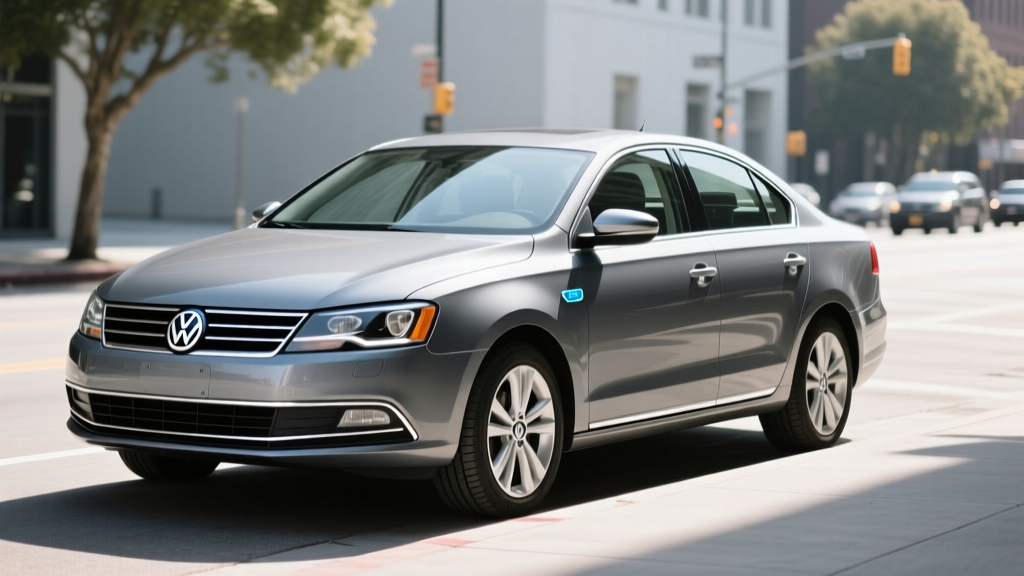
The 2014 Volkswagen Jetta Hybrid occupies a specific niche in the used-car market: it's a conventional hybrid (HEV) sedan that delivers strong fuel economy without requiring a plug, a charging setup, or any lifestyle adjustment. With an EPA-rated 45 MPG combined, it remains competitive with newer hybrids over a decade later. For buyers who want hybrid efficiency at a bargain used price — typically $6,000 to $10,000 depending on condition and mileage — the Jetta Hybrid is worth a serious look. But its age introduces battery-degradation questions that every prospective buyer must evaluate before signing the title.
Powertrain Specs: 1.4L Turbo Meets Electric Assist
Volkswagen paired a 1.4-liter turbocharged four-cylinder engine (EA211 family) with a 27-horsepower electric motor integrated into the 7-speed DSG dual-clutch automatic transmission. The combined system output is 170 horsepower and 184 lb-ft of torque — respectable figures that give the Jetta Hybrid more punch than many competing hybrids of its era.
| Spec | Value |
|---|---|
| Engine | 1.4L turbocharged inline-4 (150 hp, 184 lb-ft) |
| Electric Motor | 27 hp, integrated into DSG transmission |
| Combined System Output | 170 hp / 184 lb-ft torque |
| Transmission | 7-speed DSG dual-clutch automatic |
| Hybrid Battery | 1.1 kWh lithium-ion (nickel-manganese-cobalt) |
| Drivetrain | Front-wheel drive |
| Curb Weight | ~3,250 lbs |
| 0–60 mph | ~8.5 seconds |
| Fuel Tank | 11.9 gallons |
The 1.1 kWh lithium-ion battery pack sits behind the rear seat, which does reduce trunk space slightly compared to the gas-only Jetta (you lose about 2.5 cubic feet, bringing the trunk to approximately 13.2 cu ft). The battery is small by design — it's not meant to store energy for electric-only driving but rather to capture regenerative braking energy and provide electric assist during acceleration and low-speed crawling.
Fuel Economy: EPA Ratings vs Real-World MPG
According to fueleconomy.gov, the 2014 Volkswagen Jetta Hybrid carries the following EPA ratings:
| Driving Condition | EPA MPG | Real-World Expectation |
|---|---|---|
| City | 42 MPG | 40–46 MPG |
| Highway | 48 MPG | 43–50 MPG |
| Combined | 45 MPG | 41–47 MPG |
Real-world context: Hybrids often exceed their EPA city ratings in stop-and-go traffic because regenerative braking recaptures energy that gas-only cars waste as heat. Owner-reported data on forums and fuel-tracking apps consistently shows the Jetta Hybrid averaging 43–47 MPG in mixed suburban driving. Highway results vary more — at sustained 75+ mph speeds, the turbo engine works harder and the electric motor contributes less, potentially dropping efficiency into the low 40s. In cold weather (below 30°F), expect a 3–5 MPG reduction as the engine runs more frequently to maintain cabin heat and battery temperature.
With an 11.9-gallon tank and 45 MPG combined, the Jetta Hybrid offers an estimated total range of approximately 535 miles per fill-up — a strong figure for a compact sedan.
Hybrid Battery Health: Warranty, Degradation, and Replacement Cost
How much degradation should you expect? The 1.1 kWh battery in the Jetta Hybrid is relatively small and operates within a conservative state-of-charge window (roughly 30–70%), which reduces stress on the cells. Lithium-ion batteries in conventional hybrids typically degrade 10–20% over 10–15 years under normal use. Unlike a full EV, where 15% degradation means 45 fewer miles of range, the Jetta Hybrid's small battery means degradation shows up as slightly less aggressive electric assist and marginally lower fuel economy — not a catastrophic loss.
Battery replacement cost: If the hybrid battery fails completely, a replacement from Volkswagen runs approximately $2,500 to $3,500 for the part alone, with labor adding another $500 to $1,000. Third-party refurbished battery packs are available from specialty hybrid repair shops for $1,500 to $2,200 installed. Given the vehicle's current market value ($6,000–$10,000), a full OEM battery replacement represents a significant percentage of the car's worth — a critical factor in the buy/no-buy decision.
Pre-purchase tip: Have a VW dealer or qualified hybrid technician run a battery health diagnostic before purchase. They can read the battery's state-of-health (SoH) percentage through the OBD-II port. A reading above 80% SoH suggests years of remaining useful life. Also check for any outstanding recalls or technical service bulletins (TSBs) related to the hybrid system on NHTSA.gov.
Reliability: What Owners and Data Show
The 2014 Jetta Hybrid's powertrain combines two systems with different reliability profiles:
- The 1.4L TSI engine (EA211): Generally reliable when maintained. Key issues to watch include timing chain tensioner wear on early-build engines (mostly resolved by the 2014 model year), carbon buildup on intake valves (a direct-injection engine trait — consider a walnut-shell cleaning at 80,000–100,000 miles), and turbo wastegate rattle at high mileage.
- The DSG transmission: Volkswagen's 7-speed dry-clutch DSG (DQ200 variant) has a mixed reliability history. Some owners report mechatronic unit failures and clutch-pack wear, particularly in stop-and-go driving. A transmission fluid and filter service every 40,000 miles is essential. Listen for shuddering during low-speed acceleration during your test drive.
- The hybrid system: The electric motor and power electronics have proven durable. Most high-mileage Jetta Hybrids (150,000+ miles) report no hybrid-specific failures beyond normal battery degradation.
Overall, the 2014 Jetta Hybrid scores average to slightly above average in reliability surveys for its class. It's not as bulletproof as a Toyota Prius, but it's not a high-risk purchase either — provided maintenance records are available and a pre-purchase inspection is performed.
Pricing and Tax Credit Reality for 2026 Buyers
As of 2026, the 2014 Volkswagen Jetta Hybrid trades in the used market at these approximate price points:
| Condition / Mileage | Typical Price Range |
|---|---|
| Excellent (<80k miles, full records) | $8,500–$10,500 |
| Good (80k–120k miles, average wear) | $6,500–$8,500 |
| Fair (120k+ miles, cosmetic wear) | $4,500–$6,500 |
Federal tax credit: The 2014 Jetta Hybrid does not qualify for the current IRS §30D Clean Vehicle Credit. That credit applies only to new plug-in electric vehicles (BEVs and PHEVs) meeting battery-sourcing, MSRP, and buyer-income requirements. The Jetta Hybrid is neither new nor a plug-in vehicle. The now-expired §30D credit available at its original 2014 sale was up to $2,500 based on battery capacity, but that benefit was claimed by the original purchaser and does not transfer to subsequent owners.
State incentives: Some states offer small incentives for purchasing used hybrids or efficient vehicles, but these are uncommon and vary by jurisdiction. Check your state's energy or environmental agency website for current programs.
Who Should Buy the 2014 Jetta Hybrid — and Who Shouldn't
- You want 45 MPG without plugging in or changing your routine
- Your budget is under $10,000 and you need a fuel-efficient commuter
- You drive 15,000+ miles/year and fuel savings justify the purchase
- You prefer a turbocharged engine with more passing power than a Prius
- You don't have access to home or workplace charging
- You want electric-only driving or plug-in capability (consider a used PHEV like the Chevy Volt or Prius Prime)
- You need maximum cargo space (the hybrid battery eats trunk room)
- You can't absorb a potential $2,000–$3,500 hybrid battery replacement
- You prioritize lowest possible maintenance cost (a used Prius or Corolla Hybrid has a stronger reliability track record)
- You want modern safety tech — the 2014 Jetta lacks automatic emergency braking, lane-keep assist, and blind-spot monitoring as standard
Hybrid vs PHEV vs EV: Which Powertrain Fits Your Situation?
If you're cross-shopping the 2014 Jetta Hybrid against plug-in alternatives, here's the decision framework:
| Factor | HEV (Jetta Hybrid) | PHEV (e.g., Prius Prime) | BEV (e.g., Model 3) |
|---|---|---|---|
| Plug-in required? | No | Recommended | Yes |
| Electric-only range | 0 miles | 25–45 miles | 250–350 miles |
| Total range | ~535 miles | ~500+ miles | 250–350 miles |
| Fuel cost per mile | ~$0.08 | ~$0.04–$0.07 | ~$0.03–$0.05 |
| Federal tax credit (new) | None | Up to $7,500* | Up to $7,500* |
| Home charging needed? | No | For best value, yes | Essential |
| Best for | No-plug commuters | Short commutes + road trips | Home chargers, daily drivers |
* §30D credit subject to MSRP caps, buyer income limits, and battery-sourcing requirements per current IRS rules. Eligibility varies.
Frequently Asked Questions
How many MPG does the 2014 Volkswagen Jetta Hybrid get?
The EPA rates the 2014 Jetta Hybrid at 42 MPG city, 48 MPG highway, and 45 MPG combined. Real-world owners typically report 41–47 MPG in mixed driving, with city-heavy routes sometimes exceeding the EPA city estimate thanks to regenerative braking.
Can the 2014 Jetta Hybrid drive on electric power alone?
No. The Jetta Hybrid is a conventional hybrid (HEV), not a plug-in hybrid. It cannot drive on electric power alone for any meaningful distance. The electric motor assists the gas engine during acceleration and can propel the car at very low speeds for short bursts (under 1 mile at parking-lot speeds), but it always operates as a blended system.
Is the hybrid battery expensive to replace?
A new OEM hybrid battery from Volkswagen costs approximately $2,500–$3,500 for the part, plus $500–$1,000 in labor. Refurbished third-party packs are available for $1,500–$2,200 installed. Given the car's $6,000–$10,000 market value, a battery replacement is a significant expense — get a battery health check before buying.
Does the 2014 Jetta Hybrid qualify for any tax credit in 2026?
No. The federal §30D Clean Vehicle Credit only applies to new plug-in electric vehicles (BEVs and PHEVs) that meet specific battery-sourcing, MSRP, and income requirements. The Jetta Hybrid is a conventional hybrid and was only eligible for a smaller credit at its original sale, which has long since been claimed.
Is the 2014 Jetta Hybrid reliable?
It rates average to slightly above average for its class. The 1.4L turbo engine and hybrid system are generally durable, but the 7-speed DSG transmission requires strict maintenance and has a mixed long-term reliability record. A pre-purchase inspection focusing on the transmission, hybrid battery SoH, and turbo condition is strongly recommended.
How does the Jetta Hybrid compare to a Toyota Prius of the same year?
The 2014 Prius gets slightly better combined fuel economy (50 MPG EPA vs 45 MPG) and has a stronger long-term reliability reputation, particularly for the hybrid system and transmission (the Prius uses a proven eCVT, not a DSG). The Jetta Hybrid's advantages are its more powerful turbocharged engine (170 hp combined vs 134 hp), sportier driving dynamics, and more conventional styling. If maximum reliability and MPG are your priorities, the Prius wins. If driving feel matters more, the Jetta Hybrid has the edge.
What should I check before buying a used 2014 Jetta Hybrid?
- Hybrid battery state-of-health (SoH) reading via OBD-II diagnostic
- DSG transmission service history — fluid changes every 40k miles are critical
- Timing chain condition on the 1.4L TSI engine (listen for rattling at cold start)
- Turbo wastegate operation (no excessive play or rattling)
- Complete maintenance records, especially oil changes (direct-injection engines are sensitive to oil quality)
- NHTSA recall status — verify all open recalls have been performed