Why the 2014 Toyota Prius Plug-In Still Matters on the Used Market
The 2014 Toyota Prius Plug-In — officially badged as the Prius Plug-in Hybrid (and sold as the Prius PHV in some markets) — occupies a specific niche in 2026's used-car landscape: it's one of the most affordable entry points into plug-in hybrid ownership. With a modest 4.4 kWh lithium-ion battery, 11 miles of EPA-rated electric-only range, and Toyota's proven Hybrid Synergy Drive, this model appeals to budget-conscious commuters who want a taste of electric driving without range anxiety.
But before you hand over cash for a decade-old PHEV, you need hard data on what this car actually delivers, what battery degradation looks like at 10+ years, and whether the math still works compared to a newer hybrid or a full battery-electric vehicle. This guide covers every number that matters.
HEV vs PHEV: What the 2014 Prius Plug-In Actually Is
Conventional Hybrid (HEV) — The standard 2014 Prius (non-plug-in) uses a small nickel-metal hydride (NiMH) battery that charges exclusively through regenerative braking and the gasoline engine. You never plug it in. EPA-rated at 50 MPG combined, it operates as a charge-sustaining hybrid at all times.
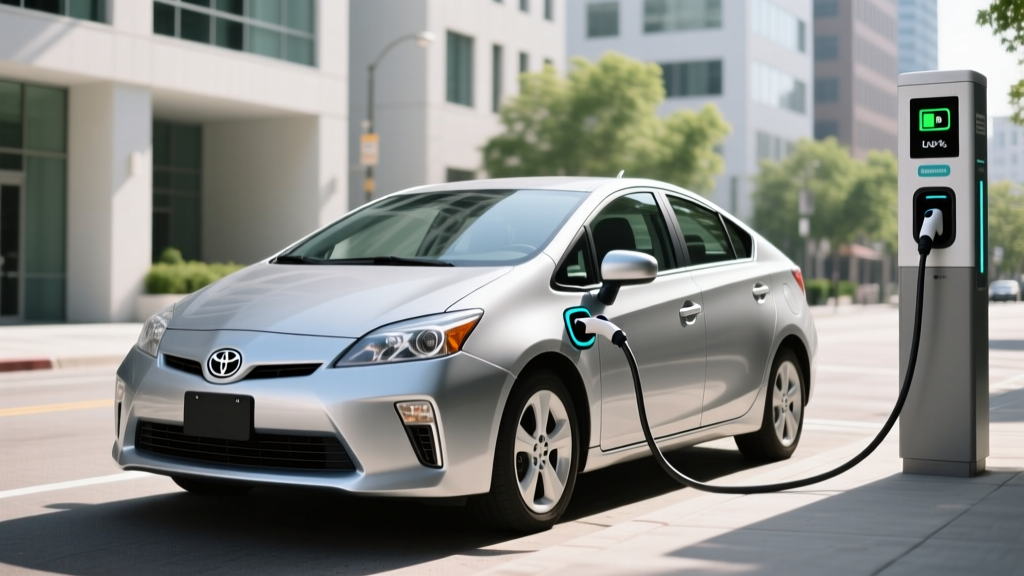
Plug-In Hybrid (PHEV) — The 2014 Prius Plug-In adds a 4.4 kWh lithium-ion battery pack and a charge port (J1772 connector for Level 1 and Level 2 AC charging). This enables a short electric-only driving mode before the gasoline engine engages. Once the battery is depleted, it operates identically to a standard Prius HEV.
The critical distinction: the plug-in model gives you optional electric driving for short trips, but it does not eliminate the gasoline engine. You can charge it from a wall outlet, but you can also drive it indefinitely without ever plugging in — it simply reverts to hybrid mode with slightly lower fuel economy than the standard Prius due to the heavier battery pack.
EPA Fuel Economy and Electric Range: The Numbers
| Metric | EPA Rating | Real-World Expectation |
|---|---|---|
| Combined MPGe (charge-sustaining + EV) | 95 MPGe | Varies heavily by plug-in frequency |
| Combined MPG (gasoline only, battery depleted) | 50 MPG | 47–52 MPG typical; higher in city driving |
| City MPG (gasoline only) | 51 MPG | 52–55 MPG (regenerative braking advantage) |
| Highway MPG (gasoline only) | 49 MPG | 45–48 MPG at 70+ mph |
| Electric-only range | 11 miles | 8–10 miles (new); 6–9 miles with degraded battery |
| Total range (EV + gasoline) | ~540 miles | ~490–530 miles with full tank + full charge |
| Electric-only top speed | 62 mph | 55–62 mph depending on load and grade |
According to fueleconomy.gov, the 2014 Prius Plug-In achieves 95 MPGe when operating with a full charge and 50 MPG in charge-sustaining (hybrid-only) mode. The 11-mile EV range was modest even at launch — it covers a short commute or grocery run but won't replace daily charging the way a 25+ mile PHEV or a full BEV can.
Real-World Range Reality: At 10+ years old, expect the lithium-ion pack to have lost 15–30% of its original capacity depending on climate, charging habits, and mileage. A well-maintained example in a temperate climate might still deliver 8–9 EV miles; a hot-climate car with frequent Level 2 charging may see only 6–7 miles of electric range. In gasoline-only mode, real-world owners consistently report 47–52 MPG combined, with city driving often exceeding the EPA estimate thanks to Toyota's regenerative braking system.
Battery, Charging, and Powertrain Specifications
| Specification | 2014 Prius Plug-In |
|---|---|
| Battery chemistry | Lithium-ion (Li-ion) |
| Battery capacity (total / usable) | 4.4 kWh / ~3.5 kWh usable |
| EV-only range (EPA) | 11 miles |
| Level 1 charging (120V, 12A) | ~1.4 kW; full charge in ~3 hours |
| Level 2 charging (240V, 15A) | ~3.6 kW; full charge in ~1.5 hours |
| DC fast charging | Not supported |
| Charge port / connector | J1772 (AC only) |
| Gasoline engine | 1.8L 4-cylinder Atkinson cycle (98 hp) |
| Electric motor | 60 kW (80 hp) permanent magnet |
| Combined net horsepower | 134 hp |
| 0–60 mph | ~9.1 seconds |
| Transmission | eCVT (planetary gearset) |
| Drivetrain | Front-wheel drive |
| Curb weight | ~3,274 lbs |
| Fuel tank | 10.6 gallons |
The 2014 Prius Plug-In charges exclusively via AC — either a standard 120V household outlet (Level 1) or a 240V Level 2 station. There is no DC fast charging capability. At Level 1, a full charge takes roughly three hours; at Level 2, approximately 90 minutes. For a car with only 11 miles of EV range, Level 1 charging from a standard outlet is entirely practical for overnight top-ups, meaning many owners never invest in a dedicated Level 2 home charger.
The powertrain pairs Toyota's 1.8-liter Atkinson-cycle four-cylinder with a 60 kW electric motor through the Hybrid Synergy Drive planetary gearset. Combined output is 134 horsepower — adequate for commuting but not quick. The 0–60 mph time of roughly 9.1 seconds reflects the car's efficiency-first engineering.
Battery Health, Warranty, and Replacement Cost
Original Battery Warranty: Toyota covered the 2014 Prius Plug-In's lithium-ion hybrid battery for 8 years / 100,000 miles (10 years / 150,000 miles in California Air Resources Board states: CA, CT, MA, ME, NJ, NY, OR, RI, VT, WA). As of 2026, the original federal warranty has expired for all examples; CARB-state warranties are also expiring or have expired depending on mileage.
For a 2014 model, battery health is the single most important factor in a used purchase. Toyota's lithium-ion pack in the Plug-In has proven more durable than early critics feared, but 10+ year-old lithium-ion cells inevitably lose capacity. Here's what to expect:
- Typical degradation at 10 years: 15–30% capacity loss, translating to 7–9 miles of EV range (down from 11)
- Hot-climate degradation: Cars in Arizona, Texas, and the Southeast tend to see higher degradation (25–35%) due to heat stress on lithium-ion chemistry
- Signs of a failing pack: Noticeably reduced EV range, frequent engine engagement in EV mode, dashboard warning lights, or the battery indicator showing fewer bars than expected when fully charged
Battery replacement cost (2026 estimates):
- New OEM Toyota lithium-ion pack: $3,500–$5,000 (parts + labor at a dealership)
- Refurbished / remanufactured pack: $2,000–$3,200 from independent hybrid specialists
- Individual module replacement (if only specific cells fail): $800–$1,500
Before purchasing, request a hybrid battery health check. Many Toyota dealerships can pull the battery's State of Health (SoH) data via OBD-II. Third-party tools like Dr. Prius or Hybrid Assistant apps paired with an OBD-II dongle can also read individual cell voltages — a spread of more than 0.3V between cells indicates imbalance and potential near-term failure.
Used Pricing and Tax Credit Eligibility
As of early 2026, the 2014 Toyota Prius Plug-In trades on the used market in a range of approximately $7,500–$12,500 depending on mileage, condition, battery health, and region. Low-mileage examples with documented battery health command premiums; high-mileage cars with original batteries sell at the lower end.
Federal Used EV Tax Credit (§25E): Under current IRS rules, the 2014 Prius Plug-In may qualify for the federal used clean vehicle credit — up to $4,000 or 30% of the sale price (whichever is lower), provided:
- The sale price is $25,000 or less (the Prius Plug-In easily qualifies)
- The buyer's adjusted gross income is ≤ $75,000 (single), $112,500 (head of household), or $150,000 (joint)
- The vehicle is purchased from a licensed dealer (private-party sales do not qualify)
- The vehicle has a minimum battery capacity of 7 kWh — the Prius Plug-In's 4.4 kWh pack does NOT meet this threshold
Important: The 2014 Prius Plug-In's 4.4 kWh battery falls below the 7 kWh minimum required by the §25E used clean vehicle credit. As a result, this model does not qualify for the federal used EV tax credit. This is a common trap for buyers of early PHEVs. Always verify battery capacity against current IRS §25E requirements before assuming eligibility.
No new-vehicle §30D credit applies since the car is long discontinued. Some states may offer separate used-EV or hybrid incentives — check your state energy office or AFDC state law database for current programs.
Reliability, Ownership Costs, and Known Issues
Toyota's third-generation Prius platform (2010–2015) has an exceptional reliability record, and the Plug-In variant benefits from the same proven Hybrid Synergy Drive architecture. Key reliability data points:
- Powertrain: The 1.8L 2ZR-FXE engine and eCVT are among the most durable powertrains Toyota has built. 200,000+ mile examples are common with basic maintenance.
- Hybrid battery (standard Prius, NiMH): Routinely lasts 150,000–200,000 miles. The Plug-In's lithium-ion pack has a somewhat shorter expected lifespan due to deeper cycling in EV mode.
- Brakes: Regenerative braking significantly reduces pad wear. Original brake pads at 80,000+ miles are common.
- Known issues: Some 2010–2014 Prius models experienced EGR (exhaust gas recirculation) valve clogging and head gasket concerns at high mileage — addressable with proactive EGR cleaning every 50,000 miles. The Plug-In variant is not immune. Oil consumption in early 2ZR-FXE engines can also occur past 100,000 miles.
Pros
- Proven Toyota reliability with abundant parts and hybrid-savvy mechanics
- 50 MPG in hybrid mode — real-world city driving often exceeds EPA
- Level 1 (120V) charging is practical for the small battery — no Level 2 investment required
- Low used pricing: $7,500–$12,500 gets you into a PHEV
- Low operating costs: minimal brake wear, inexpensive tires, cheap insurance
- CARB-state emissions compliance (SULEV)
Cons
- Only 11 miles EPA electric range (6–9 miles with battery degradation)
- No DC fast charging — irrelevant for 4.4 kWh, but limits flexibility
- Does NOT qualify for the federal used EV credit (§25E) due to sub-7 kWh battery
- Lithium-ion battery replacement cost ($2,000–$5,000) is significant relative to car value
- Modest 134 hp and 9.1-second 0–60 time — not a highway merging champion
- Dated interior tech: no Apple CarPlay / Android Auto, basic infotainment
2014 Prius Plug-In vs. Alternatives: Which Should You Choose?
| Attribute | 2014 Prius Plug-In | 2014 Prius (HEV) | Used BEV (e.g., 2017+ Bolt EV) |
|---|---|---|---|
| EV range | 11 mi (8–9 real) | 0 mi | 200+ mi |
| Hybrid MPG | 50 combined | 50 combined | N/A (electric only) |
| Total range | ~540 mi | ~540 mi | ~238 mi (2020 Bolt) |
| Plug-in required? | Optional | No | Yes |
| Used price range (2026) | $7,500–$12,500 | $6,000–$10,000 | $10,000–$16,000 |
| Federal used EV credit | No (4.4 kWh < 7 kWh) | No | Yes (if income/price qualify) |
| Battery replacement risk | Moderate ($2K–$5K) | Low ($1.5K–$3K NiMH) | High ($8K–$16K) |
Choose the 2014 Prius Plug-In If:
- Your daily commute is under 10 miles and you can charge at home via a standard 120V outlet
- You want electric driving for short trips but need gasoline range flexibility for longer drives
- You're on a tight budget and want PHEV capability for under $12,000
- You live in a cold climate where BEV range loss is a concern and want a gasoline backup
Choose the Standard 2014 Prius (HEV) Instead If:
- You have no access to any plug-in charging at home or work
- You want the lowest purchase price and don't care about electric-only driving
- You want to avoid lithium-ion battery replacement risk entirely (the standard Prius uses a more durable NiMH pack)
Choose a Used BEV (Bolt EV, Leaf, Model 3) Instead If:
- Your daily driving exceeds 15 miles and you want to eliminate gasoline entirely
- You have reliable Level 2 home charging and access to DC fast charging for road trips
- You want to qualify for the $4,000 used EV tax credit (requires ≥7 kWh battery, income limits, dealer purchase)
Frequently Asked Questions
How many MPG does the 2014 Toyota Prius Plug-In get?
The EPA rates it at 50 MPG combined (51 city / 49 highway) in charge-sustaining hybrid mode and 95 MPGe when factoring in electric driving. Real-world owners typically report 47–52 MPG combined in hybrid mode, with city driving often exceeding the EPA estimate due to regenerative braking efficiency. Your actual fuel consumption depends heavily on how often you plug in — owners who charge daily and drive under 11 miles may use very little gasoline.
How far can the 2014 Prius Plug-In go on electric only?
The EPA rated it at 11 miles of electric-only range when new. In 2026, with battery degradation, expect 6–9 miles depending on battery health, ambient temperature, and driving style. EV mode is limited to speeds under 62 mph. For context, this covers a short neighborhood errand or a very brief commute but falls well short of modern PHEVs like the current RAV4 Prime (42 miles) or Prius Prime (44 miles).
Is the 2014 Prius Plug-In reliable?
Yes. The third-generation Prius platform is among the most reliable vehicles Toyota has produced. The Hybrid Synergy Drive powertrain routinely exceeds 200,000 miles with basic maintenance. The main risk on a 2014 example is lithium-ion battery degradation — budget $2,000–$5,000 for a potential replacement within your ownership period if the pack hasn't been replaced already. Proactive EGR system cleaning is recommended to prevent head gasket issues associated with the 2ZR-FXE engine at high mileage.
What does a replacement battery cost for the 2014 Prius Plug-In?
A new OEM lithium-ion pack from Toyota runs $3,500–$5,000 installed. Refurbished packs from hybrid specialists cost $2,000–$3,200. Individual module repairs (if only specific cells fail) can be done for $800–$1,500. Always get a battery health assessment before purchase to gauge remaining life.
Does the 2014 Prius Plug-In qualify for any tax credit?
No. The federal used clean vehicle credit (§25E) requires a minimum battery capacity of 7 kWh. The 2014 Prius Plug-In's 4.4 kWh pack does not meet this threshold, making it ineligible for the up-to-$4,000 used EV credit. The original new-vehicle credit expired long ago. Check your state's incentive database at the Alternative Fuels Data Center for any local programs that may apply.
Can I charge the 2014 Prius Plug-In at home on a regular outlet?
Yes. Level 1 charging on a standard 120V household outlet takes about 3 hours for a full charge and delivers the full 4.4 kWh. Given the small battery, Level 1 is entirely practical for overnight charging and many owners never install a Level 2 station. The car uses a J1772 connector, which is the universal AC charging standard (with an adapter, it's also compatible with NACS-equipped Level 2 stations that provide a J1772 adapter).
How does the 2014 Prius Plug-In compare to the current Prius Prime?
The 2025–2026 Prius Prime offers 44 miles of EPA electric range (4x the 2014 model), a 13.6 kWh battery, 220 combined horsepower, and dramatically updated styling and technology. Used pricing for a current-generation Prius Prime starts around $28,000–$35,000 — roughly three times the cost of the 2014 Plug-In. If your budget allows, the current model is a vastly more capable PHEV. The 2014 model makes sense only for buyers seeking the lowest-cost PHEV entry point.