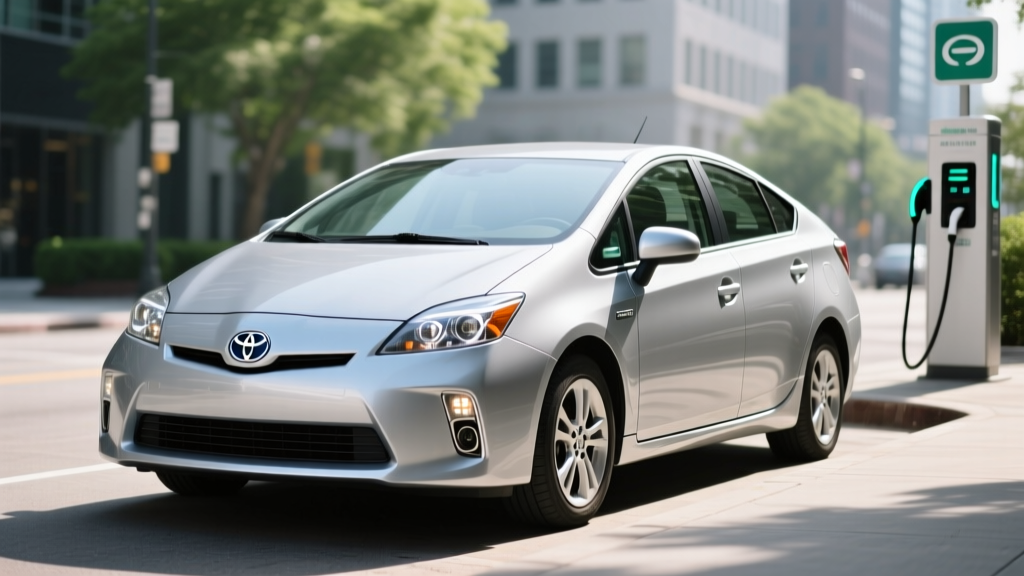
The 2014 Toyota Prius remains one of the most recognizable nameplates in the hybrid segment, and more than a decade after its debut, it continues to dominate the used-hybrid market. For buyers in 2026 searching for a dependable, ultra-efficient daily driver without the upfront cost of a new EV or PHEV, the third-generation Prius (model years 2010–2015) is a compelling option — provided you understand what you're getting, what to inspect, and how ownership costs stack up today.
This guide covers the 2014 Toyota Prius hybrid's real-world fuel economy, powertrain specs, battery longevity, replacement costs, and how it compares to modern hybrids, plug-in hybrids, and full EVs on the used market.
2014 Toyota Prius Hybrid: Core Specifications
The 2014 Prius is a conventional hybrid electric vehicle (HEV), meaning it generates all of its electricity internally through regenerative braking and its gasoline engine. It does not plug in. This is an important distinction from the Prius Plug-in (later renamed Prius Prime), which is a PHEV with a larger battery and external charging capability.
| Specification | Value |
|---|---|
| Powertrain Type | Conventional Hybrid (HEV) — no plug-in |
| Gasoline Engine | 1.8L 4-cylinder Atkinson-cycle (98 hp) |
| Electric Motor | Permanent-magnet synchronous (80 hp / 60 kW) |
| Combined System Output | 134 hp |
| Transmission | Planetary eCVT (continuously variable) |
| Hybrid Battery | 1.3 kWh (nominal), Nickel-Metal Hydride (NiMH) |
| EPA Fuel Economy (Combined) | 50 MPG |
| EPA City / Highway | 51 city / 48 highway MPG |
| Fuel Tank Capacity | 11.9 gallons |
| Total Driving Range | ~595 miles (EPA est.) |
| 0–60 mph | ~9.8 seconds |
| Cargo Volume (rear seats up) | 21.6 cu ft |
| Cargo Volume (rear seats folded) | 39.6 cu ft |
| Curb Weight | ~3,042 lbs |
| Drivetrain | Front-wheel drive |
Fuel Economy: EPA Sticker vs. Real-World MPG
The 2014 Prius carries an EPA rating of 51 city / 48 highway / 50 combined MPG, per fueleconomy.gov. These numbers remain among the best of any non-plug-in vehicle ever sold in the U.S.
Hybrids typically exceed their EPA city ratings because regenerative braking recovers more energy in stop-and-go traffic. In real-world ownership, many 2014 Prius drivers report 48–54 MPG in mixed driving. However, sustained highway driving at 75+ mph, extreme cold (below 20°F), or heavy cargo loads can drop observed economy to 42–45 MPG. A degraded hybrid battery will also reduce fuel economy by 3–8 MPG depending on severity.
| Driving Scenario | EPA Estimate | Typical Real-World |
|---|---|---|
| City (stop-and-go) | 51 MPG | 50–55 MPG |
| Highway (65 mph) | 48 MPG | 46–50 MPG |
| Highway (75+ mph) | — | 42–46 MPG |
| Combined (mixed) | 50 MPG | 47–53 MPG |
| Cold weather (below 20°F) | — | 40–45 MPG |
| With degraded battery | — | 42–47 MPG |
HEV vs. PHEV vs. EV: Which Powertrain Fits You?
The 2014 Prius is a conventional HEV. Toyota also offered the Prius Plug-in Hybrid for the 2012–2015 model years (a PHEV with ~11 miles of electric-only range and a 4.4 kWh battery). Understanding the difference is essential before buying.
| Feature | HEV (2014 Prius) | PHEV (Prius Plug-in) | BEV (Full EV) |
|---|---|---|---|
| Plugs in to charge? | No | Yes | Yes |
| Electric-only range | ~1 mile at low speed | ~11 miles (2014 model) | 150–400+ miles |
| Gasoline engine? | Yes (primary) | Yes (backup) | No |
| Home charging needed? | No | Recommended (Level 1/2) | Required |
| Federal tax credit (new)? | No | Was eligible (expired) | Up to $7,500 (§30D) |
| Tailpipe emissions | Low | Low to zero (short trips) | Zero |
| Best for | No charging access; high-mileage commuters | Short commutes + road trips | Home charging + daily driving |
Powertrain Deep Dive: How the 2014 Prius Hybrid System Works
The third-generation Prius uses Toyota's Hybrid Synergy Drive (HSD) system, which seamlessly blends a 1.8-liter Atkinson-cycle four-cylinder engine (98 hp, 105 lb-ft torque) with a 60 kW (80 hp) electric motor through a planetary gearset that functions as an electronically controlled continuously variable transmission (eCVT).
Key powertrain characteristics:
- Combined output: 134 hp — the engine and motor don't simply add together because peak outputs occur at different RPMs
- NiMH battery pack: 1.3 kWh nominal capacity, located under the rear seat. This is a small buffer battery, not a traction battery in the EV sense
- Regenerative braking: Captures kinetic energy during deceleration to recharge the hybrid battery
- EV Mode: Allows electric-only driving for roughly 1 mile at speeds under 25 mph, when battery state of charge permits
- Drive modes: Normal, Eco (reduces throttle response and A/C load for ~10% efficiency gain), Power (sharper throttle), and EV
The eCVT has no traditional belts, bands, or fixed gears — it uses the planetary gearset to split torque between the engine and motor(s). This makes it one of the most durable transmissions in any vehicle, with virtually no wear components.
Battery Longevity, Warranty, and Replacement Costs
Hybrid battery lifespan is the single biggest concern for used Prius buyers. Here's what the data shows.
Toyota warranted the 2014 Prius hybrid battery for 8 years / 100,000 miles (10 years / 150,000 miles in California and states adopting CARB emissions standards). As of 2026, the original factory warranty has expired for all 2014 models.
How Long Do 2014 Prius NiMH Batteries Actually Last?
Based on fleet data, owner surveys, and repair-shop reporting, the original NiMH battery in a 2014 Prius typically lasts 150,000 to 200,000 miles or 12 to 18 years, depending on climate and usage patterns. Heat is the primary enemy — batteries in hot climates (Arizona, Texas, Southern California) tend to degrade faster than those in temperate or cold regions.
Signs of hybrid battery degradation include:
- Reduced fuel economy (3–8 MPG drop)
- More frequent engine cycling (engine runs more often to charge the battery)
- Reduced regenerative braking effectiveness
- Dashboard warning: "Check Hybrid System" or red triangle of death
- Rapid state-of-charge swings on the energy monitor display
Battery Replacement Cost (2026 Pricing)
| Option | Cost Range | Warranty | Notes |
|---|---|---|---|
| New OEM Toyota battery | $2,500–$3,500 (installed) | 3 yr / 36,000 mi | Most reliable; dealer-installed |
| Remanufactured battery | $1,200–$2,000 (installed) | 1–3 yr varies | Replaced weak cells; quality varies by vendor |
| Used/salvage battery | $500–$1,000 (installed) | 30–90 days typical | Risky; unknown remaining life |
| Individual module replacement | $300–$800 (parts + labor) | None/limited | Replace only bad modules; requires specialist |
| Aftermarket new battery (e.g., Dorman) | $1,800–$2,800 (installed) | 2–3 yr typical | Growing availability; mixed reviews |
For context, a 2014 Prius with 160,000 miles and a healthy battery is worth roughly $7,000–$10,000 in the 2026 used market. A new OEM battery replacement at $3,000 is a significant percentage of the car's value, so factor this into any purchase negotiation for high-mileage examples.
Pricing and Tax Credit Eligibility in 2026
Used Market Pricing (2026)
The 2014 Prius was originally priced from approximately $24,200 (base Two trim) to $30,000+ (fully loaded Five trim with Advanced Technology Package). In the 2026 used market:
- 120,000–150,000 miles: $8,000–$11,000
- 150,000–180,000 miles: $6,500–$9,000
- 180,000+ miles: $5,000–$7,500 (battery condition heavily influences price)
Federal Tax Credit Status
The 2014 Toyota Prius (conventional HEV) does not qualify for any federal tax credit. Under current IRS §30D clean vehicle credit rules, only plug-in electric vehicles (PHEVs and BEVs) with sufficient battery capacity are eligible. Conventional hybrids like the standard Prius have never qualified for the federal EV credit.
The 2014 Prius Plug-in Hybrid originally qualified for a $2,500 federal credit when new, but that credit is no longer available for used purchases. Under the current used clean vehicle credit (§25E), eligible used PHEVs and BEVs can qualify for up to $4,000 or 30% of the sale price (whichever is lower), but the vehicle must be purchased from a dealer, priced at $25,000 or less, and meet model-year and battery-capacity requirements. The 2014 Prius Plug-in's eligibility under §25E is limited — consult a tax professional and verify on the IRS website before counting on this credit.
Reliability, Safety, and Ownership Costs
The third-generation Prius (2010–2015) has an outstanding reliability record. According to owner-reported data and long-term testing, the 2014 model's major mechanical components — engine, eCVT, and power electronics — routinely exceed 250,000 miles with basic maintenance.
Known Issues to Watch For (2014 Model Year)
- Head gasket failure: Some 2010–2014 Prius engines develop head gasket leaks around 150,000–200,000 miles, often preceded by coolant loss or EGR (exhaust gas recirculation) system clogging. Regular EGR cleaning after 100,000 miles is a known preventive measure.
- Oil consumption: A subset of 1.8L 2ZR-FXE engines consume oil at higher-than-normal rates. Check oil level regularly.
- Brake actuator recall: Toyota issued recalls for the brake booster assembly on some 2010–2014 Prius vehicles. Verify recall status via NHTSA's recall lookup.
- Inverter coolant pump: The inverter coolant pump can fail (recall-covered on some model years). Check for proper coolant flow.
- 12V auxiliary battery: Like all vehicles, the 12V battery needs replacement every 4–6 years. The Prius uses a specific AGM-type 12V battery located in the rear cargo area.
Safety Ratings
The 2014 Prius earned a 4-star overall rating from NHTSA (out of 5 stars) and was an IIHS Top Safety Pick with Good ratings in most crash tests. It lacks modern ADAS features like automatic emergency braking or lane-keeping assist, which became standard on later Prius models (2016+) with Toyota Safety Sense.
Who Should Buy the 2014 Toyota Prius Hybrid?
✅ Choose the 2014 Prius If:
- You need 50 MPG without plugging in
- You lack home or workplace charging access
- Your budget is under $10,000 for a reliable daily driver
- You drive 15,000+ miles per year and want minimal fuel costs
- You value cargo versatility (hatchback with 39.6 cu ft)
- You want a proven, well-supported hybrid with abundant parts
❌ Look Elsewhere If:
- You want electric-only driving or zero tailpipe emissions
- You need modern ADAS (AEB, lane-keeping, adaptive cruise)
- You prioritize acceleration (0–60 in 9.8 sec is leisurely)
- You want Apple CarPlay/Android Auto (not available in 2014)
- You prefer a new-vehicle warranty and latest tech
- You have home charging and could benefit from a PHEV or BEV
2014 Prius vs. Alternatives in 2026
| Vehicle | Type | EPA MPG / Range | Used Price (2026) | Key Advantage |
|---|---|---|---|---|
| 2014 Toyota Prius | HEV | 50 MPG combined | $6,500–$11,000 | Proven reliability, best MPG |
| 2017+ Toyota Prius | HEV | 54–58 MPG combined | $14,000–$20,000 | Toyota Safety Sense, better MPG |
| 2016–2018 Chevy Volt | PHEV | 53 mi EV + 42 MPG | $12,000–$18,000 | True EV range for commutes |
| 2018+ Nissan Leaf (40 kWh) | BEV | 150 mi range | $10,000–$15,000 | Zero emissions, low running cost |
| 2014 Honda Insight (discontinued) | HEV | 42 MPG combined | $6,000–$9,000 | Lower price, less cargo space |
Frequently Asked Questions
How many MPG does the 2014 Toyota Prius hybrid get?
The 2014 Prius is EPA-rated at 51 city / 48 highway / 50 combined MPG. In real-world driving, most owners see 47–53 MPG combined. City driving often exceeds the EPA estimate thanks to regenerative braking, while sustained high-speed highway driving and extreme cold can reduce economy to the low-to-mid 40s.
Does the 2014 Toyota Prius need to be plugged in?
No. The standard 2014 Prius is a conventional hybrid (HEV). It charges its small 1.3 kWh NiMH battery entirely through regenerative braking and the gasoline engine. You never plug it in. Only the separate 2014 Prius Plug-in Hybrid (PHEV) requires external charging to access its electric-only range.
How long does the 2014 Prius hybrid battery last, and what does replacement cost?
The original NiMH hybrid battery typically lasts 150,000–200,000 miles or 12–18 years, though hot climates accelerate degradation. A new OEM replacement costs $2,500–$3,500 installed; remanufactured units run $1,200–$2,000. The original 8-year/100,000-mile warranty has expired on all 2014 models as of 2026.
Does the 2014 Prius qualify for any federal tax credit?
No. The conventional 2014 Prius HEV has never qualified for the federal EV tax credit (§30D), which is reserved for plug-in vehicles. The Prius Plug-in originally qualified for a $2,500 credit when new, but this is no longer available. Check IRS.gov for current rules, and consult a tax professional for your specific situation.
Is the 2014 Prius reliable for high-mileage driving?
Yes. The 2014 Prius is widely regarded as one of the most reliable vehicles ever produced, with the eCVT and power electronics proving exceptionally durable. The main mechanical concern at high mileage is potential head gasket failure on the 1.8L engine, often linked to EGR system clogging. Proactive EGR cleaning and regular maintenance mitigate this risk. Examples with 250,000+ miles are common.
Hybrid vs. PHEV vs. EV — which should I choose in 2026?
If you have no access to home or workplace charging, a conventional HEV like the 2014 Prius is the pragmatic choice — it delivers 50 MPG without lifestyle changes. If you can install a Level 2 charger at home and your daily commute is under 30 miles, a used PHEV (like the Chevy Volt or Prius Prime) lets you drive mostly on electricity with a gas backup. If you have reliable home charging and want the lowest per-mile cost and zero tailpipe emissions, a used BEV (like the Nissan Leaf or Chevy Bolt) is the most forward-looking option, though you'll need to plan for longer trips around DC fast-charging infrastructure.
What should I check before buying a used 2014 Prius?
Before purchasing, verify: (1) hybrid battery health — ask for a "health check" printout from a Toyota dealer showing battery block voltage deltas; (2) recall completion status via NHTSA VIN lookup; (3) EGR system service history; (4) oil consumption history; (5) brake actuator recall status; and (6) overall maintenance records. A pre-purchase inspection by a hybrid-experienced mechanic is strongly recommended.