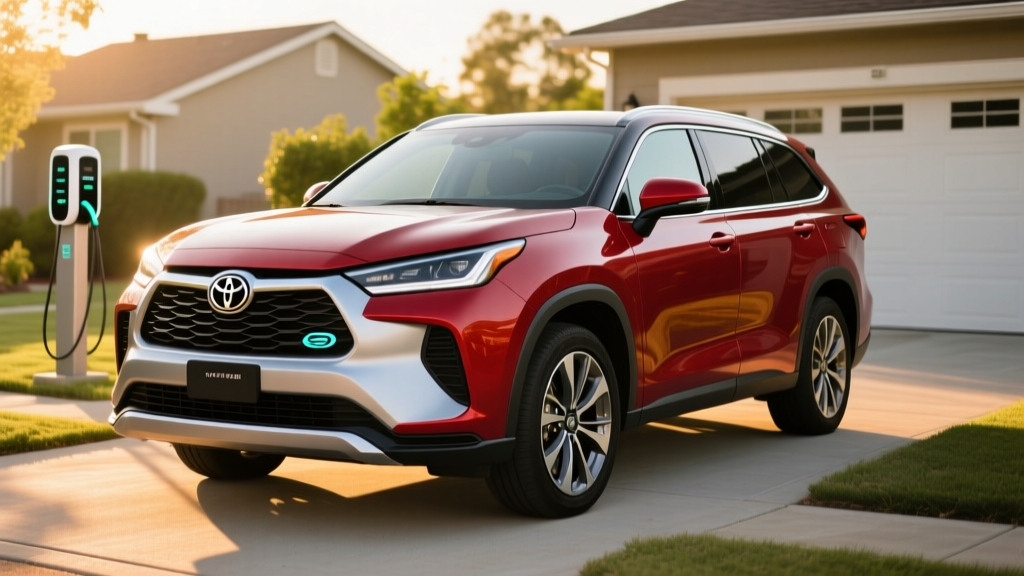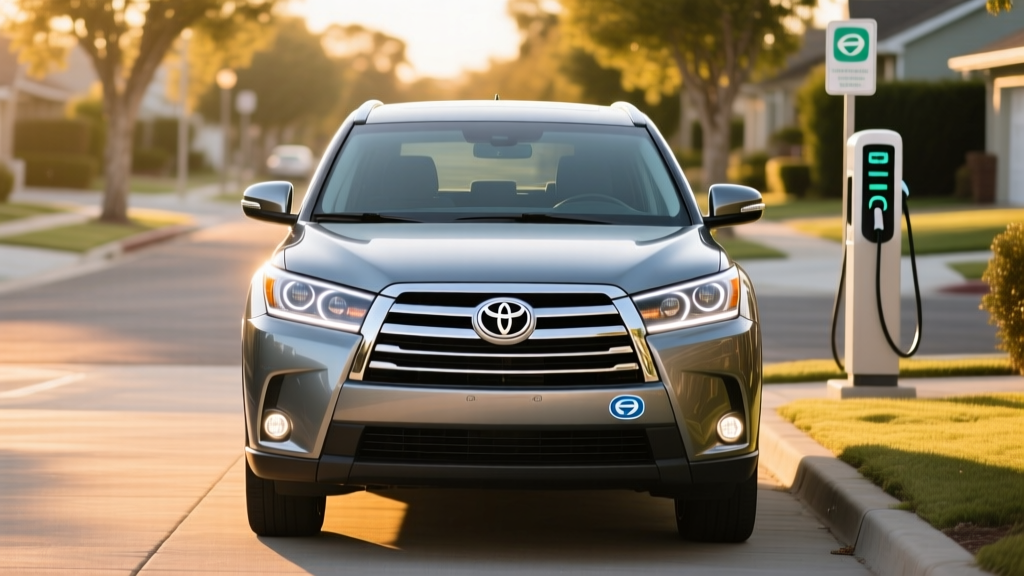
The 2014 Toyota Highlander Hybrid occupies a specific niche in the used-SUV market: a three-row family hauler that sips fuel without requiring a plug, a charging routine, or any change in driving habits. A decade after its debut as part of the third-generation Highlander lineup, this conventional hybrid (HEV) remains relevant for buyers who want electric-motor efficiency without range anxiety or infrastructure dependence.
This guide covers everything a 2026 used-car shopper needs to know — real-world MPG, powertrain specs, hybrid battery longevity, replacement costs, and how the 2014 Highlander Hybrid stacks up against modern PHEVs, full EVs, and its own gas-only sibling.
HEV vs PHEV: What the 2014 Highlander Hybrid Actually Is
Before evaluating specs, it's critical to understand what this vehicle is — and isn't.
Conventional Hybrid (HEV) — The 2014 Highlander Hybrid is a self-charging hybrid. It has a small battery (approximately 1.9 kWh usable) that recharges through regenerative braking and the gasoline engine. You never plug it in. The electric motor assists the gas engine to reduce fuel consumption, but it cannot drive the vehicle on electricity alone for meaningful distances.
Plug-in Hybrid (PHEV) — A PHEV like the 2026 Toyota RAV4 Prime carries a much larger battery (~18.1 kWh) and can travel 42 miles on electricity alone before the gas engine engages. PHEVs require plug-in charging to realize their efficiency advantage and may qualify for federal tax credits under IRS §30D.
The 2014 Highlander Hybrid is strictly an HEV. There was no plug-in variant offered for this model year, and Toyota did not introduce a Highlander PHEV (called the Grand Highlander Hybrid Max in some markets) until years later. If you see a listing advertising "plug-in" capability for a 2014 model, it's inaccurate.
Fuel Economy: EPA Ratings and Real-World MPG
The headline number for the 2014 Highlander Hybrid is its EPA-estimated fuel economy, which remains competitive with many newer midsize SUVs.
| Metric | EPA Estimate | Real-World Expectation |
|---|---|---|
| City MPG | 27 | 26–29 (hybrids often beat EPA in stop-and-go) |
| Highway MPG | 28 | 25–27 (less electric assist at sustained speed) |
| Combined MPG | 28 | 26–28 |
How many MPG does this hybrid get? The EPA rates the 2014 Highlander Hybrid at 28 MPG combined (27 city / 28 highway), per fueleconomy.gov. In practice, owners who do mostly city and suburban driving frequently report 27–30 MPG because the hybrid system recaptures energy during braking and low-speed operation. Highway-heavy commutes tend to yield 25–27 MPG, as the electric motor provides less benefit at sustained cruising speeds above 65 mph.
For comparison, the gas-only 2014 Highlander with the 3.5L V6 and 6-speed automatic earns an EPA 21 MPG combined (19 city / 25 highway). That's a 7 MPG advantage for the hybrid — roughly a 33% improvement — which translates to meaningful fuel savings over years of ownership, especially at 2026 gas prices averaging $3.20–$3.80 per gallon nationally.
Powertrain Specs: Engine, Motors, and Horsepower
| Specification | 2014 Highlander Hybrid |
|---|---|
| Engine | 3.5L V6 Atkinson-cycle |
| Engine HP | 262 hp (gas engine alone) |
| Electric Motors | Front motor (167 hp) + Rear motor (68 hp) |
| Net System HP | 280 hp combined |
| Transmission | eCVT (electronically controlled CVT) |
| Drivetrain | AWD (electronic on-demand rear axle, "AWD-i") |
| Battery Type | Nickel-metal hydride (NiMH) |
| Battery Capacity | ~1.9 kWh (usable) |
| 0–60 mph | ~7.8 seconds |
| Towing Capacity | 3,500 lbs |
| Seating | 7 passengers |
| Cargo (behind 3rd row) | 13.8 cu ft |
Toyota's Hybrid Synergy Drive in this generation pairs a 3.5-liter Atkinson-cycle V6 with two electric motors — one driving the front wheels and a smaller one powering the rear axle on demand. The result is 280 net system horsepower, which is competitive with the V6 gas model's output while delivering substantially better fuel economy.
The AWD-i system is worth noting: unlike mechanical AWD with a driveshaft, the rear motor engages only when the system detects front-wheel slip or during hard acceleration. This means the Highlander Hybrid operates as a front-wheel-drive vehicle under most light-load conditions, which contributes to its efficiency advantage. In rain and light snow, the electronic AWD is adequate, but it's not designed for serious off-road use.
Hybrid Battery Lifespan, Warranty, and Replacement Cost
Original Warranty: Toyota covered the hybrid battery for 8 years / 100,000 miles in most states, and 10 years / 150,000 miles in California Air Resources Board (CARB) states (CA, CT, MA, ME, NJ, NY, OR, RI, VT, WA). For a 2014 model, original factory warranty coverage has expired as of 2024 at the latest.
Expected Lifespan: Toyota's NiMH hybrid batteries in the Highlander and similar models (Camry Hybrid, Prius) have demonstrated strong longevity. Data from fleet operators and long-term owners suggests these batteries commonly last 150,000–200,000+ miles before significant degradation. Many first-generation Highlander Hybrids (2006–2013) are still running on original batteries at 180,000+ miles.
Is this hybrid reliable and what is battery replacement cost? The 2014 Highlander Hybrid ranks highly for reliability. Toyota's hybrid powertrains are among the most proven in the industry, with the NiMH chemistry being less energy-dense than modern lithium-ion but extremely tolerant of charge/discharge cycling. The eCVT transmission has no traditional clutch packs or bands to wear out — it's a planetary gearset that's remarkably durable.
If the hybrid battery does fail outside warranty, replacement options include:
- New OEM battery (Toyota dealer): $3,000–$4,500 installed
- Refurbished/remanufactured battery: $1,500–$2,500 installed
- Individual cell module replacement: $500–$1,200 at a hybrid specialist shop (only failed modules replaced)
For a used 2014 Highlander Hybrid in 2026, the battery is likely 12 years old. Ask the seller for a hybrid battery health check — any competent Toyota dealer or hybrid specialist can pull the State of Health (SoH) data via the OBD-II port. A battery with less than 70% capacity retention may trigger the "Check Hybrid System" warning and should factor into your purchase negotiation.
Used Pricing in 2026 and Tax Credit Eligibility
The 2014 Highlander Hybrid originally started at approximately $40,000 MSRP (Limited trim) and could reach $47,000+ for a Platinum/loaded configuration. In the 2026 used market, expect the following pricing based on condition and mileage:
| Condition | Mileage Range | Approximate Price |
|---|---|---|
| Excellent (dealer CPO or low-mileage) | 80,000–110,000 mi | $18,000–$22,000 |
| Good (private party, maintained) | 110,000–150,000 mi | $14,000–$18,000 |
| Fair (higher mileage, some wear) | 150,000–190,000 mi | $10,000–$14,000 |
Does it qualify for any tax credit? No. The federal §30D clean vehicle credit applies only to new plug-in EVs and PHEVs meeting current battery-sourcing, MSRP, and buyer-income requirements (see IRS guidelines). The 2014 Highlander Hybrid is a conventional HEV — it never qualified for the federal credit when new, and it does not qualify now. The federal used-EV credit (§25E, up to $4,000) also excludes conventional hybrids; it covers only used BEVs and PHEVs with at least 7 kWh of battery capacity.
Some states and local utilities offer rebates for used hybrid purchases, but these vary by jurisdiction and change frequently. Check your state energy office or utility provider for current programs.
Who Should Buy This Hybrid vs a PHEV or Full EV
The 2014 Highlander Hybrid fills a specific ownership scenario. Here's a practical decision framework:
Pros
- 28 MPG combined without plugging in — zero behavior change required
- Proven reliability; Toyota hybrid powertrain has 20+ years of track record
- AWD standard (AWD-i) for rain/snow traction
- 3,500-lb towing — adequate for small trailers and boat
- No range anxiety; 17.2-gallon tank = ~480-mile total range
- Used pricing is accessible ($14K–$22K for a good example)
Cons
- Only 13.8 cu ft cargo behind third row — tight for a 3-row SUV
- Third row fits children only; adults will be cramped
- NiMH battery is aging — replacement risk on high-mileage examples
- Infotainment is dated (no Apple CarPlay/Android Auto, small touchscreen)
- No electric-only driving mode — always burning some gasoline
- No federal tax credit eligibility
Hybrid vs PHEV vs EV — Which Fits You?
Choose the 2014 Highlander Hybrid if: You want a budget-friendly three-row SUV, lack access to home or workplace charging, drive a mix of city and highway miles, and want the lowest-possible running costs without changing your fueling habits. This is the pragmatic choice for apartment dwellers, street-parkers, and anyone in a region with sparse public charging infrastructure.
Choose a modern PHEV (e.g., 2026 Grand Highlander Hybrid or Chrysler Pacifica Hybrid) if: You have access to Level 2 home charging, your daily commute is under 35 miles, and you want to drive mostly on electricity during the week while retaining gas-engine flexibility for road trips. PHEVs offer the best of both worlds — but at a $48,000–$55,000 new-vehicle price point.
Choose a full EV (e.g., Kia EV9, Tesla Model X) if: You have reliable home charging, your budget allows $55,000+, you want zero tailpipe emissions, and you're ready to plan longer road trips around DC fast-charging stops. Modern three-row EVs offer 300+ miles of EPA range and 10–80% DC charging in 20–30 minutes, but upfront costs and insurance premiums are significantly higher.
Ownership Costs: Fuel Savings Over 5 Years
To quantify the value proposition, here's a 5-year fuel cost comparison assuming 15,000 miles/year and $3.50/gallon regular unleaded:
| Vehicle | MPG Combined | Gallons/Year | 5-Year Fuel Cost |
|---|---|---|---|
| 2014 Highlander Hybrid | 28 | 536 | $9,380 |
| 2014 Highlander V6 (gas) | 21 | 714 | $12,495 |
| 2026 3-row midsize gas SUV (avg) | 23 | 652 | $11,410 |
The hybrid saves approximately $3,115 in fuel over 5 years compared to its gas-only counterpart, or roughly $623/year. Factor in the hybrid's potentially higher maintenance costs as it ages (battery replacement risk, inverter coolant service) and the net savings narrow — but the hybrid still comes out ahead for most owners, especially those with city-heavy driving patterns where the MPG advantage is greatest.
Common Issues and What to Inspect Before Buying
Based on NHTSA complaint data and long-term owner reports (see NHTSA vehicle records), the 2014 Highlander Hybrid has relatively few systemic problems, but used buyers should check:
- Hybrid battery health: Request an OBD-II SoH readout. Watch for "Check Hybrid System" warnings during a test drive.
- Inverter coolant pump: Toyota issued a recall for the hybrid inverter coolant pump on some 2014 models. Verify the recall was performed (free at any Toyota dealer).
- Brake actuator: Some Toyota hybrids of this era experienced premature brake actuator wear. Listen for unusual buzzing or firm pedal feel during the test drive.
- AWD-i rear motor: On a wet surface or gravel, confirm the rear axle engages under hard acceleration. If the front wheels spin excessively without rear engagement, the rear motor or its inverter may need service.
- Timing chain: The 2GR-FXE V6 uses a timing chain (not a belt), which typically lasts the engine's lifetime, but listen for rattling at cold start — a sign of chain stretch or guide wear at high mileage.
Frequently Asked Questions
How many MPG does the 2014 Toyota Highlander Hybrid get?
The EPA rates it at 28 MPG combined (27 city / 28 highway). Real-world results range from 25–30 MPG depending on driving mix. City-heavy drivers often exceed the EPA estimate thanks to regenerative braking, while highway-heavy drivers may fall slightly below.
Can I plug in the 2014 Highlander Hybrid to charge?
No. This is a conventional hybrid (HEV), not a plug-in hybrid. The battery charges automatically through regenerative braking and the gasoline engine. There is no charging port and no electric-only driving range to speak of.
How far can the 2014 Highlander Hybrid go on electric only?
Essentially zero meaningful distance on electric power alone. The ~1.9 kWh NiMH battery assists the gas engine during acceleration and low-speed crawling, but it cannot propel the vehicle independently for more than a few hundred yards at very low speed. If electric-only range is a priority, you need a PHEV or BEV.
Is the hybrid battery reliable and what does replacement cost?
Toyota's NiMH hybrid batteries are among the most durable in the industry, commonly lasting 150,000–200,000+ miles. However, a 2014 model's battery is now 12 years old, and age-related degradation is a factor. Replacement costs range from $500 (individual module repair) to $4,500 (new OEM battery from a dealer). Get a hybrid battery health check before purchasing.
Does the 2014 Highlander Hybrid qualify for any tax credit?
No. It does not qualify for the federal §30D new-vehicle credit (which covers only plug-in vehicles) or the §25E used-EV credit (which requires at least 7 kWh of battery and plug-in capability). Some state or utility incentives may apply — check local programs.
How does it compare to a modern 2026 hybrid SUV?
Modern hybrids like the 2026 Toyota Grand Highlander Hybrid achieve 35–36 MPG combined with more power, updated safety tech (Toyota Safety Sense 3.0), and modern infotainment with CarPlay/Android Auto. However, a new Grand Highlander Hybrid starts around $45,000. The 2014 model at $14,000–$22,000 used delivers about 75% of the efficiency at 40% of the price — a strong value proposition for budget-conscious families.
Is the 2014 Highlander Hybrid good in snow?
The AWD-i system provides electronic all-wheel drive that's adequate for snow and ice on paved roads. It's not a substitute for a dedicated 4WD system in deep snow or off-road conditions, but with winter tires, the Highlander Hybrid handles typical winter commuting well. The hybrid system's instant electric torque at low speeds actually helps with traction control.