Why the 2014 Highlander Hybrid Still Matters in 2026
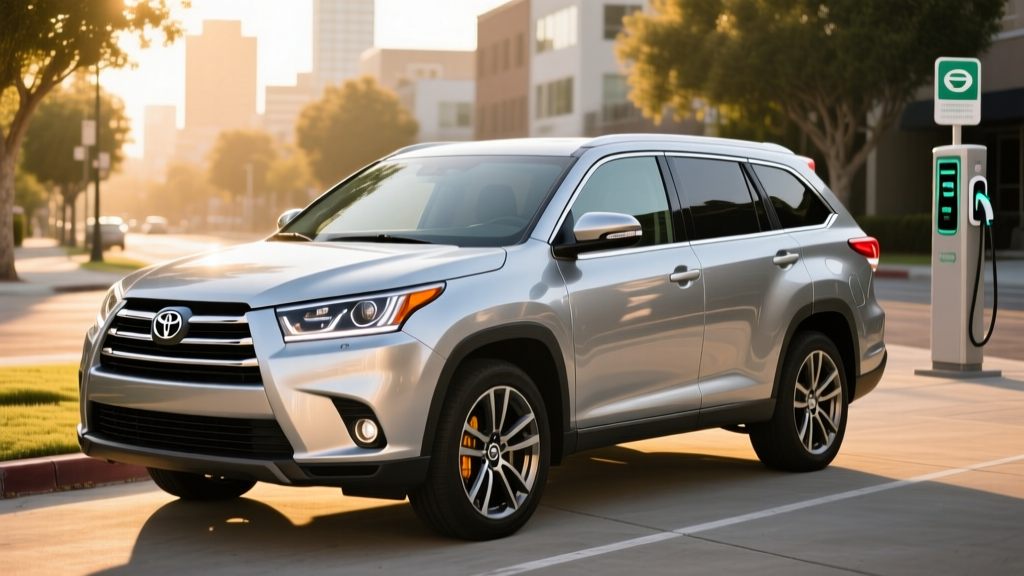
If you're searching for a 2014 Toyota Highlander Hybrid AWD on the used market, you're likely weighing fuel savings against the risks of a decade-old hybrid battery. That's a smart instinct. The third-generation Highlander Hybrid (model code XLE/Limited, 2014–2019 platform) paired a 3.5-liter V6 with Toyota's proven eCVT hybrid system and electronic all-wheel drive — delivering SUV space with sedan-like fuel economy. In 2026, with new SUV prices averaging over $48,000, a well-maintained 2014 Highlander Hybrid AWD (typically $14,000–$20,000 depending on mileage and condition) remains one of the most practical ways to get three rows and 28 MPG combined without a plug.
This guide covers every number a used-hybrid buyer needs: EPA and real-world MPG, powertrain specs, battery health expectations, replacement costs, and how this HEV stacks up against modern PHEVs and full EVs.
HEV vs PHEV: What the 2014 Highlander Hybrid Actually Is
Conventional Hybrid (HEV) — This vehicle: The 2014 Highlander Hybrid is a self-charging hybrid. It has a small 1.9 kWh nickel-metal hydride (NiMH) battery that recharges through regenerative braking and the gasoline engine. You never plug it in. The electric motor assists the gas engine during acceleration and can propel the vehicle at very low speeds (under ~25 mph) for brief distances, but there is no meaningful electric-only range.
Plug-in Hybrid (PHEV) — Not this vehicle: A PHEV like the current Toyota RAV4 Prime carries a much larger battery (18.1 kWh usable) and offers 42 miles of electric-only driving before the gas engine engages. PHEVs plug into Level 1 or Level 2 chargers. Toyota did not offer a plug-in Highlander in 2014, and as of 2026, no Highlander PHEV exists in the US market.
Full EV (BEV): Zero gasoline, large battery (60–100+ kWh), requires regular charging. Think Tesla Model Y or Hyundai Ioniq 5.
The 2014 Highlander Hybrid is firmly an HEV. If a seller tells you it "plugs in" or has "electric-only mode for commuting," they're either mistaken or misrepresenting the vehicle. The EV mode button on the dash allows short, low-speed electric-only movement (roughly 1 mile at under 25 mph under ideal conditions), but this is not a usable electric commute range.
Fuel Economy: EPA Numbers and Real-World MPG
| Driving Cycle | EPA Rating | Real-World Expectation |
|---|---|---|
| City | 27 MPG | 26–30 MPG (hybrids often beat EPA in stop-and-go) |
| Highway | 28 MPG | 25–28 MPG (aerodynamic drag and AWD engagement reduce efficiency) |
| Combined | 28 MPG | 25–29 MPG depending on driving mix |
Source: EPA Fuel Economy Guide — 2014 Toyota Highlander Hybrid AWD.
The 2014 Highlander Hybrid's city and highway numbers are unusually close — a hallmark of Toyota's hybrid synergy drive system, which recaptures braking energy in urban driving to offset the V6's thirst. In real-world ownership, many drivers report averaging 26–28 MPG over mixed driving, with city-heavy commutes occasionally pushing 30 MPG.
For context, the gas-only 2014 Highlander AWD with the same 3.5L V6 was rated at 18 city / 24 highway / 20 combined. The hybrid's 40% combined improvement translates to roughly $400–$600 annual fuel savings at 15,000 miles per year and $3.40/gallon (2026 national average).
Cold-weather note: Hybrid fuel economy drops 10–15% in sub-30°F conditions. The engine runs more frequently to heat the cabin and warm the battery, reducing regenerative braking effectiveness. Expect 23–25 MPG combined in northern winters.
Powertrain Specs: V6 + Electric Motors + eCVT
| Specification | 2014 Highlander Hybrid AWD |
|---|---|
| Engine | 3.5L V6 (2GR-FXE, Atkinson cycle) |
| Engine Output | 236 HP / 212 lb-ft torque |
| Front Electric Motor | 123 kW (165 HP) |
| Rear Electric Motor (AWD) | 50 kW (67 HP) |
| Net System Horsepower | 280 HP combined |
| Transmission | eCVT (electronically controlled, no fixed gears) |
| Drivetrain | Electronic AWD (rear motor engages on demand) |
| Hybrid Battery | 1.9 kWh NiMH (245V nominal) |
| 0–60 mph | ~7.8 seconds |
| Towing Capacity | 3,500 lbs (when properly equipped) |
| Curb Weight | ~4,872 lbs |
The eCVT in this generation uses Toyota's planetary gearset design — no belts, no pulleys, no traditional shifting. This contributes heavily to the drivetrain's long-term reliability since there are no clutch packs or torque converters to wear. The rear electric motor provides AWD functionality without a mechanical driveshaft, reducing weight and parasitic loss.
The Atkinson-cycle V6 sacrifices some low-end torque for higher thermal efficiency. Combined with the front motor's instant torque fill, acceleration feels responsive from stops even though 280 HP is moving nearly 5,000 pounds.
Hybrid Battery Health, Warranty & Replacement Cost
Original warranty: Toyota covered the 2014 Highlander Hybrid battery for 8 years / 100,000 miles (10 years / 150,000 miles in California and CARB-adopting states). For a 2014 model, factory battery warranty expired in 2022 at the latest.
Current status: Any 2014 Highlander Hybrid you buy in 2026 is on the owner's dime for battery replacement unless an extended warranty was purchased and transferred.
How Long Do These Batteries Last?
Toyota's NiMH hybrid batteries from this era have an excellent longevity track record. Data from owner forums, repair shops, and Consumer Reports reliability surveys suggest most 2014 Highlander Hybrid batteries reach 150,000–200,000 miles before significant degradation (below 70% capacity). Some exceed 250,000 miles with gradual capacity loss rather than sudden failure.
NiMH chemistry degrades more gracefully than early lithium-ion packs. You won't typically see a sudden "cliff" — instead, fuel economy slowly declines by 2–4 MPG over several years as the battery loses capacity, and the gas engine runs more frequently.
Battery Replacement Costs (2026 Pricing)
| Option | Cost Range | Notes |
|---|---|---|
| New OEM Toyota battery | $3,500–$4,800 | Installed at dealership; 1-year warranty on parts |
| Remanufactured battery | $1,800–$2,800 | Replaced cells in original casing; 1–3 year warranty from specialist shops |
| Individual cell replacement | $400–$900 | Only viable if 1–2 cells are bad; requires diagnostic scan to confirm |
| Used/salvage battery | $600–$1,200 | Risky — unknown remaining life; typically no warranty |
Before purchasing any 2014 Highlander Hybrid, request a hybrid battery health scan. Any competent hybrid specialist or Toyota dealer can read the battery's state of health (SoH) and individual cell voltage balance using Toyota's Techstream diagnostic tool or an aftermarket OBD-II scanner with hybrid capability. Look for:
- SoH above 75% — good condition for a 12-year-old pack
- Cell voltage variance under 0.2V — indicates balanced degradation
- No stored P0A80 or P0A7F diagnostic trouble codes (hybrid battery system faults)
Reliability and Ownership Costs
The 2014 Highlander Hybrid's powertrain is among the most reliable Toyota has produced. The 2GR-FXE V6 avoids the direct-injection carbon buildup issues that plagued some non-hybrid Toyota V6 engines of the same era, since the Atkinson cycle and hybrid system reduce sustained high-load operation.
Common issues to inspect on a 2014 example with 100,000+ miles:
- Brake actuator assembly: The electrohydraulic brake system can fail around 120,000–160,000 miles. Replacement runs $1,200–$1,800. Symptoms include a firm pedal, warning lights, or a buzzing sound from the actuator pump.
- Water pump (engine): The mechanical water pump is a wear item around 100,000–130,000 miles ($400–$600 replacement).
- Inverter coolant pump: Electric pump that circulates coolant through the inverter. Failure triggers a hybrid system warning. ~$300–$500 replacement.
- A/C compressor: Electrically driven; failure is uncommon but expensive ($1,000–$1,500) due to the high-voltage integration.
Insurance costs for a 2014 Highlander Hybrid are modest — typically $90–$140/month depending on driver profile and state, since the vehicle's value has depreciated significantly. Annual maintenance (oil changes, cabin filter, brake inspection) runs $300–$500 at an independent shop.
Does the 2014 Highlander Hybrid Qualify for Tax Credits?
No. The 2014 Toyota Highlander Hybrid does not qualify for any federal tax credit in 2026.
- The IRS §30D Clean Vehicle Credit ($3,750–$7,500) applies only to new plug-in vehicles (BEVs and PHEVs) with sufficient battery capacity. Conventional hybrids (HEVs) like this Highlander have never qualified.
- The Used Clean Vehicle Credit (up to $4,000 or 30% of sale price, whichever is lower) under §25E also requires a plug-in vehicle — BEV or PHEV only.
- Some states previously offered hybrid purchase rebates (e.g., California's Clean Vehicle Rebate Project), but these have been phased out or redirected to plug-in vehicles.
For full details on current federal incentive rules, see the IRS Clean Vehicle Credits page.
Highlander Hybrid vs. PHEV vs. EV: Which Fits You?
Choose the 2014 Highlander Hybrid AWD if:
- You need three-row seating and AWD on a $15,000–$20,000 budget
- You lack access to home or workplace charging (apartment, street parking)
- You want proven hybrid reliability with no plug-in learning curve
- You drive 10,000–15,000 miles/year and want 26–28 MPG without thinking about it
- Towing 3,500 lbs is a requirement (most PHEVs and EVs in this price range can't)
Consider a PHEV or EV instead if:
- You have home Level 2 charging and a commute under 40 miles (a PHEV like the RAV4 Prime covers most trips on electricity)
- You want to eliminate gasoline entirely for daily driving
- You're buying new and can access the $7,500 federal credit on a qualifying BEV/PHEV
- You prioritize the lowest possible per-mile energy cost (electricity at $0.04–$0.05/mile vs. gasoline at $0.12–$0.15/mile for this hybrid)
- You want modern ADAS features (the 2014 lacks Toyota Safety Sense — no automatic emergency braking, no lane-keeping assist)
The 2014 Highlander Hybrid occupies a specific niche: affordable, reliable, three-row family transportation with meaningfully reduced fuel consumption and zero charging infrastructure requirements. If your situation demands a plug-free vehicle that still beats a gas SUV by 40% at the pump, it remains a strong used-market pick in 2026.
FAQ: 2014 Toyota Highlander Hybrid AWD
How many MPG does the 2014 Toyota Highlander Hybrid AWD get?
The EPA rates it at 27 city / 28 highway / 28 combined MPG. Real-world owners typically see 26–29 MPG combined, with city-heavy driving sometimes reaching 30 MPG. Cold weather and sustained highway speeds above 75 mph reduce efficiency to 23–25 MPG.
Can the 2014 Highlander Hybrid drive on electric power only?
Only at very low speeds (under ~25 mph) for about 1 mile or less. This is not a usable electric commute mode. The vehicle is a conventional hybrid (HEV) — it cannot be plugged in and has no meaningful electric-only range.
How much does it cost to replace the hybrid battery?
A new OEM battery from Toyota runs $3,500–$4,800 installed. Remanufactured batteries from hybrid specialists cost $1,800–$2,800 with a 1–3 year warranty. Most 2014 Highlander Hybrid batteries last 150,000–200,000 miles before needing replacement.
Is the 2014 Highlander Hybrid reliable?
Yes. The 2GR-FXE hybrid powertrain and eCVT are among Toyota's most durable setups. The main expensive failure point is the brake actuator assembly ($1,200–$1,800) at high mileage. Routine maintenance costs are comparable to a non-hybrid V6 Highlander.
Does the 2014 Highlander Hybrid qualify for any tax credit?
No. Federal clean vehicle credits (§30D for new, §25E for used) require plug-in vehicles — battery-electric or plug-in hybrid. Conventional hybrids like this model are not eligible for any current federal tax incentive.
What should I check before buying a used 2014 Highlander Hybrid?
Prioritize a hybrid battery health scan (state of health percentage and cell voltage balance), brake actuator function test, inverter coolant pump operation, and a full pre-purchase inspection at a hybrid-experienced shop. Verify maintenance records, especially for engine coolant and inverter coolant service intervals.