Quick Verdict: The 2014 Camry Hybrid as a Used Hybrid Benchmark
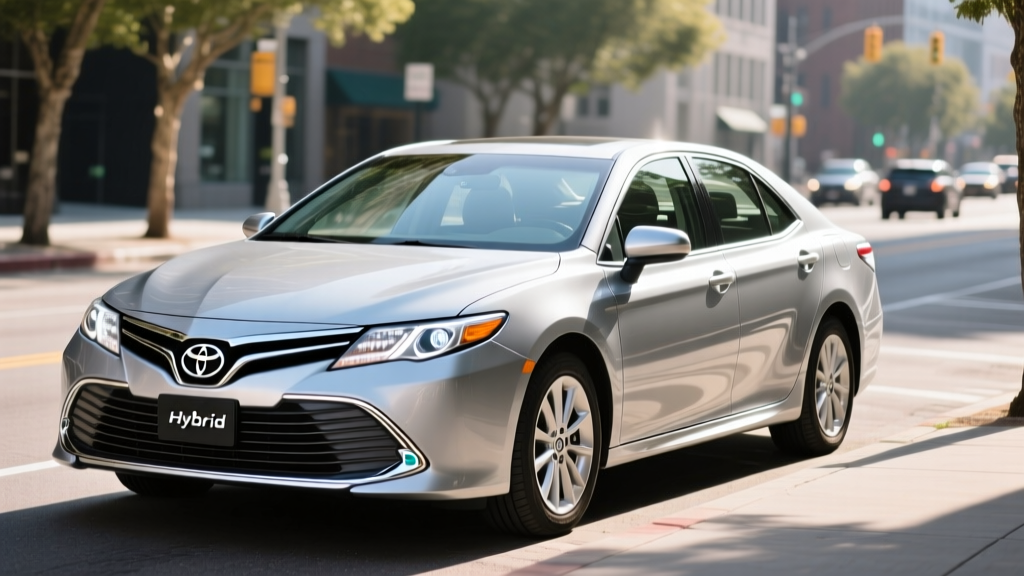
The 2014 Toyota Camry Hybrid sedan remains one of the most rational used-hybrid purchases on the market more than a decade after its debut. With an EPA-rated 41 mpg city, 38 mpg highway, and 40 mpg combined, it delivers fuel economy that still rivals many newer hybrids — and it does so without a plug, without range anxiety, and with Toyota's proven Hybrid Synergy Drive system under the hood.
For buyers in 2026 shopping the used market, the 2014 Camry Hybrid occupies a sweet spot: depreciated enough to be affordable (typically $8,000–$13,000 depending on mileage and condition), yet built on a powertrain architecture that routinely surpasses 200,000 miles with basic maintenance. This guide covers the exact numbers you need — EPA and real-world MPG, battery longevity, replacement costs, and how it compares to a PHEV or full EV for your daily driving.
HEV vs. PHEV: Where the 2014 Camry Hybrid Fits
Conventional Hybrid (HEV) — 2014 Camry Hybrid: The gasoline engine and electric motor work together, with the battery recharged through regenerative braking and engine power. You never plug it in. The small 1.6 kWh NiMH battery assists during acceleration and enables brief low-speed electric-only motoring, but the car cannot drive meaningful distances on electricity alone.
Plug-in Hybrid (PHEV): A PHEV carries a larger battery (typically 8–20 kWh) that you charge from a wall outlet or public charger, enabling 20–50 miles of electric-only driving before the gas engine takes over. Toyota did not offer a Camry PHEV in the U.S. market. If plug-in capability is a priority, you would need to look at models like the Toyota Prius Prime or a Ford Escape PHEV instead.
Full EV (BEV): No gasoline engine at all — battery-only propulsion with 200–400 miles of range and mandatory charging access. Higher upfront cost, lowest per-mile fuel cost, and zero tailpipe emissions.
The 2014 Camry Hybrid is strictly an HEV. It requires zero behavioral change from a gas-car owner: fill up with gas, drive, and let the hybrid system optimize efficiency in the background.
Fuel Economy: EPA Ratings and Real-World MPG
| Metric | EPA Rating | Real-World Expectation |
|---|---|---|
| City MPG | 41 mpg | 38–44 mpg (hybrids often beat EPA in stop-and-go) |
| Highway MPG | 38 mpg | 35–40 mpg (sustained 75+ mph reduces hybrid advantage) |
| Combined MPG | 40 mpg | 37–42 mpg |
| Fuel Tank Capacity | 17.2 gallons | ~600–680 miles per tank |
| Annual Fuel Cost (est.) | ~$1,350 at 15,000 mi/yr and $3.50/gal (per fueleconomy.gov) | |
Why real-world city MPG can exceed the EPA sticker: Toyota's Hybrid Synergy Drive recaptures energy during braking and uses the electric motor heavily at low speeds, where gasoline engines are least efficient. Drivers who do mostly city and suburban driving with frequent stops often report 42–44 mpg in warm weather. Conversely, sustained highway driving at 80 mph or in cold climates (below 30°F) can pull combined figures down to 35–37 mpg, as the engine runs more often for cabin heat and the battery's charge/discharge efficiency drops in cold.
Compared to the 2014 Camry's gasoline four-cylinder sibling (25/35/28 mpg EPA), the hybrid delivers roughly 43% better combined fuel economy — a substantial gap that translates to roughly 300 fewer gallons per year at 15,000 miles.
Powertrain Specs: Engine, Motor, and Combined Output
| Specification | 2014 Toyota Camry Hybrid (LE/XLE) |
|---|---|
| Engine | 2.5L inline-4 Atkinson-cycle (156 hp, 156 lb-ft) |
| Electric Motor | Permanent-magnet synchronous (105 kW / 141 hp, 199 lb-ft) |
| Net Combined Horsepower | 200 hp |
| Transmission | ECVT (electronically controlled continuously variable) |
| Hybrid Battery | 1.6 kWh NiMH (nickel-metal hydride), 204V nominal |
| 0–60 mph | ~7.6 seconds |
| Drivetrain | Front-wheel drive |
| Curb Weight | ~3,435–3,545 lbs (LE/XLE) |
| EPA Emissions Rating | SULEV (Super Ultra-Low Emission Vehicle) |
The 200 hp combined output gives the 2014 Camry Hybrid adequate passing power and confident highway merging — a meaningful step up from the Prius of the same era (~134 hp combined). The Atkinson-cycle engine sacrifices some peak power for thermal efficiency, but the electric motor fills the torque gap at low RPM, providing responsive off-the-line acceleration that feels punchier than the numbers suggest.
The eCVT is a power-split device, not a belt-driven CVT. It uses a planetary gearset to blend engine and motor power seamlessly. Unlike some belt-CVTs in competing vehicles, Toyota's eCVT has no belts or cones to wear out, and it is widely regarded as one of the most durable transmissions in the industry.
Hybrid Battery Longevity, Warranty, and Replacement Cost
Original Warranty: Toyota covered the 2014 Camry Hybrid's battery with an 8-year/100,000-mile warranty (10-year/150,000-mile in California-emissions states: CA, CT, ME, MA, NJ, NY, OR, RI, VT, WA). By 2026, all original warranties have expired unless the vehicle had very low mileage and was registered in a CARB state.
Expected Battery Lifespan: Toyota's NiMH hybrid batteries are among the most durable in the industry. Real-world data from taxi fleets and high-mileage owners shows these packs routinely lasting 150,000–200,000+ miles before significant degradation. Capacity loss is gradual — expect roughly 10–15% capacity reduction over 150,000 miles, which translates to a 1–2 mpg drop rather than a sudden failure.
Battery Replacement Cost (2026):
- New OEM Toyota pack: ~$3,500–$4,500 (installed at dealer)
- Remanufactured aftermarket pack: ~$1,500–$2,500 (installed at independent hybrid specialist)
- Individual module replacement: ~$400–$800 (if only 1–2 of the 34 NiMH modules have failed — a common repair at hybrid-specialty shops)
The honest assessment for used buyers: A 2014 Camry Hybrid with 120,000+ miles is approaching the age where hybrid battery issues become possible, though not inevitable. Before purchasing, request a hybrid battery health check — many Toyota dealers and hybrid specialists can read the battery's State of Health (SoH) via OBD-II. If the pack is original and the car has 140,000+ miles, budget $1,500–$2,500 for a potential remanufactured replacement within the next few years. Even with that cost factored in, the total ownership math often still beats a comparable gas-only vehicle over 3–5 years of fuel savings.
Sources: Toyota Warranty Guide, fueleconomy.gov
Pricing in 2026 and Tax Credit Eligibility
Used Market Pricing (2026):
- 2014 Camry Hybrid LE (80,000–100,000 mi): $10,000–$12,500
- 2014 Camry Hybrid LE (100,000–140,000 mi): $8,000–$10,500
- 2014 Camry Hybrid XLE (80,000–100,000 mi): $11,000–$13,500
- 2014 Camry Hybrid XLE (100,000–140,000 mi): $9,000–$11,500
Prices vary by region, vehicle condition, service history, and battery health. XLE trims add leather, a premium audio system, and a smart-key system over the LE.
Federal Tax Credits: The 2014 Camry Hybrid does not qualify for the federal §30D new clean vehicle credit — that credit applies only to new vehicle purchases. For used vehicles, the IRS offers a Used Clean Vehicle Credit (up to $4,000 or 30% of the sale price, whichever is less) under IRS §25E. However, this credit has strict eligibility requirements:
- The vehicle must be at least two model years old (the 2014 qualifies)
- Sale price must be $25,000 or less (the 2014 Camry Hybrid qualifies)
- Buyer income caps: $75,000 single / $112,500 head of household / $150,000 joint
- The vehicle must be purchased from a licensed dealer (private-party sales do not qualify)
- The credit is non-refundable — you must have tax liability to claim it
- The vehicle's battery must have at least 4 kWh capacity — the 2014 Camry Hybrid's 1.6 kWh pack does not meet this threshold
Bottom line: The 2014 Camry Hybrid's battery is too small to qualify for the used-EV federal tax credit. This credit was designed primarily for PHEVs and BEVs. You are purchasing this vehicle for its fuel savings and reliability, not for incentive eligibility.
Reliability, Safety, and Long-Term Ownership Costs
The 2014 Camry Hybrid benefits from Toyota's reputation for long-term durability, and the hybrid-specific components have proven remarkably robust over millions of cumulative fleet miles.
Reliability highlights:
- Engine: The 2AR-FXE Atkinson-cycle 2.5L is a detuned variant of Toyota's widely used 2AR-FE. Timing chain (not belt) means no scheduled replacement. Oil consumption is low with regular 0W-20 synthetic changes every 10,000 miles.
- eCVT: Power-split planetary gearset with no wearable belts. Failure before 200,000 miles is rare with normal fluid maintenance.
- Brakes: Regenerative braking significantly reduces wear on the friction pads. Many owners report original brake pads lasting 80,000–100,000+ miles.
- 12V auxiliary battery: Located in the trunk. Standard AGM-type replacement every 4–6 years (~$200–$300). This is separate from the hybrid traction battery.
Safety ratings: The 2014 Camry earned a 5-Star Overall rating from NHTSA and a Top Safety Pick from IIHS (Good ratings in all crashworthiness tests). Standard safety equipment includes 10 airbags, Stability Control, ABS, and a tire-pressure monitoring system.
Estimated annual maintenance cost: $400–$600/year for a well-maintained example — lower than most gas-only midsize sedans thanks to reduced brake wear and no transmission fluid service intervals on the eCVT (though many specialists recommend a drain-and-fill at 120,000 miles as preventive care).
Who Should Buy the 2014 Camry Hybrid vs. a PHEV or Full EV
Reasons to Choose the 2014 Camry Hybrid
- You want hybrid efficiency without changing any habits — no plugs, no charging apps, no route planning
- Your budget is under $13,000 and you need a reliable daily driver
- You drive 10,000–18,000 miles/year and want to minimize fuel cost (~$1,350/yr vs ~$2,100/yr for the gas Camry)
- You live in an apartment or lack home-charging access, making a PHEV or EV impractical
- You prioritize proven long-term reliability and low maintenance costs
- You want a midsize sedan with comfortable rear seating and a 14.4 cu-ft trunk
Reasons to Look Elsewhere
- You want electric-only driving for short commutes (consider a Prius Prime or RAV4 Prime PHEV)
- You need all-wheel drive (the 2014 Camry Hybrid is FWD only; the AWD Camry Hybrid arrived in 2020)
- You want modern infotainment — the 2014's Entune system lacks Apple CarPlay and Android Auto
- You want the lowest possible per-mile fuel cost and have home charging (a used BEV like a Leaf or Bolt costs ~$0.04/mile vs the Camry Hybrid's ~$0.09/mile)
- You want current-model safety tech — no automatic emergency braking, lane-keeping, or adaptive cruise on the 2014 model
Decision Framework
Choose the 2014 Camry Hybrid if: You need an affordable, no-plug, high-MPG sedan and don't have reliable charging access. It's the lowest-risk entry into hybrid ownership.
Choose a PHEV (e.g., Prius Prime) if: You have home or workplace charging and want 25–40 miles of electric-only commuting with gas backup for road trips. Expect to pay $18,000–$28,000 used for a 2019–2022 model.
Choose a full EV (e.g., Chevy Bolt, Tesla Model 3) if: You have Level 2 home charging, drive under 250 miles/day, and want the lowest operating cost. Used BEVs from 2019–2022 start around $14,000–$22,000 and may qualify for the $4,000 used-EV tax credit.
Frequently Asked Questions
How many MPG does the 2014 Toyota Camry Hybrid get?
The EPA rates it at 41 mpg city, 38 mpg highway, and 40 mpg combined. In real-world driving, city-dominant commuters often see 42–44 mpg, while highway-heavy drivers at 75+ mph may see 35–38 mpg combined. Cold weather (below 30°F) reduces efficiency by roughly 5–8% due to increased engine runtime for cabin heat.
Does the 2014 Camry Hybrid need to be plugged in?
No. It is a conventional hybrid (HEV), not a plug-in hybrid (PHEV). The 1.6 kWh battery charges itself through regenerative braking and the gasoline engine. You never plug it in — just fill up at a gas station as you would with any other car.
Is the hybrid battery reliable, and what does replacement cost?
Toyota's NiMH hybrid batteries are among the longest-lasting in the industry, routinely reaching 150,000–200,000+ miles. If replacement is needed, a remanufactured pack costs $1,500–$2,500 installed, and individual module repair can be done for $400–$800 at a hybrid specialist. A new OEM pack runs $3,500–$4,500 at a Toyota dealer.
Does the 2014 Camry Hybrid qualify for any tax credit?
No. The federal Used Clean Vehicle Credit (§25E) requires a minimum 4 kWh battery capacity, and the 2014 Camry Hybrid has only 1.6 kWh. The new-vehicle §30D credit does not apply to used purchases. Some states may offer separate incentives for high-efficiency used vehicles — check your state's energy office for current programs.
How does the 2014 Camry Hybrid compare to a full EV for daily commuting?
For a 30-mile round-trip commute, the Camry Hybrid uses about 0.75 gallons of gas per day (~$2.63 at $3.50/gal). A comparable EV like a Chevy Bolt uses about 9 kWh per day (~$1.17 at $0.13/kWh national average). The EV saves roughly $1.46/day in fuel, but requires home charging access and has a higher purchase price. If you can charge at home and your commute is under 50 miles, a used EV will cost less per mile. If you lack charging access or regularly drive 300+ miles in a day, the Camry Hybrid's flexibility and 600+ mile range per tank are significant advantages.
What are common issues with the 2014 Camry Hybrid at high mileage?
At 120,000+ miles, watch for: hybrid battery degradation (reduced MPG is the first sign), EGR (exhaust gas recirculation) valve clogging which can cause rough idle, worn engine mounts (the hybrid's engine stop/start cycles add wear to mounts), and the 12V auxiliary battery in the trunk. None of these are deal-breakers — all are well-documented with straightforward repairs.
Is the 2014 Camry Hybrid a good car for a teenager or first-time buyer?
It is an excellent choice. Low insurance costs, cheap maintenance, outstanding fuel economy, strong safety ratings, and Toyota reliability make it one of the most practical first cars available in the $8,000–$12,000 range. The main caveat is ensuring the hybrid battery is in good health at purchase — get a pre-purchase inspection from a hybrid-qualified mechanic.