Quick Verdict: An Early Hybrid Experiment That Still Runs
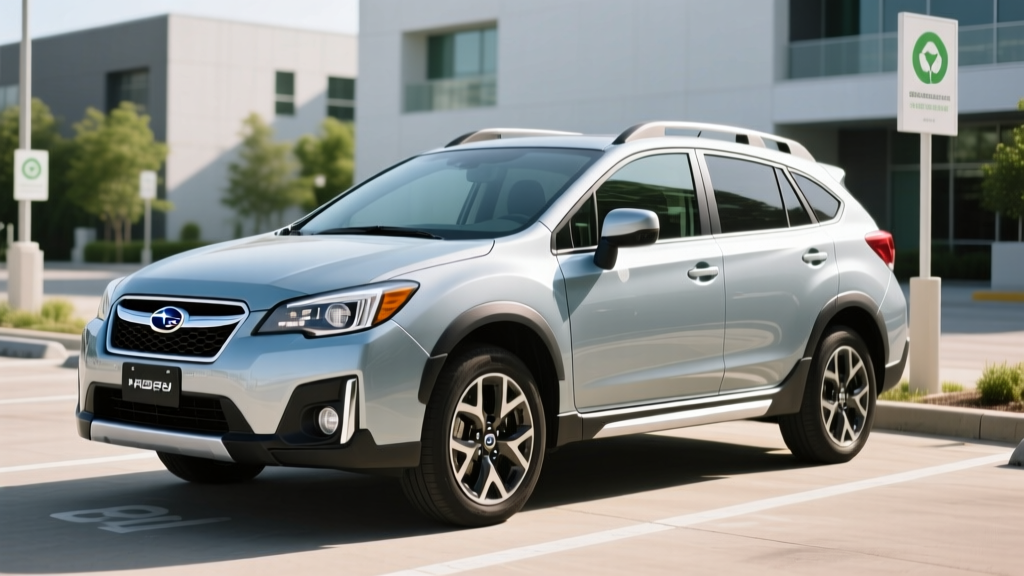
The 2014 Subaru XV Crosstrek Hybrid 2.0i Hybrid was Subaru's first attempt at a gasoline-electric hybrid — a conventional hybrid (HEV), not a plug-in. Built on the first-generation Crosstrek platform, it paired a 2.0-liter flat-four with a small electric motor integrated into the Lineartronic CVT. The result was a modest efficiency bump over the standard gas model and the added benefit of Subaru's symmetrical all-wheel drive.
In 2026, this model only exists on the used market. Production ended after the 2015 model year, and Subaru didn't revisit the Crosstrek Hybrid nameplate until the 2019 plug-in version (which was itself discontinued). For buyers considering a used 2014 XV Crosstrek Hybrid today, the key questions center on real-world fuel economy, battery longevity at 12+ years old, and whether the hybrid premium over the gas model was worth it — or still is on the secondary market.
| Specification | 2014 XV Crosstrek Hybrid 2.0i |
|---|---|
| Powertrain Type | Conventional Hybrid (HEV) — no plug |
| Engine | 2.0L DOHC flat-4 (FB20) |
| Electric Motor | 10 kW (13.4 hp) integrated in CVT |
| Combined Horsepower | 160 hp (engine + motor) |
| Transmission | Lineartronic CVT |
| Drivetrain | Symmetrical AWD |
| Hybrid Battery | ~0.5 kWh nickel-metal hydride (NiMH) |
| EPA MPG (City / Hwy / Combined) | 29 / 33 / 31 |
| 0-60 mph | ~9.5 seconds |
| Cargo Volume | 21.9 cu ft (rear seats up) |
| Original MSRP | $25,995 (base Hybrid) / $29,295 (Hybrid Touring) |
| Current Used Price Range (2026) | $7,000 – $12,500 depending on mileage/condition |
Fuel Economy: EPA Numbers vs. Real-World MPG
The EPA rated the 2014 XV Crosstrek Hybrid at 29 city / 33 highway / 31 combined MPG. For context, the standard 2014 Crosstrek 2.0i with CVT was rated at 25/33/29 MPG. The hybrid's advantage was concentrated in city driving, where the electric motor assists during acceleration and enables brief electric-only movement at low speeds — the exact scenario where conventional hybrids shine.
| Driving Scenario | EPA Estimate | Real-World Expectation |
|---|---|---|
| City | 29 MPG | 27–31 MPG (hybrids often match or beat EPA in stop-and-go) |
| Highway | 33 MPG | 29–32 MPG (small battery limits highway electric assist) |
| Combined | 31 MPG | 28–31 MPG |
| Cold Weather (below 32°F) | — | 25–28 MPG (engine runs more for cabin heat) |
According to fueleconomy.gov, owners of the 2014 Crosstrek Hybrid reported an average real-world combined MPG of approximately 29–30. This is typical for Subaru's early hybrid system: the NiMH battery pack was small (roughly 0.5 kWh usable), so the electric motor's contribution was limited to low-speed assist and brief stop-start coasting. On sustained highway climbs or at altitude, expect fuel economy to drop closer to 26–28 MPG.
The 2 MPG combined improvement over the gas model translated to roughly 30–40 fewer gallons per year at 15,000 miles annually — a meaningful but not transformative gain. At 2026 fuel prices averaging $3.20–$3.80/gallon nationally, that's approximately $100–$150 in annual fuel savings versus the non-hybrid Crosstrek.
Hybrid vs. Plug-In Hybrid: Understanding What This Crosstrek Is
This is a critical distinction for shoppers browsing used listings. The 2014 XV Crosstrek Hybrid is a conventional hybrid (HEV). It has no plug, no charging port, and no meaningful electric-only range. The battery charges exclusively through regenerative braking and the gasoline engine. You fuel it like any other car and never need to think about charging infrastructure.
| Feature | 2014 Crosstrek Hybrid (HEV) | 2019+ Crosstrek Hybrid (PHEV) | Full EV (e.g., 2026 Solterra) |
|---|---|---|---|
| Plug-in Charging | No | Yes (Level 1/2) | Yes (Level 1/2/DC) |
| Electric-Only Range | ~0.5 miles at low speed | 17 miles (EPA) | 222–228 miles (EPA) |
| Battery Capacity | ~0.5 kWh (NiMH) | 8.8 kWh (Li-ion) | 71.4 kWh (Li-ion) |
| Gas Engine | Yes — primary power | Yes — extends range | No |
| Fueling | Gas only | Gas + electricity | Electricity only |
| Federal Tax Credit (at purchase) | None | Up to $4,502 (expired) | Up to $7,500 (§30D) |
Subaru later released a proper plug-in hybrid Crosstrek for the 2019–2023 model years with 17 miles of electric-only range and an 8.8 kWh lithium-ion pack. That PHEV was based on Toyota's Prius Prime powertrain and qualified for a partial federal tax credit at the time. The 2014 model shares none of that architecture.
Powertrain Deep Dive: The 2.0i Hybrid System
Subaru's hybrid system in the 2014 XV Crosstrek was a mild full-hybrid design. The 2.0-liter FB20 boxer engine produced 148 horsepower on its own, while a 10 kW (13.4 hp) electric motor was sandwiched between the engine and the Lineartronic CVT. Combined system output was rated at 160 horsepower — a 12 hp bump over the standard 2.0i.
The electric motor served three functions:
- Launch assist: Filling torque gaps during initial acceleration, reducing the engine's fuel consumption during the most inefficient phase of driving.
- Regenerative braking: Capturing kinetic energy during deceleration to recharge the NiMH battery pack.
- Low-speed electric creep: Enabling very brief electric-only movement in parking lots or heavy traffic at speeds under ~15 mph, though range in this mode was measured in fractions of a mile.
The system was integrated into Subaru's symmetrical AWD, meaning all four wheels remained driven regardless of whether the engine or motor was providing propulsion. There was no EV-only mode selectable by the driver, and no way to force electric-only operation.
Performance was adequate but unexciting. The 0–60 mph time of approximately 9.5 seconds was roughly on par with the non-hybrid CVT model. The added weight of the hybrid system (~275 lbs over the gas model) was partially offset by the electric motor's instant torque, resulting in similar acceleration characteristics. The CVT's characteristic drone under hard acceleration was present, though the electric motor's low-speed assist made around-town driving feel slightly more responsive.
Battery Health, Warranty, and Replacement Cost in 2026
The 2014 Crosstrek Hybrid's nickel-metal hydride (NiMH) battery pack was covered by Subaru's hybrid component warranty: 8 years / 100,000 miles (10 years / 150,000 miles in California and states adopting CARB emissions standards). In 2026, every 2014 model is beyond the standard 8-year warranty window, and most are past 100,000 miles.
Battery Warranty & Lifespan Summary
- Original Warranty: 8 yr / 100,000 mi (federal) or 10 yr / 150,000 mi (CARB states)
- Current Status (2026): Expired for all 2014 models under standard terms
- NiMH Chemistry: More degradation-resistant than early Li-ion, but 12+ years of age is a factor
- Typical Degradation: 15–30% capacity loss at 100k–150k miles — reduces electric assist but rarely causes total failure
- Replacement Cost: $2,000–$3,500 for a refurbished or new OEM pack (parts + labor)
NiMH batteries age differently than the lithium-ion packs in modern EVs and PHEVs. They tend to lose capacity gradually rather than experiencing sudden failure. A degraded hybrid battery in a 2014 Crosstrek will manifest as reduced fuel economy (the engine compensates for weaker electric assist), more frequent engine engagement, and potentially a dashboard warning light if individual cells become imbalanced.
According to NHTSA service records and owner forums, complete hybrid battery failure on the 2014 Crosstrek Hybrid is uncommon but not unheard of at 120,000+ miles. Independent hybrid battery shops can often recondition or replace individual modules for $800–$1,500, while a full OEM replacement pack from Subaru runs $2,000–$3,500 installed. Third-party refurbished packs are available for $1,200–$2,000.
Buying advice for 2026: If you're evaluating a used 2014 Crosstrek Hybrid, ask for a hybrid battery health check. Many Subaru dealers can pull a State of Health (SoH) reading from the battery management system. An SoH below 70% means you're likely looking at a replacement within 1–2 years, and the purchase price should reflect that $2,000–$3,500 liability.
Pricing, Tax Credits, and Used Market Value
The 2014 XV Crosstrek Hybrid originally started at $25,995 for the base Hybrid trim and $29,295 for the Hybrid Touring — a roughly $3,000–$4,000 premium over equivalent gas models. That premium was never recoverable through fuel savings alone (at ~$120/year in savings, payback would have taken 25+ years).
On the used market in 2026, expect to pay:
- $7,000–$9,000: Examples with 120,000+ miles, potential battery concerns, or cosmetic issues
- $9,000–$11,000: Average-condition examples with 80,000–120,000 miles
- $11,000–$12,500: Low-mileage (<80,000 mi), well-maintained, clean-title Touring models
Tax credit eligibility: The 2014 Crosstrek Hybrid did not qualify for any federal tax credit when new — conventional hybrids without plug-in capability have not been eligible for the IRS §30D clean vehicle credit since the original hybrid credits expired for most manufacturers in the late 2000s. As a used purchase in 2026, it also does not qualify for the used clean vehicle credit (which applies only to used EVs and PHEVs under $25,000, not conventional HEVs). There is no federal or state incentive for purchasing this vehicle today.
Who Should Buy This Hybrid — And Who Shouldn't
Pros
- Standard AWD — rare for hybrids in this class and era
- No charging infrastructure needed — fuel and go
- Slightly better city MPG than the gas Crosstrek
- Subaru reliability for the mechanical components (engine, CVT, AWD)
- 8.7 inches of ground clearance for light off-road use
- Lower used prices than equivalent gas models (hybrid premium has fully depreciated)
Cons
- Only 2 MPG combined improvement over the gas model
- Hybrid battery is 12+ years old — replacement is a real cost risk
- No EV-only mode, no plug-in capability
- Added weight (~275 lbs) with minimal performance benefit
- Small cargo area (21.9 cu ft) with no frunk or battery packaging advantage
- No modern ADAS — pre-dates Subaru EyeSight standard availability on this trim
Choose the 2014 Crosstrek Hybrid If:
- You need AWD and want marginally better fuel economy without changing your fueling habits
- You find a well-maintained example with documented hybrid battery health above 80%
- You drive predominantly in city/stop-and-go conditions where the hybrid system provides its greatest benefit
- The purchase price is at least $1,500–$2,000 below an equivalent gas Crosstrek (to offset potential battery replacement)
Look Elsewhere If:
- You want meaningful fuel savings — a modern PHEV like the 2019+ Crosstrek Hybrid (17 mi electric range) or a current Toyota RAV4 Hybrid (39 MPG combined) is substantially more efficient
- You want to reduce fossil fuel consumption — this hybrid's 2 MPG gain is marginal
- You want modern safety tech — EyeSight (Subaru's ADAS suite) wasn't widely available on the 2014 Hybrid trim
- The hybrid battery SoH is unknown or below 70%
Hybrid vs. PHEV vs. Full EV — Which Fits You?
If you're cross-shopping the 2014 Crosstrek Hybrid, consider where you fall on the electrification spectrum:
- Conventional Hybrid (HEV) like this Crosstrek: Best for drivers who want zero lifestyle change — no plugs, no range planning, just slightly better MPG. The trade-off is that efficiency gains are modest (2–8 MPG depending on model).
- Plug-In Hybrid (PHEV): Best for drivers with home charging who want 20–40 miles of daily electric driving plus a gas engine for road trips. A used 2019+ Crosstrek PHEV or a Toyota RAV4 Prime delivers far greater fuel savings if you can charge at home.
- Full EV (BEV): Best for drivers with reliable home or workplace charging who want maximum fuel cost savings and zero tailpipe emissions. A used Subaru Solterra or Hyundai Ioniq 5 offers 220+ miles of range with far lower operating costs — but requires charging access.
Reliability Record and Known Issues
The 2014 Crosstrek Hybrid shares most of its mechanical components with the standard first-generation Crosstrek, which has a solid reliability record. The FB20 engine and Lineartronic CVT are well-understood by Subaru technicians. According to IIHS, the 2014 XV Crosstrek earned Good ratings in most crashworthiness categories, though it predates the more rigorous small-overlap testing updates.
Hybrid-specific concerns are relatively limited:
- NiMH battery degradation: The primary concern at this vehicle's age. Expect reduced electric assist and slightly lower MPG as the pack ages.
- Inverter cooling system: The hybrid system's inverter has a dedicated cooling circuit. Coolant should be flushed per Subaru's maintenance schedule; neglect can lead to inverter overheating.
- Regenerative braking feel: Some owners report a grabby or inconsistent brake pedal as the system transitions between regenerative and friction braking — this is characteristic of the design, not necessarily a fault.
- CVT longevity: Subaru's Lineartronic CVTs from this era have a mixed record. Fluid changes every 60,000 miles are strongly recommended, especially given the added load from the hybrid system.
Frequently Asked Questions
How many MPG does the 2014 Subaru XV Crosstrek Hybrid get?
The EPA rates it at 29 city / 33 highway / 31 combined MPG. Real-world owners typically report 28–31 combined, with city driving occasionally exceeding the EPA estimate thanks to regenerative braking and electric assist. Cold weather and sustained highway driving reduce these figures to 25–28 MPG.
Can I plug in the 2014 Crosstrek Hybrid to charge it?
No. The 2014 XV Crosstrek Hybrid is a conventional hybrid (HEV) with no charging port. The battery charges exclusively through regenerative braking and the gasoline engine. You fuel it with gasoline like any other car. If you want a plug-in Crosstrek, look at the 2019–2023 Crosstrek Hybrid (PHEV), which has a charging port and 17 miles of electric-only range.
How much does it cost to replace the hybrid battery?
A full OEM hybrid battery replacement runs $2,000–$3,500 installed at a Subaru dealer. Third-party refurbished packs cost $1,200–$2,000. Individual cell module reconditioning at a hybrid specialist shop can cost $800–$1,500 if only a portion of the pack has degraded. At 12+ years old, budgeting for eventual battery service is prudent.
Does the 2014 Crosstrek Hybrid qualify for any tax credit?
No. The 2014 model did not qualify for a federal tax credit when new, and it does not qualify for the current IRS §30D used clean vehicle credit (which applies only to plug-in vehicles — EVs and PHEVs — not conventional hybrids). No state incentives apply to conventional hybrid purchases in 2026.
Is the 2014 Crosstrek Hybrid reliable?
The mechanical components (engine, CVT, AWD) have a solid reliability record shared with the gas Crosstrek. The hybrid-specific components — primarily the NiMH battery and inverter — add a layer of age-related risk. Complete hybrid system failure is uncommon, but battery degradation at 12+ years is expected and will reduce the efficiency benefit. A pre-purchase hybrid health check is strongly recommended.
How far can it drive on electric power alone?
Effectively zero meaningful distance. The 2014 Crosstrek Hybrid's electric motor can propel the car at very low speeds (under ~15 mph) for brief distances — think crossing a parking lot or creeping in traffic. There is no EV mode button, and the system does not sustain electric-only driving. This is fundamentally different from a PHEV, which can drive 17–40 miles on electricity alone.
Should I buy this or a newer hybrid?
If budget allows, a newer hybrid delivers substantially more value. A 2019+ Toyota RAV4 Hybrid achieves 39 MPG combined (vs. 31 here), while a 2019+ Crosstrek PHEV offers 17 miles of electric range plus 35 MPG on gas. The 2014 Crosstrek Hybrid makes sense only at a low used price ($8,000–$10,000) with confirmed battery health, for a buyer who specifically needs AWD and wants a simple hybrid with no charging requirements.